

 4 hours ago
7
PROTECT YOURSELF with Orgo-Life® QUANTUM TECHNOLOGY
Orgo-Life the new way to the future Advertising by Adpathway
URUGUAY · ECONOMY
Key Facts
- The country Uruguay is a small South American country between Argentina and Brazil.
- What happened Uruguay’s factory output rose 7.7% in September from a year earlier.
- The catch One oil refinery restarting after repairs added 5.9 percentage points of the 7.7% growth; without it, output rose 1.8%.
- The workers Hours worked in factories fell 2.9% and jobs fell 2.8%.
- Power Index Uruguay ranks 7th of 14 in The Rio Times Latin America Power Index, with 45.2 points (November 2026 edition).
Uruguay’s factories made 7.7% more in September than a year earlier, the National Statistics Institute (INE) said on Wednesday 11 November 2026. The headline looks strong, but most of the jump comes from one oil refinery that was switched off a year ago.
Free daily brief — no card needed
Get every Economy story in one morning email
We build you a personalized brief around the topics you follow — free for 7 days. Love it? Your first month after that is US$1.
Yes, email me my free daily brief — I can unsubscribe any time.
For US readers, the number is a lesson in reading base effects: a weak month last year makes this year look better. Our earlier look at August’s industrial output showed a 4.8% rise that the refinery also lifted, so September is not a clean break.
What Happened
INE publishes a monthly index of the physical volume of manufacturing, called IVFIM in Spanish. It counts how much factories produce, not how much money they earn, measured against a base period set to 100.
The September reading was 121.4, which is 7.7% above September 2025. Compared with August, and after removing normal seasonal swings, output actually slipped 0.4%.
Why the Refinery Matters
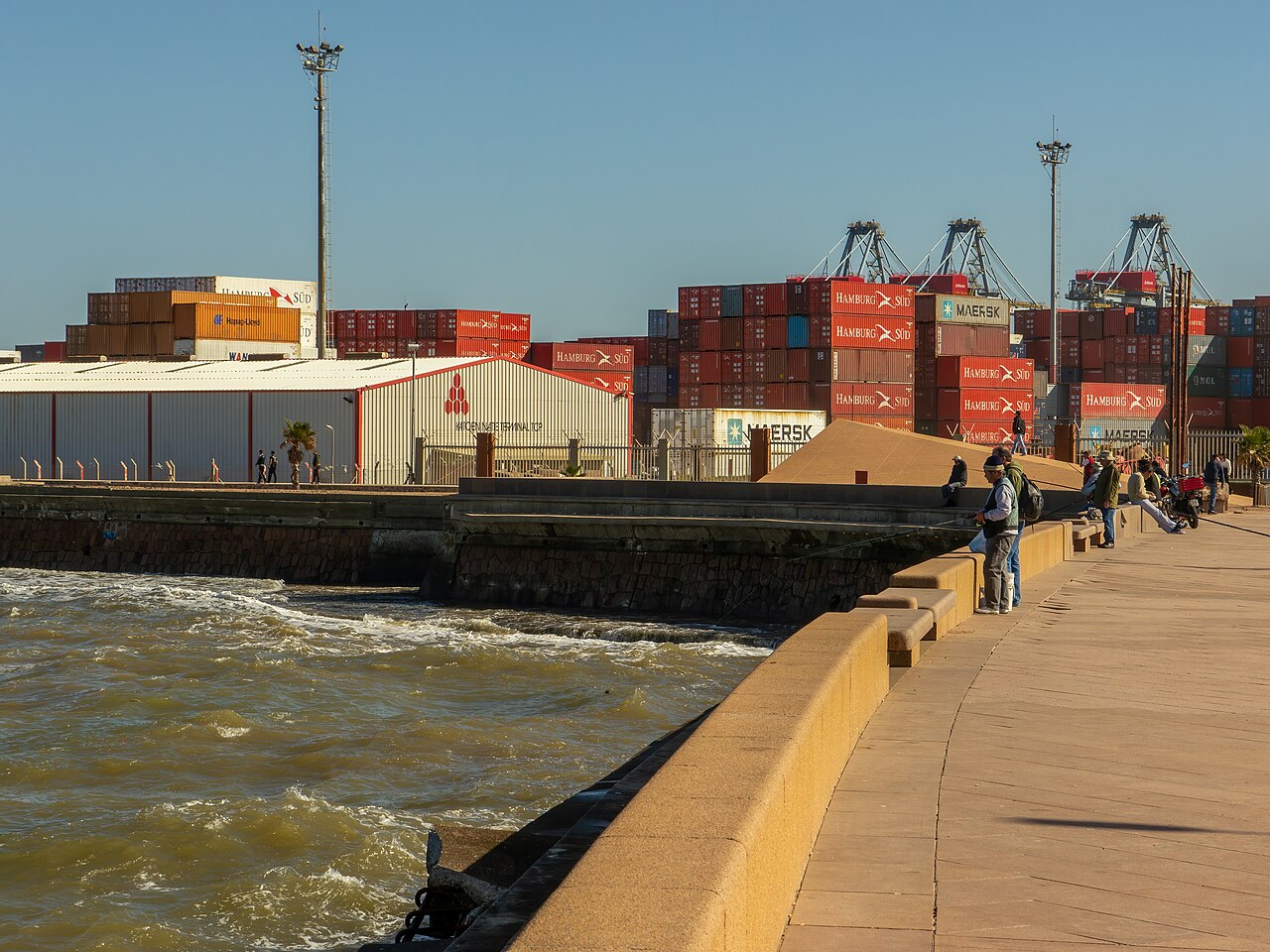
The biggest single push came from the refining of petroleum products, which INE counts as its own division of industry. ANCAP, Uruguay’s state oil company, had its refinery out of production in September 2025 while crews repaired an offshore oil buoy at José Ignacio, a coastal site.
Because the refinery produced almost nothing a year ago, its output this September is up by an enormous percentage. INE says that single division added 5.9 percentage points to the 7.7% total.
Without the refinery, the index stood at 122.1 and grew 1.8% from a year earlier. That is the better guide to the everyday strength of Uruguayan industry.
Winners and Losers Inside Industry
Food production rose 3.3% in September and added 1.4 points to the total. Paper and paper products rose 3.1%, adding 0.4 points.
Beverages fell 17.0%, which cut 1.1 percentage points from the total, and printing fell 22.8%. INE also reports a 2.5% drop in pharmaceuticals.
Over the first nine months of 2026, factory output averaged 3.8% more than a year earlier. Over the latest 12 months, the average gain is 2.9%, and food is the largest contributor to both.
The Job Picture
Hours worked by factory workers fell 2.9% from a year earlier, and the number of people employed in industry fell 2.8%. Food production accounts for the largest share of the lost hours and jobs.
Hours and employment fell even as output rose. INE does not give a reason for the gap.
How September Compares With August
August’s 4.8% rise was also lifted by the refinery, which added 3.8 percentage points. Without it, output grew only 1.0% in August.
The measure without the refinery therefore picked up from 1.0% in August to 1.8% in September. That is a modest improvement, not a surge.
A percentage point here means one point of the overall growth rate, so a division adding 5.9 points supplies 5.9 of the 7.7 percentage points. The other divisions together supplied the remaining 1.8 points.
What It Means for You
If you follow Uruguay through a US fund or a bond, read 7.7% as a figure flattered by a one-off repair a year ago. The 1.8% growth without the refinery and the 0.4% monthly dip give a more modest picture of the underlying pace.
Readers tracking the wider economy can also see our reports on Uruguay’s October inflation and the September unemployment rate. Both give context for how Uruguay’s households and firms are doing.
What Is Not Known
INE does not say how much the refinery will add or subtract in coming months. The INE release does not say what caused the 17.0% fall in beverages.
The data also does not show profits or exports, so it cannot say whether companies are earning more. A single month with a one-off distortion cannot settle the trend.
More: Uruguay news in English, every day from The Rio Times.
Frequently Asked Questions
How Much Did Uruguay’s Factory Output Rise in September?
Output rose 7.7% from September 2025, according to INE, the national statistics office. Without the oil refinery, the rise was 1.8%.
Why Is the 7.7% Figure Flattered?
Uruguay’s state refinery was shut for repairs in September 2025, so its output this year looks huge by comparison. That one division added 5.9 points to the total.
Did Factory Jobs Grow in Uruguay?
No. Hours worked by factory workers fell 2.9% and employment fell 2.8% from a year earlier.
What Happened to Output From August?
After seasonal adjustment, September output was 0.4% lower than August. In August, output had risen 4.8% from a year earlier.
Sources: National Statistics Institute of Uruguay (INE), Physical Volume Index of Manufacturing (IVFIM), September 2026, 11 November 2026.
This article was produced by The Rio Times’ automated AI newsroom. Editorial responsibility: Matthias Camenzind, Publisher and Editor-in-Chief. The Rio Times also runs Ask Rio Times, which answers from 100,000+ of our own articles, the daily Latin America Power Map, and prediction-market odds on elections and markets.. How we use AI · Report an error
The Rio Times · Power Map
See who really holds power in Latin America
Click to open the Power Map →
















 English (US) ·
 French (CA) ·
 French (FR) ·