

 2 months ago
149
2 months ago
149
PROTECT YOURSELF with Orgo-Life® QUANTUM TECHNOLOGY
Orgo-Life the new way to the future Advertising by AdpathwayDuring a visit to the Office of the Commissioner of Police in Bengaluru in 2022, I noticed a large painting hanging on the wall of a uniformed officer overpowering a raging bull. The symbolism was difficult to miss — policing was imagined as the act of subduing and overpowering. It is precisely this institutional imagination that underlies India’s custodial violence problem.
The recent judgment in the custodial torture and killings of P. Jayaraj and P. Bennix has forced the reality of custodial torture back into public discourse. In June 2020, the father and son, who ran a small mobile phone shop, were taken into custody for keeping their store open past COVID-19 curfew hours. What followed, as recorded in the charge sheet, was prolonged torture: sexual violence, sustained beatings, and injuries so severe that blood stained the walls and toilet of the police station. The two men were made to clean up the evidence of their own abuse. Both died within days.
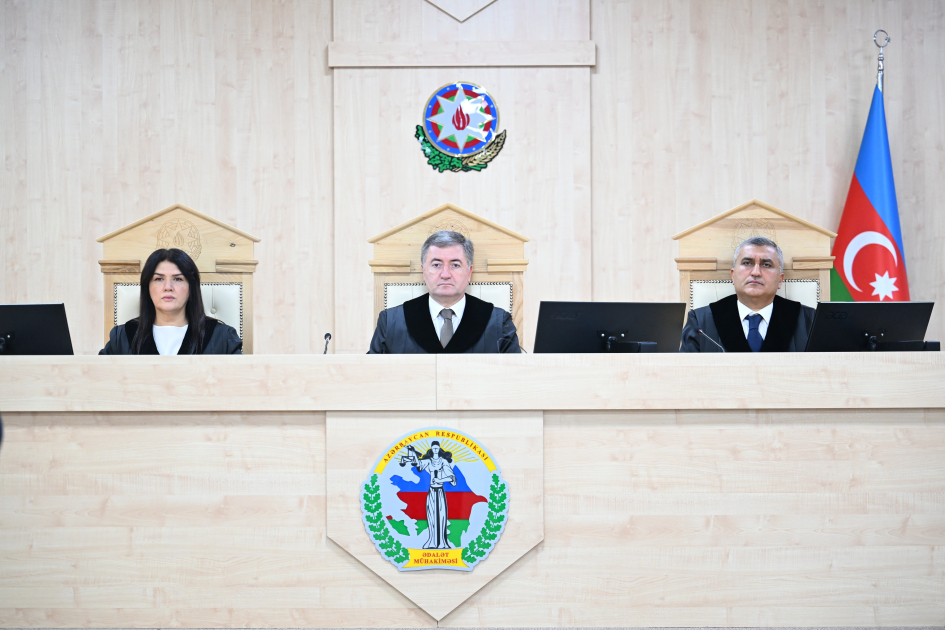
The brutality of the incident sparked widespread public outrage, leading to the case being transferred to the Central Bureau of Investigation (CBI), India’s federal investigative agency, rather than the state police, whose own officers stood accused. This distinction arguably is what made a conviction possible at all. The CBI found the injuries inflicted to be “sufficient in the ordinary course of nature to cause death.” Nearly six years later, the district court went on to convict the nine accused officers, sentencing them to death under the “rarest of rare” doctrine.
The judgment has, for this reason, been widely celebrated as a rupture in India’s entrenched culture of police impunity. But to read this case as a turning point is to misunderstand what it reveals. If anything, it exposes the limits of accountability in a system where custodial violence remains systemic.
The data tells a stark story. In 2019 alone, the National Human Rights Commission recorded 1,723 custodial deaths, nearly five every day. Yet between 2011 and 2022, not a single police officer was convicted across 1,107 recorded deaths in police custody, according to the National Crime Records Bureau. The Jayaraj–Bennix case stands out not because it signals systemic change, but because it deviates from a deeply entrenched pattern of impunity.
For this reason, the debate on custodial torture in India cannot be reduced to whether the country should ratify the United Nations Convention Against Torture (UNCAT). Ratification is necessary, but it is not sufficient. The problem is not merely the absence of law. It is the persistence of institutional practices, evidentiary barriers, and social hierarchies that sustain torture despite the law.
India’s legal framework embeds constitutional guarantees under Article 21, which protects the right to life and dignity, alongside procedural safeguards governing arrest and detention. Yet there remains no comprehensive domestic legislation that defines and criminalizes custodial violence in all its forms. Even this gap, however, only partially explains the problem. Legal reform, in isolation, cannot address a system in which the very institutions tasked with enforcing the law are also those most often implicated in its violation.
The difficulty lies not only in what the law says, but in how custodial violence is produced and concealed. Torture occurs in closed settings, beyond public scrutiny, where independent witnesses are rarely present and documentation is controlled by state authorities. Investigations are frequently conducted by the police themselves, even when their own personnel stand accused. In such conditions, requiring victims to meet conventional standards of proof effectively guarantees impunity. Without evidentiary presumptions in cases of custodial injury or death, independent investigative mechanisms, and mandatory medical documentation at every stage of detention, legal protections risk remaining largely symbolic.
Part of the problem also lies in how custodial torture itself is understood. Public discourse in India tends to frame it narrowly as brutality during interrogation, violence used to extract confessions or information. This limited understanding obscures the fact that torture extends far beyond the interrogation room. It persists within prisons, embedded in everyday practices of discipline, control, and punishment.
While much of the global discourse on policing has focused on racialized forms of control, the Indian context reveals how similar logics operate through caste, shaping who is surveilled, criminalized, and subjected to custodial violence. A recent ruling by the Supreme Court of India in Sukanya Shantha v. Union of India and Others brought this into sharp focus. Striking down caste-based provisions in prison manuals that permitted segregation and differential labor allocation within prisons, the Supreme Court exposed how deeply caste structures the experience of incarceration.
It also examined the classification of “habitual offenders,” a category rooted in colonial-era practices that disproportionately targeted individuals from Denotified and Nomadic Tribes, communities historically stigmatized and criminalized under British rule. Although contemporary legal definitions of “habitual offenders” do not rely on caste, their continued use in prison administration has the effect of reproducing patterns of surveillance, criminalization and coercive labor along caste lines. Custodial violence, in this sense, is not episodic but rather structural, woven into the daily architecture of incarceration.
An intersectional lens further reveals how this violence is unevenly distributed. Data from the National Campaign Against Torture indicated that the majority of victims in documented custodial death cases come from poor or marginalized communities. The Status of Policing in India Report, 2025, similarly found that a typical victim is someone accused of a relatively minor offense who belongs to a socially or economically vulnerable group. Caste and class shape both who enters police custody and what they are subjected to while in detention, while gender introduces additional vulnerabilities that remain insufficiently addressed in custodial procedures. Custodial torture is therefore disproportionately inflicted on those at the margins.
The scope of custodial power also extends beyond conventional sites such as police stations and prisons. Border security forces operating along India’s frontiers exercise significant control over migrants, asylum seekers, and border communities, with documented instances of torture and extrajudicial violence. This is corroborated by the Global Torture Index, which flags India as a country where torture by state forces, including against marginalized communities and those at the border, remains systemic and underaddressed. A legal framework that focuses narrowly on formal detention settings risks leaving some of the most vulnerable populations outside its protection.
Even the international framework often invoked as a solution carries its own ambiguities. The definition of torture under UNCAT, while expansive, excludes pain or suffering arising from “lawful sanctions.” In contexts like India, this exclusion becomes deeply problematic. What is deemed “lawful” can itself be shaped by discriminatory practices and institutional bias, particularly within judicial custody. Without confronting this ambiguity, the framework risks legitimizing forms of violence that ought to be recognized as torture.
Any meaningful response must therefore move beyond formal compliance. Ratifying UNCAT would signal commitment, but without institutional transformation, it risks functioning as a performative act, enhancing international legitimacy while leaving domestic realities largely unchanged. Effective reform requires mechanisms that enable reporting, protect survivors, and ensure accountability. It also requires attention to repair: state-funded legal aid, interim relief, and comprehensive reparations frameworks to address the long-term consequences of custodial abuse.
The deaths of Jayaraj and Bennix should have marked a turning point. That they have instead come to represent an exception is an indictment in itself. Until custodial torture is recognized not as a deviation from the rule of law, but as one of its recurring manifestations, efforts at reform will remain partial and impunity will endure.
Lastly, the nature of the punishment imposed in this case also raises difficult questions. The death penalty is being framed as a strong deterrent. Yet it reflects a troubling paradox: responding to one form of extreme state violence with another. More fundamentally, the severity of punishment does little to address the structural conditions that enable custodial torture in the first place. If anything, it risks creating perverse incentives where the consequences of exposure are so severe that there is greater motivation to suppress or erase evidence of abuse. Deterrence alone cannot dismantle a system in which violence is routine, and accountability remains uncertain.



















 English (US) ·
  French (CA) ·
  French (FR) ·