

 2 months ago
113
2 months ago
113
PROTECT YOURSELF with Orgo-Life® QUANTUM TECHNOLOGY
Orgo-Life the new way to the future Advertising by Adpathway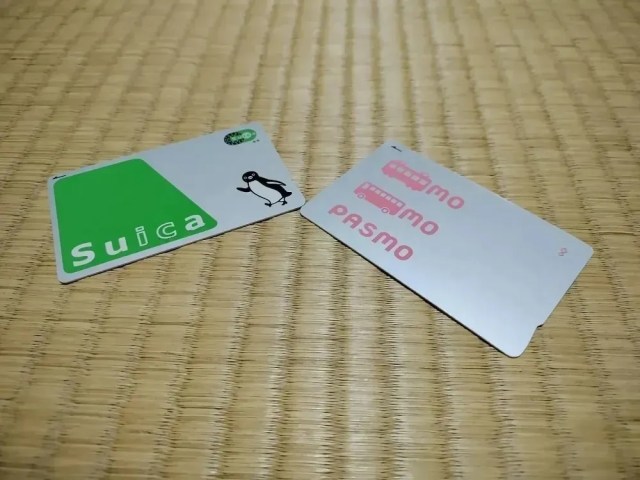
New machines at two of Tokyo’s busiest metro stations will require you to pay with a credit card or one-day-pass QR code.
Tokyo’s Ginza and Ueno subway stations are two of the busiest rail stops in the city, providing access to some of the city’s most popular shopping destinations in the upscale Ginza neighborhood and access to Ueno Park in Ueno, one of downtown’s largest green spaces and also home to some of the country’s finest art and history museums. Because of that, you’d think that subway operator Tokyo Metro would want to keep the flow of passengers in and out of the stations as smooth as possible, but they’ve decided instead to install some new ticket gate machines that don’t accept paper tickets or the most popular form of cashless payment for locals and travelers.
By far the most common way to pay for train/subway tickets in Japan is with a prepaid card that you tap on a terminal at the ticket gate when entering the station and then again at your destination, with your fare automatically deducted from the balance. The cards can be easily recharged at terminals located both inside the station and outside the gates. East Japan Railway Company’s Suica card is the most widely used of these “IC transportation cards,” as the payment format is called, but train and subway station ticket gates can also accept payment from other IC cards such as Pasmo or JR Central’s Icoca. IC transportation cards can be purchased at pretty much any rail station, including the stations connected to the Tokyo area’s Haneda and Narita international airports, and getting one as soon as you arrive in Japan has been a handy travel tip for the past several years.
However, Tokyo Metro has announced that it is installing new machines in the Ginza Line’s Ginza and Ueno Stations that will not accept payment by Suica or any other IC transportation card, nor will they allow you to use a physical paper ticket. Instead, these machines, developed in partnership with tech company Takamisawa Cybernetics, will only allow you to pay with a credit card (via tap) or by scanning a QR code from your phone.
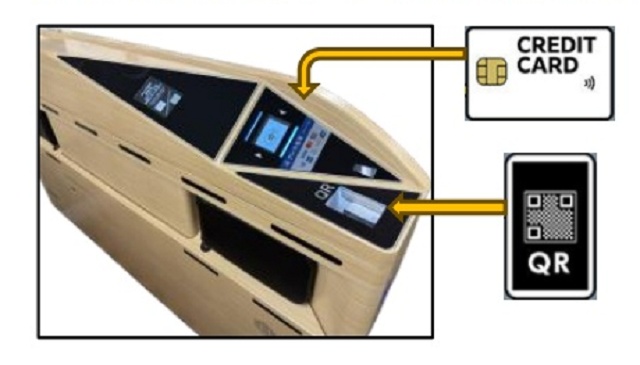
While Tokyo Metro offers QR code tickets for single-day unlimited-ride passes, they don’t seem to be available for standard single-fare rides, though QR-based payment apps like Apple Pay or Google Pay will ostensibly be usable.
▼ The no-ticket/IC card gate machine designs for Ginza Station (left) and Ueno Staton (right). Tokyo Metro says that they are designed to look different from regular ticket gates in order to avoid confusion, but for everyone who hasn’t read this article or the company’s press release, they’re probably going to look like they’re supposed to let you pay with an IC card.
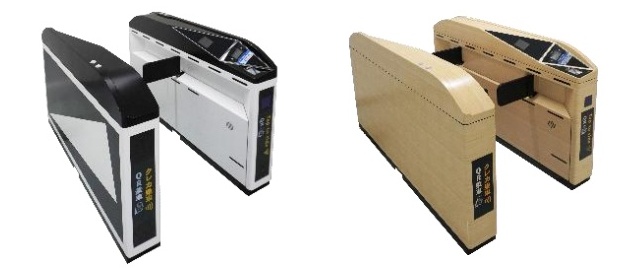
In its announcement, Tokyo Metro proudly says that these will be the first credit card/QR-code exclusive gate machines to be put into use in east Japan…but is that really anything to brag about?
Let’s start with the potential positives. Giving travelers and commuters more options for how to pay their subway fares and get into/out of the station is a good thing. All else equal, it increases convenience and decreases congestion. However, all else is not equal here, as the new machines exclude the most common, and thus convenient, way of paying for train fare (IC cards), as well as the simplest (paper tickets). If Tokyo Metro were adding credit card/QR code functionality to its already-installed gates, that’d be great, but it’s a lot harder to see the upside is supposed to be in forcing passengers who want to use those machines to use their credit card or phone, except for making it easier for Tokyo Metro/Takamisawa Cybernetics to collect and track user data.
Thankfully, there are currently only plans for one credit card/QR code-exclusive gate machine each at Ginza and Ueno, with Ginza’s located in ticket gate array for the Ginza Yonchome Crossing Gate and Ueno’s at the subway station’s JR Ueno Station Gate. However, Tokyo Metro wouldn’t be installing any machines at all if the company wasn’t interested in expanding their use to a large scale in the future.
The Ginza Station machine went into service on July 22, and Ueno’s is coming on July 31. They’re slated to be in use until February of next year.
Source: Tokyo Metro (1, 2) via Impress Watch
Top image ©SoraNews24
Insert images: Tokyo Metro
● Want to hear about SoraNews24’s latest articles as soon as they’re published? Follow us on Facebook and Twitter!

![This Japanese sandwich mascot is filled with fiery rage, and he’s got a point [Video]](https://soranews24.com/wp-content/uploads/sites/3/2026/10/ss-7.jpg?w=1000&h=525&crop=1)











 English (US) ·
  French (CA) ·
  French (FR) ·