

 9 hours ago
8
9 hours ago
8
PROTECT YOURSELF with Orgo-Life® QUANTUM TECHNOLOGY
Orgo-Life the new way to the future Advertising by AdpathwayGhana · EXPAT
Key Facts
- —The country Ghana, in West Africa, has about 35 million people and an economy of roughly US$114 billion, slightly larger than Luxembourg's. Its poorer north relies heavily on mobile networks.
- —Why it matters Buried fibre-optic cables carry the traffic behind calls, mobile data and mobile money. Road works and illegal gold mining keep cutting them, and repairs cost operators millions.
- —Why now On Saturday, 26 September, the communications minister said three separate routes feeding the north and the eastern Oti Region had been cut on the same day.
- —What happened Cuts on routes run by MTN, Telecel and the state IT agency left 1,215 mobile sites without service or badly degraded.
- —The numbers 694 older 2G/3G sites and 521 faster 4G sites were hit. Ghana logged 8,578 fibre cuts by early September, costing operators over US$20 million.
- —What it means for you In the north, expect patchy calls, data and mobile-money payments during outages. Carry some cash and offline maps; a second network's SIM may help.
- —Still open The regulator said repairs were under way on Saturday afternoon, but full restoration had not been announced. The causes of the three cuts are still being investigated.
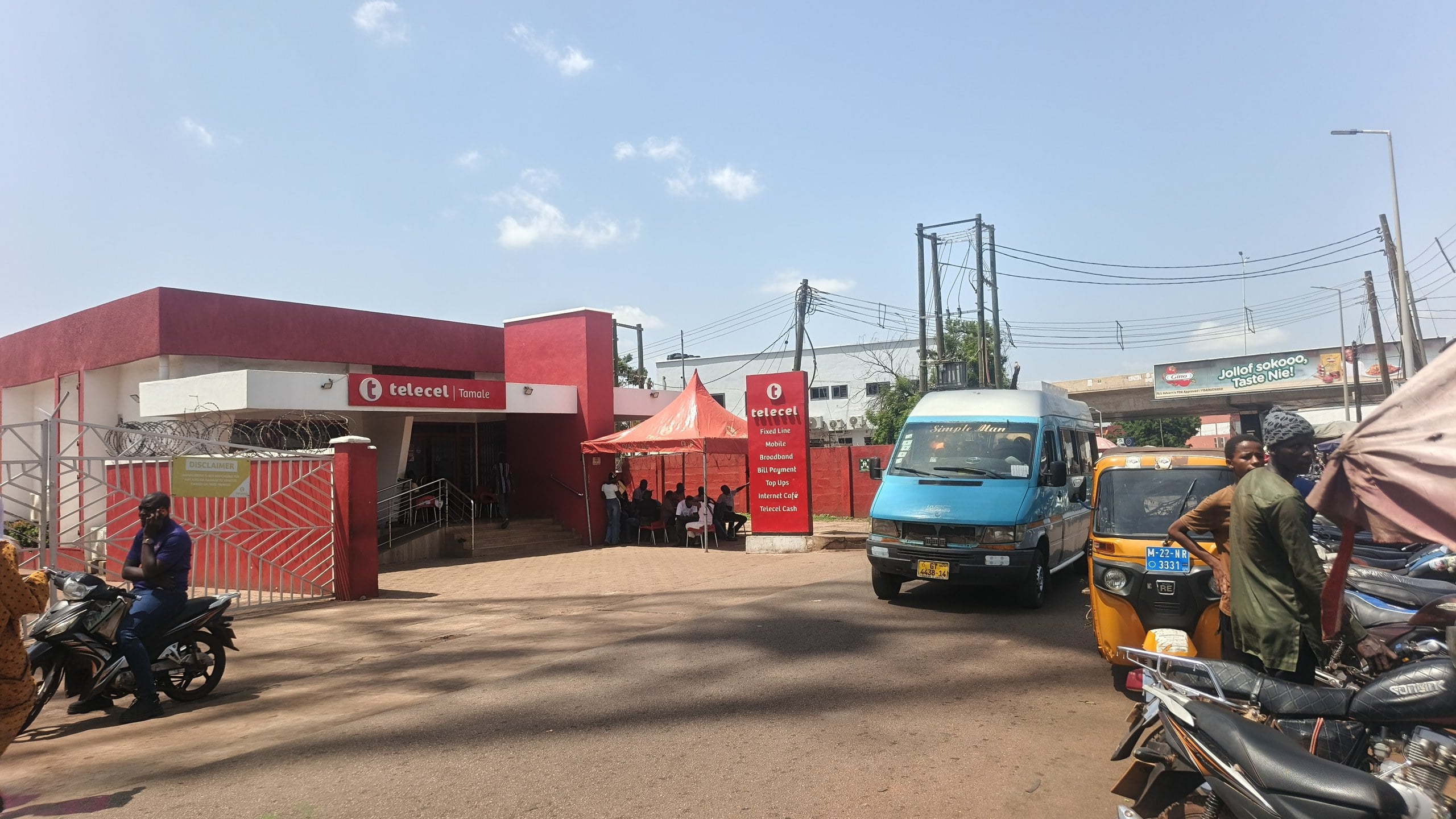
Three Ghana fibre cuts on one day have degraded or knocked out 1,215 mobile sites in the north and the Oti Region. Calls, mobile data and mobile money in those areas all depend on those sites.
One-stop reference
Company Intelligence
Every listed company in Latin America — financials, ownership and structure for 1,450+ companies across 26 exchanges, in one place.
Ghana, a West African country of about 35 million people, runs much of daily life over mobile networks. Its communications minister, Samuel Nartey George, disclosed the outage on Saturday, 26 September.
The damaged routes serve the five regions of Ghana's north and parts of Oti, a newer region on the Togo border. They belong to two private operators and a state agency.
What the three cuts knocked out
The first cut hit the Kintampo–Buipe route, on the section run by MTN Ghana, at 04:19 GMT. MTN, a South African group, is Ghana's largest mobile operator.
The second struck the Wakawaka–Bamboi route, on Telecel Ghana's section, at 11:36 GMT. Telecel Ghana is the former Vodafone Ghana.
The third hit the Hohoe–Jasikan route at 11:25 GMT. That section belongs to the National Information Technology Agency (NITA), the state body that runs government networks.
Ghana keeps Greenwich Mean Time all year, so these are also local times. The first break came before dawn and the other two late in the morning.
How many sites went down
The minister said 694 2G and 3G sites and 521 4G sites were suffering service denial or significant degradation. That is 1,215 sites in all.
2G and 3G are older network generations that handle voice calls and basic data. 4G is the faster standard most people use for mobile internet.
Mobile money, the phone-based payment system many Ghanaians use every day, depends on the same towers. A mast that loses its fibre link can stay switched on yet carry no traffic.
The minister made that point at a government briefing on 7 September. “It's not because there is no service, but because the fibre has been cut,” he said.
Who is fixing it, and how fast
Teams from MTN Ghana, Telecel Ghana and NITA were sent to find the causes and restore service. They work under the National Communications Authority (NCA), Ghana's telecoms regulator.
The minister said he was confident restoration would begin within a few hours. He apologised to customers and residents in the affected regions.
His statement named no cause for any of the three cuts. The NCA said later on Saturday that repair work was ongoing, with no restoration timeline.
A problem that keeps coming back
Saturday's Ghana fibre cuts add to a long run of damage. Ghana had recorded 8,578 fibre cuts in 2026 by early September, the minister told the 7 September briefing.
He said operators had spent more than US$20 million this year repairing them. “That's money that without the fibre cut we could have used to build new sites,” he said.
Road building under the Big Push, the government's flagship road programme, caused 49% of the cuts. Illegal gold mining, known locally as galamsey, caused about 25%.
Private developers and other activities accounted for the remaining 26%. The full picture is in our earlier report, Ghana Has Counted 8,578 Fibre Cuts This Year, and Paid US$20m to Mend Them.
The yearly totals swing widely. The minister cited about 3,900 cuts in 2021, more than 10,000 in 2022 and about 8,000 in 2025.
Why the north is exposed
Ghana's five northern regions are Northern, Savannah, North East, Upper East and Upper West. Tamale, the largest northern city, lies hundreds of kilometres from the capital, Accra.
The minister said all three damaged routes supply capacity to those five regions. Losing three on one day leaves few backup paths for the traffic.
Oti, created in 2019 from part of the Volta Region, borders Togo to the east. The Hohoe–Jasikan route runs from the Volta Region into Oti.
What it means for residents, visitors and business
For anyone travelling in northern Ghana, patchy calls and data are a real risk during outages like this one. Carrying some cash and offline maps is a sensible precaution.
A SIM card from a second operator can help, though this incident hit routes used by several networks. Shops and firms relying on card terminals or mobile money should plan for downtime.
For investors, the figures describe a real operating cost. Every dollar spent on repairs, the minister argues, is a dollar not spent on new coverage.
The pattern is familiar across Africa, where fibre expansion often outruns protection of the cables. For a broader view, see Africa: The New Scramble.
What to watch after the Ghana fibre cuts
The first test is how quickly the 1,215 sites come back online. The second is whether the operators name a cause for each cut.
Beyond this week, the question is whether road builders and miners can be kept away from buried cables. The minister has framed every repair bill as money lost to new coverage.
Frequently Asked Questions
Which parts of Ghana were affected by the fibre cuts?
The five northern regions (Northern, Savannah, North East, Upper East and Upper West) and parts of the eastern Oti Region.
How many mobile sites were affected?
The minister said 694 2G and 3G sites and 521 4G sites faced service denial or significant degradation, 1,215 in total.
Who is repairing the damage?
Teams from MTN Ghana, Telecel Ghana and the state National Information Technology Agency, supervised by the National Communications Authority, the telecoms regulator.
What causes most fibre cuts in Ghana?
Road construction caused 49% of cuts this year, illegal gold mining about 25%, and developers and other activities 26%, the minister said.













 English (US) ·
  French (CA) ·
  French (FR) ·