

PROTECT YOURSELF with Orgo-Life® QUANTUM TECHNOLOGY
Orgo-Life the new way to the future Advertising by Adpathway NOACs, also known as direct oral anticoagulants (DOACs), are newer blood-thinning medications used to prevent strokes and blood clots, particularly in people with atrial fibrillation. Common examples include apixaban (Eliquis), rivaroxaban (Xarelto), dabigatran (Pradaxa), and edoxaban (Savaysa/Lixiana). Credit: Shutterstock
People with atrial fibrillation and Alzheimer’s disease who received NOACs showed a modestly slower rate of cognitive decline.
For people living with both Alzheimer’s disease and atrial fibrillation, the type of blood-thinning medication they receive may be linked to how quickly their cognitive abilities decline. Research from Karolinska Institutet, published in the European Heart Journal, found that patients taking newer anticoagulants known as NOACs experienced a slower rate of cognitive decline than those taking warfarin or no anticoagulant.
Atrial fibrillation is a common abnormal heart rhythm among older adults, including many people with Alzheimer’s disease. Blood-thinning medications are frequently prescribed to reduce the risk of dangerous blood clots. Earlier research has suggested that anticoagulants may reduce the likelihood of developing dementia, but much less is known about their relationship with cognition after Alzheimer’s disease has already developed.
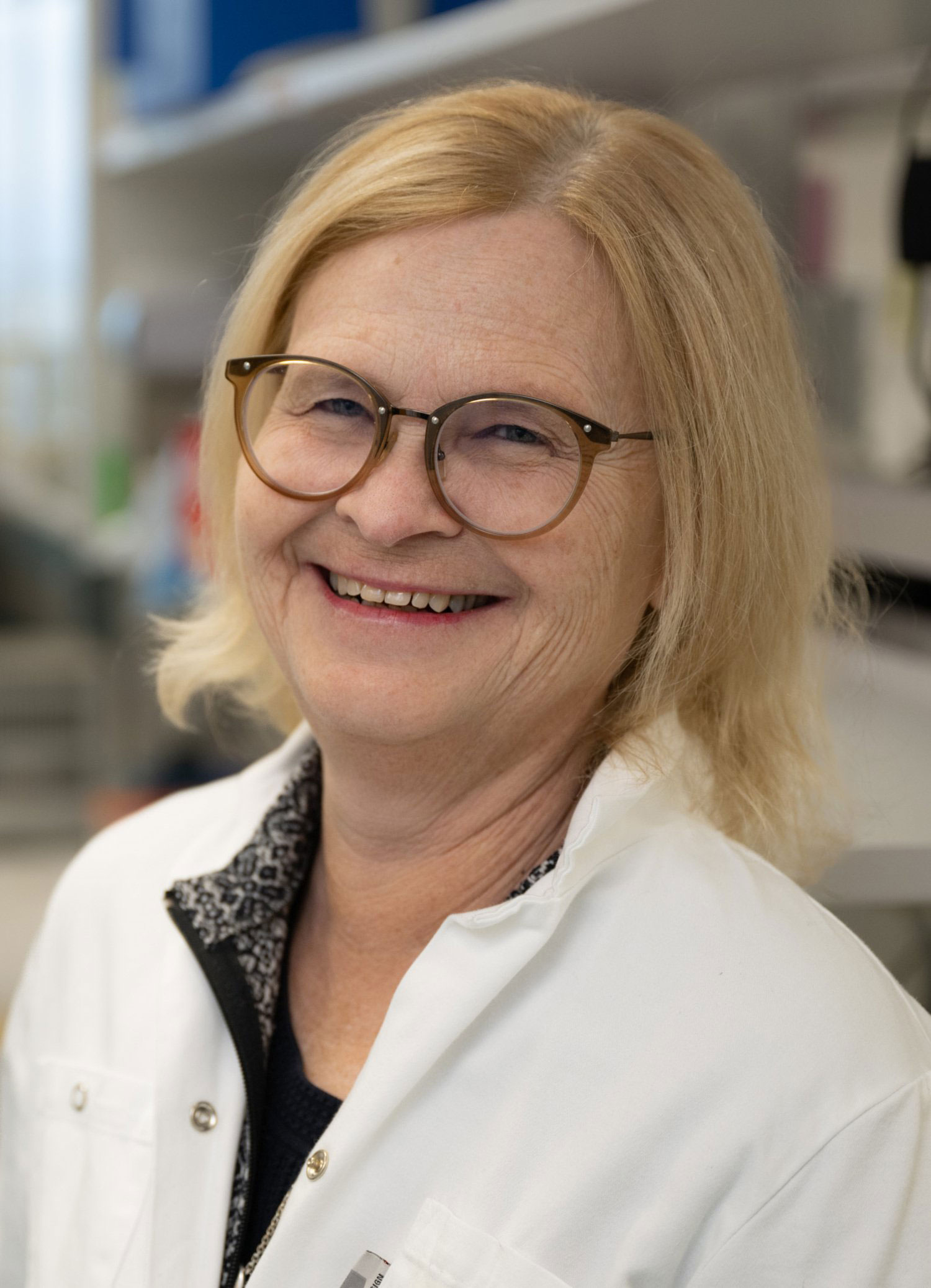 Maria Eriksdotter. Credit: Ulf Sirborn
“There are reasons to believe that the treatment could have a positive effect on cognition, for example by improving blood flow and reducing small-scale damage in the brain,” says Maria Eriksdotter, professor at the Department of Neurobiology, Care Sciences and Society, Karolinska Institutet, and senior consultant in geriatric medicine at Karolinska University Hospital, who led the study.
Study follows more than 7,000 patients
The researchers analyzed records from 7,308 people diagnosed with both atrial fibrillation and Alzheimer’s disease using the national quality register SveDem (Swedish Register for Cognitive Disorders/Dementia). Participants were placed into three matched groups: people taking NOACs, those receiving the older anticoagulant warfarin (Waran), and those receiving no anticoagulant medication. Cognitive changes were tracked over time with the standardized Mini-Mental State Examination (MMSE).
People taking NOACs showed a significantly slower decline in cognitive function than participants receiving warfarin or no anticoagulant therapy. The difference amounted to slightly more than 0.2 MMSE points each year.
 Nanbo Zhu. Credit: Gunilla Sonnebring
“The difference is modest for an individual patient from one year to the next, but over a longer period even such an effect could influence how cognitive function develops. Our findings suggest that NOAC treatment may also be significant for cognition in this patient group,” says Nanbo Zhu, researcher at the Department of Neurobiology, Care Sciences and Society, Karolinska Institutet.
Other health outcomes also differed
Compared with people who received no anticoagulant treatment, those taking NOACs also had lower risks of death, stroke, blood clots, and fractures. Warfarin was similarly associated with reduced risks of death, stroke, and blood clots, but it was linked to a greater risk of major bleeding.
The findings come with important limitations. Because the research was observational, it cannot establish with certainty that NOAC treatment caused the slower cognitive decline or other health differences. The researchers were also unable to fully account for some factors that could influence both medication choice and health outcomes, and some participants may have changed medications during the follow-up period.
Reference: “Oral anticoagulants, cognition, and clinical outcomes in atrial fibrillation and Alzheimer’s disease: a Swedish nationwide study” by Nanbo Zhu, Hong Xu, Sara Garcia-Ptacek, Sumonto Mitra and Maria Eriksdotter, 12 August 2026, European Heart Journal.
DOI: 10.1093/eurheartj/ehag584
The study was funded by, amongst others, the Swedish Research Council, the Swedish Brain Foundation, CIMED, ALF project funding and Karolinska Institutet funds.
Never miss a breakthrough: Join the SciTechDaily newsletter.
Follow us on Google and Google News.














 English (US) ·
  French (CA) ·
  French (FR) ·