

 3 weeks ago
33
3 weeks ago
33
PROTECT YOURSELF with Orgo-Life® QUANTUM TECHNOLOGY
Orgo-Life the new way to the future Advertising by AdpathwayAside from Bangladesh, the youngest nation of South Asia born in December 1971, Bhutan is the second-to-last state from the region to gain membership in the United Nations. India is a founding member of the U.N., followed by Afghanistan (1946), Pakistan (1947), Nepal and Sri Lanka (1955), and Maldives (1965). Bhutan finally joined on September 21, 1971.
Bhutan’s King Jigme Dorji Wangchuk had formally applied for U.N. membership on December 10, 1970, mainly seeking the sovereign equality the global body offers to small nations like Bhutan. In a letter addressed to then-U.N. Secretary-General U Thant, the king wrote, “The Government and people of Bhutan area acutely aware of the proven value of the United Nations Organization to small and developing nations off the world and consequently attach great importance to membership.”
Bhutan’s Permanent Mission to the U.N. holds the same attitude today. Its website says: “The United Nations, with its universal scope and global membership and the spirit of multilateralism that the United Nations fosters, forms an integral part of Bhutan’s foreign policy.”
Two months after Bhutan’s formal application to the U.N., on February 10, 1971, the U.N. Security Council unanimously voted to favorably recommend Bhutan’s membership at that year’s 26th General Assembly. Bhutan was thus formally recognized as a U.N. member state on September 21, 1971.
Bhutan’s accession to the United Nations in 1971 was a great diplomatic achievement for a small state in South Asia. In the same decade, forget joining the U.N., the Kingdom of Sikkim had lost its very nationhood and merged into India in 1975. In 1971, the same year that Bhutan became a U.N. member state, Pakistan lost the “East Pakistan” part of its nation, which became the independent state of Bangladesh. Amid the making and breakings of nationhood in South Asia in this tumultuous decade, it was a diplomatic victory for a tiny Himalayan nation like Bhutan to become a part of the U.N. body.
Despite the tensions in the region, Bhutan’s entry into the world body wasn’t a part of controversy like nearby Nepal’s. Nepal applied for membership in 1949, but its ambition was delayed for six years mainly owing to the Soviet Union’s veto. Moscow’s obstruction, however, wasn’t really about Nepal. The USSR was seeking a broader diplomatic deal to win approval for five new U.N. member states that were in the Soviet camp: Hungary, Albania, Romania, Bulgaria, and Mongolia.
This was not the case for Bhutan. In the February 10, 1971 meeting of the Security Council, Bhutan’s ally India spoke in favor of its membership application. To do so, India requested permission to participate in the UNSC discussion, as New Delhi was not a member at the time. India’s U.N. representative, Samar Sen, said that the Security Council’s “decision to support Bhutan’s candidature… was but a final manifestation of Bhutan’s independent stature and nationhood.” Sen also noted that India “had, at Bhutan’s request, given it as much help as possible regarding the application for United Nations membership.”
In the same meeting of the UNSC, China’s U.N. Representative Liu Chieh said he “had been happy to vote for the admission of Bhutan.” In Liu’s words, “Bhutan had had a long history of independence… although in foreign relations, it had agreed to be guided by India.” However, China here means the Republic of China (or Taiwan), not the People’s Republic of China. The PRC government would gain China’s seat in the U.N. in October 1971 – one month after Bhutan entered the United Nations. That means Bhutan has been a U.N. member longer than the PRC.
Pakistan, like India, requested and was granted the right to participate in the UNSC session. Its diplomat, Agha Shahi, also voiced his support for Bhutan’s membership and welcomed the country to the “mainstream of international life.” He added that “Bhutan, although smaller than the other countries of the region, played a valuable role and would, he was sure, maintain harmonious relations with its neighbors in the interest of peace and stability.”
Japan, which held a non-permanent seat on the UNSC at the time, also approved Bhutan’s U.N. accession, saying that “Bhutan and Japan were closely connected by ties of the Eastern Asian civilization,” especially Mahayam Buddhism.
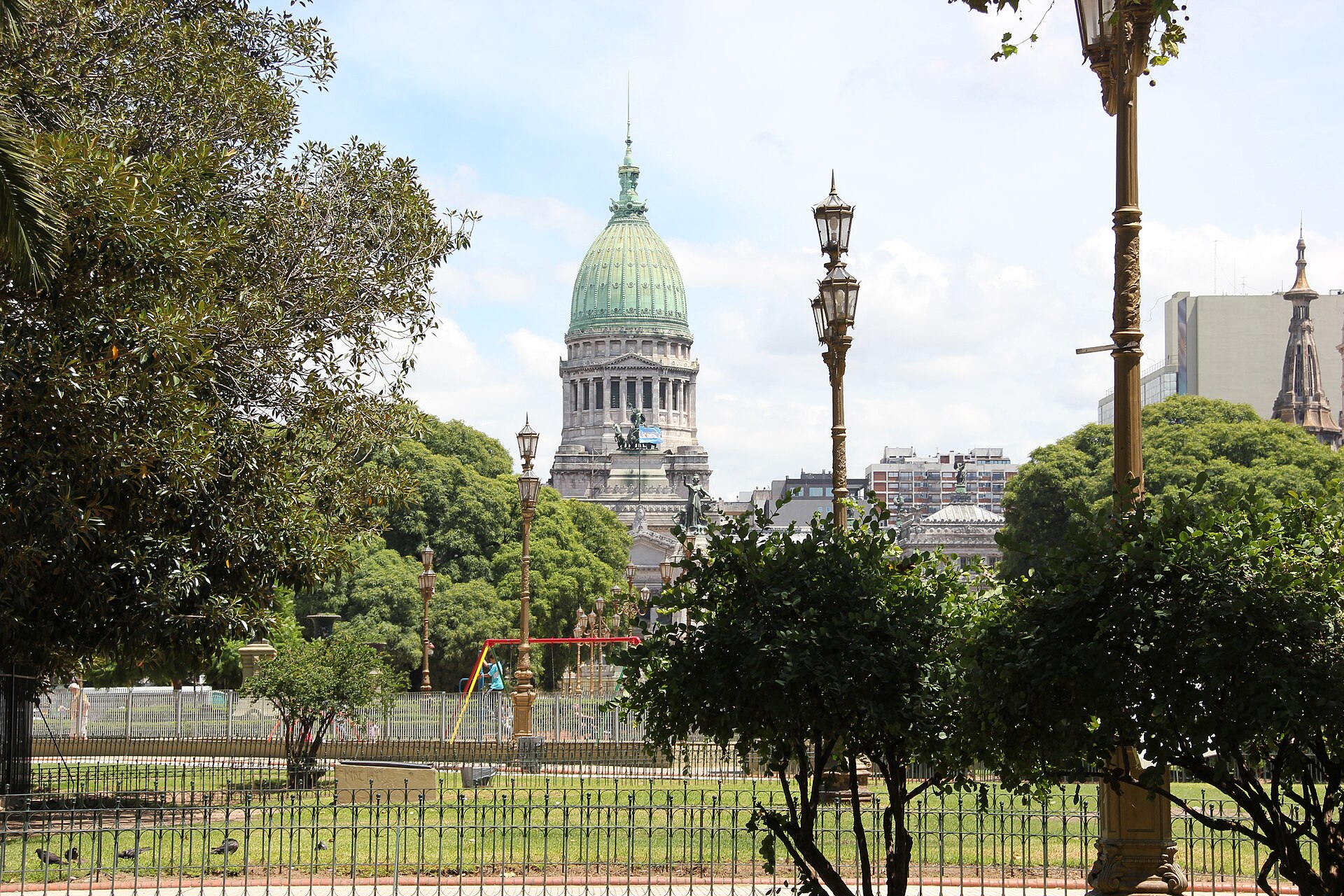
Other members of the UNSC in 1971 to support Bhutan’s membership included Argentina, Belgium, Burundi, France, Italy, Nicaragua, Poland, Sierra Leone, Somalia, the Soviet Union, and the United Kingdom. The session was chaired by the U.S. representative, Charles Yost, who concluded the session by pointing out that Bhutan “had long prided itself on its cultural traditions and its strong sense of national identity.”
Bhutan thus became the 128th member of the United Nations, with support from rivals like the U.S. and the Soviet Union, as well as India and Pakistan. Today, the number of U.N. member states has jumped to 193.
Bhutan’s major achievements in the U.N. include its graduation from Least Developed Country status in 2023 and its emphasis on “gross national happiness.” Bhutan also has a reputation as a voice for green growth, thanks to its global image as a “carbon negative” nation.
Beyond the U.N., Bhutan’s global diplomatic engagements remain limited. Interestingly, Bhutan does not have formal diplomatic relations with any of the five permanent U.N. Security Council members: China, France, Russia, the U.K., and the U.S. Bhutan does maintain a Permanent Mission to the U.N. in New York, where its U.N. representative also serves as Bhutan’s ambassador to Canada and Brazil.
Meanwhile, only three countries operate embassies in Bhutan: India, Bangladesh and Kuwait. Bhutan doesn’t host an embassy of Australia, the nation where reportedly 1.5 percent Bhutanese have migrated.
In the second week of June 2026, I was in Thimphu on my first tour to the fellow Himalayan nation. I talked to some tourism entrepreneurs, political figures, and ordinary citizens I met there and found that none of them were concerned about the few embassies in the Buddhist kingdom of around 800,000 people.
“In the age of digital visa and hyperconnectivity, we don’t need physical embassies of all important nations,” said a hotelier based in Paro, Bhutan’s third largest city which hosts the international airport. He added, “Even the U.S. and China don’t have embassies in all United Nations member nations.”











 English (US) ·
  French (CA) ·
  French (FR) ·