

PROTECT YOURSELF with Orgo-Life® QUANTUM TECHNOLOGY
Orgo-Life the new way to the future Advertising by Adpathway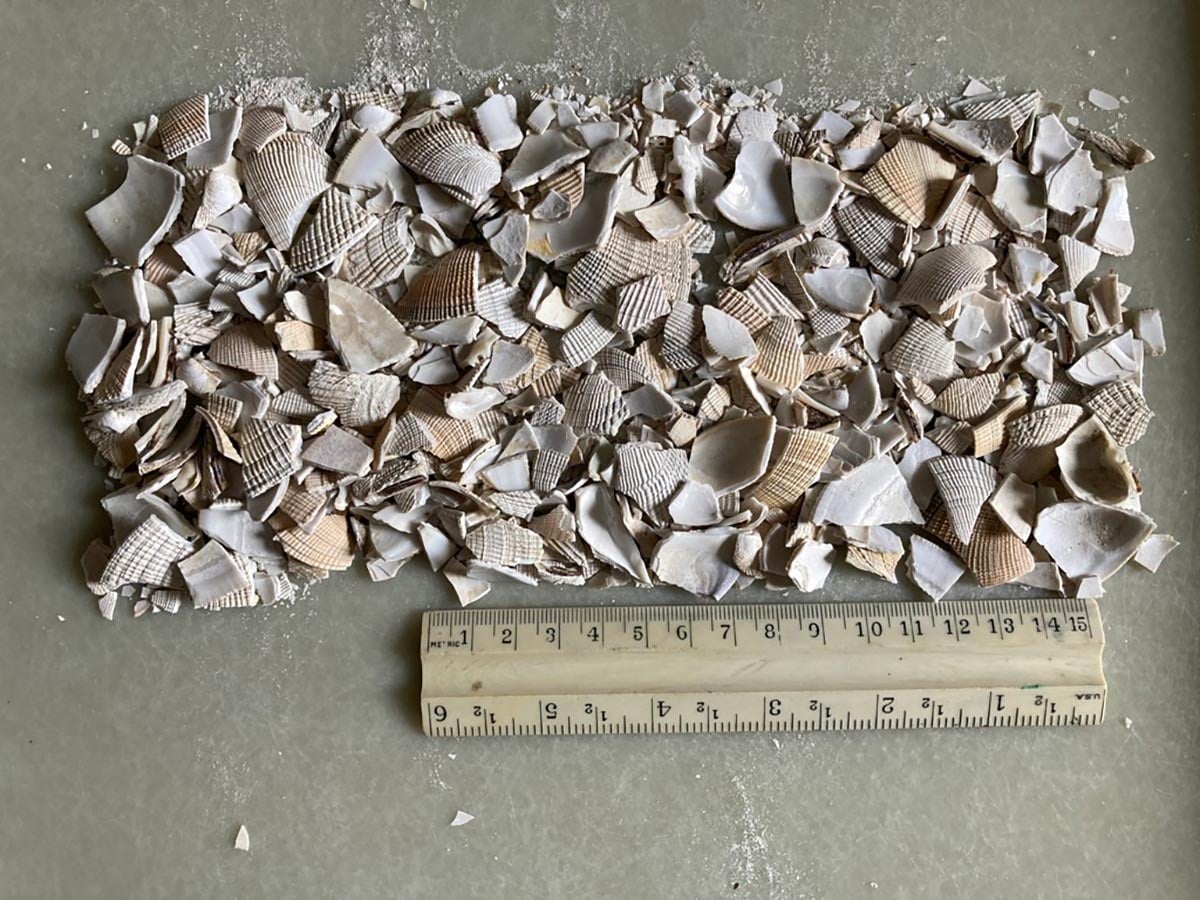 In the study, UC Davis researchers added crushed shells, pictured here, to sand to better understand how the practice can protect shell-making animals from the negative effects of ocean acidification. Credit: Hannah Kempf/UC Davis
Crushed shells helped young clams grow larger shells in laboratory tests, showing how a long-standing Indigenous coastal practice can offer local protection against ocean acidification.
For a young clam, the surrounding water can threaten the shell it is trying to grow. When seawater absorbs excess carbon dioxide from the atmosphere, it becomes more acidic, making shell growth more difficult and energetically costly for animals such as clams, oysters, and mussels. Acidic seawater can even dissolve shells. Larvae and juveniles are thought to be especially vulnerable to this process, known as ocean acidification.
Indigenous communities have long added crushed shells to coastal sands to help keep these ecosystems healthy. Research from the University of California, Davis now helps explain how this material, called shell hash, can protect young clams from some of acidification’s effects. Published in Biogeosciences, the study connects the chemistry of water between sand grains with changes in clam growth and gene activity.
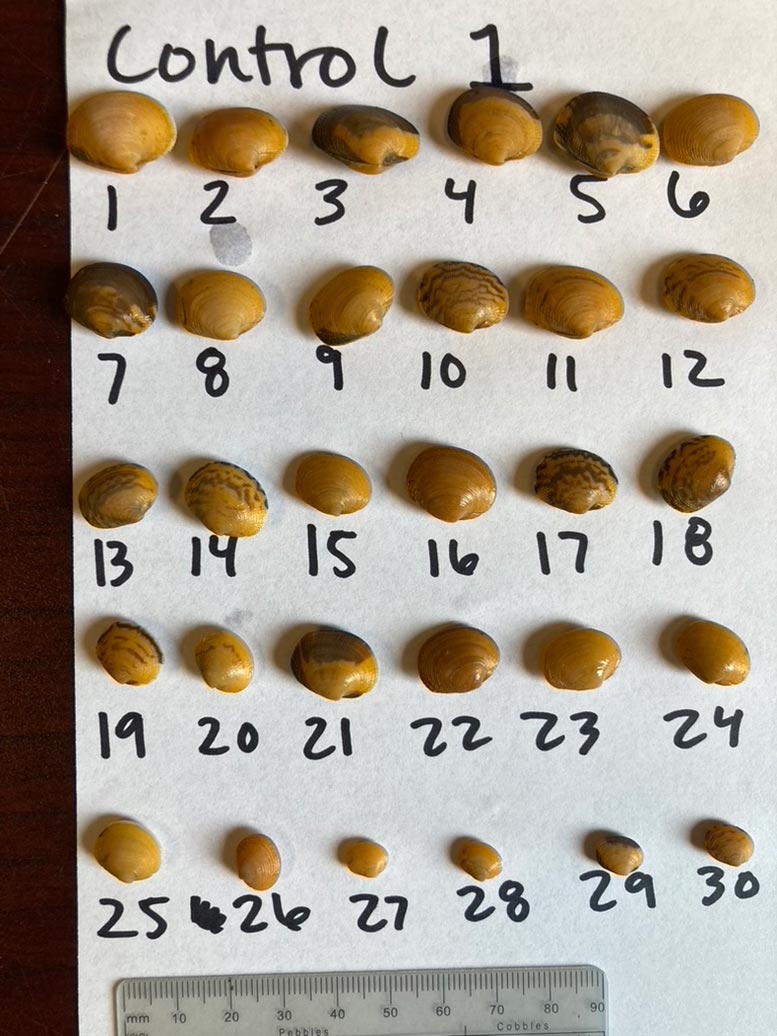 Raising groups of Pacific littleneck clams in four different conditions, the researchers monitored their growth and the water’s chemistry over a 90-day period. Credit: Hannah Kempf/UC Davis
Crushed shells help young clams grow
At the UC Davis Bodega Marine Laboratory, researchers raised baby Pacific littleneck clams in four conditions. Two groups burrowed in sediment beneath either non-acidified or acidified seawater. The other two experienced the same seawater conditions, but their sediment contained shell hash. During the 90-day experiment, the team tracked shell growth and sampled the seawater three times a week, monitoring acidity, salinity, temperature, and dissolved oxygen.
“We found that, on average, clams grew larger shells when shell hash was present in their treatment,” said study first author Hannah Kempf, an environmental scientist at the California State Water Board who graduated from UC Davis with a Ph.D. in earth and planetary sciences in 2024. “Interestingly, we also found that, on a genetic level, the ‘acidification’ signal was dramatically minimized when shell hash was present.”
The crushed shells altered the chemistry of the water filling the tiny spaces between sand particles, reducing its overall acidity and creating better conditions for shell growth. That finding places the protection at a very local scale, in the water surrounding the burrowing clams.
A weaker acidification signal in clam genes
“Adding crushed shells removed the negative genetic changes that occur when young clams are raised in acidified water,” said study corresponding author David Gold, an associate professor of earth and planetary sciences at UC Davis.
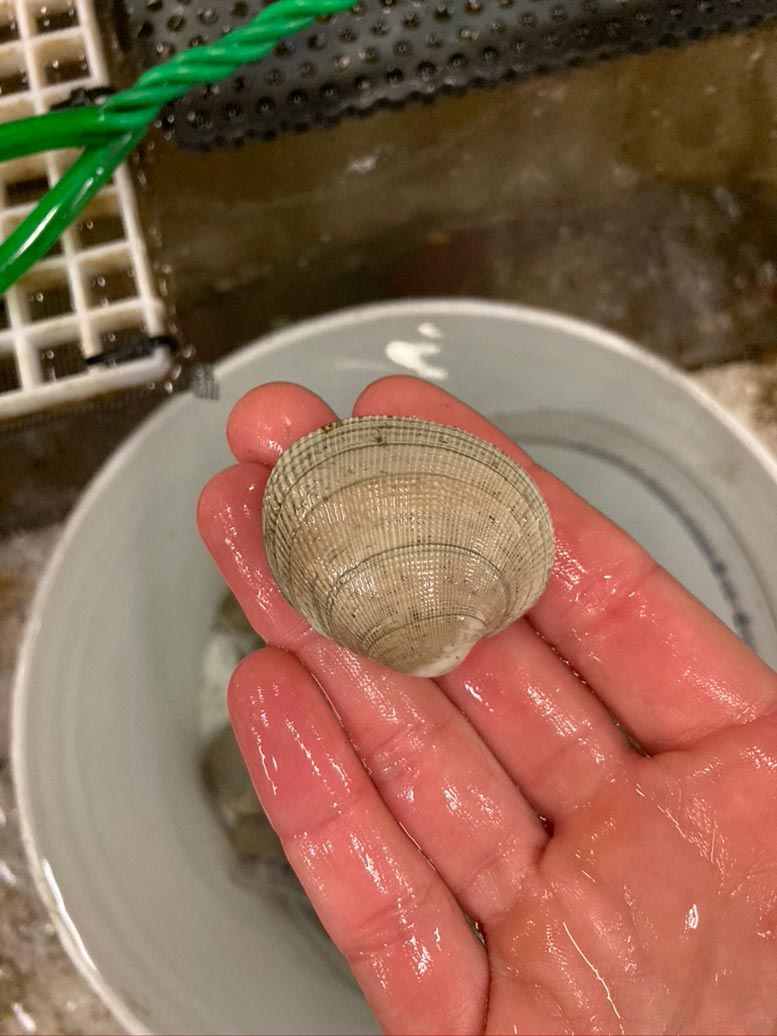 A UC Davis researcher holds a Pacific littleneck clam. Credit: Hannah Kempf/UC Davis
To examine gene activity, the researchers collected samples of the clams’ mantle tissue, which produces their shells, after 90 days and used them for follow-up gene sequencing. The analysis revealed gene expression profiles, or patterns of activity across genes. In clams raised in acidified seawater with shell hash, those profiles were largely indistinguishable from those of clams raised in non-acidified water.
“This was the first time the question was studied from a genetic perspective,” Gold said.
Indigenous expertise could shape coastal research
Traditional ecological knowledge provides significant evidence that shell hash benefits shell-making animals, said study co-author Tsim Schneider, an associate professor of anthropology at UC Santa Cruz. In the Pacific Northwest, some Indigenous communities build large-scale structures that expand intertidal spaces, the areas of shore between high and low tide. These structures promote habitat for invertebrates and other marine organisms.
“For me, one of the interesting aspects of this research is the potential to engage more fully with tribes on designing projects that promote their long-standing expertise and Indigenous science,” said Schneider, who is also affiliated with the National Science Foundation’s Center for Braiding Indigenous Knowledges and Science. “If there’s a history of adding shell hash to clam beds in California, for example, western science might be able to better support communities interested in reawakening dormant cultural knowledge and coastal stewardship practices.”
Reference: “Shell hash promotes growth in Pacific littleneck clams (Leukoma staminea) by altering pore water chemistry” by Hannah L. Kempf, Alyssa J. Griffin, Gabriel Ng, Tessa M. Hill, Tsim D. Schneider, Sandra J. Carlson and David A. Gold, 29 October 2026, Biogeosciences.
DOI: 10.5194/bg-23-7627-2026
The research was supported by a California Sea Grant and the Russell J. and Dorothy S. Bilinski Fellowship.
Never miss a breakthrough: Join the SciTechDaily newsletter.
Follow us on Google and Google News.



















 English (US) ·
 French (CA) ·
 French (FR) ·