

 15 hours ago
4
PROTECT YOURSELF with Orgo-Life® QUANTUM TECHNOLOGY
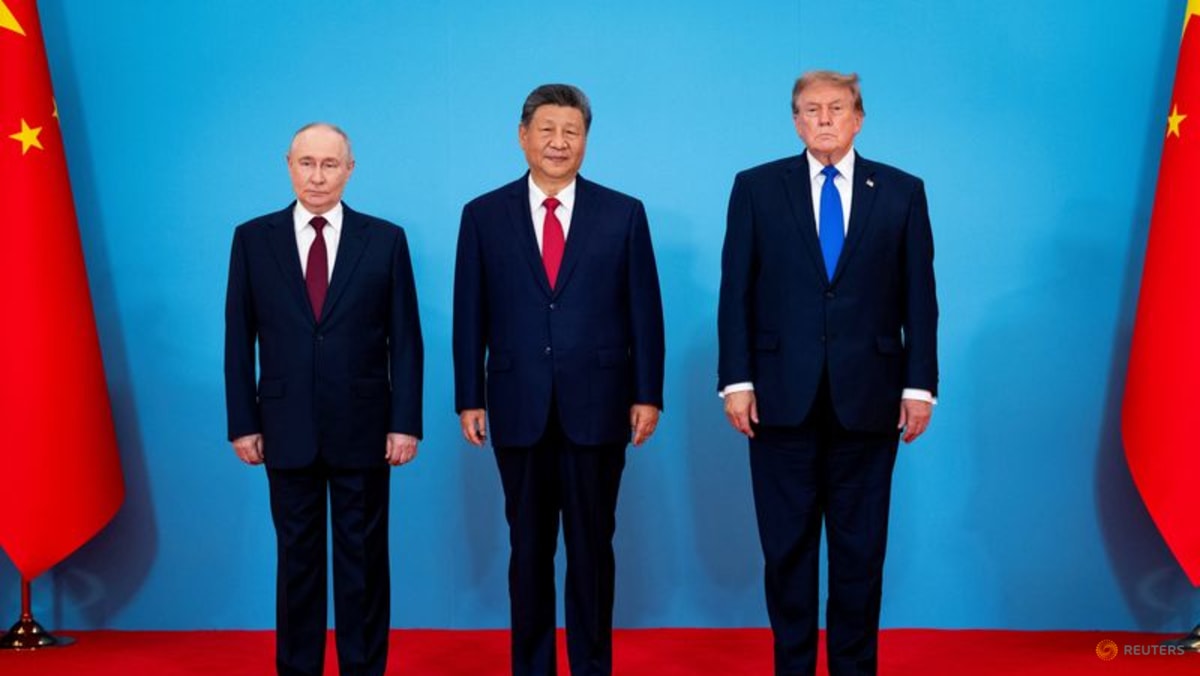
Orgo-Life the new way to the future Advertising by AdpathwayOn November 19, U.S. President Donald Trump met China’s President Xi Jinping in Shenzhen. It was the latest in a sequence of encounters and agreements that Washington has repeatedly presented as signs of renewed stability in the relationship. It was, in other words, another “breakthrough” – except that it was not quite clear what had been broken through, since the principal economic, technological, and strategic disputes between Washington and Beijing remained unresolved.
To be clear, that is not necessarily a criticism of the meeting. Diplomacy does not have to produce a grand settlement to be useful. But there is something revealing about the language surrounding China-U.S. relations. Again and again, Washington narrates the relationship as though the latest development might provide a decisive turning point. Then the same old story starts again.
This has been particularly visible during Trump’s second administration. In May, after Trump’s visit to Beijing, the White House announced that the United States and China had reached a “historic” agreement intended to “enhance stability and confidence for businesses and consumers around the world.” The two sides also agreed to “build a constructive relationship of strategic stability based on respect, fairness and reciprocity.”
In September, Xi traveled to Washington for a state visit. Trump described their relationship as “a friendship – a truly great friendship, actually – built on mutual respect.” At the state dinner, he said that the two countries could continue building a relationship that promoted prosperity and security for future generations.
The White House subsequently described the visit as advancing a “fair and reciprocal relationship” and “operationalizing” the trade and investment mechanisms established during the May summit. Again, Xi’s visit was deemed to be “historic.”
Trump himself was even more expansive. At the state dinner, he said that the two countries had “never gotten along better” and that they could together “build a relationship that promotes prosperity and security for future generations.”
Two months later, Trump was back in China. In comments to the press, Trump emphasized the supposedly singular nature of his reception in China: “the fanfare, the beauty, the pageantry, the thousands of people… the soldiers, the whole thing. It was a great respect, and I appreciate that.”
From Beijing to Washington to Shenzhen, each meeting produced the language of progress and was presented as a new stage in the relationship.
And yet, between these “historic” diplomatic moments, the underlying disputes didn’t disappear. On November 6 – less than two weeks before the Shenzhen meeting – U.S. Trade Representative Jamieson Greer was still pressing Beijing “to fully implement its past commitments” to buy U.S. agricultural goods and ease export controls on rare earths and other critical minerals.
There is a tendency, especially on Washington’s part, to talk about the China-U.S. relationship as though each new development is bringing it closer to an imaginary ending. Each time, it turns out to be just another chapter of the same story.
The pattern can be seen not only in the on-again, off-again nature of summit diplomacy, but also in the recurring sequence of tariffs and tariff suspensions, export controls and negotiations over technology, and disputes over rare earths and agricultural purchases. Each time a new agreement is reached, it supposedly resets the relationship, only for the pattern to repeat itself.
Biden’s China Story
This pattern is not unique to Trump, however. Former President Joe Biden’s approach also depended on a narrative about how the China-U.S. relationship could be stabilized and managed.
Biden told a very different story about China. His administration generally avoided the language of dramatic personal deals and instead emphasized responsible competition and “guardrails” against conflict.
At the November 2023 summit in Woodside, California, Biden described the task in remarkably different terms than Trump would later use. Competition between the United States and China was unavoidable – indeed, it was already underway, Biden argued. However, it had to be managed “responsibly to prevent it from veering into conflict, confrontation, or a new Cold War.” Biden and Xi agreed to maintain communication and work to prevent the China-U.S. rivalry from sparking a wider crisis.
Biden’s approach was therefore less about finding a decisive deal than about establishing a stable framework for managing competition. That was a different political genre, but it still supplied a narrative about how political action could give direction to an uncertain relationship, implicitly supplanting the old way of dealing with China.
But for all their differences, there is an important similarity in Biden’s and Trump’s China policies: both approaches hinge on a story about where the relationship is going. Both reduce a sprawling and continuing relationship into a sequence of moments. And both center on the idea that the president’s leadership is breaking new ground in the relationship. And both depend, to some degree, on the idea that political action can give history a discernible direction.
Tragicomic Emplotment
This is where the concept of “tragicomic emplotment” becomes useful. In my research on China-U.S. relations, I use the term to describe a narrative form in which grave stakes coexist with repeated expectations that recovery, restoration, or victory remain possible through resolve and leadership.
The term does not mean that China-U.S. relations are funny. The stakes are genuinely tragic, particularly the possibility that competition between two nuclear-armed powers could lead to conflict. The comic element, instead, is the repeated expectation of closure.
Over and over again in the recent history of China-U.S. relations, we see the same pattern: confrontation produces a negotiation, the negotiation produces a deal, the deal is described as a breakthrough, and the breakthrough produces stability – until the underlying dispute returns.
Consider the economic relationship. In May 2026, the White House described the agreements reached with Beijing as “historic” and said they would “optimize the bilateral economic relationship.” Yet by November, American officials were still pressing Beijing over implementation of earlier commitments.
Again, this does not mean that the original agreements were meaningless. But clearly, they did not change the underlying issues in the China-U.S. trade relationship.
There is a political logic to the tendency to talk of turning points and breakthroughs in China-U.S. relations. Presidents need to demonstrate agency, and so their rhetoric tends to personalize change. Trump in particular turns his diplomatic encounters into evidence of presidential agency and success.
Trump’s narrative on China is roughly this: there was a difficult relationship until Trump intervened. The leaders met, Trump won Xi’s respect, and the relationship moved forward. The next chapter could therefore be imagined as a success.
Biden’s framing was different, but it also supplied a narrative structure. His administration repeatedly presented the task as one of responsibly managing competition. Again, there was a comparison to the old, unsustainable way of approaching China-U.S. relations, even if Biden left the criticism largely implicit.
In Trump’s narrative, leadership produces resolution through strength and tough negotiation; in Biden’s, leadership produces stability through restraint and careful management. The stories differ, but the desire to center the president as a game-changer remains the same.
A New Chapter, Not the End of the Story
A president can achieve a real diplomatic success without changing the larger historical trajectory of China-U.S. relations. This distinction is important because expectations about endings shape policy itself. If every crisis must end in a decisive victory, then the next crisis risks becoming evidence that the previous victory was incomplete.
If every agreement must demonstrate that the relationship has entered a new era, then the inevitable return of disagreement looks like failure, rather than the normal condition of great-power relations.
The United States and China are likely to continue competing, negotiating, cooperating, and confronting one another simultaneously. For Washington, the challenge may be learning to conduct its China policy in the knowledge that there is no perfect ending to be had.















 English (US) ·
 French (CA) ·
 French (FR) ·