

PROTECT YOURSELF with Orgo-Life® QUANTUM TECHNOLOGY
Orgo-Life the new way to the future Advertising by AdpathwayWhen Whitney Houston appeared on The Arsenio Hall Show in the early weeks of 1991, Arsenio’s other guest was Roseanne Barr, who had notoriously sung “The Star-Spangled Banner” at a San Diego Padres game the previous year. The host asked Barr if she had any advice for Whitney, whose performance at the Super Bowl XXV in Tampa was just weeks away. “Don’t grab your crotch and spit,” Barr replied. It was sort of funny, and also absurd, given how much more pressure Whitney would bear, as a Black woman singing the song on January 27, amid the heightened security and national panic that marked the first weeks of the Gulf War.
Article continues after advertisement
Whitney was tapped for the Super Bowl, one imagines, because of the potency of her Olympic ballad “One Moment in Time”—which proved, if not her patriotism, then her willingness to support fundamentally nationalist sports agendas. But her musical approach to the anthem was more pro-Black than pro-American. She and Rickey discussed versions of “The Star-Spangled Banner” she loved, especially Marvin Gaye’s minimalist rendition at the 1983 NBA All-Star Game. Gaye’s was perhaps the most inventive, not to say subversive, Black version of the anthem since Jimi Hendrix had shredded the song at Woodstock in 1969.
But while the tape played, she sang her heart out into a dead mic—a performance so fully embodied and perfectly synced to the tape that most people would never know the difference.
The video shows an impossibly cool Gaye in a sharp blue suit and a tie, his eyes concealed by tinted shades. His only accompaniment—a drum machine and a keyboard—has already started by the time he walks onto the court, adjusts the mic, and starts singing in a way that is more seductive than solemn. He parcels out phrases according to a pattern only he can discern, then steers the song back toward the original at “rockets’ red glare,” as if to prove he knows how it’s supposed to go, and is intentionally avoiding it. The crowd seems to both love this and not quite believe it is happening. It’s so audacious.
But Gaye’s rendition, while perhaps a bit mocking (“thy star-spangled banner,” he sang, not “that”) was also so tender and skillful as to remake the booming song of American might and masculinity into an ode to Black musical ingenuity. By the time he was done, the home of the brave wasn’t America—it was any place people could plant their feet in the maelstrom of this country and be wholly themselves.
Whitney didn’t deconstruct the song like Gaye did, but she did take his version as proof of the song’s malleability. “It wasn’t rushed,” was how she described it to Rickey. “He was able to take his time.” Gaye had changed the time signature, from the oom-pah-pah European waltz time of 3/4 to the more standard (and more gospel) march of 4/4.
Whitney and Rickey did the same. Rickey also had the jazz bassist and bandleader John Clayton Jr. create an orchestral arrangement that synthesized jazz, classical, and gospel idioms. (Clayton had played in both the Count Basie Orchestra and the Amsterdam Phil-harmonic.) The result, as Rickey describes it, was “this crazy quilt of a classical orchestration with jazz and gospel influences, set to 4/4 time.” He flew to Tampa to record it with the symphony orchestra, but the conductor complained the arrangement was “too dissonant and strange.” Where Whitney, Rickey, and Clayton heard an innovative admixture, the conductor—presumably less experienced with such syncretism—heard a clash. Meanwhile, the NFL found the arrangement too slow. They feared people wouldn’t be able to sing along to it. Would Whitney rerecord it, they asked John? The answer from Whitney’s camp was simple: No.
The plan was for her to wear a sleeveless black cocktail dress with heels, Robyn says, in keeping with the orchestra’s formal attire. They’d anticipated warm weather in Florida. At the sound check that day, Whitney realized she’d freeze in the dress, so Robyn suggested the tracksuit she’d brought. Whitney did her own makeup, put on her Nike Cortez sneakers, and fastened an ivory bandana around her head. It’s now hard to imagine it otherwise.
The entire appearance—Whitney’s comportment, her hand gestures, and outfit—seems “arranged to convey casual confidence,” Danyel Smith writes in a 2016 piece for ESPN. Even Whitney’s choice to clasp her hands behind her back, Smith says, “reads clearly as a military at-ease.” Whitney had prerecorded the song—a necessity in such settings, Rickey says, due to the overwhelming din of the crowd. But while the tape played, she sang her heart out into a dead mic—a performance so fully embodied and perfectly synced to the tape that most people would never know the difference.
Whitney wasn’t chasing Black representative status. But she knew her expression of confident complexity itself could embolden other Black people—perhaps especially girls and women.
The song is only four sentences long. Whitney’s version lasts a mere two minutes. Yet in that space, she writes a great American novel. Taking her time with every word, she asks us to take nothing for granted. She sings the first verse straight, without embellishment; then moves into a quiet, suspenseful vision of the flag “o’er the ramparts”; and reharmonizes the song’s penultimate thrust—“our flag was—still there”—to let us know it’s not over yet. By the time she’s topped what is already the pinnacle of the song with a butterfly flourish—“free-ee-ee!”—Whitney has planted her flag in the anthem. It’s hers.
People wept in the stands, high-fived one another at home. Whitney was the people’s champ; their girl. They called radio stations to request it so often that DJs played tapes recorded from the TV, until Arista released the song as a single. It sold over a million copies. Whitney donated proceeds to the Red Cross Gulf Crisis Fund. (She would again donate her earnings to charity when, after the September 11, 2001, attacks, Arista rereleased the single.) Whitney’s version was immediately under-stood to be definitive. When trumpet player Wynton Marsalis played the anthem at the NBA All-Star Game in Philadelphia two weeks later, he repeated Whitney’s flourish on “free.” The writer Cinque Henderson lists several others who have since done the same: Christina Aguilera, Justin Timberlake, Carrie Underwood, Jennifer Hudson, Patti LaBelle, Mariah Carey, and Beyoncé.
Some have since asked what it meant for a Black woman, representative of America’s least free demographic, to reassure her fellow citizens that their nation was still the land of the free. The scholar Farah Jasmine Griffin has argued that Whitney and other Black women who have sung for the country at such major events can be seen as handmaid-ens to American power, embodying not the “mother of the nation” but its mammy—a nurturing, unifying figure who is “just like one of the family” but “has no rights or privileges within it.”
Yet the way Whitney interpreted the anthem—on what Rickey tells me was her first take—expressed an inclusive freedom that was especially poignant for Black artists and listeners. Robyn writes, “Her gospel inflections claimed the song for African Americans, many of whom felt a connection to it for the first time.” The power Whitney expressed was more abstract than Beyoncé’s heavy-handed, and still astonishing, Super Bowl halftime performance in 2016, in which the artist stormed the field with a battalion of women dressed as Black Panthers.
Yet Whitney combined Black artists’ ideals from that same revolutionary era: Nina Simone’s definition of freedom, in the early 1970s, as the absence of fear, and Gaye’s license to express oneself, down to every last funky idiosyncrasy. In Whitney’s clasped hands, her forebears’ fearless self-expression becomes total confidence. She is a singer with talent to burn, delighted by her own capacity, as bad as she wants to be. And she’s extending her greatness to us. We see this in the knowing sidelong glance she issues at the end of her performance, stretching up her arms as if to say, We got this.
Whitney wasn’t chasing Black representative status. But she knew her expression of confident complexity itself could embolden other Black people—perhaps especially girls and women. The effect was similar to the one writer Joan Morgan ascribes to The Miseducation of Lauryn Hill (1998). Morgan argues that Hill’s multifaceted persona—as a righteous, romantic Ivy League–educated rapper and fashionista—was and remains crucial for fans, for this reason: “It allows you to grant yourself permission to become the thing you know in your heart you are but have never seen.”
In an era before the preponderance of prerecorded tracks, pop stars had to have great live bands, and Whitney—alongside Michael, Janet, Prince, and Madonna—had one of the best.
A decade before Hill expressed her genius through songwriting, Whitney advanced a different kind of authenticity—not by writing her own lyrics but by threading her quicksilver habits of mood and mind into her vocal art. To watch her rehearsing for, then performing “All the Man That I Need” on Saturday Night Live—delivering different inflections within a matter of hours; and, on the show itself, slapping her palms like a tambourine and moving the love song into church—is to witness a singer whose vocals were synced to her impulse and moved faster than thought. Here was a noncommercial expressive authenticity more fundamental than Whitney’s supposed restoration of her gospel or R&B roots.
She could express these ideas in the moment not only thanks to years of practice but because she was now supported by world-class musicians—“a band of bad motherfuckers” (in Bette’s phrase) who would facilitate the greatest performances of her life. In an era before the preponderance of prerecorded tracks, pop stars had to have great live bands, and Whitney—alongside Michael, Janet, Prince, and Madonna—had one of the best.
In 1989, Rickey curated the ensemble that would tour with her for nearly a decade and paid them well enough to keep them from working with those other artists. Wayne Linsey, a fun-loving, self-described “civil rights baby” and preacher’s kid from Atlanta, played keys, alongside Bette, who was the one white member and the one woman. The guitarist was Ray Fuller, a big-hearted Chicago native who’d worked with Quincy Jones, George Duke, and Dionne. The drummer Rickey Lawson was a Detroiter who’d toured with Stevie and Michael. Bashiri Johnson was a quiet, brilliant New York percussionist who’d been mentored by James Mtume and played with Madonna, Michael, and Luther. Kirk Whalum was another preacher’s son; a soul-pop sax player from Memphis who, like everyone else, approached his playing as a creative and spiritual mission. Bashiri tells me, “We just wanted [Whitney] to feel like she was standing on top of the mountain and we were supporting her with all of our might and talent so she could just sing. And that’s what she did.”
After her Super Bowl triumph, Whitney, fired up and fearless, wanted to perform for the troops in the Middle East. Few people, Cissy writes, thought this was a good idea. Military representatives and Washington authorities alike advised against it—telling Whitney she could get kidnapped or killed. So she sang for 3,500 troops who had just returned from the Persian Gulf. HBO had wanted her to do a special anyway. Welcome Home Heroes with Whitney Houston, her first live televised concert, held at the Naval Air Station in Norfolk, Virginia, aired on Easter Sunday, March 31, 1991. HBO unscrambled the signal to make it accessible to fifty-three million households. Both technically and culturally, it constituted one of the greatest live shows of the late twentieth century.
__________________________________
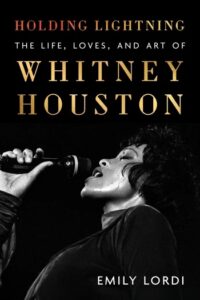
Excerpted from Holding Lightning: The Life, Loves, and Art of Whitney Houston by Emily Lordi. Copyright © 2026 by Emily Jeanne Lordi. Published by Mariner Books, an imprint of HarperCollins Publishers. All rights reserved. Reprinted with permission.













 English (US) ·
  French (CA) ·
  French (FR) ·