

 11 hours ago
4
PROTECT YOURSELF with Orgo-Life® QUANTUM TECHNOLOGY
Orgo-Life the new way to the future Advertising by AdpathwayWith its distinctive twin top tubes, unusual titanium biplane fork, and unmistakable Stooge demeanor, the titanium Scrambler is anything but conventional. After five months of ATBing, trail riding, and bikepacking, Logan dives deep into this curious machine, compares it to its steel counterpart, and revisits some long-held opinions about titanium bikes. Find his full Stooge Scrambler Ti review here…
I’ve spent a fair amount of time recently revisiting old opinions, questioning long-held assumptions, and generally trying to make sense of how my relationship with bikes, bikepacking, and gear has evolved over the last 15 years. One of the dozen conclusions I came to in my What I’d Do Differently… piece was that I probably wouldn’t add another titanium bike to my collection. Steel is just fine, I reasoned. It’s durable, dependable, repairable, and sometimes even has a ride quality that’s superior to the most expensive metal used for frame tubing. Plus, I’m not convinced titanium’s perceived invincibility translates into a true “forever bike,” especially for bikes built for heavy trail thrashing.

But here I am, throwing another carefully considered opinion back into the blender with the Stooge Scrambler Ti. I decided to review it out of curiosity, and after five months of use, it’s made me reconsider where titanium might actually make sense. Not necessarily as a flashier alternative to a good steel frame, but as a material uniquely suited to this niche style of bike and the riding it’s built for: long ATB outings and extended dirt-road touring.
A Perfect Ti Specimen?
Titanium is a theoretically obvious fit for the latter. Big tours dish out unpredictable weather and the inevitable scrapes and abrasion that come from bag straps, bus transport, accidental drops, and all other forms of abuse. A bike meant to be loaded up, scratched, muddied, and put away wet seems like an awfully compelling case for a material that doesn’t rust, is tough to dent or scratch, needs little care, and could very well outlast its owner. Plus, a little added frame compliance might help smooth out long, taxing days on rough tracks. Better yet, the Stooge Scrambler Ti’s unique frame design might just be an optimal use case for titanium.
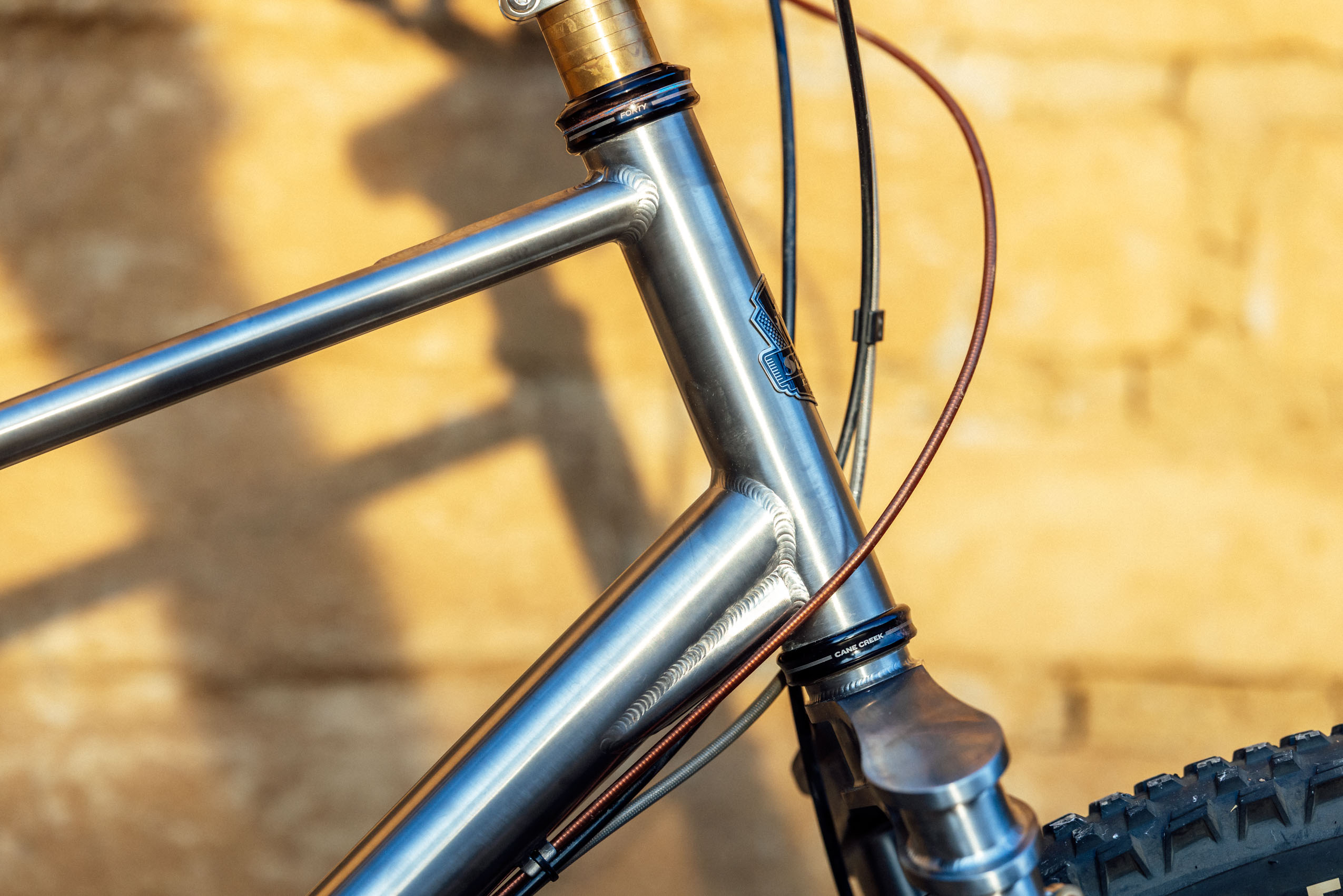
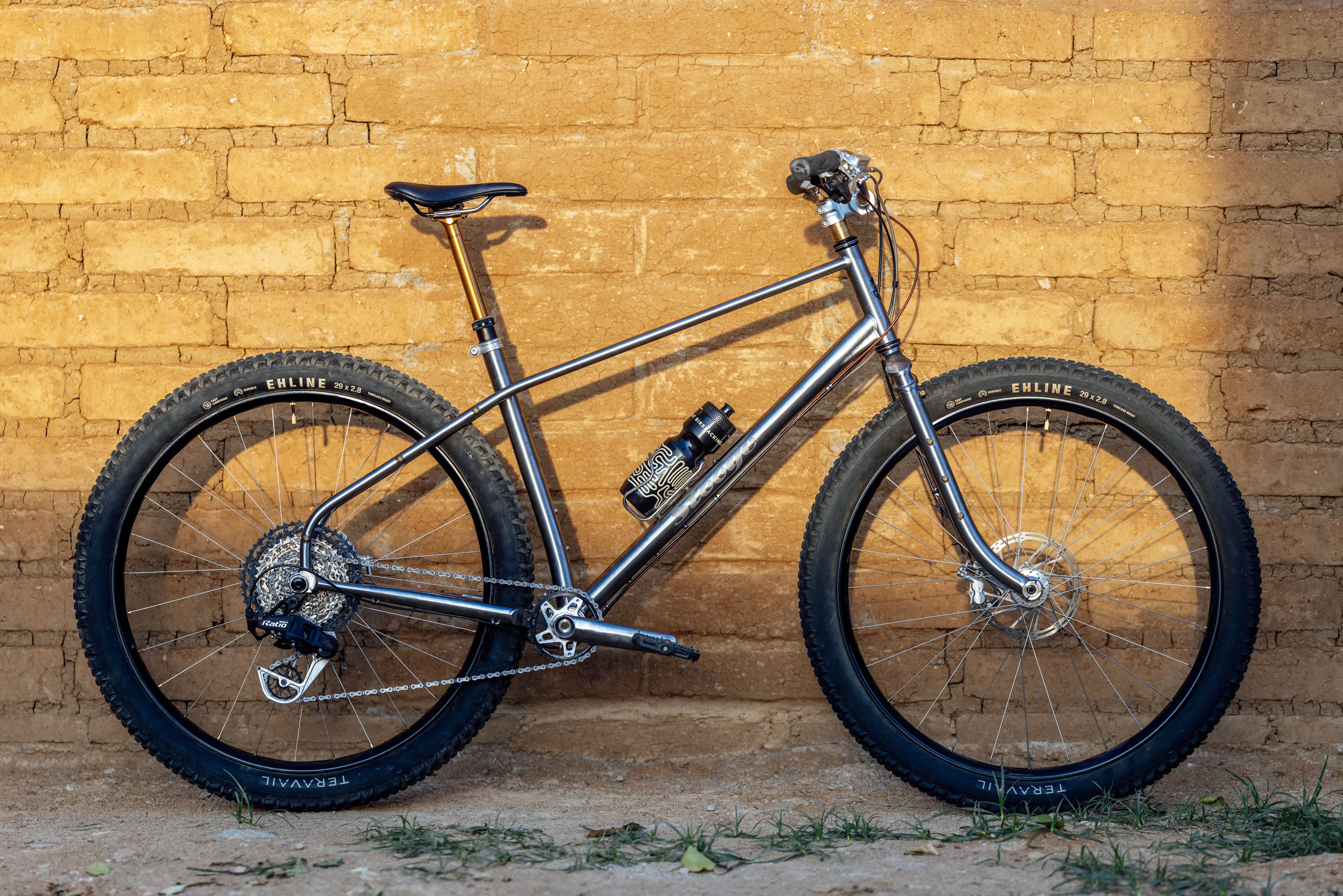

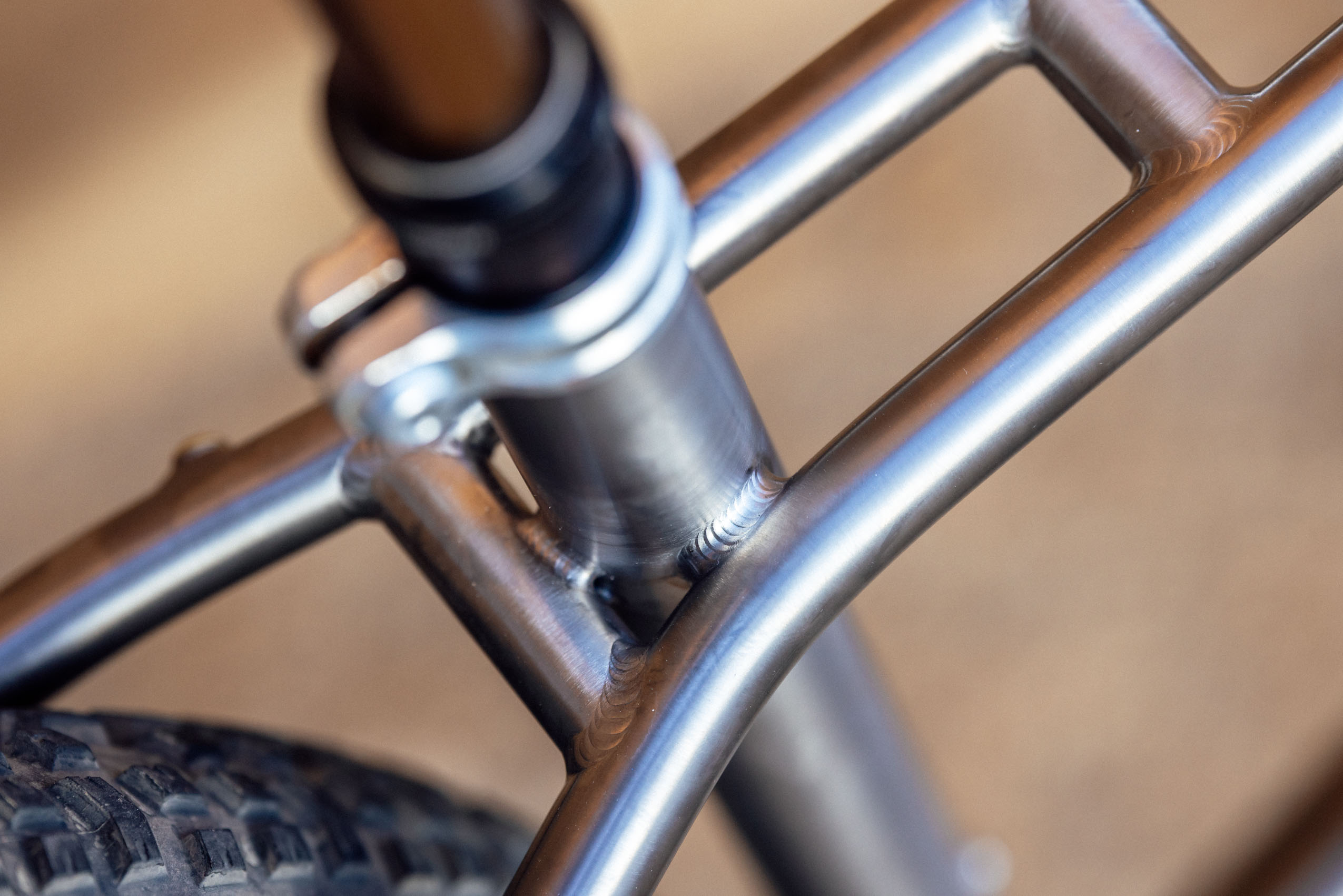

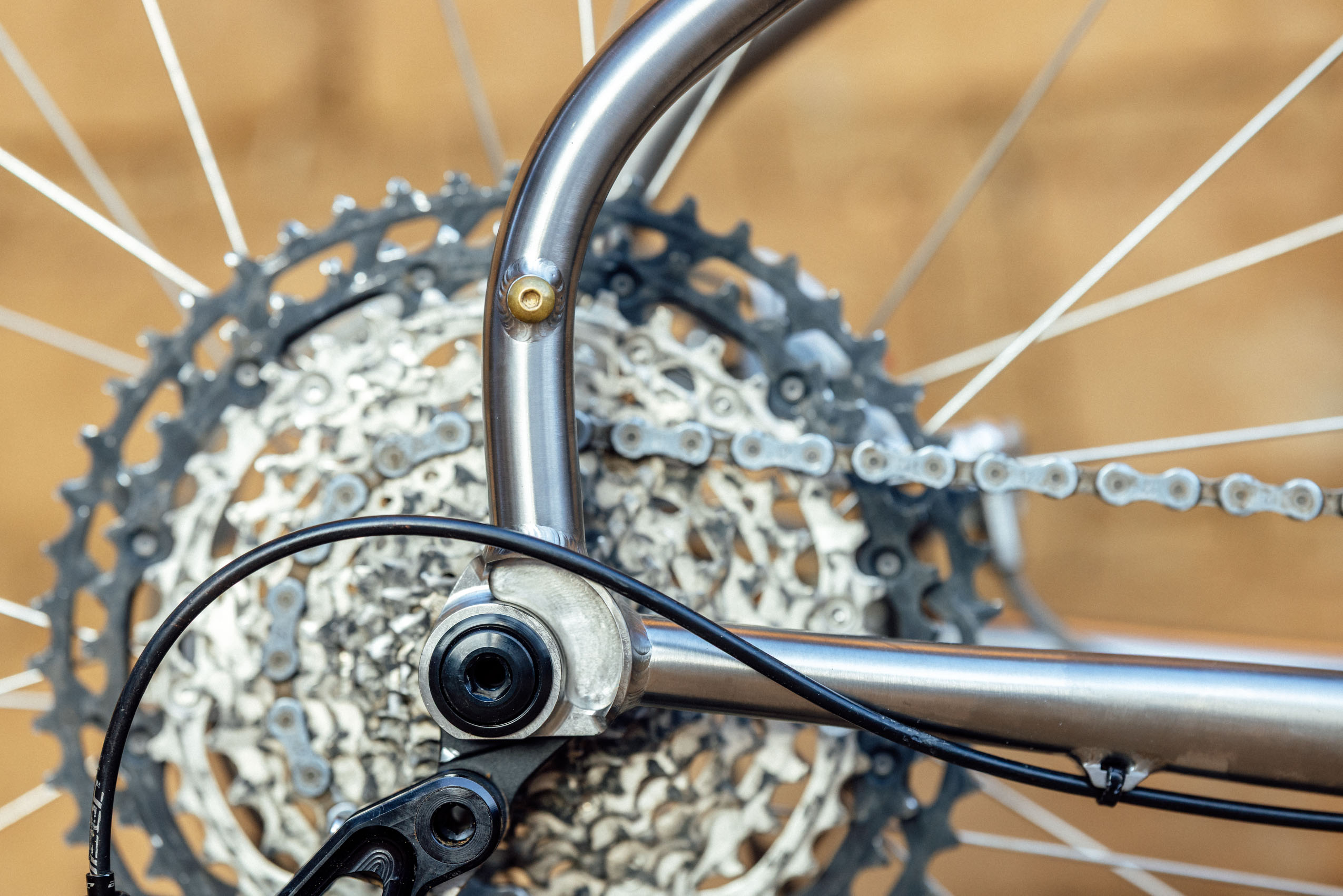
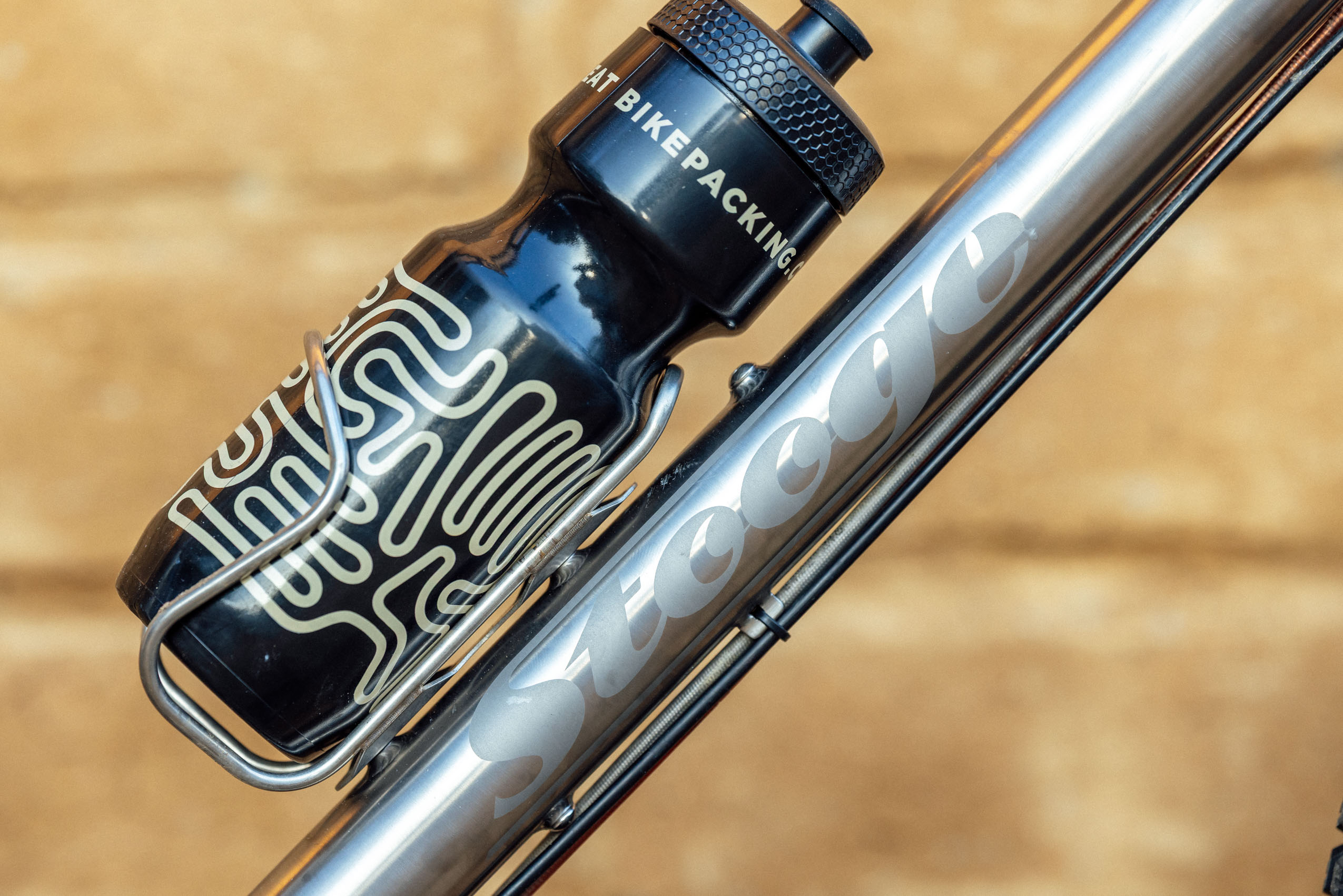
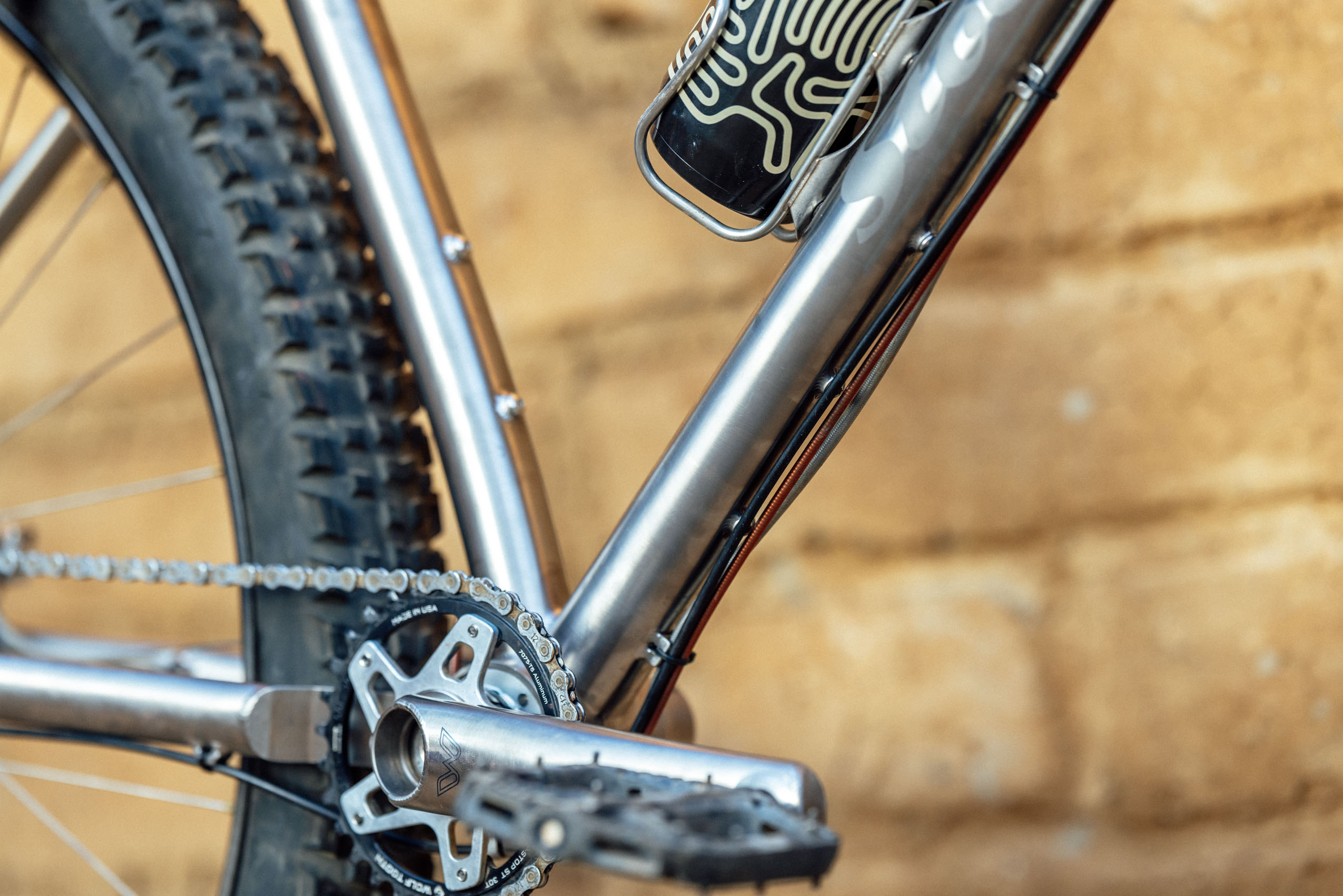
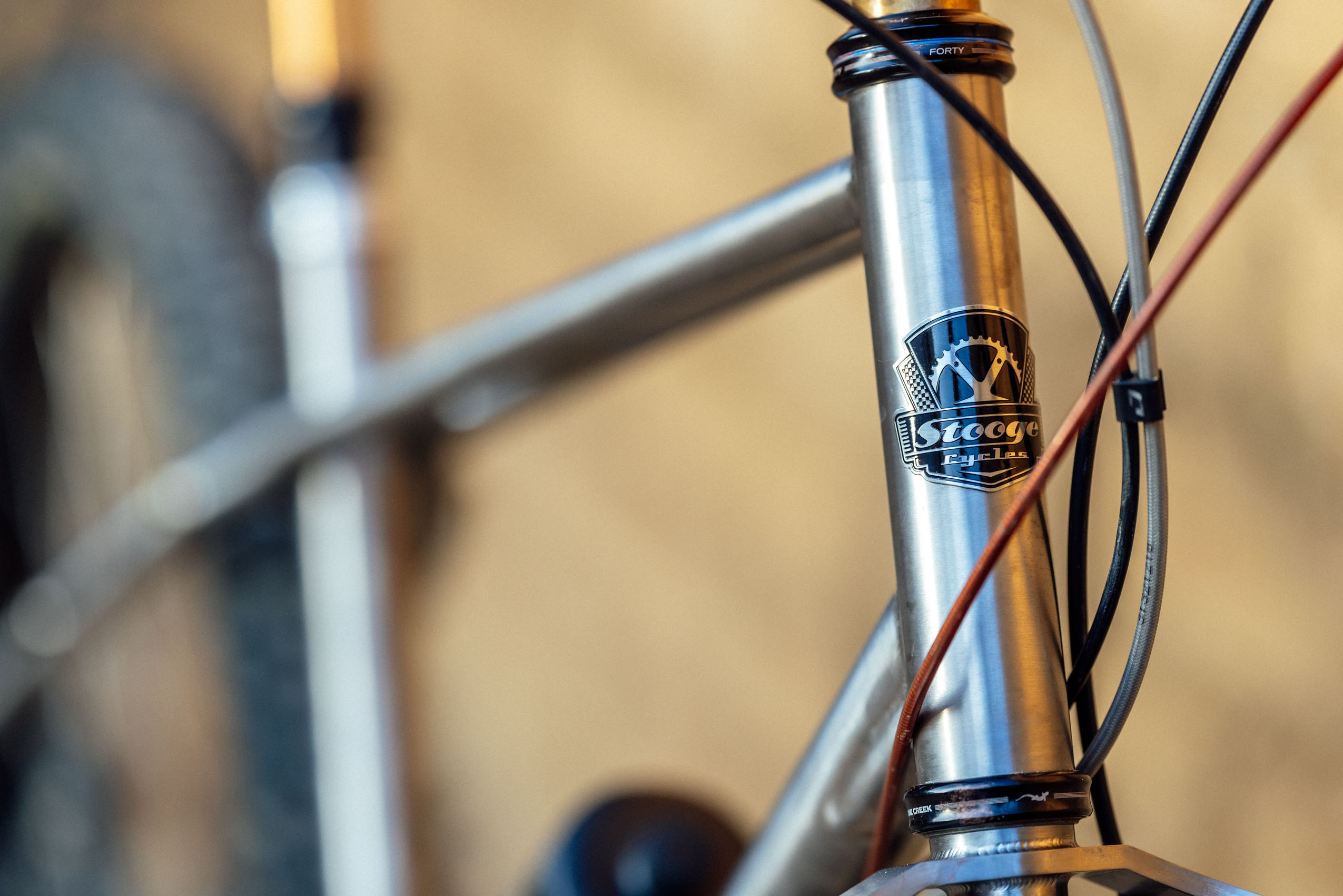

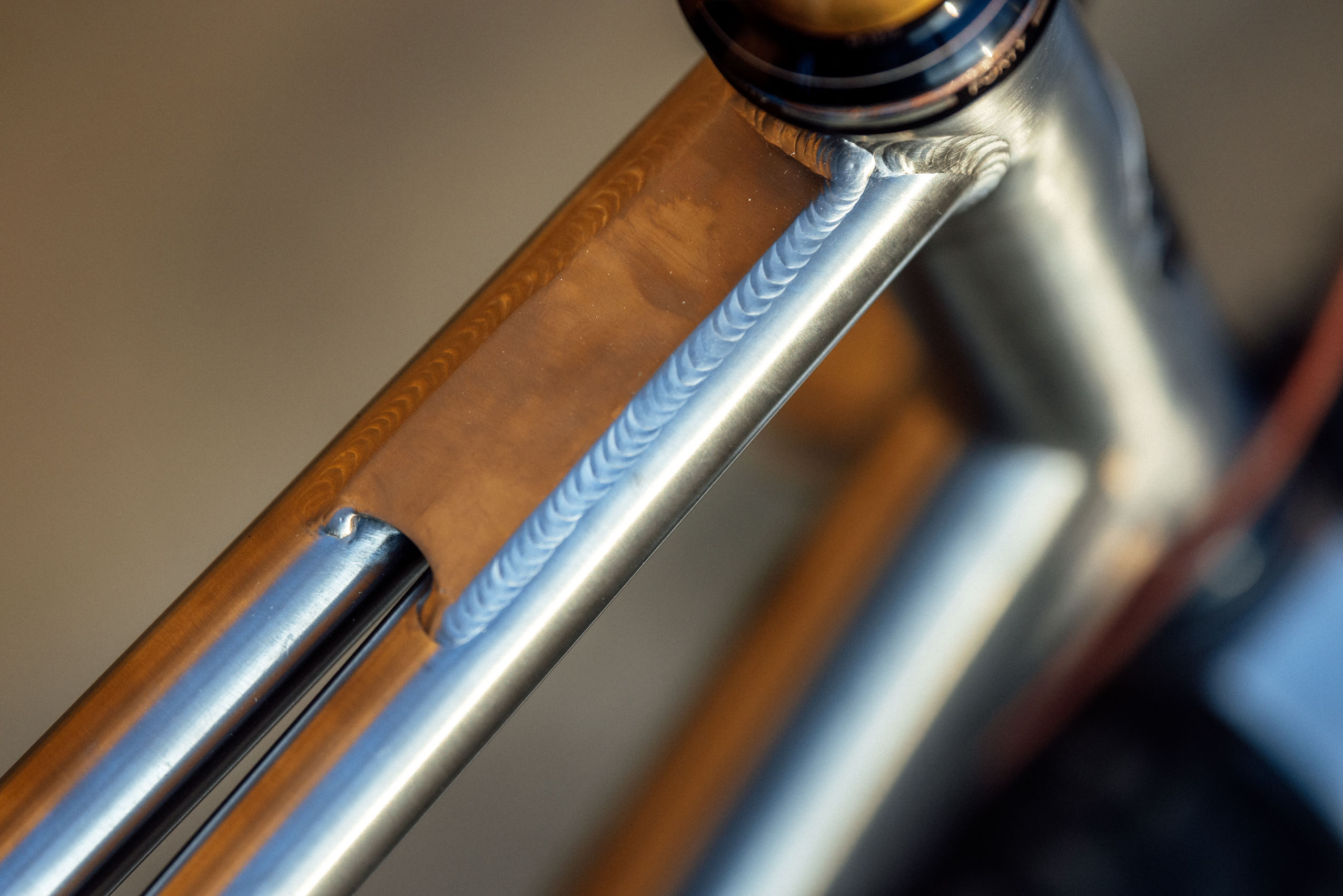
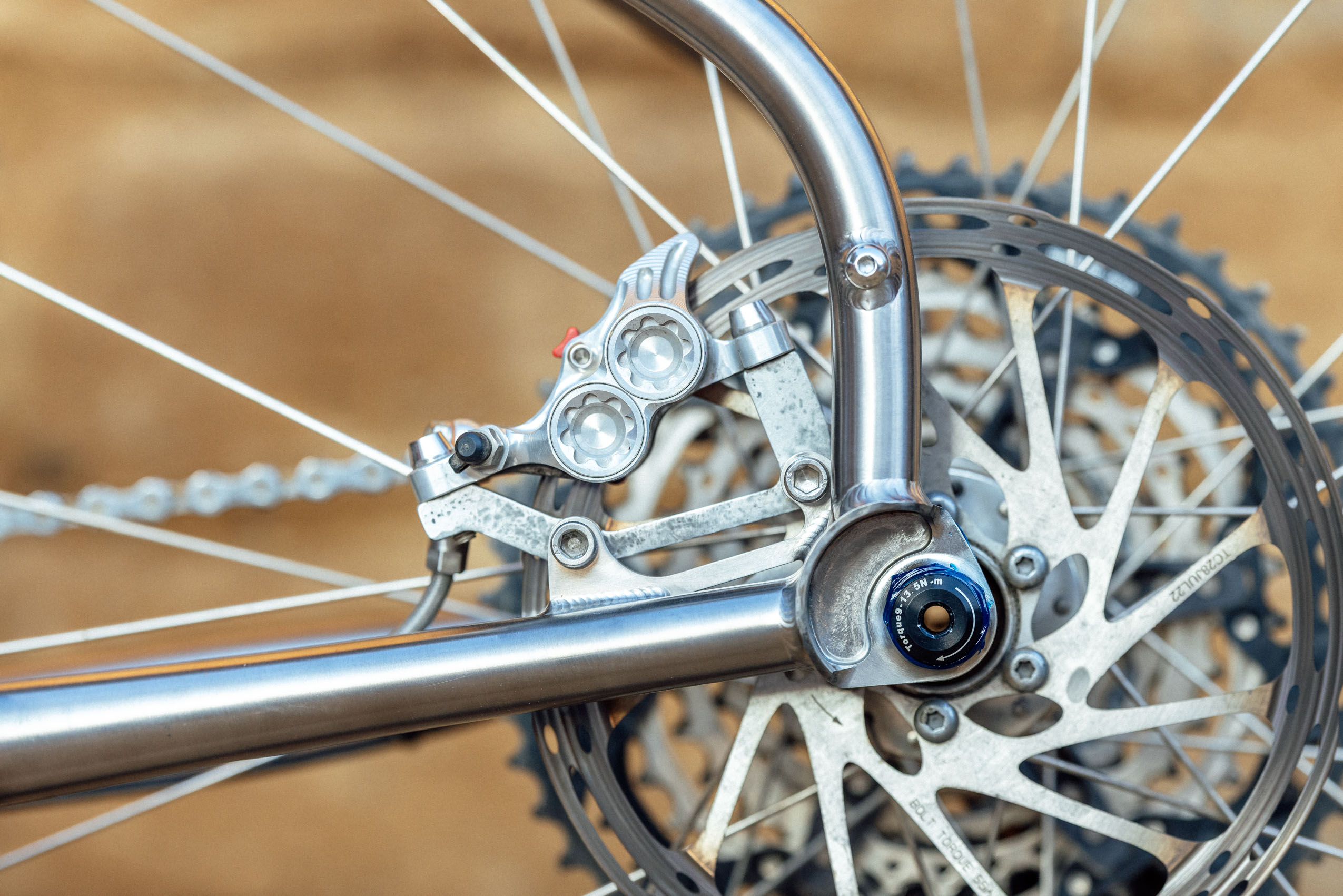
The Stooge Scrambler Ti frame is constructed from straight-gauge 3Al-2.5V titanium tubing. Instead of relying on complex butting profiles, the structural integrity and ride quality are engineered via the size, shape, and tubing configuration. Most notably, its distinctive twin-top-tube design offers more than just aesthetics. According to Stooge founder Andy Stevenson, maintaining lateral stiffness was a key consideration, particularly for a bike designed to carry a load over rough terrain. To that end, he opted for a relatively stout downtube and oversized twin top tubes, which work together to keep unwanted flex and loaded-bike shimmy in check. This structural approach to frame design might make even more sense with titanium tubes than it does steel. From my experience, which I’ll cover in more detail later, it balances the lively, responsive feel that makes titanium appealing with the structural rigidity needed for a capable dirt-touring bike, without ending up overly stiff or excessively flexy.
The Fork is Key
The Scrambler Ti’s matching titanium biplane fork is the most interesting piece of the puzzle. Few bikes have a titanium frame and fork. Even fewer have titanium single-crown forks—a conventional design with two fork blades extending from a single crown at the base of the steerer tube. Many titanium forks use a truss layout: a triangulated structure that increases rigidity via additional tubes or struts connecting the fork legs to an upper attachment near the steerer tube. I’ve ridden a couple of those, but this is my first rodeo with a single-crown titanium fork—or more specifically, a single-crown biplane fork.

For those unfamiliar, a biplane fork uses two vertically separated plates or crossmembers to connect the fork blades to the steerer tube, creating its distinctive double-decker structure. The design dates back to early bicycles and lives on through popular brands and builders such as Stooge, Cjell Mone, and Rivendell. Beyond its classic look, the arrangement offers an alternative way to manage loads through the fork crown by connecting the fork blades to the steerer tube at multiple locations, rather than bending the blades to attach them to the crown. The fork blade tubes pass through cutouts in the lower plate, and the steerer tube threads a central hole in the top plate. When welded together with eight beads, it creates a very strong system that may help distribute torsional loads through the crown assembly. That said, the design itself doesn’t necessarily improve comfort or compliance. On the Scrambler Ti, the ride quality comes from the diameter and wall thickness of the titanium fork blades.

Some might miss the tapered-leg aesthetic of Stooge’s steel forks, but replicating that look in titanium would create too much flex, so the challenge was finding the right combination of tubing diameter and wall thickness to deliver a smooth, forgiving ride without sacrificing steering or braking confidence. Drawing on years of experimentation with titanium forks, Andy settled on larger-diameter, straight-gauge legs to manage the material’s natural flex.
Right: lines show how tubes pass through the plates. A lot of welds!
Unlike Stooge’s titanium truss fork, which Andy says offers exceptionally precise steering and virtually eliminates brake flutter but provides little compliance, the Scrambler’s biplane fork was designed specifically to take the edge off rough terrain. It’s an interesting contrast in design philosophies: while the truss fork relies almost solely on its inherently rigid structure, the biplane fork starts with a more flexible platform and uses carefully selected tubing to rein it in. For the record, the fork is made from fairly heavy-duty 1.8mm gauge tubing, and it’s tested to ISO 4210.
Despite all that metal, the Stooge Scrambler Ti frameset weighs 3.67 kilograms, which is 1.4 kilograms (about 3.1 pounds) less than the 5.07-kilogram steel Scrambler I tested. At 1.29 kilograms (2.84 pounds), the Scrambler Ti fork alone weighs about 250 grams less than the steel version (1.54 kilograms). It’s still no featherweight, though. By comparison, steel “utility forks” like the Nordest Sardinha fork or Salsa’s Firestarter Steel weigh about 2.6 pounds (~1.2 kilograms). It feels significantly lighter than the steel version while riding, which I’ll describe later.
Build Kit
My full build (without pedals) measured 13.57 kilograms (29.9 pounds) on my trusty Topeak Prepstand scale. Note that I moved most parts over from my Stooge MK7 build and reallocated a few others. You can find that build kit below.
- Frame/fork Stooge Scrambler Ti, 20
- Front Hub Project 321 Gen 3
- Rear Hub Project 321 Gen 3
- RimsWe Are One Fuse, 33mm IW, 28-spoke
- Spokes Double-butted Sapim Race, Simworks Raw Brass Nipples
- Front Tire Maxxis Minion DHF 29 x 3.0″
- Rear Tire Maxxis Rekon 29 x 2.6″
- Crankset Cane Creek eeWings, 170mm
- Chainring Wolf Tooth CAMO, 30t
- Derailleur Ratio The Mech 12-speed
- Shifter Shimano XT 12-speed
- Cassette Shimano XT 12-speed 10-52
- Bottom Bracket Wolf Tooth
- Handlebar Stooge Tracker 85, 820mm
- Stem PAUL Boxcar, 50mm
- Grips SQlab
- Headset Cane Creek 40
- Brakes Hope Tech4 E4
- Saddle WTB Solano
- Seatpost Fox Transfer, 200mm
- Seatpost Clamp Hope
Frame Changes
The Stooge Scrambler Ti frame got a couple of notable upgrades from the steel version I tested. First and foremost, it now fits a 29 x 2.8” tire in the back (or probably a 3.0″) and has room for 3.25” rubber up front. As you can see in these photos, clearance still isn’t overly generous with the Ehline 2.8s installed on 33mm internal width rims, but it offers much more wiggle room than the steel version, which felt cramped with a meager 2.5” rear tire.
Photographed with Teravail Ehline 29 x 2.8″ tire on 33mm IW rims.
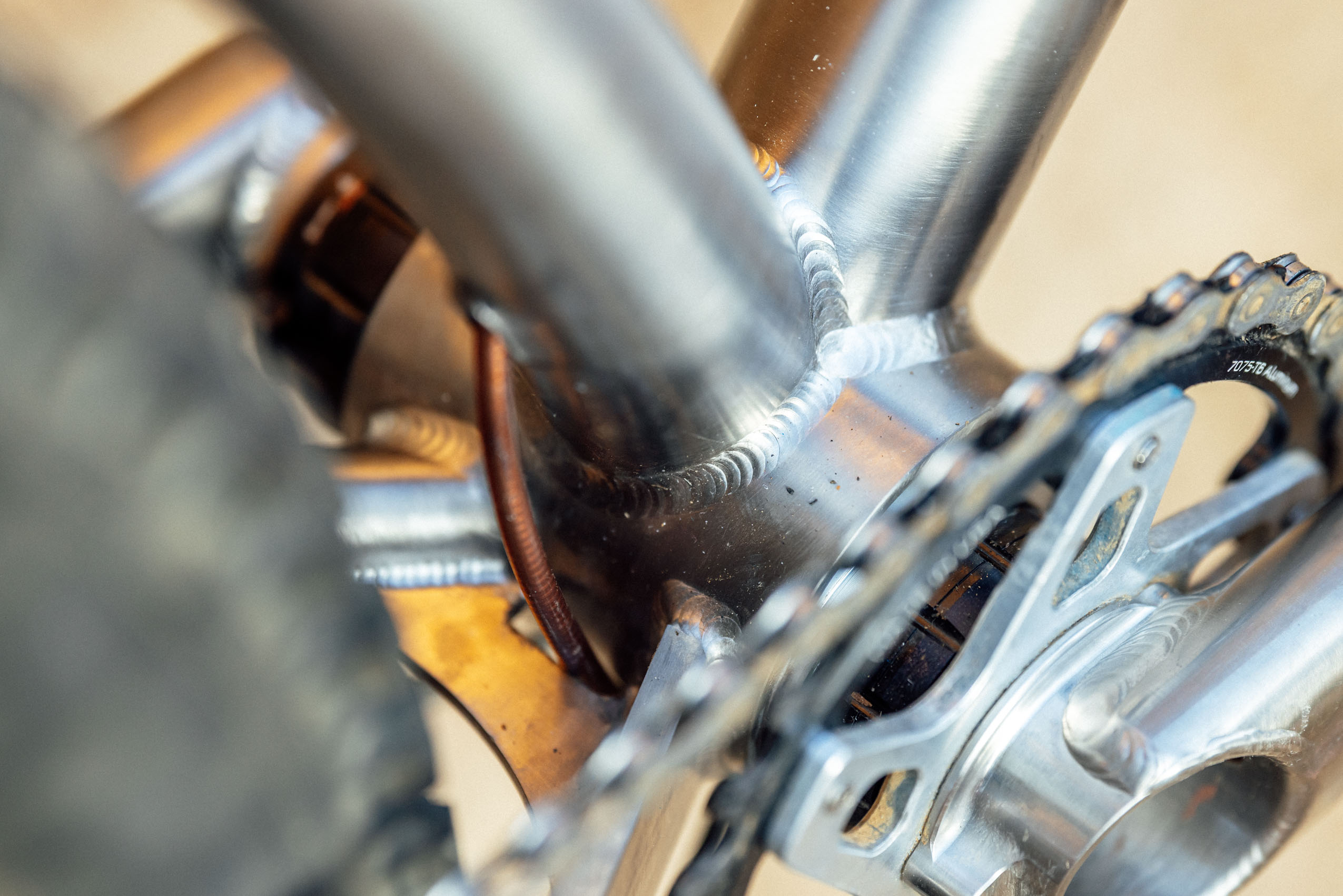
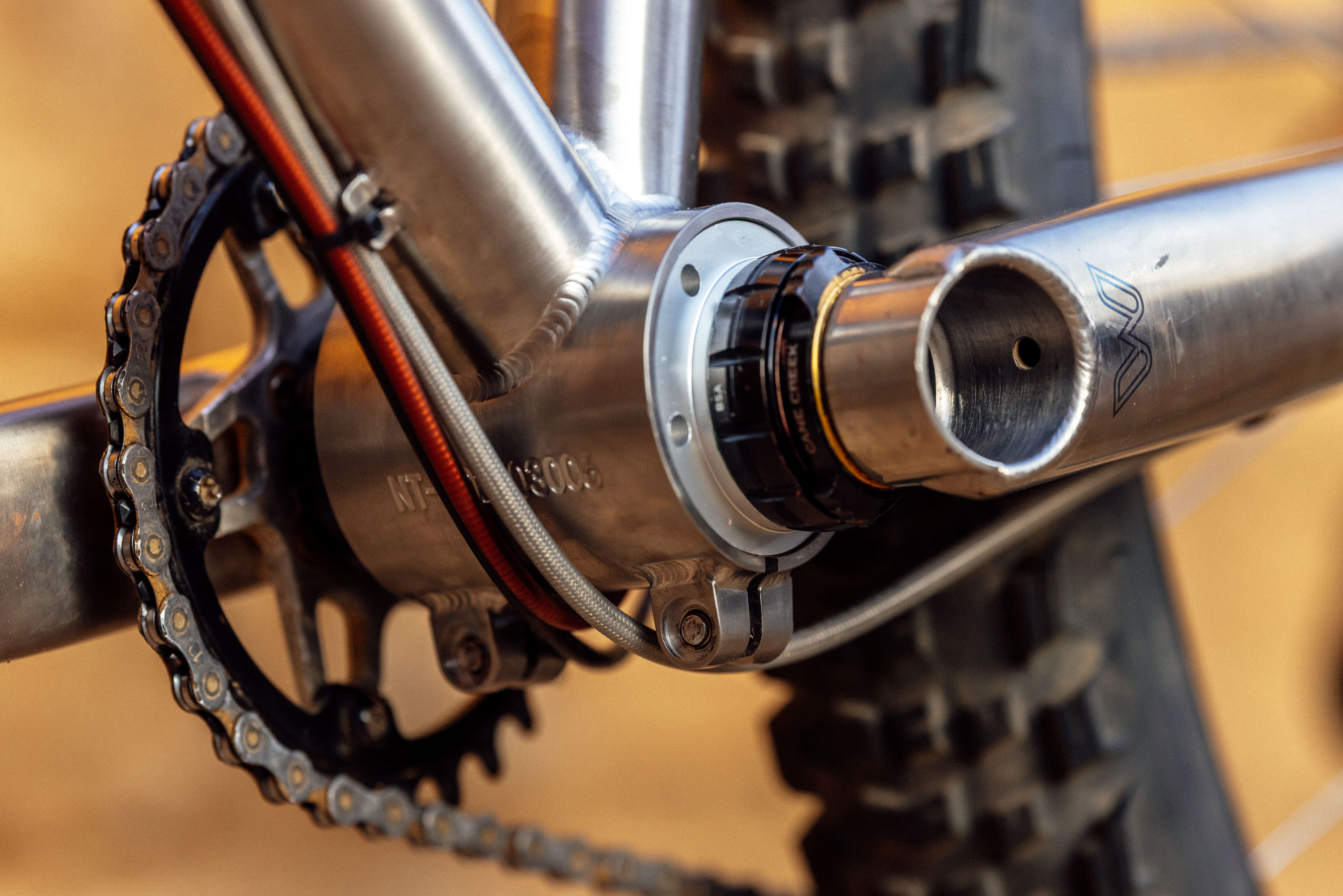
The other major frame change is a redesigned clamping mechanism for the eccentric bottom bracket. The Ti BB shell has an elegant new system with threaded tabs on one side and bolt fittings on the other, tightened down to secure the aluminum EBB cylinder. Instead of relying on grub screws that press against the eccentric cylinder insert to lock it in position, it uses circumferential pressure, much like a one-piece stem. All the other Stooges I’ve tested use the set screws, and while they’ve functioned well and never had creaks or other issues, the new design seems much more polished.
The EBB has one downside, though. The rear derailleur cable routing goes under the BB shell, and then threads along the underside of the chainstay. That leaves it a little exposed in the tire/yoke area. It’s not a deal breaker, but something worth mentioning.
Geometry and Fit
The Scrambler Ti’s geometry is almost identical to the steel version. But, in classic Stooge fashion, Andy made a couple of minor tweaks to incrementally advance the platform. He calls this V2, though it was actually the fourth batch of Scrambler frames. The Scrambler Ti comes in two sizes. I tested the 20” frame, the larger of the two, and as you can see in the chart below, there are a couple of differences worth discussing. I also included the other Stooges I’ve tested for comparison.
| Effective top tube | 625 | 625 | 635 | 640 (620) |
| Seat tube | 457 | 457 | 483 | 483 (457) |
| Head tube | 140 | 157 | 160 | 170 (160) |
| Chainstay | 450 | 445 | 435 | 445 |
| BB drop (+/-7mm) | 75 | 60 | 65 | 65 |
| Fork a/c | 455 | 455 | 455 | 455 |
| Fork offset | 65 | 65 | 57 | 57 |
| Head angle | 66 | 66 | 67 | 67 |
| Seat angle actual | 73 | 74 | 72 | 72 |
| Seat angle virtual | 74.5 | NA | 73.5 | 73.5 |
| Reach | 459.6 | 452.6 | 453.4 | 451 (434) |
| Stack | 604.5 | 601.3 | 617.8 | 627 (618) |
| Seatpost size (clamp) | 30.9 (33) | 31.6 (34.9) | 31.6 (34.9) | 31.6 (34.9) |
Reading top to bottom, the Scrambler Ti has a one-centimeter-longer head tube, which results in a little more stack—a welcome addition based on my fit preferences. But, for some reason, I struggled to dial in the fit on the size 20. This was a little odd, considering the steel Scrambler and MK7 have roughly the same reach, and both fit me well. Still, the Scrambler Ti felt a touch too long. I ultimately solved this by swapping out the stem, which I’ll cover in a future article.
Frame Feel on The Trail
The Stooge Scrambler Ti also has a one-centimeter-longer chainstay than its steel counterpart. Clearly added to increase tire clearance, a lengthier rear-center might also help with high-speed stability and a smoother ride. As I was trying to pinpoint how it handles on dirt roads and trails, I couldn’t tell much difference from the steel Scrambler, although I was impressed by how well it tracks when just pedaling along. If I’m nitpicking, it might be a tad less frisky when it comes to rear wheel drifts.

Beyond that, I’m not going to go too deep into how the Scrambler Ti handles from a geometry perspective. It maneuvers and operates remarkably similarly to the steel version I already wrote about, and that’s pretty well covered in that review. What I will describe is how the titanium frame feels and how it distinguishes itself by comparison.
From the head tube back, the frame feels very solid, much like the MK7 and steel Scrambler, with the twin-top-tube design preventing it from feeling overly flexy or twisting under load. The apple doesn’t fall far from the tree. As expected, however, it’s notably more forgiving on bumpy surfaces. Having a larger tire in the back also helps, but I experimented with higher pressures, and maintain my stance. I believe this is due to a combination of the slightly longer stays and frame material. It’s a decidedly more comfortable bike on big rides, and the titanium tubing seems to do its part at soaking up vibrations and small bumps, a quality that’s even more noticeable on long and rough rides, and exponentially beneficial when pedaling multiple days in a row. It also feels lighter, which balances out the longer chainstay and keeps that familiar lively feel I found in the original Scrambler.

At the front end, the Scrambler Ti fork feels strikingly different from the steel model. It still has the same quick-handling characteristics that come from the relatively long 57mm offset. But the fork legs have substantially more flex—to the point where you can visibly see the axle moving fore and aft while riding. Still, it doesn’t feel like a noodle, even pedaling out of the saddle, railing corners, or picking lines at speed on rutted dirt roads. It generally maintains its poise on the rough stuff, although if I’m splitting hairs, it might sacrifice a little confidence on rough, technical descents.
That’s not what this bike was made for, however, and there are real benefits to how the fork was engineered. It has a lively springiness that allows you to pop the front tire up and over ruts and obstacles with fluid ease. That alone amplifies how much lighter the fork feels than the steel one. Plus, it’s quite comfy when you’re putting in the miles on unpaved surfaces—a premium for an ATB/dirt-touring bike. That said, I couldn’t help but wonder whether the flex/feel in a titanium fork might change over time due to material fatigue. Or whether there’s any associated risk with allowing a significant amount of longitudinal movement in the fork. Andy mentioned that he’s produced well over 100 titanium forks since 2015, and all are still going strong. In his words, “One of the best qualities of titanium is its resistance to fatigue compared to steel or alloy, which is why you can run [more] compliant handlebars when they’re made from it. A steel or alloy bar with the same flex as a Ti bar would probably last about a week… Ti just keeps on going.”
Out Bikepacking
As I rambled on about in the intro, the Stooge Scrambler Ti was equally impressive once I hit the dirt roads of Oaxaca loaded up with bikepacking gear. The frame didn’t feel too wiggly, and the fork seemed fairly consistent with how it felt unloaded. I usually try not to overburden the handlebar bag and keep the payload centered, but even when loaded with food, three liters of water, and my full kit—including a camp chair—the fork never seemed out of sorts or too squirmy. The frame felt fantastic for dirt-road touring, really. It’s stiff in the right ways and supple where it needs to be.

The Stooge Ti frameset came with (almost) the same set of mounts and provisions as its steel sibling. Fortunately, Andy made one significant improvement to the fork that addressed one of my cons with the steel version: that it lacked a crown mount. Stooge outfitted the Ti fork with a threaded M4 eyelet, a very welcome addition since I kitted it out with my Allygn Diamond Rack. One downside is that Stooge nixed the lower rack/fender bosses on the Ti model. That’s not an issue for me, but some people might miss it.

The Stooge Scrambler Ti frameset sells for £2,520. Considering that it includes a frame and a fork, it’s a pretty fair price when compared to other titanium bikes. Stooge is out of them right now, but Andy said there’s a very small batch incoming in the next month or so. And, depending on demand, he’ll likely open up a build-to-order option, with a roughly three-month turnaround.
- Model/Size Tested: Stooge Scrambler Ti 20
- Actual Weight (frameset): 3.67 kg ()
- Place of Manufacture: Taiwan
- Price: £2,520
- Manufacturer’s Details: Stooge
Pros
- Lighter and more plush version of the beloved Scrambler
- More tire clearance!
- The fork no longer feels like a front-end anchor, and instead offers “lift”
- Twin-tube frame design and biplane fork seem like the perfect implementation of titanium
- Nicer EBB bolts
- Beautifully constructed frame and clean welds
- Large frame-bag space and all the eyelets you need
Cons
- Rear derailleur cable routing along chainstay, particularly with large 29 x 2.8” rubber
- A little more tire clearance would be nice (but not at the expense of a longer stay)
- The Ti price tag isn’t for everyone
Wrap Up
After several months on the Stooge Scrambler Ti, I’m convinced that Andy Stevenson created something special. It’s not a radical departure from the steel Scrambler. It retains the quirky character, surefooted handling, and versatility that made the original so compelling, but it’s more refined. The added tire clearance, lighter frameset, and improved eccentric bottom bracket are all welcome changes, but the frame feel sets it apart. The titanium frame feels both lively and solid, and the unique biplane fork brings a kind of micro-suspension quality to the front end, taking the sting out of chunky roads and trails without feeling excessively vague or unwieldy. Together, they make for a very comfortable and capable ATB/dirt-touring platform.
That’s not to say it’s perfect. I’d still like a little more tire clearance out back, and the rear derailleur cable routing could use some attention—maybe a pass-through ferrule or two instead of a zip-tie cable guide. The fork’s pronounced flex might also give pause to riders who prioritize pinpoint steering precision on technical terrain, and I remain curious about how it will hold up over the long haul. Then there’s the price, which is difficult to justify when the steel Scrambler is already such a good bike. Still, for someone who spends most of their time pedaling long distances on rough dirt roads, day after day, the advantages are tangible. The combination of reduced weight, added comfort, and titanium’s resistance to corrosion and everyday abuse makes a decent argument for the upgrade.
That brings me back to the question that prompted this review in the first place: Is there really a place for another titanium bike in my collection? I’m still not convinced titanium is inherently better than steel, and I certainly don’t think it’s the answer for every bike or every kind of riding. But the Scrambler Ti has made me reconsider my broad stance. Perhaps the real appeal of titanium isn’t its supposed indestructibility or the promise of a forever bike, but how its particular qualities can complement a thoughtful design. In the case of the Scrambler Ti, the twin top tubes seem to provide the necessary backbone while the frame and fork offer a welcome dose of compliance.
Further Reading
Make sure to dig into these related articles for more info...
Please keep the conversation civil, constructive, and inclusive, or your comment will be removed.























 English (US) ·
 French (CA) ·
 French (FR) ·