

 2 months ago
28
2 months ago
28
PROTECT YOURSELF with Orgo-Life® QUANTUM TECHNOLOGY
Orgo-Life the new way to the future Advertising by AdpathwayA smart home can lower waste, but only when the technology controls something that already wastes energy or water. A connected bulb in every lamp does not automatically make a home greener. A smart speaker in every room does not make the house efficient. A drawer full of unused sensors, hubs, chargers, and failed gadgets can become its own environmental problem.
You can open Table of Contents show
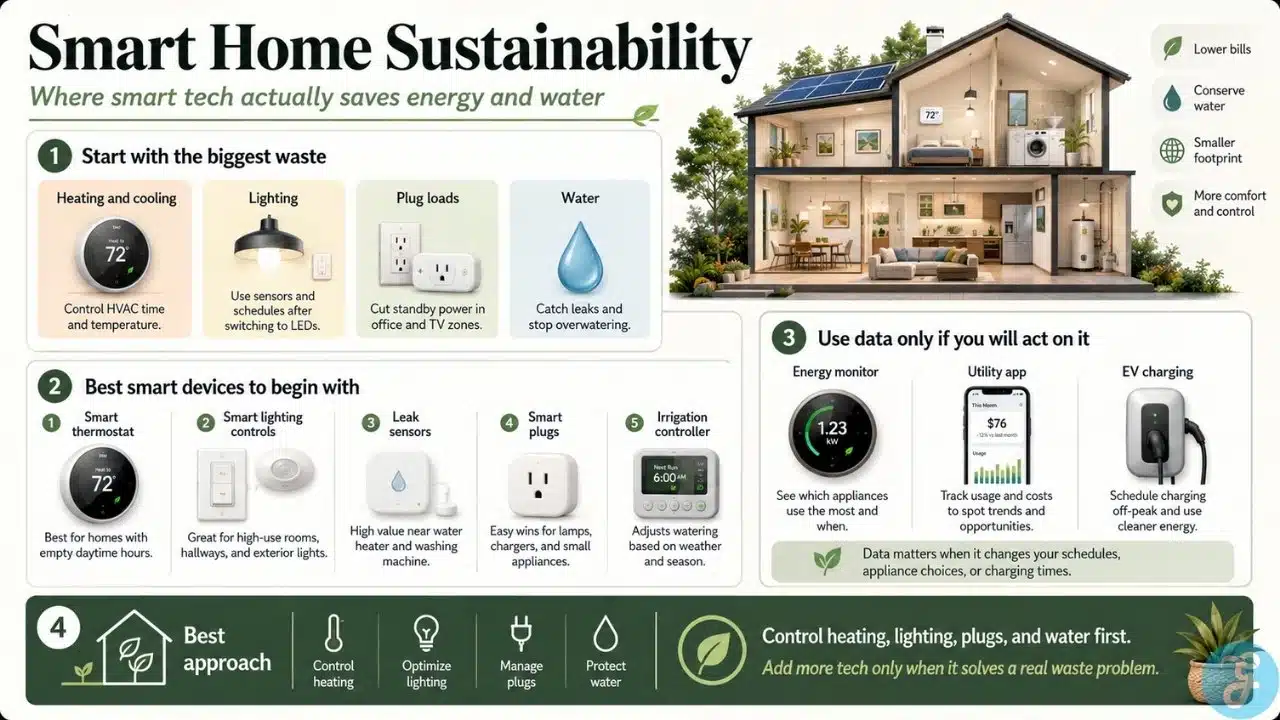
That is the practical problem with smart home sustainability. The best devices are not always the flashiest ones. They are the ones that quietly reduce heating and cooling waste, shut off unused electronics, prevent water damage, manage lighting, show where energy is going, or help larger systems run at better times.
The right question is not “How smart can this home become?” It is simpler: what waste is happening now, and can a device reduce it without creating more hassle, cost, or e-waste?
For most homes, the strongest answer starts with heating, cooling, lighting, plug loads, water use, and habits. Everything else comes later.
Start With the Waste You Already Have
Smart devices work best when they solve a specific household pattern.
A thermostat can help if the HVAC system runs when nobody is home. A smart plug can help if a TV setup, game console, printer, or desk setup stays in standby all day. A leak sensor can help if the home has a washing machine, water heater, dishwasher, or sink cabinet that could cause expensive damage. A weather-based irrigation controller can help if sprinklers run on a fixed schedule even after rain.
Buying devices without naming the waste first usually leads to clutter.
Before buying anything, walk through the home and look for repeat waste:
| Heating and cooling | HVAC runs hard when the house is empty or asleep | Smart thermostat |
| Lighting | Lights stay on in empty rooms or outdoor fixtures run too long | Smart switches, sensors, schedules |
| Plug loads | Entertainment centers, office gear, chargers, and consoles stay on standby | Smart plugs or smart power strips |
| Water | Sprinklers overwater, leaks go unnoticed, hot water runs inefficiently | Irrigation controller, leak sensor, water heater control |
| Appliances | Laundry, dishwasher, or EV charging can shift to cheaper or cleaner hours | Smart appliance controls, energy monitor, EV charger |
| Whole-home use | Bills are high but the cause is unclear | Energy monitor or smart meter data |
This is the difference between an eco smart home and a gadget-heavy home. The first one reduces waste. The second one just connects things.
What Smart Home Tech Can and Cannot Do
Smart devices can control timing, automate routines, show data, and reduce forgotten waste. They can turn things off, lower demand during peak hours, and make invisible energy use easier to see.
They cannot fix a badly insulated attic. They cannot make an oversized HVAC system efficient. They cannot make an old refrigerator behave like a new efficient model. They cannot turn wasteful habits into sustainable living without some effort from the people in the house.
A smart thermostat in a drafty home still has to fight the drafts. A smart irrigation controller cannot save much if the sprinkler heads are broken or watering the sidewalk. A smart plug cannot reduce much energy if the device plugged into it barely used any power in the first place.
The best approach is to treat smart devices as controls, not miracles. Controls work well when the underlying system is worth controlling.
Smart Thermostats Are Usually the First Serious Upgrade
Heating and cooling often dominate home energy use, so thermostat control is one of the most practical places to start. A smart thermostat can adjust temperatures based on schedules, occupancy, app control, weather, or learning patterns. The real benefit is not the screen. It is reducing unnecessary HVAC runtime while keeping the home comfortable.
This does not mean every smart thermostat saves money automatically. The device needs to be set up properly, and the household needs to avoid fighting it every day. If people override the schedule constantly, leave windows open while the system runs, or set aggressive temperature swings that trigger backup heat, savings can shrink.
Smart thermostats tend to work best for homes with predictable empty periods, regular sleep schedules, central HVAC, or owners who actually use scheduling features. They can also help with maintenance reminders and remote control, which matters for people who travel or manage a second home.
Be more careful if the home has:
- A heat pump with electric resistance backup
- Radiant floor heating
- Multi-zone systems
- Older thermostat wiring
- Humidity control equipment
- A system that already behaves strangely
In those cases, compatibility matters. The wrong thermostat or wrong settings can make the system less efficient, not more.
A good smart thermostat setup should answer these questions:
- What temperature should the home keep when occupied?
- What setback makes sense when sleeping or away?
- Does the system use backup heat?
- Does the thermostat avoid unnecessary backup heat?
- Can everyone in the home tolerate the schedule?
- Does the app make control easier, or will it become another ignored tool?
For many homes, this is the smart device most worth considering first.
Smart Lighting Helps Most After You Switch to LEDs
Lighting is a common entry point into smart homes, but the sustainability benefit depends on what is being replaced.
If a home still uses incandescent bulbs, the first upgrade should be LED bulbs, smart or not. LEDs use far less energy than old incandescent lighting. After that, smart controls can add convenience and reduce waste from lights left on too long.
Smart lighting is most useful in places where people forget switches:
- Hallways
- Closets
- Bathrooms
- Garages
- Porches
- Driveways
- Laundry rooms
- Kids’ rooms
- Outdoor security lighting
Motion sensors often make more sense than app-controlled bulbs in these spaces. Nobody needs a phone app to turn off a closet light. A sensor or timer does the job better.
Smart switches can also be better than smart bulbs for rooms with multiple fixtures. They let people use the wall switch normally while still allowing schedules and automation. Smart bulbs can be useful for lamps, rentals, color temperature control, and rooms where rewiring is not practical.
The mistake is replacing every working bulb with a connected bulb for the sake of it. If a light already uses an efficient LED and people turn it off reliably, the sustainability gain may be small. The new device also has its own materials, electronics, packaging, and standby power.
Useful smart lighting is boring in the best way. It turns off what people forget.
Smart Plugs and Power Strips Are Best for Standby Waste
Some devices keep using electricity when they look off. Entertainment centers, gaming setups, printers, monitors, chargers, speakers, and office equipment can all contribute to standby power use. The amount varies by device, age, settings, and household setup.
Smart plugs and smart power strips can help by cutting power on a schedule or after devices go idle. They are most useful when several products sit together and do not need power all day.
Good places to use them include:
- TV and game console setups
- Home office equipment
- Guest room electronics
- Holiday lights
- Workshop tools with chargers
- Small appliances that do not need standby power
- Kids’ entertainment devices with set use times
Do not use smart plugs blindly. Some devices need constant power for updates, recording, clocks, network access, safety, or memory. Cutting power to a router, medical device, security system, refrigerator, freezer, sump pump, or essential appliance can create bigger problems than the energy saved.
This is where energy smart devices should be used with judgment. A smart plug is useful when it controls a wasteful standby load. It is pointless when it controls something that barely uses power or needs to stay on.
Home Energy Monitors Are Useful Only If You Act on the Data
Whole-home energy monitors, circuit-level monitors, and smart meter apps can help homeowners see patterns that a monthly bill hides. They may show spikes from HVAC, water heating, EV charging, pool pumps, electric dryers, dehumidifiers, or older appliances.
The value is not the graph. The value is what the graph changes.
An energy monitor can help when a homeowner wants to:
- Understand what drives high bills
- Compare before and after efficiency upgrades
- Spot unusual usage
- Track solar production and home consumption
- Shift use away from expensive peak hours
- Decide whether an appliance replacement is worth considering
Energy monitors are less useful for people who will check the app twice and forget it. They can also misidentify some loads, especially when multiple devices behave similarly. Treat the data as a clue, not a perfect diagnosis.
A simpler option is to start with the utility’s smart meter portal, if available. Many utilities already provide hourly or daily usage data. That may be enough to spot overnight waste, peak-time use, or unusual patterns without buying another device.
Water Tech Can Be More Sustainable Than Another Smart Speaker
Water does not always get as much attention as electricity, but smart water devices can be valuable, especially in homes with irrigation, basements, older plumbing, or expensive water rates.
Leak Sensors
Leak sensors are small, inexpensive compared with major water damage, and often more practical than people expect. Place them near:
- Water heaters
- Washing machines
- Dishwashers
- Under sinks
- Toilets
- Sump pumps
- Basement walls
- HVAC condensate areas
- Refrigerator water lines
A leak sensor does not reduce daily energy use, but it can prevent wasted water, mold, damaged materials, and expensive repairs. Some systems can also connect to automatic shutoff valves. That adds cost, but it can make sense for second homes, vacation rentals, older houses, and homes with a history of plumbing issues.
Smart Irrigation Controllers
A standard sprinkler timer waters based on a schedule. A weather-based controller can adjust irrigation based on local weather, rainfall, temperature, or seasonal conditions. Soil moisture sensors can go a step further by checking whether the landscape actually needs water.
This is one of the strongest smart sustainability upgrades for homes with automatic irrigation. Overwatering wastes water, increases bills, and can harm lawns and plants. A smarter controller is not enough if sprinkler heads are misaligned or the landscape is poorly designed, but it can reduce the waste created by rigid timers.
Smart Water Heater Controls
Water heating is a major energy use in many homes. Smart controls can help in certain situations, especially when the household has predictable schedules, time-of-use electricity rates, solar panels, or a heat pump water heater.
The point is not to make hot water inconvenient. Nobody wants a sustainability setup that causes cold showers. The useful version avoids heating water at poor times, reduces waste during long absences, or helps the water heater coordinate with solar production or utility rates.
For basic homes, simple steps may matter more: lower the water heater temperature to a safe appropriate setting, fix leaks, use efficient fixtures, insulate hot water pipes where practical, and choose an efficient model when replacement time comes.
Smart Appliances Are Not Always the Greenest Purchase
Smart appliances can be useful, but buying a new appliance only because it connects to an app is usually a weak sustainability move.
A working refrigerator, washer, dryer, or dishwasher has embodied materials and manufacturing impact. Replacing it early needs a strong reason, such as poor efficiency, repeated repairs, unsafe operation, or a real need for better performance. Connectivity alone is not enough.
Smart appliance features worth caring about include:
- Delay start for off-peak electricity
- Energy use reporting
- Leak alerts
- Maintenance alerts
- Better load sensing
- Heat pump dryer controls
- Grid-aware operation
- Integration with solar or battery systems
Features worth ignoring include novelty notifications, brand ecosystems with little practical value, and voice commands for tasks that still require someone to load the machine.
For sustainable home tech, efficiency rating and durability matter more than app features. A reliable efficient appliance beats a fragile connected one.
EV Chargers, Batteries, and Solar Make Smart Controls More Valuable
Smart home sustainability changes when the home has solar panels, a battery, or an electric vehicle. At that point, timing matters more.
A smart EV charger can schedule charging during cheaper hours, lower-carbon grid periods, or times when rooftop solar is producing. A home battery can store solar power or provide backup during outages. Smart panels and energy management systems can help prioritize loads when power is limited.
These systems are more complex and more expensive than smart plugs or bulbs. They make sense when the home already has, or plans to add, major electric loads.
For example, a homeowner with solar and an EV may want to:
- Charge the car during solar production
- Avoid peak utility rates
- Keep backup power for essential circuits
- Run appliances when power is cheaper or cleaner
- Track whole-home demand
- Prevent overloading the electrical panel
This is where smart tech moves from convenience to energy management. It also becomes an area where installation quality, electrical capacity, utility rules, and local incentives matter a lot.
Do not buy this category casually. Get proper quotes, ask about compatibility, and think about future loads such as heat pumps, induction cooking, EV charging, and battery storage.
Security Devices and Sustainability: A Mixed Case
Smart locks, cameras, doorbells, and sensors can support safety and convenience. Their sustainability value is weaker unless they prevent unnecessary travel, help manage a second home, or work as part of a broader energy system.
A video doorbell that replaces nothing and records constantly adds hardware, cloud storage, electricity use, and potential privacy concerns. A smart lock for a rental or shared household may reduce travel and key waste. A garage door sensor may prevent heating or cooling loss if the garage connects to conditioned space. Context matters.
For security devices, ask:
- Will this reduce travel, waste, or energy use?
- Does it require a subscription?
- How long will the device receive updates?
- Can the battery be replaced?
- Does it record more data than necessary?
- Will it become useless if the company changes terms?
A sustainable smart home should not become a surveillance-heavy home by accident.
The Hidden Costs: Standby Power, E-Waste, and App Fatigue
Every connected device has a footprint. It requires materials, shipping, packaging, electricity, software support, and eventually disposal. Some devices also require hubs, cloud services, batteries, subscriptions, and replacement parts.
This is why “smart” is not automatically “sustainable.”
A device should earn its place. It should reduce more waste than it creates, last long enough to justify the purchase, and work without constant attention.
Before buying, check:
- Does it work with the smart home platform already in use?
- Can it operate locally if the internet goes down?
- Does it require a paid subscription for basic features?
- How often do batteries need replacement?
- Does the brand provide security updates?
- Can the device be repaired, reused, resold, or recycled?
- Will the product still work if the company shuts down its cloud service?
App fatigue is real too. A home with ten devices controlled by seven apps is not efficient. It is annoying. The simpler system is usually the one people keep using.
A Practical Buying Order for an Eco Smart Home
Most households do not need to buy everything at once. Start with the devices that address the biggest waste or highest risk.
| Priority | Smart tech | Best use case | Skip or delay if |
| First | Smart thermostat | HVAC runs when the home is empty or asleep | HVAC is incompatible or already well managed |
| First | LED lighting plus smart controls | Lights are often left on | Existing LED habits are already good |
| First | Leak sensors | Water damage risk near appliances or plumbing | There are very few risk areas |
| Next | Smart plugs or power strips | Office or entertainment standby loads | Devices need constant power |
| Next | Irrigation controller | Automatic sprinklers overwater | No irrigation system or very small landscape |
| Next | Energy monitor | Bills are high and causes are unclear | Nobody will review the data |
| Later | Smart water heater control | Time-of-use rates, solar, predictable schedules | Hot water demand is irregular |
| Later | Smart EV charger | EV charging needs scheduling or load management | Basic charging is already efficient and cheap |
| Maybe skip | Smart speakers everywhere | Mostly convenience, not sustainability | They add clutter and always-on power |
| Maybe skip | Smart appliances bought early | Existing appliance works well | Connectivity is the main selling point |
This order will not fit every home, but it avoids the common mistake: buying visible gadgets before controlling major energy and water systems.
Renter-Friendly Smart Sustainability Upgrades
Renters can still build a more efficient smart setup, but they need devices that are removable, safe, and allowed by the lease.
Good renter options include:
- Smart plugs
- Smart power strips
- Plug-in energy monitors
- Smart bulbs
- Motion-sensor bulbs
- Leak sensors
- Portable temperature and humidity sensors
- Window AC smart plugs, only if rated correctly
- Smart radiator valves, where compatible and allowed
Renters should be careful with thermostats, hardwired switches, irrigation systems, door locks, and electrical panel products. Those usually require landlord approval or professional installation.
For apartments, the biggest gains may come from small controls: turning off standby loads, reducing AC waste, using sensors for lights, preventing leaks, and tracking energy use during peak bill periods.
Common Mistakes That Make Smart Homes Less Sustainable
The first mistake is buying devices because they are on sale. A discounted device that does not solve a real problem is still waste.
The second mistake is building around one brand without checking compatibility. Smart home standards and ecosystems change, and not every device works well with every platform. A home full of incompatible devices becomes harder to maintain.
The third mistake is ignoring the boring physical fixes. Weatherstripping, insulation, duct sealing, LED bulbs, low-flow fixtures, and appliance maintenance may deliver more value than another sensor.
The fourth mistake is automating waste instead of removing it. If outdoor lights run all night because the schedule is easy to set, the smart system may increase energy use. If a thermostat keeps the house too warm in winter because remote control makes it convenient, the app did not help.
The fifth mistake is forgetting the people in the home. A smart routine that annoys everyone will be overridden. Sustainability has to fit daily life.
How to Set Up Smart Home Routines That Actually Save
A good automation should be simple, visible, and easy to override.
Start with a few routines:
Away mode: lowers heating or cooling demand, turns off nonessential lights, cuts selected standby loads, and leaves safety devices active.
Sleep mode: adjusts thermostat settings, turns off forgotten lights, shuts down entertainment devices, and keeps hallway or bathroom lighting minimal.
Peak pricing mode: delays dishwasher, laundry, EV charging, or water heating if the home has time-of-use electricity rates.
Leak alert mode: sends a notification if water is detected and, if installed, closes a shutoff valve.
Outdoor lighting mode: uses motion, sunset timing, or a limited schedule instead of leaving lights on all night.
Do not automate everything at once. Add one routine, watch whether it helps, then adjust. Good smart home sustainability is built through small working systems, not one huge weekend setup.
When Smart Tech Is Not Worth Buying
Skip the device when the benefit is vague.
A smart fridge screen is not a sustainability upgrade if the old fridge works efficiently. A smart shower display is not useful if a low-flow showerhead and shorter showers would solve the waste. A smart bulb in a lamp that is rarely used will not matter much. A smart plug on a device that draws almost no standby power may take years to justify itself.
Also skip products that create dependency without enough value. If a device needs a subscription for basic functions, has a sealed battery, lacks clear support history, or only works through a cloud service, think carefully before adding it to the home.
The most sustainable device is sometimes the one you do not buy.
A Smart Home Sustainability Checklist Before You Spend
Use this before buying any connected device:
- Does it control heating, cooling, lighting, water, plug loads, or another real waste source?
- Will it replace a repeated waste pattern?
- Can it work with devices already in the home?
- Can everyone in the household use it easily?
- Does it need a subscription?
- Does it still work if the internet fails?
- How much standby power does it use?
- How long should it last?
- Can batteries be replaced?
- What happens when the manufacturer stops supporting it?
A product does not need a perfect answer to every question. It does need enough good answers to justify becoming another object in the house.
Build the Smart Home Around the House, Not the Hype
The best smart home sustainability plan starts with the biggest waste, not the newest device. Control the HVAC system well. Use efficient lighting and sensible automation. Cut standby loads where they matter. Watch for leaks. Avoid overwatering. Use energy data when it changes decisions. Coordinate larger loads like EV charging, solar, batteries, and water heating only when the home is ready for that level of management.
Smart home tech works best when it disappears into the background and helps the home waste less without making daily life more complicated.
That means the most sustainable setup may be small: one good thermostat, a few smart plugs, leak sensors in the right places, outdoor lighting on motion or schedule, and a smarter irrigation controller if the house needs one. Add more only when the next device solves a real problem.
A smarter home should not ask people to buy more forever. It should help them waste less, maintain comfort, and make better decisions with less effort. That is the version of sustainable home tech worth building.
Frequently Asked Questions (FAQs) About Smart Home Sustainability
What is smart home sustainability?
Smart home sustainability means using connected devices to reduce energy use, water waste, standby power, unnecessary heating and cooling, and avoidable damage. It is not about making every device connected. The best setup targets the parts of the home that waste the most.
Which smart device saves the most energy?
For many homes, a smart thermostat has the strongest potential because heating and cooling are major energy uses. The actual savings depend on the home, climate, HVAC system, settings, and whether the household uses the features properly.
Are smart bulbs worth it for sustainability?
Smart bulbs can help if lights are often left on, especially in rooms where schedules, dimming, or motion control make sense. If the home already uses LED bulbs and people turn them off reliably, the extra sustainability benefit may be small.
Do smart plugs waste electricity?
Smart plugs use some electricity because they stay connected and ready to respond. They make sense when they control devices with meaningful standby power or schedules. They are less useful for very low-power devices or equipment that needs to stay on.
What is the best smart home tech for water savings?
For homes with automatic sprinklers, a weather-based irrigation controller can be one of the strongest water-saving upgrades. Leak sensors are also useful because they can catch plumbing problems early and prevent wasted water and damage.
Can renters use sustainable smart home tech?
Yes. Renters can often use smart plugs, smart bulbs, leak sensors, plug-in monitors, and motion-sensor lighting without permanent changes. Hardwired switches, thermostat replacements, smart locks, and irrigation controls usually need landlord approval.
Is a full smart home system better than individual devices?
A system can be better if it makes devices work together and keeps control simple. A full system is not automatically better. Too many devices, apps, subscriptions, and compatibility problems can make the home harder to manage.
What should I avoid when buying sustainable home tech?
Avoid devices that solve no clear problem, require subscriptions for basic use, have poor compatibility, use sealed batteries, or depend completely on cloud services with uncertain long-term support. Also avoid replacing working appliances early just for smart features.






















 English (US) ·
  French (CA) ·
  French (FR) ·