

 2 months ago
36
2 months ago
36
PROTECT YOURSELF with Orgo-Life® QUANTUM TECHNOLOGY
Orgo-Life the new way to the future Advertising by Adpathway
Neil spent the last couple of months testing the Significant Other Ded Reckin, a 120/130 full-suspension titanium bike fabricated in Denver, Colorado. Featuring incredible craftsmanship, an interesting linkage design, and the easy-on-the-eyes aesthetics we’ve come to associate with builder Ashley King, Neil’s time with her first production model yielded some unexpected outcomes. Dig into his full video and written reviews below…
You might have sensed a theme with the bikes I’ve taken on recently. I’ve been really into trail riding this year. While I’ll get back to riding hardtails, gravel bikes, and even midtail bikes soon enough, this video is about my thoughts on yet another trail-focused bike: the Significant Other Ded Reckin. It’s a short-travel, full-suspension bike and a departure from the custom, one-off bikes that owner/operator Ashley King has made in the past. The Ded Reckin is her first production bike, and, to avoid burying the lede, it’s a blast. This is a big one, so check out my full video review below, followed by a written version and an interview with Ashley.
The Reckoning
The Ded Reckin is a short-travel, full-suspension bike with 120mm of rear travel and a 130mm fork, or, as Ashley calls it, a cross-country-oriented trail bike. The Ded Reckin is welded in Denver by Ashley and uses Grade 9 titanium for the front triangle, along with a combination of 316L stainless steel and 4130 chromoly for the rear triangle.
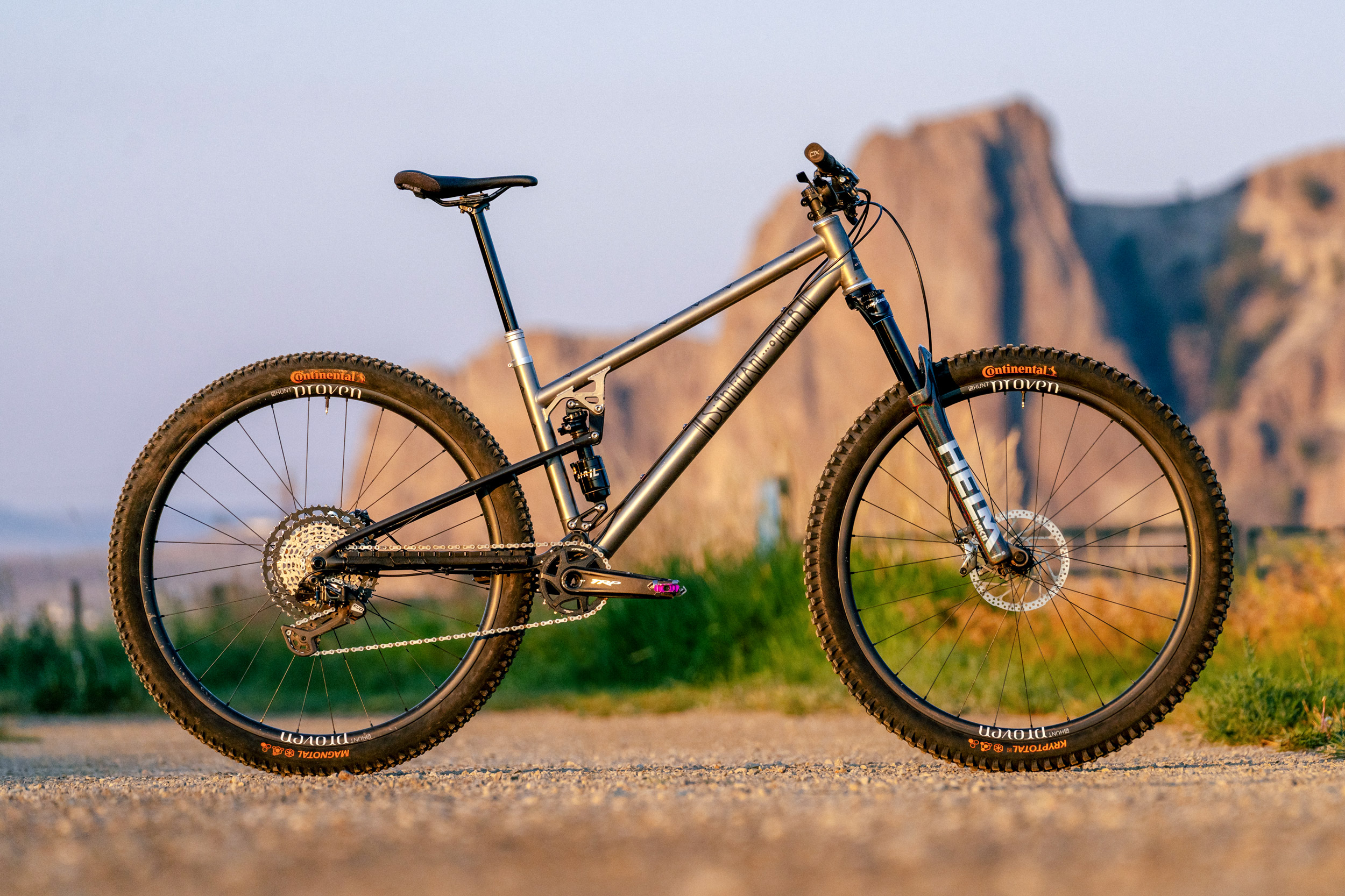
At first glance, it might look simple for a full-suspension bike. In a lot of ways, it is. Especially when you compare it to a more complex suspension system like CBF on the Revel bikes. However, Ashley uses a variety of laser-cut, machined, and 3D-printed titanium and stainless steel parts throughout the frame. She mentioned that ordering materials for the first round of bikes was more complex than she anticipated, but in the end, it all came together to create a bike that looks better than most, if not all, full-suspension bikes. The Ded Reckin uses a linkage-driven single-pivot design with flex stays. The rocker moves forward as the suspension compresses, and the shock sits nearly vertical directly above the bottom bracket. It’s a system that caught my attention, especially in a sea of carbon full-suspension bikes.
I asked Ashley why she designed it this way, and she explained: “The biggest driving force was the goal to minimize heat concentrations/welded areas on the titanium front triangle and keep the shock forces isolated to the frame’s strongest parts. The final layout creates good mass centralization by placing the shock right over the bottom bracket, better isolates it from frame flex for improved shock life, maximizes the investment and value of the 3D printed titanium main pivot housing, and preserves more usable space inside the front triangle, which I think is especially important on smaller sizes where water storage can sometimes be non-existent. It also let us tune the sporty leverage curve we wanted to work with the spring force of the flex stays for better small-bump, pedaling platform, and bottom-out performance.”

The bike uses Boost spacing, is built around 29 x 2.5″ tires, and comes with most of the modern standards we’ve come to expect. It has a threaded 73mm bottom bracket, a ZS44 upper and EC44 lower headset, and a 30.9mm seatpost diameter. While it does have internal dropper-post routing, I love the external cable routing along the upper portion of the downtube. Not only does it look good and remains somewhat hidden, but it also keeps things functional and easy to work on.
Sizing
I went down the rabbit hole this year on full-suspension bikes and sizing. The short version of what I’ve learned is that I can certainly ride both a medium and a large, but there are complexities beyond that. In fact, I’m starting to think I need to spend less time staring at geometry charts and more time just committing to a size.

This spring, I tested the Medium Revel Ranger. It was an incredible bike, but I came away feeling like I could have used a little more length. Overlaying the Ded Reckin and Ranger’s silhouettes, you can see that the size 45 Ded Reckin is pretty close to the Ranger, but it’s ever so slightly longer in the chainstays and front center, giving it a slightly longer wheelbase. However, it has a shorter reach with a taller stack, and that reach number was what gave me so much pause about going with the size I ended up with. I tend to get caught up in reach and stack numbers without paying enough attention to other important measurements like effective top tube, front center, and just the overall wheelbase. I’ve been told plenty of times not to rely on reach alone, and over the past few years, I’ve started looking much more closely at the whole picture.
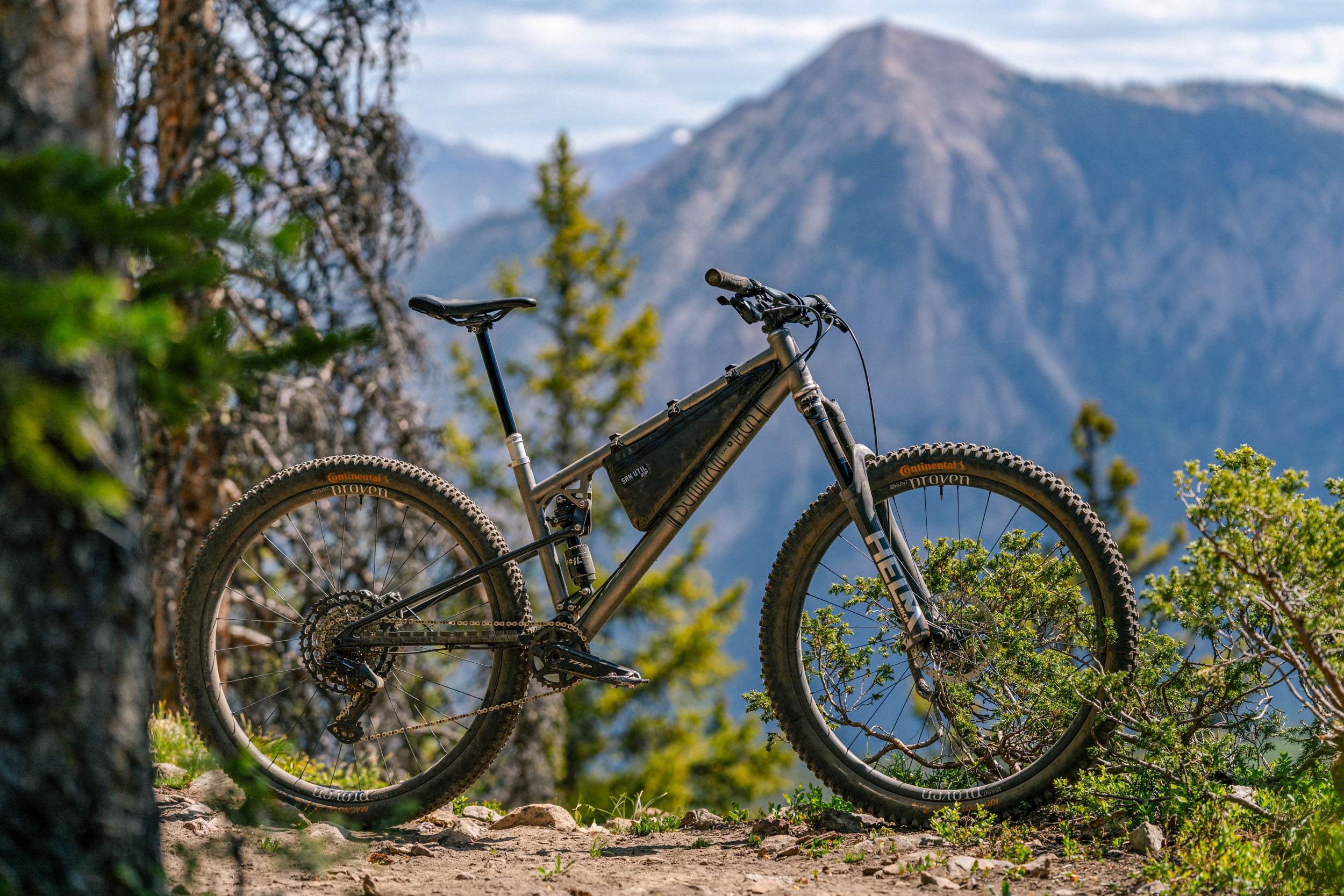
Long story short, Ashley offers six sizes, and the reach number names them. I tested the 45, which has a 450mm reach. When I first started riding the 45 with the 40mm BikeYoke stem that came with it, I felt like I was close to an ideal fit, but the cockpit still felt a little short. Since the Ranger had a 465mm reach and felt close to what I wanted, I nudged the saddle back a touch and swapped the 40mm stem for a 50mm. That gave me a little more room between the saddle and bars, and the overall fit felt pretty good. I’m 5’9.5”, but with longer arms, so that extra space is needed.
The Ded Reckin also has a noticeably taller 626mm stack than the Ranger and many of the other short-travel bikes I’ve ridden. But, once I swapped the stem and spent a few days on it, I stopped thinking about the fit altogether. It never annoyed or nagged at me. My body was perfectly happy on the 45 with a few minor adjustments.
Geometry
Typically, when you see a 65-degree head tube angle on a bike, it’s often as a trail bike. Of course, a lot has changed over the last decade, and the sheer number of bikes with 65-degree or sub-65-degree head tube angles has grown. Longer bikes, slacker front ends, and steeper seat tubes are increasingly common in modern bike design. I counted 13 mountain bikes I’ve tested or reviewed over the last four years, and almost all of them had claimed head tube angles between 64.5 and 65.5 degrees, with most around that 65 degrees. That’s common these days, but of course, the head tube angle isn’t the full picture.
The seat tube angle comes in at 76 degrees, but the big number that stood out to me was the chainstay length. On the size 45 I tested, the Ded Reckin has 440mm chainstays, which are long for a size-medium short-travel trail bike. Most similar bikes I’ve tested fall somewhere between 430 and 436mm. That extra length is what I would call the special sauce of this bike, but more on that soon. It is worth noting that the 47, 49, and 51 sizes have even longer stays at 450mm. All told, the 45 has a 775mm front center and a total wheelbase of 1,214mm, with a 35mm bottom bracket drop.
Ridin’ the Reckin
Whether it’s time spent on a suspension design you enjoy or simply years of consuming marketing jargon, I think most of us understand that there are seemingly endless ways to connect a front and rear triangle with a shock and some pivots. When you get something as relatively straightforward as a linkage-driven single-pivot flex-stay design, it’s refreshing.
It’s not an especially difficult system to understand, but that doesn’t mean every bike with this system is going to ride the same. Leverage curves, geometry, frame material, travel, and all the other little details can completely change how a bike feels. That’s one of the reasons I’ve always been so intrigued by full-suspension bikes. That said, I’ve never ridden one that feels quite like the Ded Reckin.
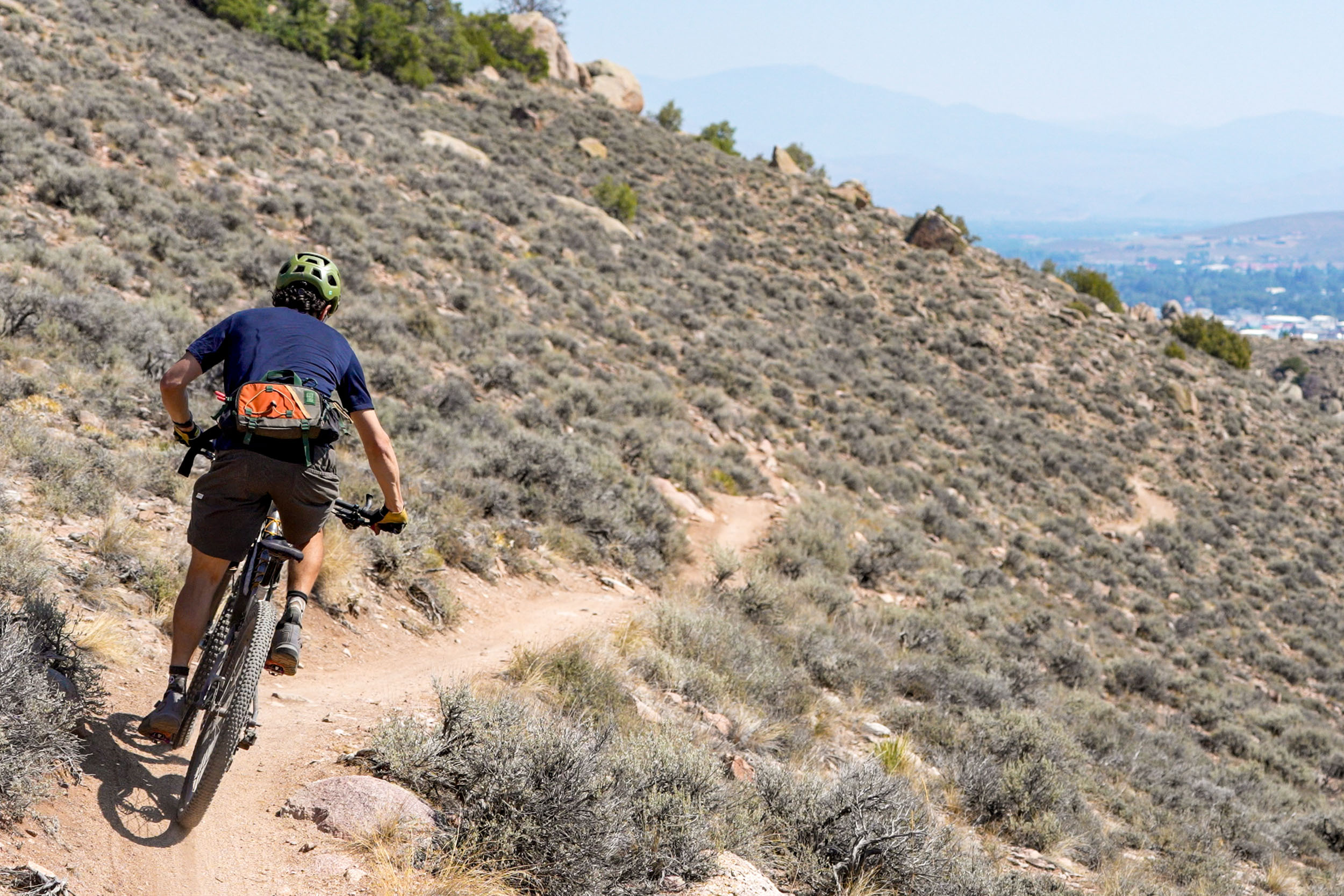
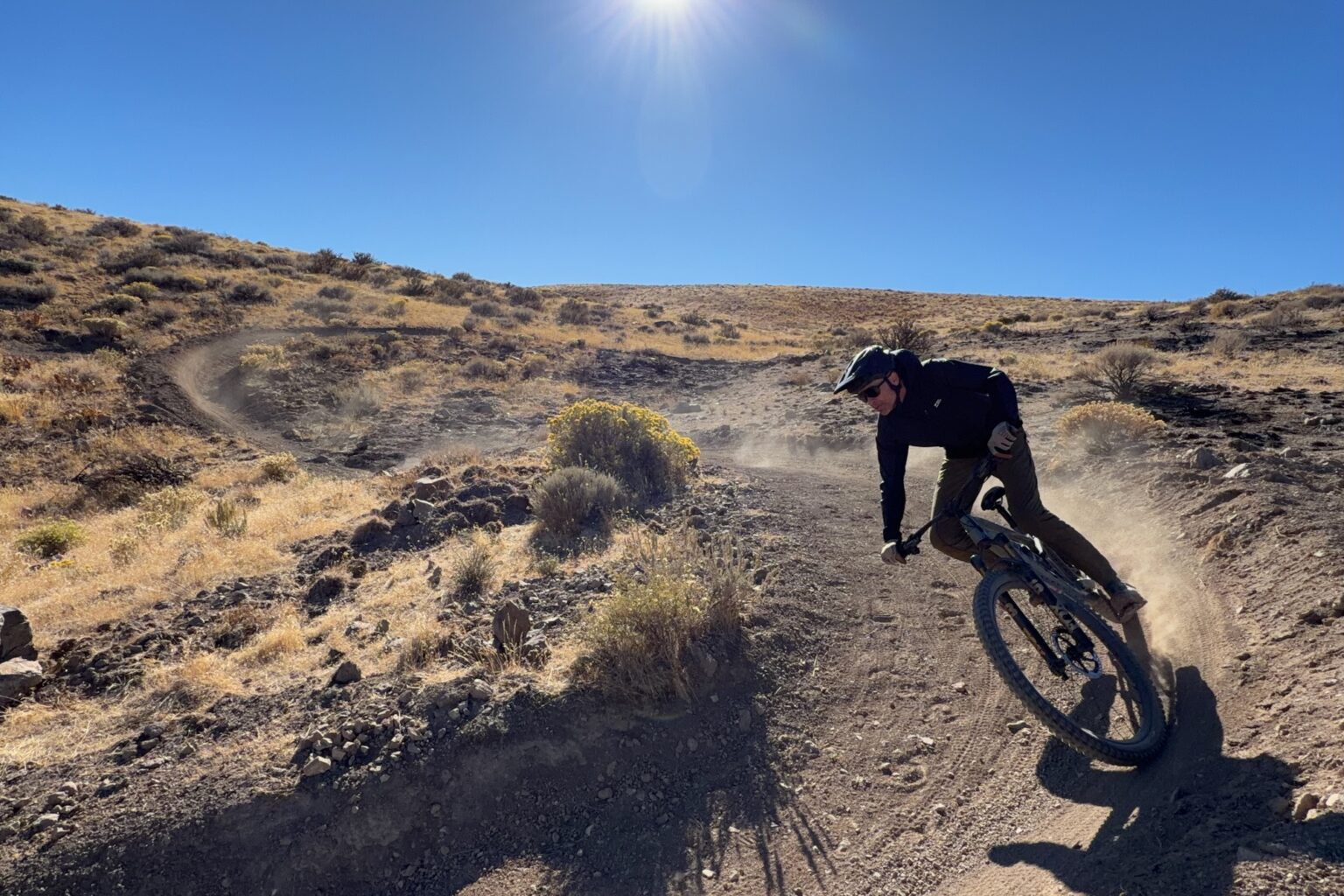
I ended up riding this bike for two months, with lots of vert and technical trails throughout. There wasn’t a single trail ride where I found myself wishing I was on something else. Sure, if I was riding pavement or endless gravel roads, there are better tools for the job. But the end goal for most of my rides is singletrack, and the Ded Reckin handled everything remarkably well.
Some of that is down to how efficient this bike feels. I’ve mentioned this before, but it’s one of the key ingredients in the bikes I tend to like. I love the challenge of human-powered travel, long technical climbs, and big days on the bike, and efficiency feels baked into the Ded Reckin’s DNA. This bike just goes. Whether I was climbing dirt two-track or technical singletrack, I was consistently impressed by its sense of urgency. There were moments on technical climbs where getting the rear wheel up and over something took a little more effort than some “downcountry” bikes. Maybe some of that comes from the longer chainstays, and maybe some of the other short-travel suspension designs I’ve ridden have felt a touch more eager in those situations. But it was never enough to frustrate me or regularly get me off the bike. There’s also something appealing about achieving all of this with a relatively simple suspension layout and fewer pivots and bearings to maintain.
Where the bike surprised me most, though, was while descending. I can’t think of many situations where the Ded Reckin felt undergunned. I’m not the fastest or most aggressive descender out there. I have a limit beyond which I stop pushing my comfort zone. But that limit always seemed to be mine, not the bike’s.
I felt incredibly confident on the Ded Reckin, and for a 120mm-travel bike, that’s saying something. I felt more comfortable descending on it than I have on bikes like the REEB SST, Revel Ranger, Salsa Spearfish, and plenty of other short-travel bikes I’ve ridden. Under hard braking, the suspension remained impressively active, which helped the bike stay composed and track through rough terrain rather than stiffening up.
The longer 440mm chainstays, paired with the flex-stay suspension, are part of the special sauce that helped accomplish this. They give the bike a unique character. It feels like it has more than 120mm of travel at times, with a balanced and planted demeanor that inspires a ton of confidence. But what surprised me is that it still manages to be playful. Perhaps that’s some of its cross-country DNA coming through, but it can feel incredibly grounded and composed one moment, then happily pump through terrain, pop off little features, and get airborne the next.
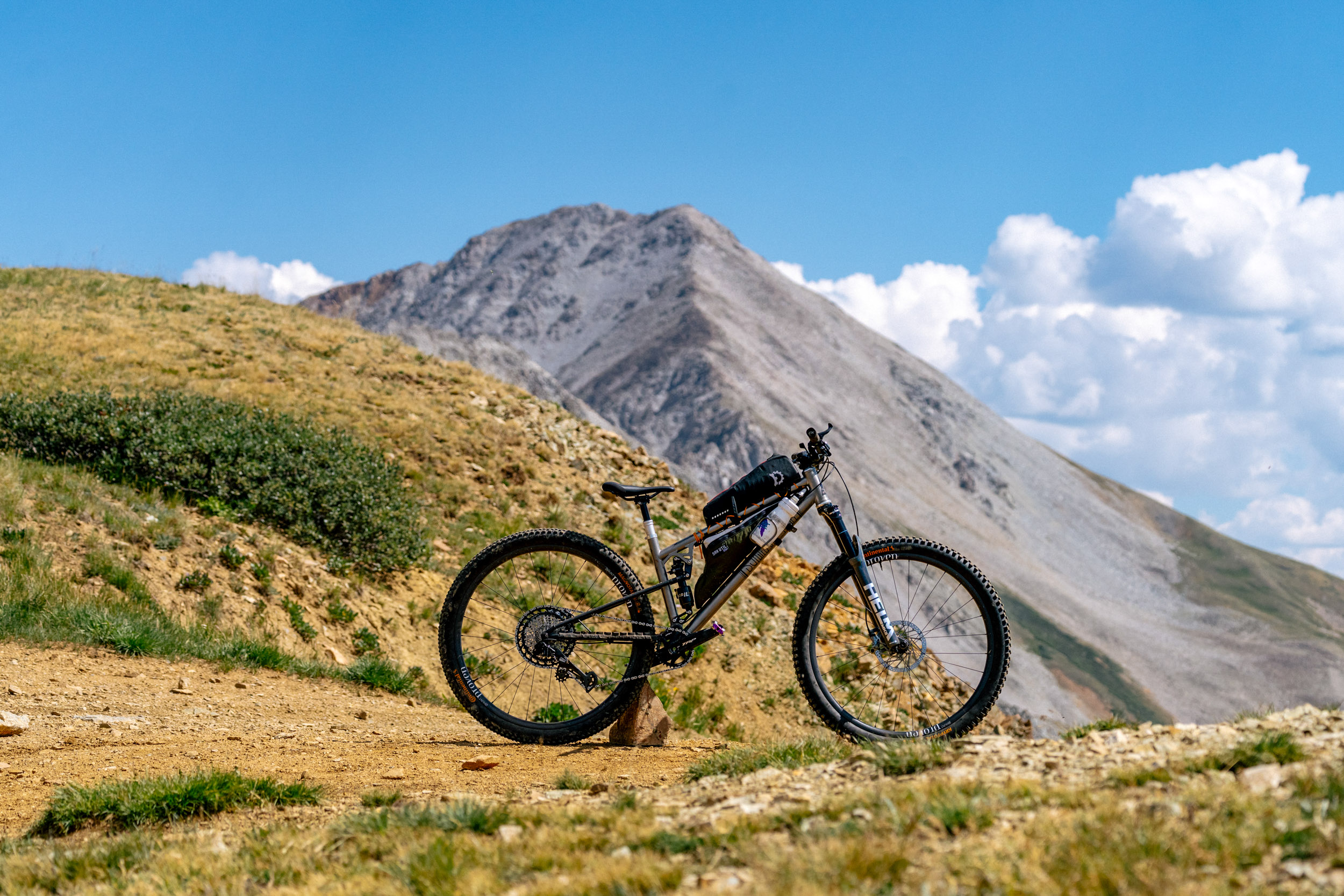
Finally, the low top tube and generous standover allow the Ded Reckin to run a 200mm dropper. On rolling XC-style trails where you’re constantly transitioning between seated pedaling and short descents, that much drop can occasionally feel like overkill. I noticed that a little at Hartman Rocks. But get the bike into the high country with 2,000-plus-foot descents, and it’s a game changer. The saddle completely disappears, the bike gets out of your way, and you’re left with all the room you could want to move around and ride right up to the limit of your ability.
I hate to use the term “unicorn bike,” but if you love riding singletrack and want a bike that climbs exceptionally well without limiting you on the descents, this could be that one bike that does it all. Plus, it looks so good. I could go on and on about the attention to detail, the immaculate welds, and the overall craftsmanship, but I’ll let the photos tell that story.
Loaded Up
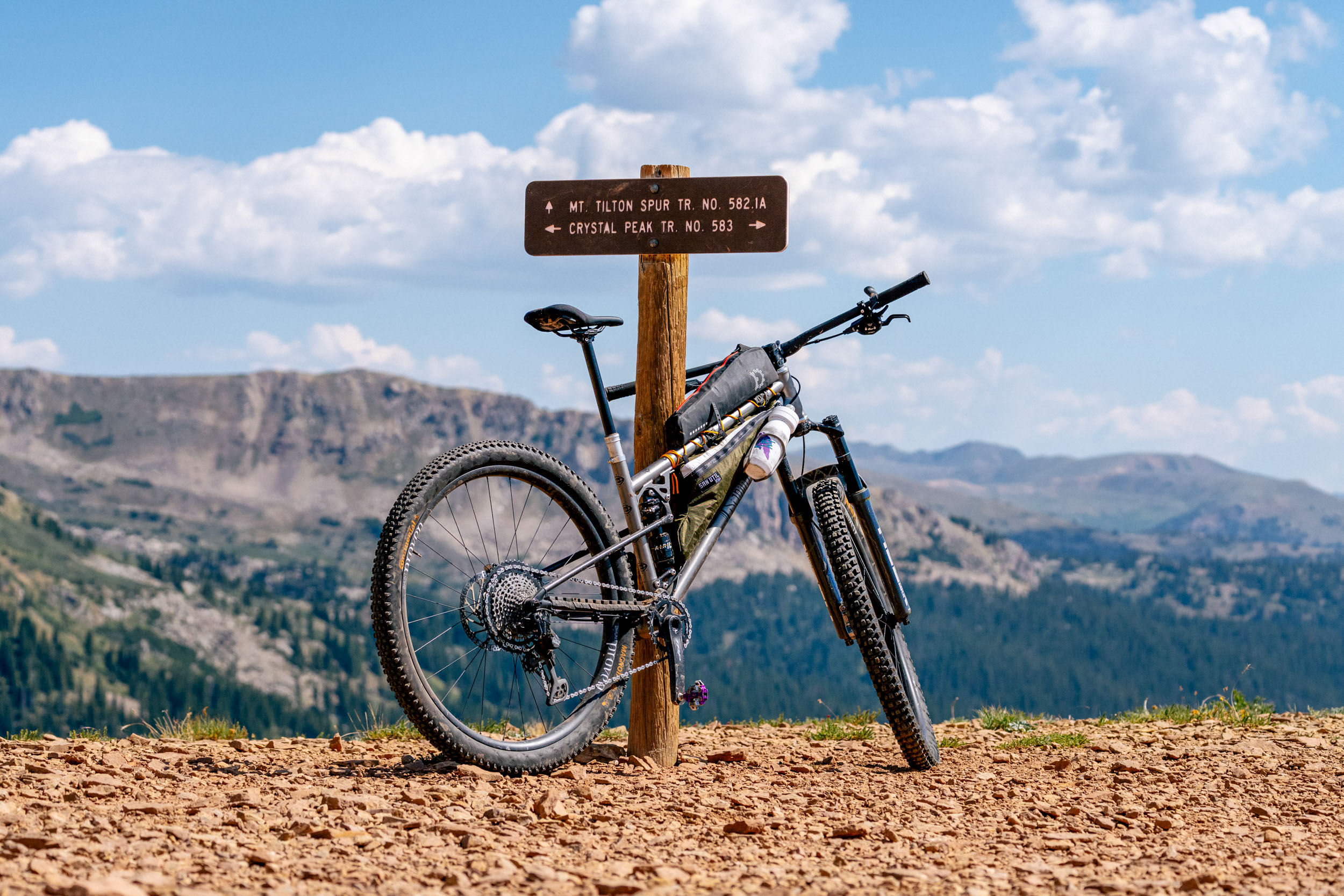
I should preface this section by saying I was close to taking the Ded Reckin on the Colorado Trail this year. The only reason I didn’t was that I had other gear and a frame that needed more immediate testing. The last ride I did on this bike before leaving for the Colorado Trail was the Baxter, Para Me Para Ti, and Green Lake loop outside Crested Butte. It was one of those rides where the bike just did everything so well. It made it difficult to choose the Santa Cruz Tallboy, and after spending some time with it loaded, I can confidently say it would make a great Colorado Trail bike. There’s also something about the combination of steel and titanium that gives me a little extra confidence when loading a bike up for a long trip. Carbon has obviously come a long way, and I have plenty of confidence in it, but there’s still something reassuring about strapping gear to metal tubes and heading into the backcountry.
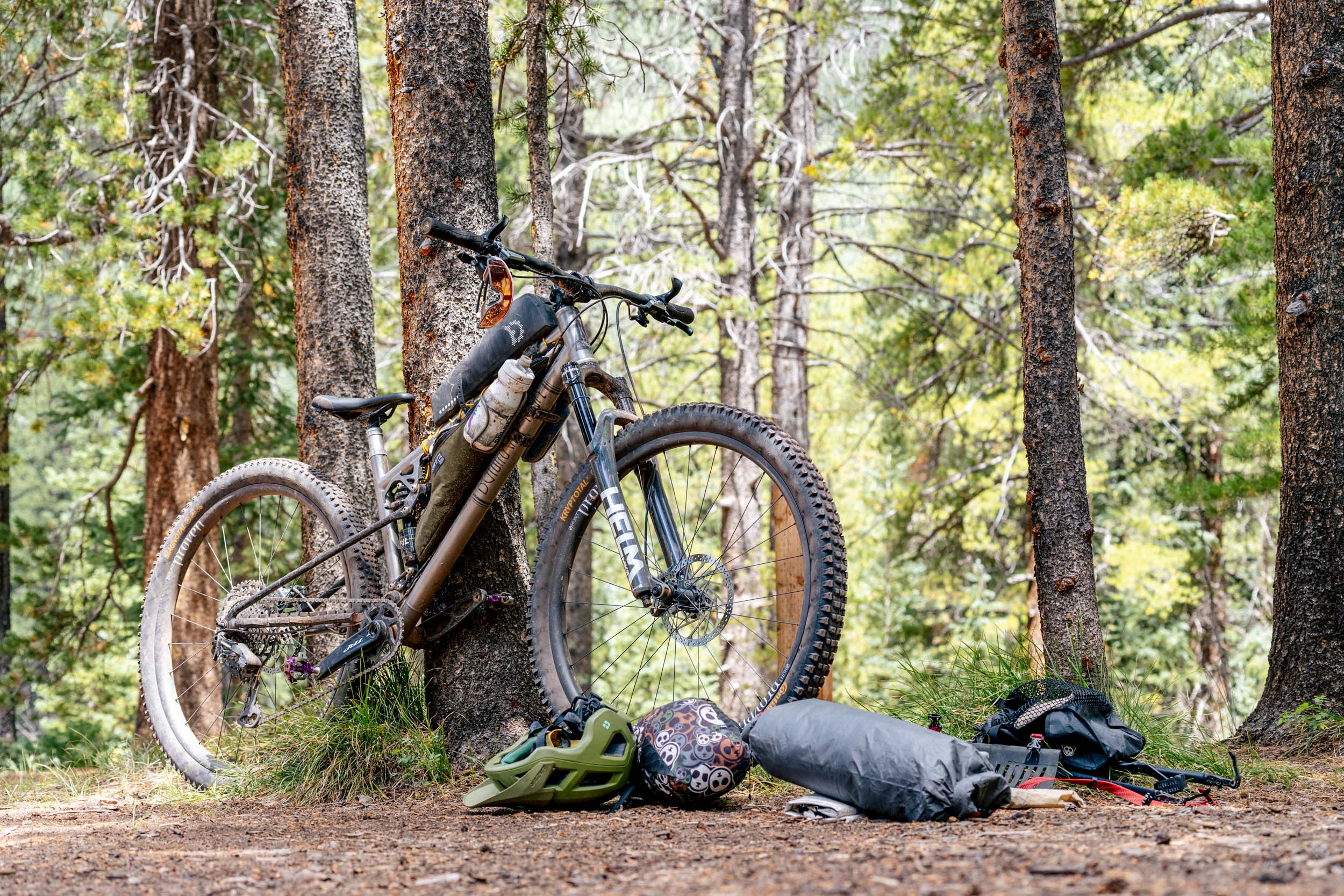
I will say, though: titanium makes a surprisingly terrifying sound when struck by a wayward rock. It’s this sharp, high-pitched ping that initially sounds like something just broke. Nothing happened during my time with this bike, but it’s a worrying sound. The biggest limitation to bikepacking on a size 45 frame is frame space. There just isn’t much of it. The vertical shock takes up a good portion of the main triangle, so on these smaller sizes, you’re probably going to rely more heavily on big top-tube bags to supplement your storage. San Util made me a custom frame bag for this bike, which allowed me to eke out a little more usable volume than the wedge bag that came with it, but there’s still not much room for anything substantial.
As far as mounting points, the frame is pretty simple. There are five bosses inside the downtube that can be used for a bottle and cable keepers, and they also work well for a direct-mount frame bag. Ashley offers additional bosses for $25 each, though, and I would absolutely add two underneath the downtube. For another $50, having that extra cargo location would be well worth it for a bike like this. For my setup, I used the Tailfin Journey Rack, which worked nicely. More importantly, it paired well with the 200mm dropper. There was no need to compromise dropper travel just to carry rear cargo, which is something I appreciate on a full-suspension bike. Up top, I used a longer Revelate Designs Extend Play top-tube bag, which helped make up for some of the missing inner frame storage. If I were setting this bike up for the Colorado Trail, though, I’d seriously consider running a full-length top tube bag from the head tube all the way to the seat tube.
More importantly, the Ded Reckin maintained all of its best qualities while loaded. The efficiency I liked so much unloaded was still there, and the longer rear end gave the bike a stable, planted feel with gear on it. That’s ultimately what I want from a bikepacking bike: something that doesn’t completely change personality the second you strap a bunch of stuff to it.
Specs and Build Kit
Ashley currently offers the Ded Reckin as a frame-only, frame-and-shock, or frame, shock, fork, and headset. She’s no longer offering a complete build, which might be a detractor for some. That said, I want to talk about the suspension and a few other components that came with this test bike.
One of the biggest parts of the bike, and one of the reasons I think it rides so well, comes down to two components: the Cane Creek Helm MKII fork and Cane Creek Air IL shock. The Air IL is a lightweight inline shock with unusually deep adjustability, including independent high- and low-speed compression and rebound. That makes it extremely tunable but also a little frustrating because small adjustments can noticeably change how the bike rides. In the past, I’ve struggled to get along with it, but with time on this bike, I finally figured it out. I got it to a point where it felt incredibly efficient while still tracking well on technical climbs, then handled bigger, harsher hits remarkably well on descents.
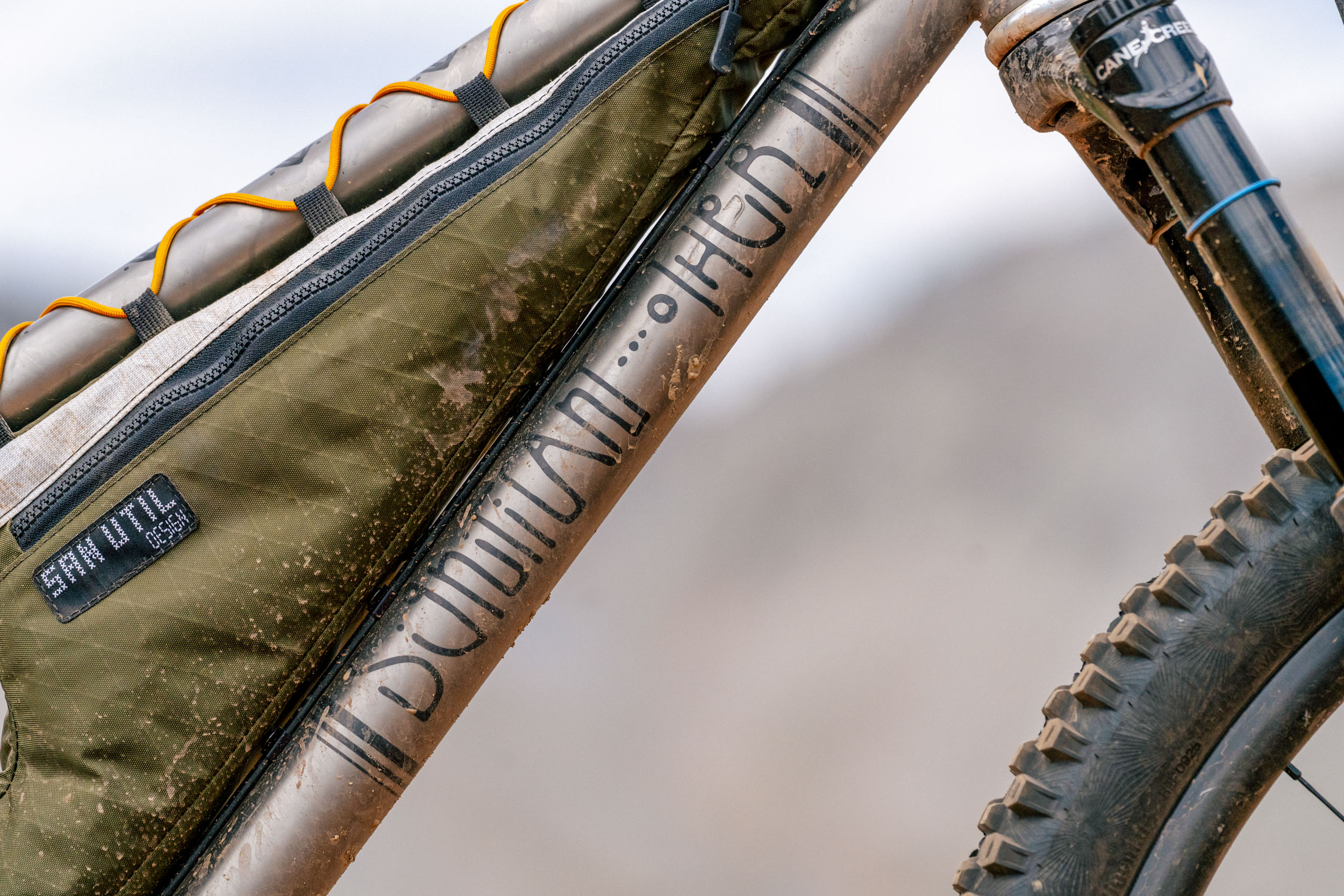
I kept the shock open for most of my time with the Ded Reckin. There were a few occasions where I used the climb switch on pavement, but I didn’t feel much need for it otherwise. The switch is also tucked into a slightly awkward spot near the rocker link, so I didn’t find myself reaching for it very often. But considering how efficiently the bike pedaled in the open position, that never bothered me. I had a similar experience with the Helm. I had an issue during the test period when the fork seemed to build up pressure and needed to be equalized, but overall, this was a much better Cane Creek suspension experience than I’ve had in the past.
Significant Other Ded Reckin Build Kit
- Frame: DED RECKIN Size 54
- Fork: Cane Creek Helm MKII
- Crankset: TRP EVO 12 Alloy
- Derailleur: TRP EVO 12
- Shifter: TRP EVO 12
- Cassette: TRP Evo12
- Bottom Bracket: TRP BSA
- Front Wheel: Hunt Proven
- Rear Wheel: Hunt Proven
- Front Tire: Continental Kryptotal
- Rear Tire: Continental Magnotal
- Headset: Cane Creek
- Handlebar: One UP
- Stem: Race Face Turbine 50mm
- Grips: SX Lab 70X
- Saddle: Sq Lab
- Seatpost: BIke Yoke Revive
- Dropper Lever: Bike Yoke
- Brake Levers: TRP EVO
- Brake Calipers: TRP EVO
- Rotors: TRP
Moving on to the drivetrain and brakes, Ashley spec’d this bike with the TRP EVO 12-speed drivetrain. It worked pretty well. I had plenty of satisfying moments while using it, and I appreciate having another drivetrain option from a reputable cycling brand outside the big two. The shifting isn’t quite as crisp or effortless as some of the other drivetrains I’ve used, but it almost always got the job done. My biggest complaint was the clutch, which seemed relatively weak. I dropped the chain multiple times on rougher descents, which was the most frustrating part of the drivetrain. And for cranks, it comes with 165s. Though I did have a few pedal strikes, I was never annoyed with the overall bottom bracket height.

As for the TRP EVO Pro brakes, they’re powerful. At times, they almost felt like they had too much bite, but overall, I liked the power and feel. Despite providing more confidence on trail, however, I noticed some fading once they got hot on longer descents. It’s an extreme case, as I put them through sustained 2,000- to 3,000-plus-foot descents, but it’s something to note. This bike is equipped with 180mm rotors front and rear, and the published Ded Reckin build uses TRP’s thicker 2.3mm rotors.
Outside of those components, Ashley spec’d the bike with a HUNT Proven Carbon Trail HCore wheelset. I’ve heard some horror stories about HUNT wheels over the years, but I’m the second person to ride this particular media bike, and these are still true and have held up great. I also enjoyed the Continental tires. The Kryptotal up front inspires a ton of confidence, while the Magnotal out back rolls surprisingly well without feeling outgunned when things get rough. Finally, BikeYoke and SQlab components round out the bike I tested. The full build came in at 31.5 pounds. It’s not light, but it’s a metal bike; it’s not made to be feathery.
Ashley King and Significant Other
The Ded Reckin is available in three configurations: frame only for $3,400, frame and rear shock for $3,967, or frame, shock, and fork for $5,059.
Something to note is that Ashley offers quite a few customization options. For example, you can swap rear triangles, so if you want the size 47 but prefer to stick with the 440mm chainstays, you can do that. There are also several other options, including Colorado-machined parts and additional frame details, allowing you to tailor the bike to your preferences. Much of this is because it is a small-batch production bike, fabricated in the US. To get a better idea of the process and the frame design, I caught up with Ashley in her Denver workspace when I picked up the bike. Check out the full interview below:
- Model Tested: Ded Reckin, 45
- Actual Weight: 31.5 pounds (14.28 kilograms)
- Place of Manufacture: Denver, Colorado
- Price: $5,059
- Manufacturer’s Details: Significant Other
Pros
- Efficient-pedaling bike
- Feels much bigger than a 120mm
- Balanced mix of planted stability and playful handling
- Beautiful craftsmanship and thoughtful frame details
- Simple suspension layout with fewer pivots and bearings means less maintenance
- Excellent when loaded
Cons
- Limited frame space
- Suspension takes time to tune
- Longer rear end requires more effort on technical climbs
- Not the lightest or fastest short-travel bike
- Premium price
- No complete build option
Wrap Up
When thinking about the amount of effort that goes into making a bike—the engineering, testing, and fine-tuning—you can understand why larger brands often have entire teams working on a single model. So, when a bike like the Ded Reckin comes along, and you get to talk directly with the person who helped design and build it about the process, the development, and the passion behind it, it’s exciting.
What’s even better is when a bike from a small builder can go toe-to-toe with bikes from much larger manufacturers. There’s something really satisfying about that, and the Ded Reckin certainly does. The bike offers a ride quality that inspires confidence both with and without gravity on your side. It pedals with urgency, descends far beyond what I expected from 120mm of travel, feels fantastic loaded down, and manages to be both planted and playful.
Is it perfect? No. The smaller sizes don’t offer a ton of frame-bag space, the suspension takes some patience to dial in, it’s not the fastest bike out there, and there are a few instances where a CBF or Split pivot truly do make for a better trail experience. But those things feel minor compared to its smiles-per-mile.
More than anything, the Ded Reckin feels thoughtfully made. Nothing about it seems different simply for the sake of it. The materials, suspension layout, geometry, and all the little fabrication details serve a purpose, and together, they create one of the most memorable short-travel bikes I’ve ridden in a long time. Perhaps that’s the biggest compliment I can level: after months of riding it, there were very few times I wished I was on something else.
Further Reading
Make sure to dig into these related articles for more info...
Please keep the conversation civil, constructive, and inclusive, or your comment will be removed.

















 English (US) ·
  French (CA) ·
  French (FR) ·