

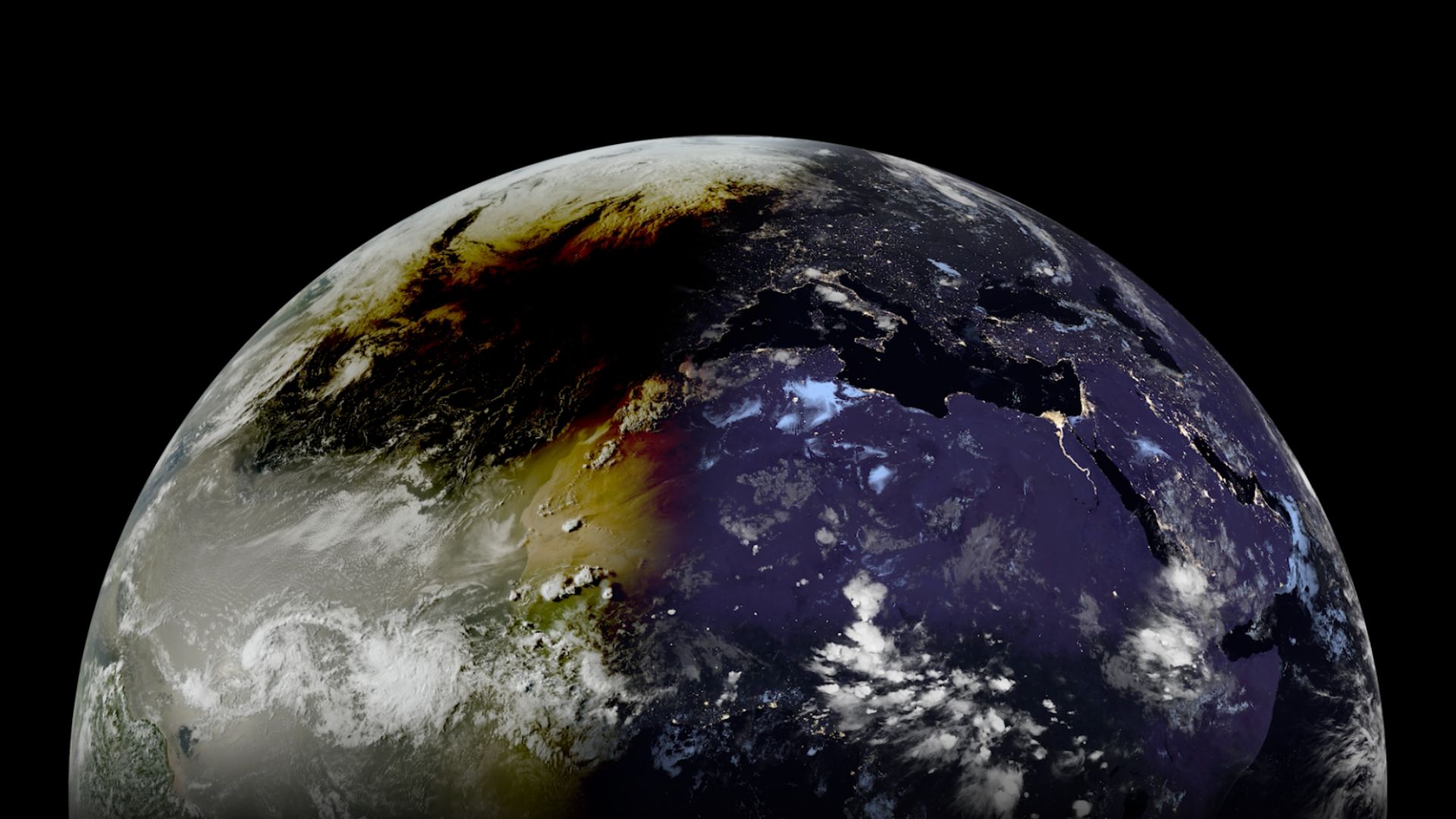
The Aug. 12 total solar eclipse didn't only plunge millions of people across Greenland, Iceland and Spain into a false twilight — a fleet of spacecraft orbiting our planet managed to capture the magic, too.
August's total solar eclipse occurred as the moon passed directly between the sun and Earth during its monthly new moon phase. Those lucky enough to be in the path of totality watched on in awe as the moon progressively swallowed the light of the sun, ultimately revealing our star's tenuous atmosphere against a prematurely darkened evening sky.
It was a show of truly epic proportions — and maybe one whose scale can be particularly appreciated when viewed through the mechanical eyes of NASA and European Space Agency (ESA) spacecraft that observe our planet and sun from afar. Read on to see some breathtaking views of the Aug. 12 total solar eclipse from orbit.
The Aug. 12 total solar eclipse, seen from space
Our first view comes courtesy of NASA astronaut Jessica Meir, who captured the moon taking a bite out of the sun from the Russian segment of the International Space Station (ISS) on Aug. 12.
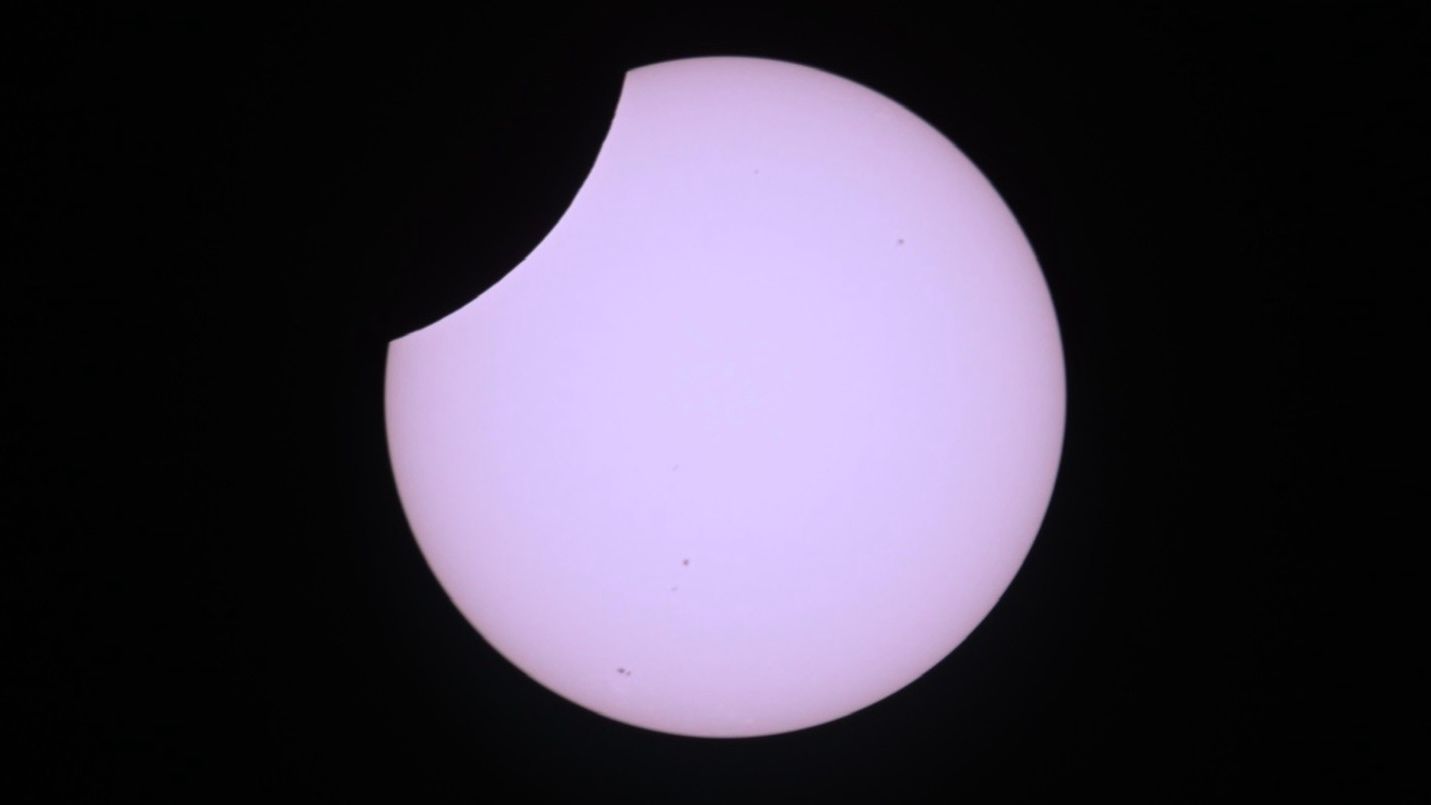
"Given the location of the @Space_Station at the time of the total solar eclipse today, we saw only a partial eclipse, with a peak of around 18% sun coverage," Meir said in an X post accompanying the photographs.
Given the location of the @Space_Station at the time of the total solar eclipse today, we saw only a partial eclipse, with a peak of around 18% sun coverage. Here’s how it looked from a window in the Russian segment about 45 minutes ago. Photo of the sun taken with a Nikon Z9,… pic.twitter.com/BUrMQVR808August 12, 2026
Around the same time, photographer Joel Kowsky managed to line up a beautiful shot of the ISS as it passed across the face of our eclipsed star in the skies over Hodgdon, Maine.
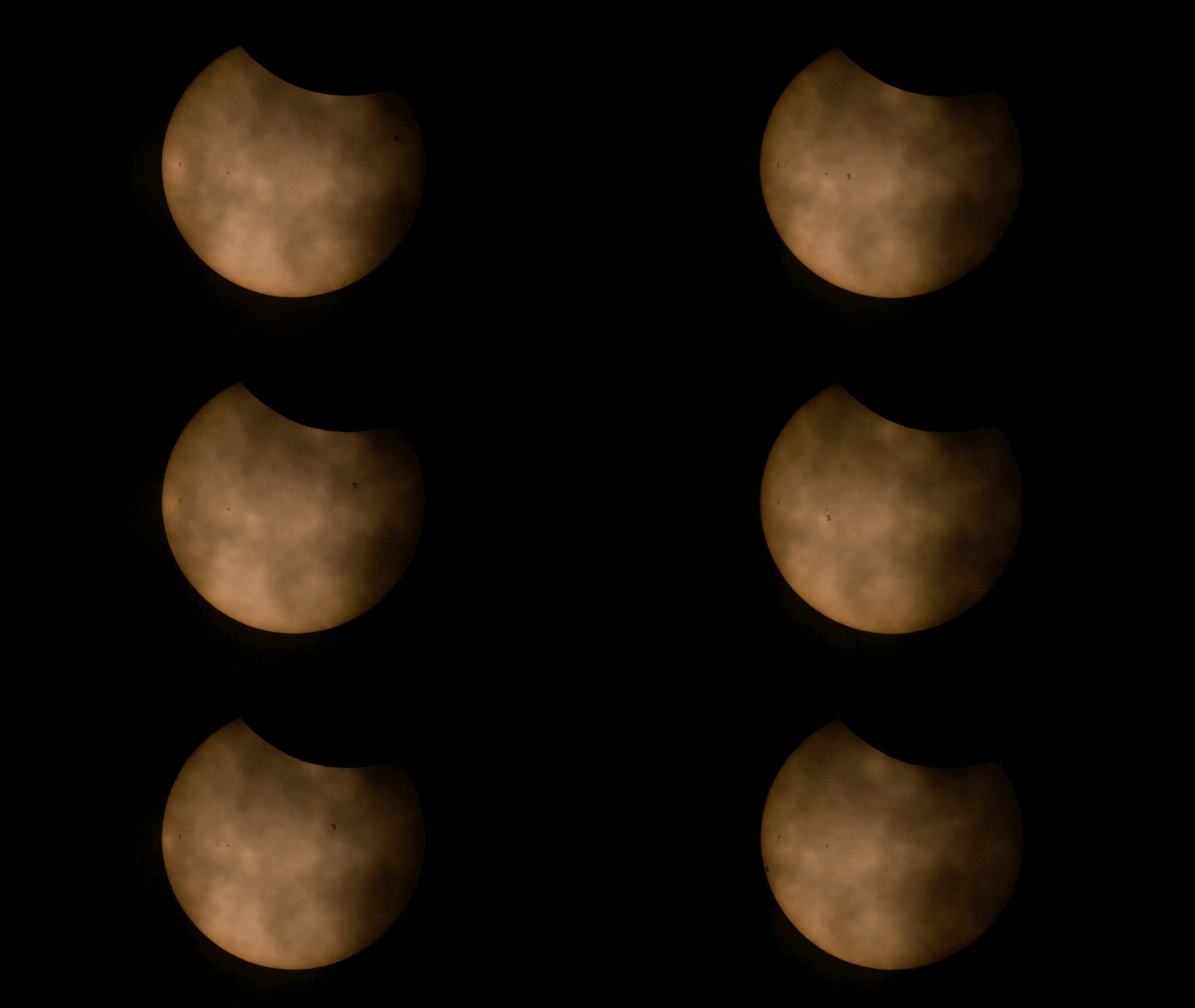
The dual spacecraft of the European Space Agency's Proba-3 mission also captured a lovely (though largely redundant) view of the moon moving to occult the sun's disk, which, in this case, was already perfectly hidden behind the lead spacecraft's coronograph!
Both Proba-3 spacecraft are designed to fly in perfect formation in line with the sun. The "Occulter" spacecraft, closest to the sun, is equipped with a large sunshield, or coronagraph. This coronagraph blocks the sun's disk for the more distant member in the Proba-3 formation, allowing that spacecraft to image our star's atmosphere in incredible detail.
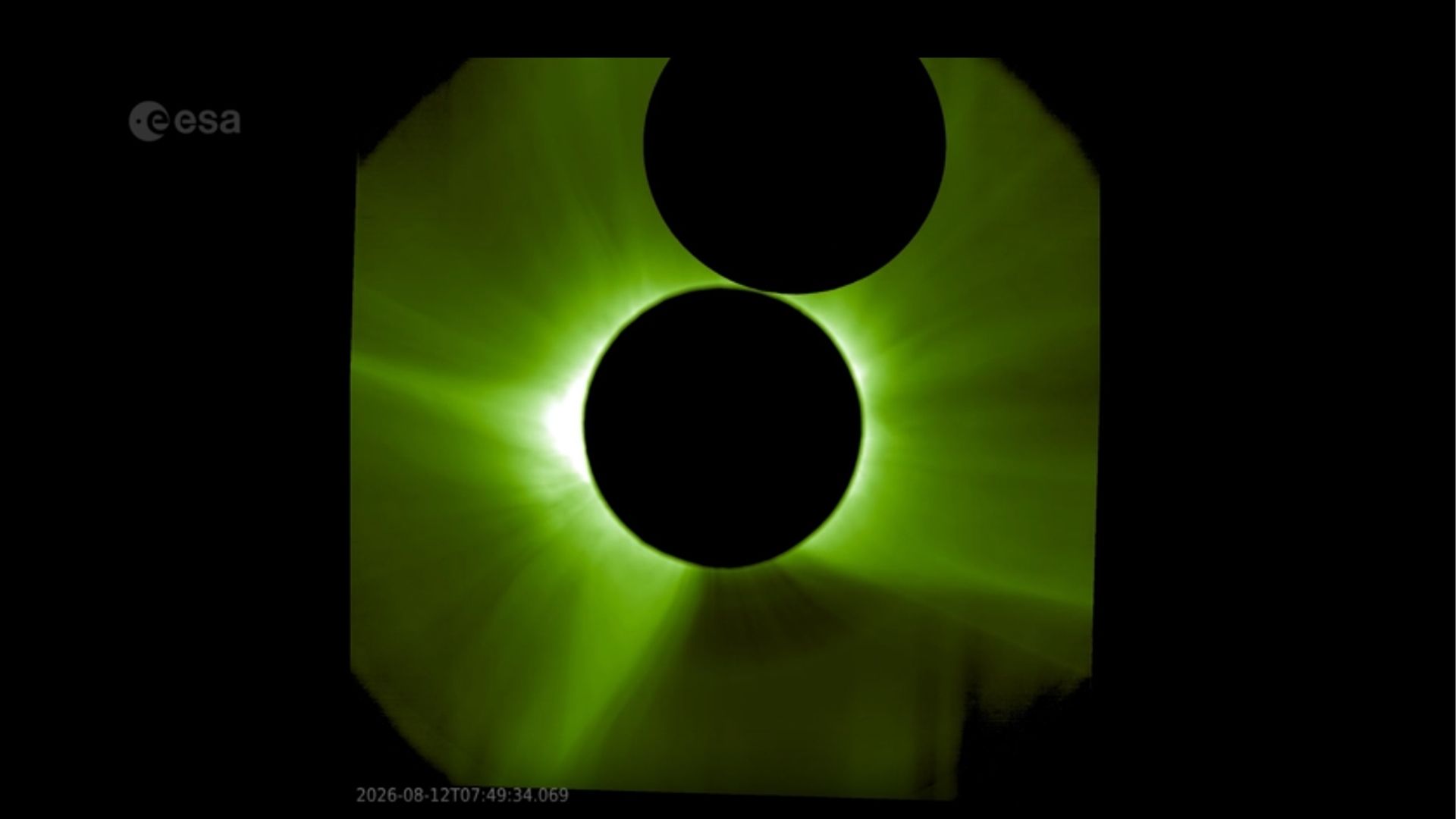
Thanks to their unique setup, for a brief moment on Aug. 12, the Proba-3 spacecraft recorded a rare double eclipse, as the moon and its artificial mimic simultaneously hid light emanating from our parent star.
Sitting about 22,370 miles (36,000 kilometers) above Earth's surface, ESA's Meteosat Third Generation Imager Satellite (MGT-I1) caught a spectacular view of the moon's shadow darkening our planet.
Solar eclipse as seen from space! From its vantage point in space, the Meteosat Third Generation Imager satellite (MTG-I1) captured the Moon’s dark shadow as it passed over Earth’s surface – converging with the advancing twilight shadow as dusk fell over Europe.… pic.twitter.com/dAQVyuXiIPAugust 13, 2026
The moon's shadow can be seen arcing south in the satellite imagery, before eventually combining with the advancing terminator line, which heralded the transition from day to night wherever it passed.
That same shadow was observed on Aug. 12 by the U.S. National Oceanic and Atmospheric Administration's GOES-19 satellite as it kept watch over Earth from its perch in geostationary orbit.
This #FullDiskFriday, we revisit the #totalsolareclipse that @NOAA’s #GOESEast (#GOES19) 🛰️ captured on August 12, 2026. The moon moved directly between the Earth and sun, casting a shadow that travelled over Greenland, Iceland and Spain. Millions of people in this path of… pic.twitter.com/y9nyXkpvs1August 14, 2026
Be sure to check out our photo roundup to see more stunning views of the Aug. 12 total solar eclipse. Why not also read up on this month's lunar eclipse, which will see Earth's shadow turn the moon a deep crimson overnight on Aug. 27-28
Editor's Note: If you would like to share your astrophotography with Space.com's readers, then please send your photo(s), comments, and your name and location to [email protected].



















 English (US) ·
  French (CA) ·
  French (FR) ·