

PROTECT YOURSELF with Orgo-Life® QUANTUM TECHNOLOGY
Orgo-Life the new way to the future Advertising by Adpathway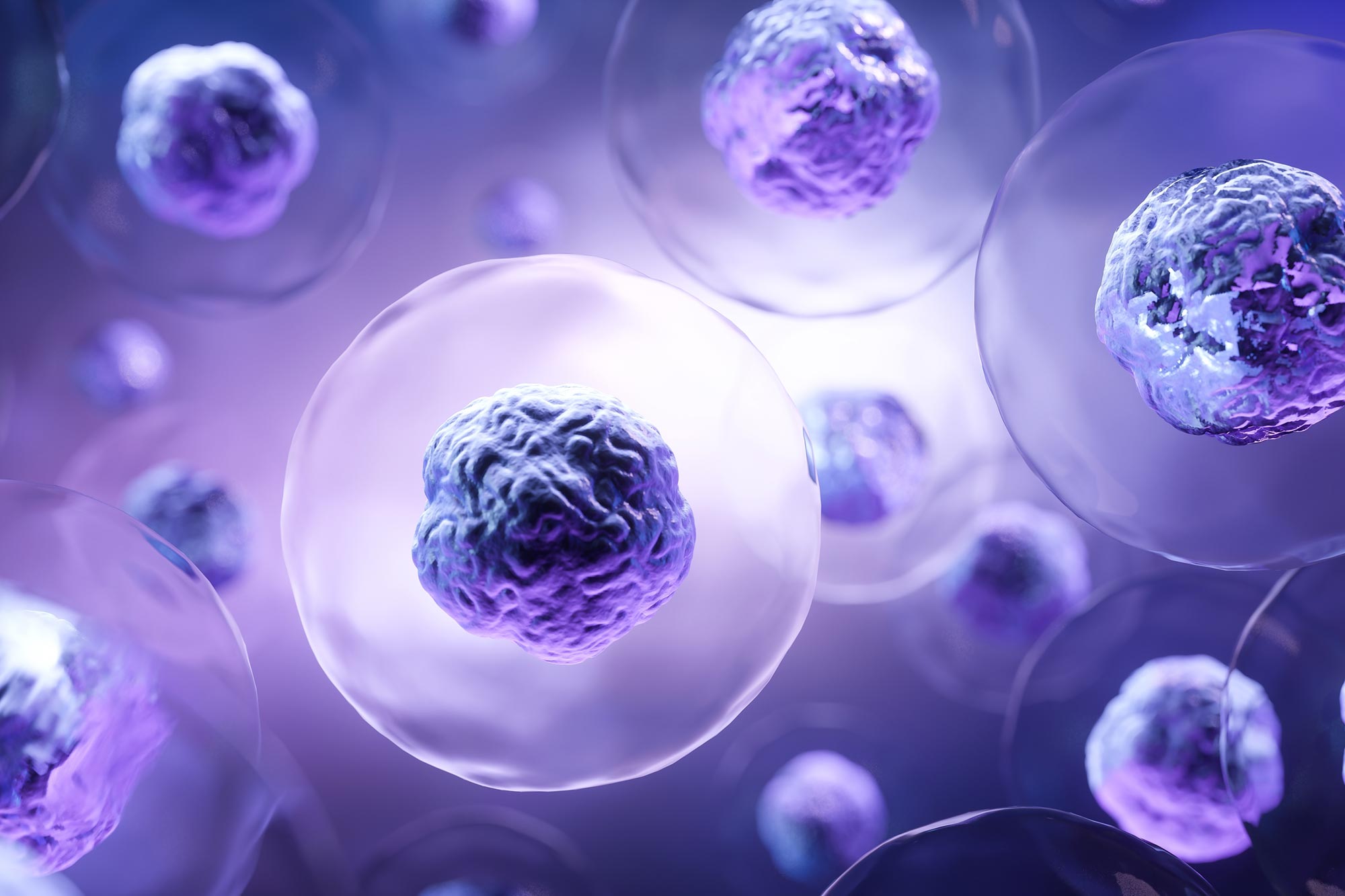 A new study from the University of Basel challenges decades of research into how certain proteins help cells maintain their structure and function. Credit: Shutterstock
The tools scientists use to study cells may be changing the very proteins they observe, raising questions about decades of research into how cells maintain their structure.
For decades, textbooks and hundreds of scientific papers have described coronin proteins as important organizers of the internal framework that gives cells their shape and helps them move. Now, researchers at the University of Basel in Switzerland are revisiting that longstanding explanation, showing how scientific progress can sometimes begin by questioning what we thought we already knew.
Coronins are found in organisms ranging from single-celled amoebae to humans. They are involved in essential processes such as immunity, development, and cell survival. Scientists have traditionally viewed them as proteins that interact with actin, a major component of the cytoskeleton. This network of tiny filaments supports a cell’s structure, allows it to move, and helps organize its contents.
Coronins may play a different role in cells
A new study published in PLOS Biology, led by Professor Jean Pieters at the University of Basel’s Biozentrum, challenges that understanding. Using a broad range of experiments to examine coronins in their natural state, the researchers found that these proteins are largely unnecessary for the overall organization of the actin cytoskeleton.
“Over the years, my laboratory failed to find evidence for a direct role of coronin proteins in actin binding and modulation across a wide range of model systems,” says Pieters. “Even cells lacking coronins continue to organize and remodel their actin networks normally. Of course, absence of evidence is not evidence of absence.”
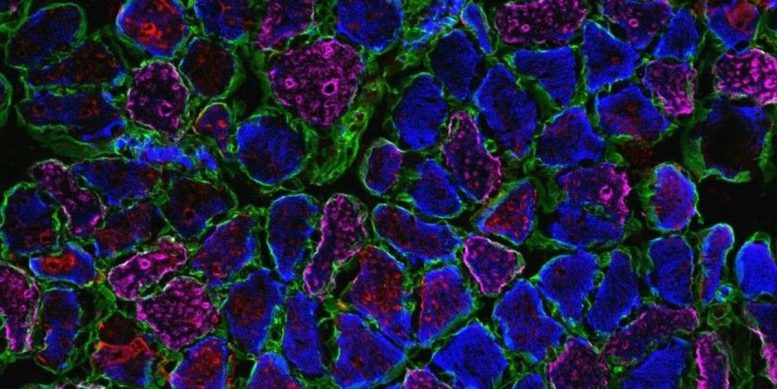
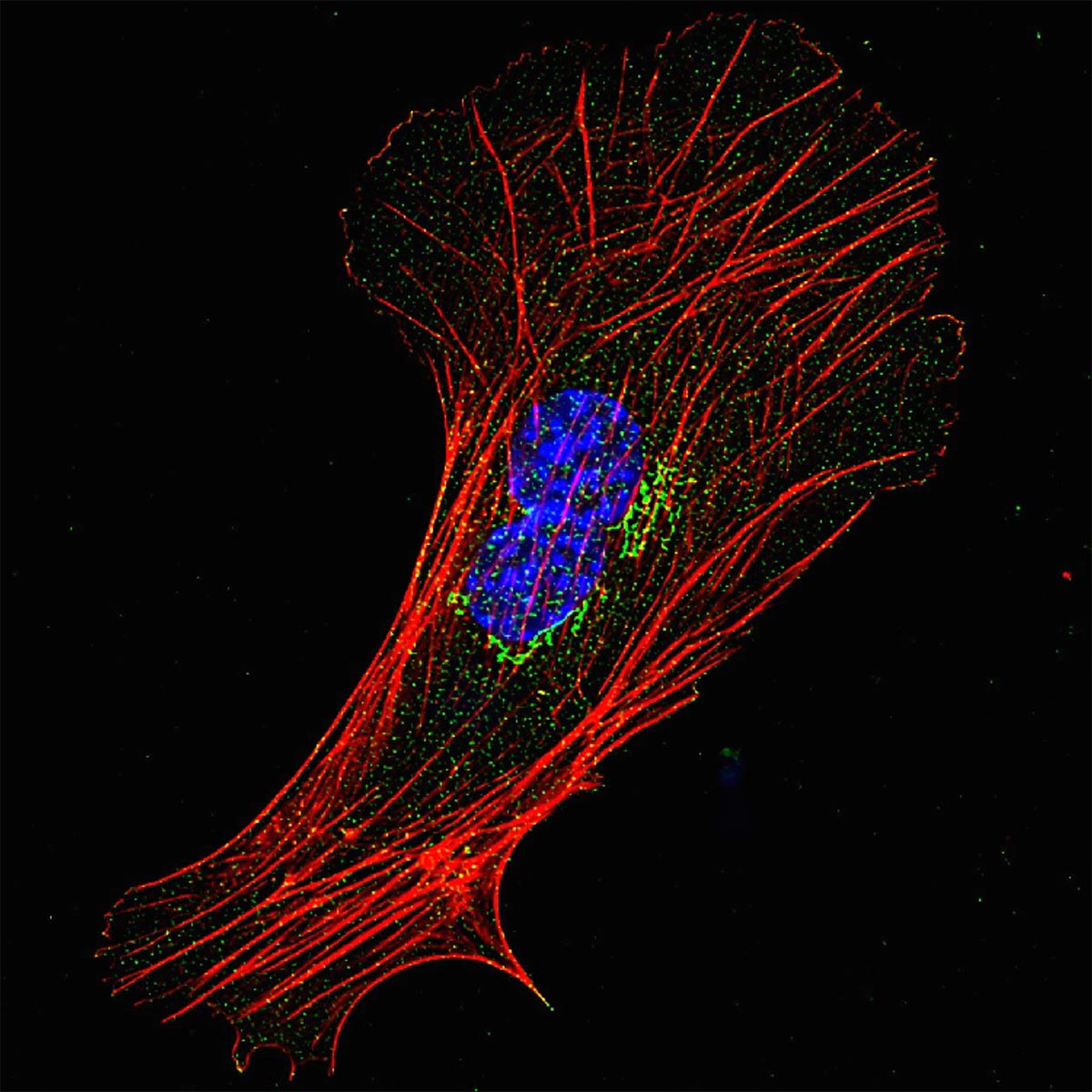 Mouse fibroblast stained for coronin 2 (green) and actin filaments (red); nuclei in blue. Credit: Biozentrum, University of Basel, Roko Gvozdenica Sipic
Laboratory tools may have distorted results
The team also identified a possible reason why earlier studies reached different conclusions. To observe proteins inside living cells, scientists often attach molecular tags that make them easier to track. Although these tools are widely used, they can sometimes interfere with the proteins being studied.
“These tags are extremely useful and assumed to be innocuous for protein function,” says Roko Gvozdenica, the study’s first author. “However, we found that the tagging of coronin proteins has the potential to cause loss of their function and significantly alter their localization.”
This raises the possibility that some earlier evidence linking coronins to actin resulted from experimental artifacts rather than their natural behavior. The researchers also found that many antibodies used to detect coronins lack specificity, adding to broader concerns about the reliability of these tools in biomedical research.
Coronins help maintain healthy immune cell numbers
The findings bring attention to another important role of coronins: helping cells communicate through chemical signals.
“Over the years, we have reported that coronins are involved in cell signaling,” emphasizes Pieters. “In the immune system, for example, coronin involvement in these signaling processes was found to be essential for the maintenance of normal T cell numbers, which is vital for protecting the body against infections or cancer.”
The researchers caution that their findings do not completely rule out a connection between coronins and the cytoskeleton. These proteins may still influence its organization, either directly or indirectly through cell signaling.
By reexamining an idea that has shaped research for decades, the study opens new possibilities for understanding how coronins help cells communicate, survive, and maintain healthy cell numbers.
Reference: “Reassessment of the roles of coronin proteins as actin effectors and in signaling” by Roko Gvozdenica Šipić, Haiyan Zhang, Andrii Kharin, Jerneja Koren, Viviana D’Otolo, Yuko Nariai, Takeshi Urano, Pawel Pelczar, Klemens Fröhlich, Alexander Schmidt, Urszula Brykczynska Kunzmann, Tohnyui Ndinyanka Fabrice, Alexey Baldin and Jean Pieters, 18 August 2026, PLOS Biology.
DOI: 10.1371/journal.pbio.3003904
Never miss a breakthrough: Join the SciTechDaily newsletter.
Follow us on Google and Google News.




















 English (US) ·
 French (CA) ·
 French (FR) ·