

PROTECT YOURSELF with Orgo-Life® QUANTUM TECHNOLOGY
Orgo-Life the new way to the future Advertising by Adpathway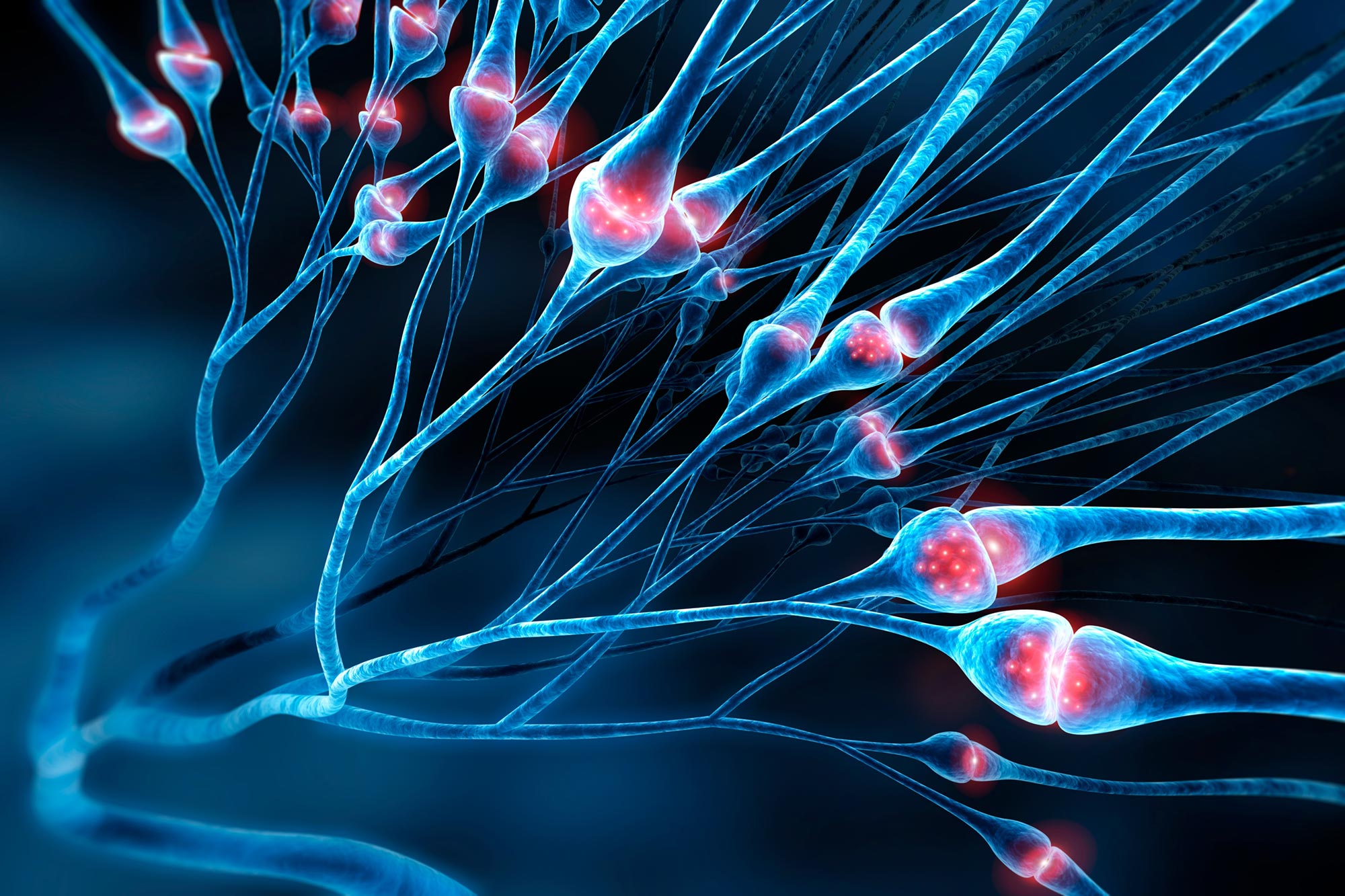 Researchers have redesigned microscopic lipid carriers to release a powerful numbing drug far more slowly than expected. In rats, the approach extended local anesthesia from hours to weeks, suggesting a possible path toward much longer-lasting pain relief after surgery. Credit: Shutterstock
The findings could help researchers make local anesthetics last longer in people.
Patients recovering from surgery may need pain relief beyond the eight to 12 hours, or about a day at most, that most local anesthetics provide.
Seeking a longer-lasting option, researchers at Boston Children’s Hospital have redesigned liposomes, microscopic carriers made from fatty molecules, to release a numbing drug more gradually. In rats, the formulation sustained local anesthesia for two to three weeks, compared with about four to eight hours for a commercial formulation.
Rethinking how drugs escape liposomes
For decades, physicians have used liposomes to release medication gradually, with their fatty components, called lipids, determining how quickly a drug escapes. Scientists generally expected loosely packed, more fluid lipids to let medications slip out faster. That faster release can produce a stronger but shorter-lived effect and increase the risk of toxicity.
Research engineer Yuan Wang, PhD, found that water-soluble medications behaved differently. These drugs, known as hydrophilic drugs because they mix readily with or dissolve in water, escaped extremely slowly from the more fluid liposomes. Wang works in the laboratory of Daniel Kohane, MD, PhD.
A pufferfish toxin’s potential for pain relief
To test whether this slower release could sustain a nerve block, the researchers filled the carriers with tetrodotoxin, a powerful neurotoxin found in pufferfish and blue-ringed octopuses that also acts as a potent numbing agent. They injected the formulation near a nerve in the rats’ legs and found no toxicity at the injection site or elsewhere in the body. The results indicated that the drug was released slowly enough for the body to clear it, while maintaining levels sufficient to numb the area. The study was published in Nature Biomedical Engineering.
Nerve blocks generally last longer in humans than in rats, although tetrodotoxin is not yet commercially used in patients. Kohane, senior associate in pediatric critical care at Boston Children’s and director of the Laboratory for Biomaterials and Drug Delivery, is considering potential applications for perioperative pain, meaning pain around the time of surgery.
“This extended-release combination could be used for longer-term perioperative pain instead of opioids, and we are starting to consider using these potentially for chronic pain, as well,” says Kohane. “These liposomes can also provide slow release of a wide range of hydrophilic molecules.”
Inside the liposomes that slow drug release
The explanation for the slow release emerged from experiments examining how the lipids assembled into carriers. Adding multiple double chemical bonds to the lipids’ tails prevents the molecules from packing tightly together, making the membranes more fluid. The researchers found that liposomes made with many double bonds contained multiple compartments, while those without double bonds had a simple spherical structure.
“The more fluid membranes in liposomes with many double bonds may be easier to cross, but the greater number of barriers slow down the drug’s release,” says Wang. “The more fluid liposomes with more double bonds may form concentric spheres that are like onions with many layers or could even potentially be even spheres within spheres.”
Reference: “Ultra-slow release of hydrophilic drugs via multilamellar–multivesicular liposomes formed by unsaturated phospholipids” by Yuan Wang, Tianrui Xue, Matthew Torre, Yiyuan Han, Rachelle Shao and Daniel S. Kohane, 23 September 2026, Nature Biomedical Engineering.
DOI: 10.1038/s41551-026-01793-6
This work was supported by NIH R35GM131728 (to D.S.K.) and the Anesthesia Research Ignition Award (to Y.W. and D.S.K.).
Never miss a breakthrough: Join the SciTechDaily newsletter.
Follow us on Google and Google News.





















 English (US) ·
  French (CA) ·
  French (FR) ·