

 3 weeks ago
6
3 weeks ago
6
PROTECT YOURSELF with Orgo-Life® QUANTUM TECHNOLOGY
Orgo-Life the new way to the future Advertising by AdpathwayTennessee’s prison chief is under fire for the failed execution of Christa Pike, which lawyers say was the fifth “botched” execution under his leadership across two states since 2022.
Frank Strada, the commissioner of the Tennessee department of correction, has faced mounting questions about the state’s highly secretive death penalty protocols since Wednesday evening when Pike became the first death row prisoner in the US to to be injected with lethal drugs and survive.
Witnesses said Pike, 50, was heard choking and struggling an hour after receiving the first injection of pentobarbital, a sedative, and after a second dose failed to kill her, she was hospitalized in critical condition.
The scrutiny on Strada comes as Pike’s failed execution has sparked international outrage, with lawyers and advocates calling for a national halt on executions in the US. Pike’s lawyers have called the process “cruel and torturous”, and one death penalty expert said it was the worst botched execution in modern history.
Bill Lee, Tennessee’s Republican governor, has suspended executions in the state until the end of the year and ordered an independent inquiry. He called the case “deeply disturbing”, but when a reporter asked him about Strada’s leadership, Lee responded: “So far as we know, the department of correction followed exactly the protocol that was outlined.”
The journalist was pressing the governor on Strada’s history, which includes another failed execution in May of this year, when Tennessee officials struggled for more than an hour to locate Tony Carruthers’ vein, prompting the procedure to be called off. And when Strada was a deputy prison director in Arizona in 2022, the state carried out three executions that experts and attorneys said were prolonged and “botched”.
Death penalty lawyers said there were common threads in the five problematic executions under Strada, including the prisoners’ protracted suffering and questionable injection procedures, and argued Lee should never have appointed Strada given his Arizona record.
Tennessee department of correction spokespeople declined to answer questions about Strada’s record on Friday and said the commissioner was unavailable for an interview. A spokesperson for Lee did not respond to inquiries.
‘Botched’ executions in Arizona
After joining Arizona’s corrections department in 2020, Strada oversaw executions, which included forming the teams that carried out the procedures, monitoring the practices and obtaining lethal injection drugs, he said in a deposition.
In the May 2022 execution of Clarence Dixon in Arizona, a media witness said the execution team struggled to place IVs to administer the lethal drugs, ultimately requiring them to make an incision by his groin to insert the IV. That process, according to his attorneys, took roughly 40 minutes.
In June 2022, a witness said Frank Atwood, a death row prisoner, had to help executioners find a vein after officials repeatedly struggled to kill the 66-year-old, who had a degenerative spinal condition.
And in November 2022, Arizona officials struggled to find a vein in Murray Hooper, forcing them to insert a catheter into his groin.
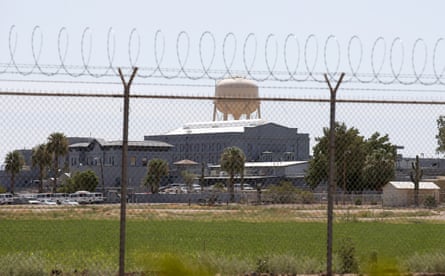
The Death Penalty Information Center, a non-profit organization that studies capital punishment, classified all three Arizona executions as “botched”, based on researchers’ analysis. “Botched” is not a legal term, but the group says executions can be botched when there is a breakdown in protocol or unexpected problems or delays that cause needless suffering.
Dale Baich, who represented Arizona death row prisoners during Strada’s tenure, said the fact that execution officials’ struggled to find veins suggested they were not qualified: “If your job is to access veins, you should be able to do that ... to me, it indicated the department of corrections did not properly vet those team members.”
In a 2023 declaration in a court case, Arizona’s corrections director said his review of execution procedures identified “several critical issues”, including “inadequate knowledge and expertise” of the people involved in executions, concerns about the IV team’s procedures, and concerns about the efficacy of the drugs.
Trouble in Tennessee
Despite reports of three botched Arizona executions, Lee appointed Strada to head Tennessee’s prisons in early 2023. That appointment came while Tennessee was grappling with its own scandals around lethal injections, with a 2022 state-commissioned independent report finding that Tennessee had failed to follow protocol in several executions, not properly tested drugs and had a “tunnel-vision, result-oriented” approach to executions.
Death row attorneys have argued that Strada has failed to address the problems raised in that report.
Under Strada, Tennessee removed a key training requirement for people involved in lethal injections, according to Kit Thomas, a death row attorney. Before Strada joined, execution team members were directed to practice catheterization with saline, records show. But training guidelines put in place under Strada eliminated that requirement, saying: “No IV is inserted into the person playing the role of the inmate.”
“He reduced the training requirements and we’ve seen disastrous results,” said Thomas. “He oversaw executions in Arizona which involved prolonged, torturous attempts to establish IV lines, and he brought a similar practice here.”
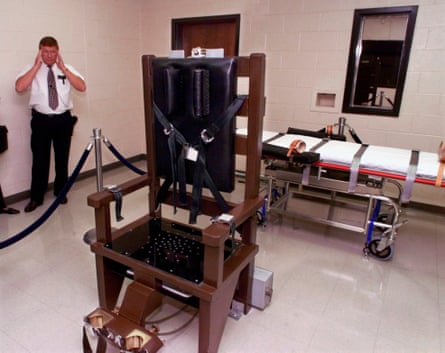
After Strada left Arizona, corrections officials made changes to the state’s lethal injection process, including increasing the number of people on the IV team responsible for injections and requiring more rigorous training, records show. But Strada has not overseen similar changes in Tennessee, instead implementing a protocol that mirrored the older Arizona policy of requiring only two people on the IV team that does injections, Thomas noted.
Thomas also provided excerpts of a November 2025 deposition where Strada was questioned by death row attorneys. When Strada was asked what he considered to be a successful execution, he responded: “The condemned is put to death.” When a lawyer followed up, asking: “Anything else?”, Strada replied: “No.”
Thomas said Strada’s response suggested he had “no regard for the experience of the individual being executed other than that they end up dead”. The response, she added, echoed the same “tunnel-vision” approach to executions that investigators had called out in the Tennessee-commissioned report in 2022.
In the 2025 deposition, Strada further acknowledged he had not followed some of the recommendations of the 2022 report, including failing to hire a full-time employee or consultant with a pharmaceutical background to provide guidance on the lethal injection process and failing to hire a full-time employee or consultant to assist with locating lethal injection sources.
“What good is an independent investigation if those investigators provide recommendations that are ignored?” said Thomas.
Questions mount over lethal drugs
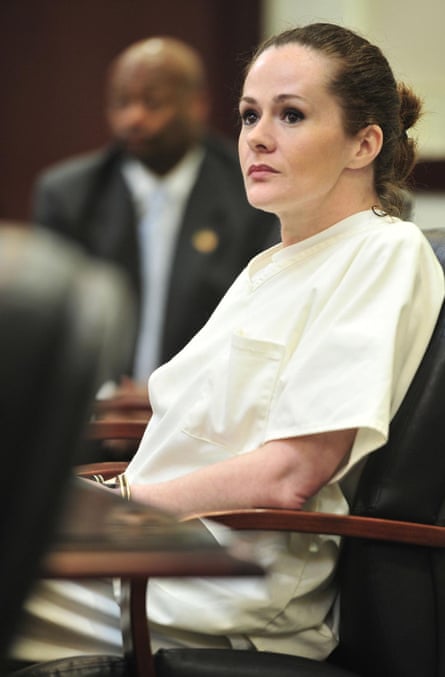
Questions about how the state acquires, maintains and administers lethal injection drugs are critical following the botched killing of Pike, who was sentenced to death in 1996 at age 20 for the murder of 19-year-old Colleen Slemmer.
Pike’s lawyers said Friday that she remained unconscious and on a ventilator. Prison officials have not addressed questions of what might have gone wrong, but some outside experts have questioned whether the pentobarbital could have been degraded or may have failed to properly enter her bloodstream and instead seeped into surrounding tissue.
Tennessee keeps secret the identities of people involved in executions and basic facts about the drugs it uses in executions. Thomas pointed to a number of questions that Strada previously declined to answer, including whether he was using the same drug supplier he used in Arizona, whether Tennessee’s supplier had complied with Food and Drug Administration rules and regulations, and whether he had any procedures or checklists to ensure the lethal injection chemicals had not been adulterated.
Stephen Ferrell, federal defender and one of Pike’s attorneys, expressed skepticism about the governor’s call for another independent inquiry, noting the last independent investigation on the state’s death penalty system resulted in continued secrecy.
“We are kept in the dark,” he said in a press conference Thursday, noting that reporters who served as witnesses to Pike’s botched killing also raised concerns about the secrecy surrounding the execution procedure: “Our predictions are downplayed, and yet they continue to come true. Tennessee should not be torturing its citizens in the name of justice.”
As the governor sidestepped questions about Strada, candidates running to replace Lee said they would not keep Strada in the job if they were elected in the November midterms.
Robin Maher, executive director of the Death Penalty Information Center, said Tennessee officials should answer questions about Strada’s involvement in multiple botched executions. She also raised concerns about the lack of transparency or accountability after Carruthers’ botched execution in May: “We saw no information about why this had gone wrong and no explanation or corrective action to ensure that wouldn’t happen another time.”
“Governor Lee should urge his officials to be forthcoming about all the mistakes that may have been made and to accept responsibility for whatever went wrong with these executions,” she continued.
Ed Pilkington contributed reporting























 English (US) ·
  French (CA) ·
  French (FR) ·