

PROTECT YOURSELF with Orgo-Life® QUANTUM TECHNOLOGY
Orgo-Life the new way to the future Advertising by AdpathwayThe following essay is adapted from a keynote address given at the Association for the Study of Buffy+’s 11th Biennial Slayage Conference on July 10, 2026. In case it needs to be said, this essay contains many, many spoilers for, and inside jokes regarding, Buffy the Vampire Slayer and Angel.
Article continues after advertisement
*
For the record, I am not actually a Buffy the Vampire Slayer nostalgia case. I didn’t have a television growing up, so I found the show as an adult, when my then-boyfriend (a screenwriter) made me watch it. I was charmed but basically unconvinced until we got to episode six, “The Pack,” in which the cool kids, possessed by, checks notes, hyena spirits, eat the school principal. They literally eat him.
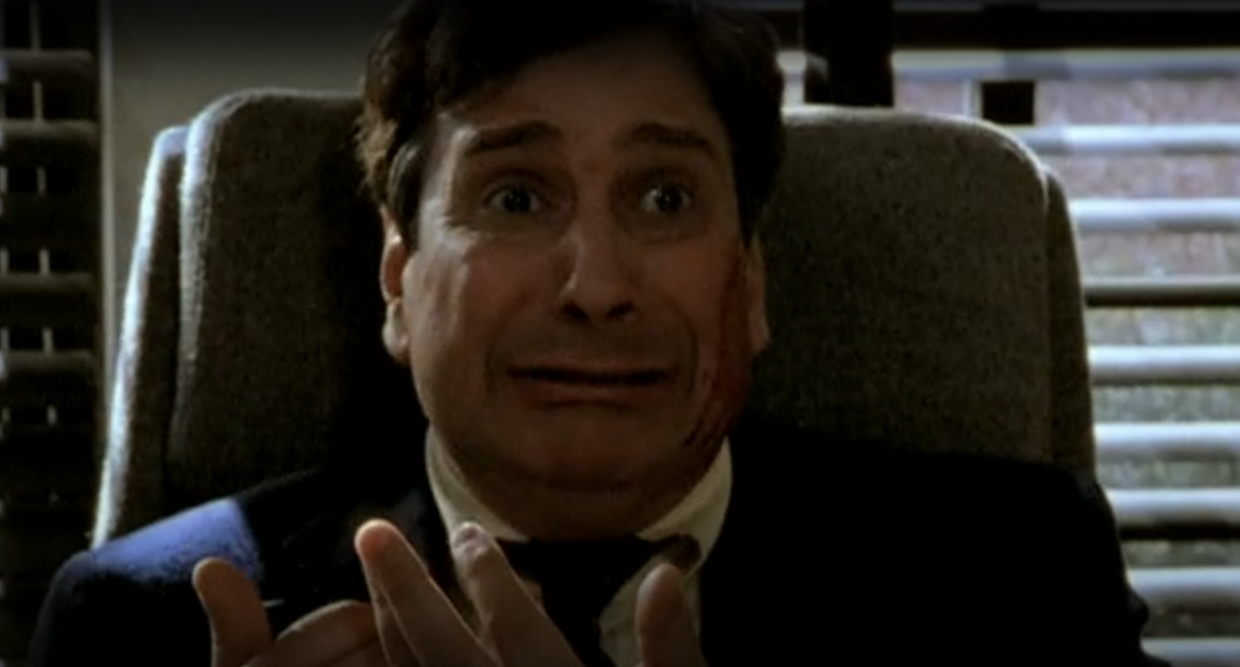 RIP Principal Flutie.
Ok, I thought. I’m in.
Now, I love what everybody loves about Buffy and Angel: the language, the metaphors, the characters, the specific pleasure of getting the thing and lampshading the thing in the same gesture, the richness of the world, the way the storytelling begins and ends in emotion, and the way it can be so many things at once: comedy, horror, romance, drama, fantasy. I love how serious it can feel, and how scary, and how silly, all at the same time.
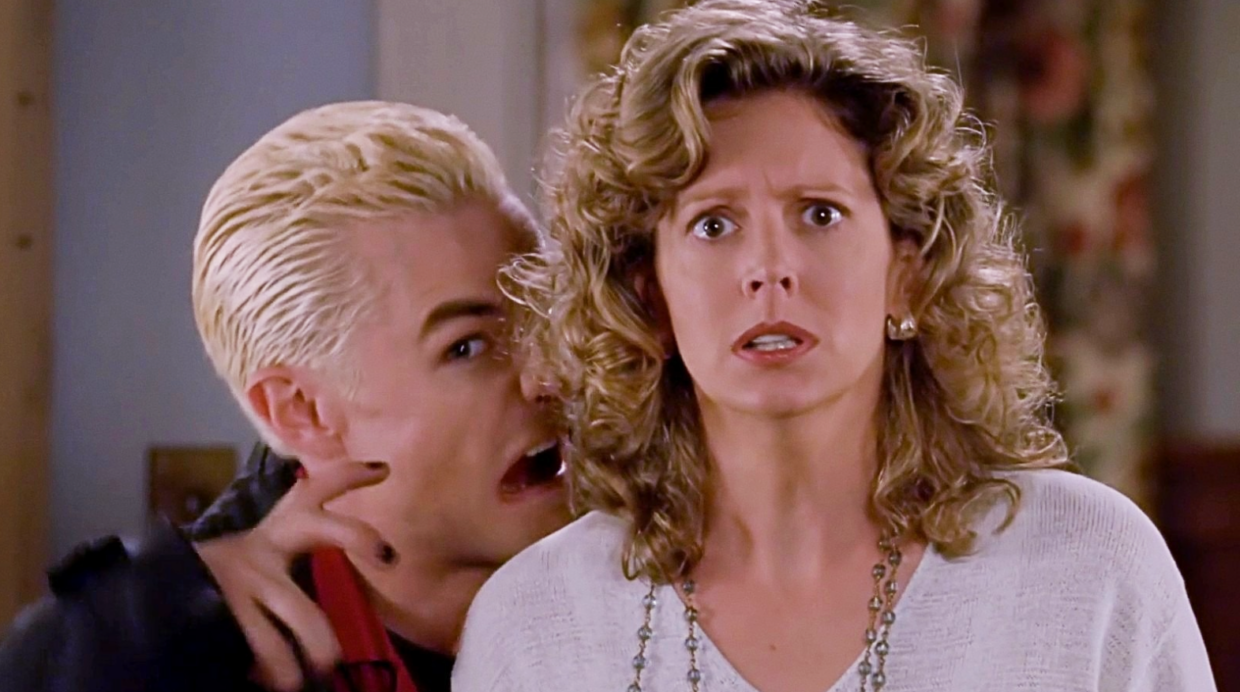 Grr. Argh.
Since I am not an academic, but just a novelist and sometime-critic, I thought I would unpack why novelists in particular seem to love Buffy and Angel so much. Lots of people like Buffy, of course, but anecdotally, everyone I know who really loves it also happens to be a writer of some kind.
I will talk about that a bit, but recently Anthony Stewart Head died, and so now I have to talk about grief.
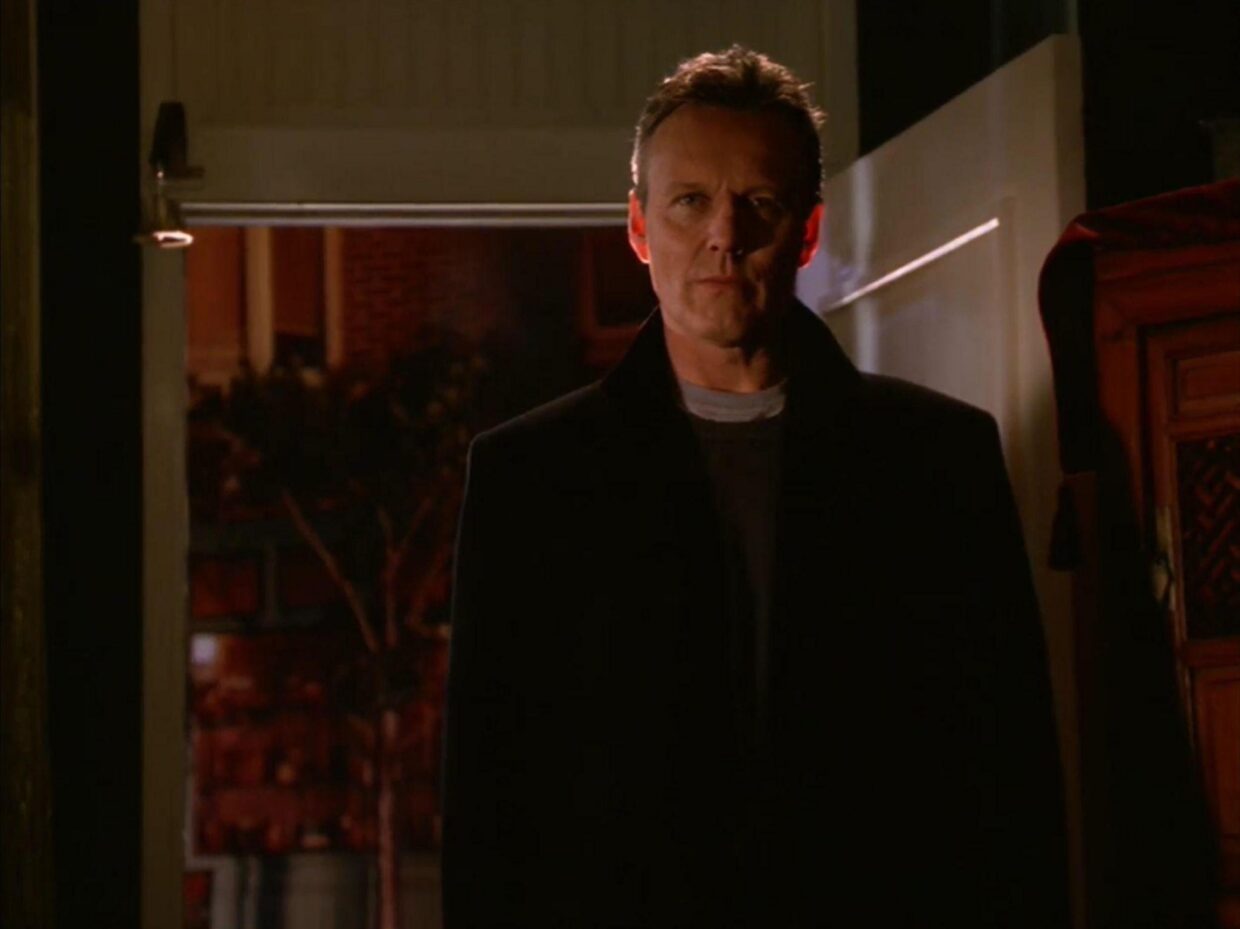 Daddy’s home.
Buffy the Vampire Slayer is, at its core, a show about grief. To me, it is even more about grief than it is about love, or magic, or witty remarks, or maybe even power, because it is about being a teenager, and being a teenager is about grief.
Wait a second, all the adults with jobs are saying to themselves. Being a teenager isn’t about grief. Teenagers don’t know how good they have it! Which is true. But being a teenager is about grief because being a teenager is about change. You’re mourning your childhood, and you’re mourning your innocence, and you’re mourning the fact that the people who are supposed to love you don’t know you anymore, or at least don’t understand you. Later, of course, the show becomes about trying to become an adult—see Buffy’s doomed day job at the Doublemeat Palace—and that is an exercise in grief too. Then there’s Angel, which is ultimately a show about the grief of being an adult, because Angel is essentially a story about futility.
Life, it turns out, is a show about grief, I am sorry to report.
It’s been a hard year for Buffy fans. Tony Head died at 72. Nicholas Brendon died at 54, in March. This is not even to mention Michelle Trachtenberg, who died last year—can you believe it was only last year?—at 39. I’m not a fan of this pattern. Maybe it has something to do with the hellmouth so obviously opening under the whole of the United States, if not in fact the world. Maybe we’re just unlucky.
I was particularly struck by the outpouring of love for Tony Head, and the way that clips of him were passed around online as a way of mourning. Nothing new for the age of the internet. But these were not clips of him in his most recent high profile role, in another beloved show, Ted Lasso, where he plays a villain (also named Rupert). No, they were all clips of Giles (apart from a few of the Nescafé Gold Blend ads). We mourned him as Giles, as the best father figure that ever refused to judge us, that ever did kill Ben (who might know Glory) for us, that was ever there, until he thought it might save us for him not to be. Of course, we—I—don’t know Tony Head. It helps that by all accounts he was a great person, that he was also the father figure on set, that he seemed to care for others in his regular life and in his work. But we don’t know him. We’ve been mourning Giles.
But of course, Giles is just as alive as ever.
Giles exists, whenever we want to look. We have exactly as much of him as we did before. There’s an entire other conversation to be had about parasocial relationships in the modern era, obviously, but since Buffy isn’t really from the modern era, I do think it speaks to the power of the character, the acting and the writing, and to the universe of the show itself, that the average fan feels they’ve lost something.
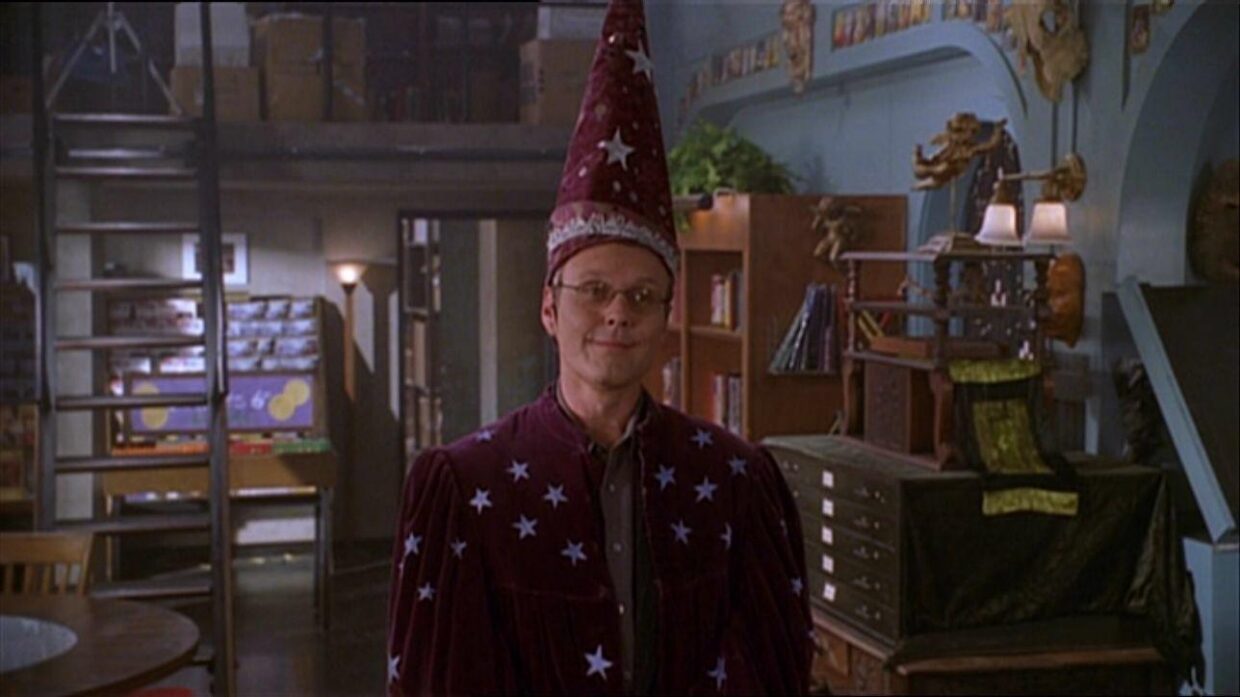 The Magic Box: Your one-stop spot to shop for all your occult needs.
The novelist Naomi Alderman has argued that what makes Buffy so good is what she calls “character doubling.” She writes that “every single character contains their opposite within them. It is a show about having the sense that you have a strange other lurking inside.” That’s definitely true—consider Vampire Willow. Xander literally split into his good and bad qualities, Faith and Buffy, already foils, swapping bodies, the Buffybot, Joan the Vampire Slayer, and so on—and doubling is of course a classic literary trope.
But now I want to consider a very specific kind of “strange other” that both Buffy and Angel return to repeatedly: the person you become when faced with grief. Because in the Buffyverse, as sometimes in life, grief makes you a different person. Often literally.
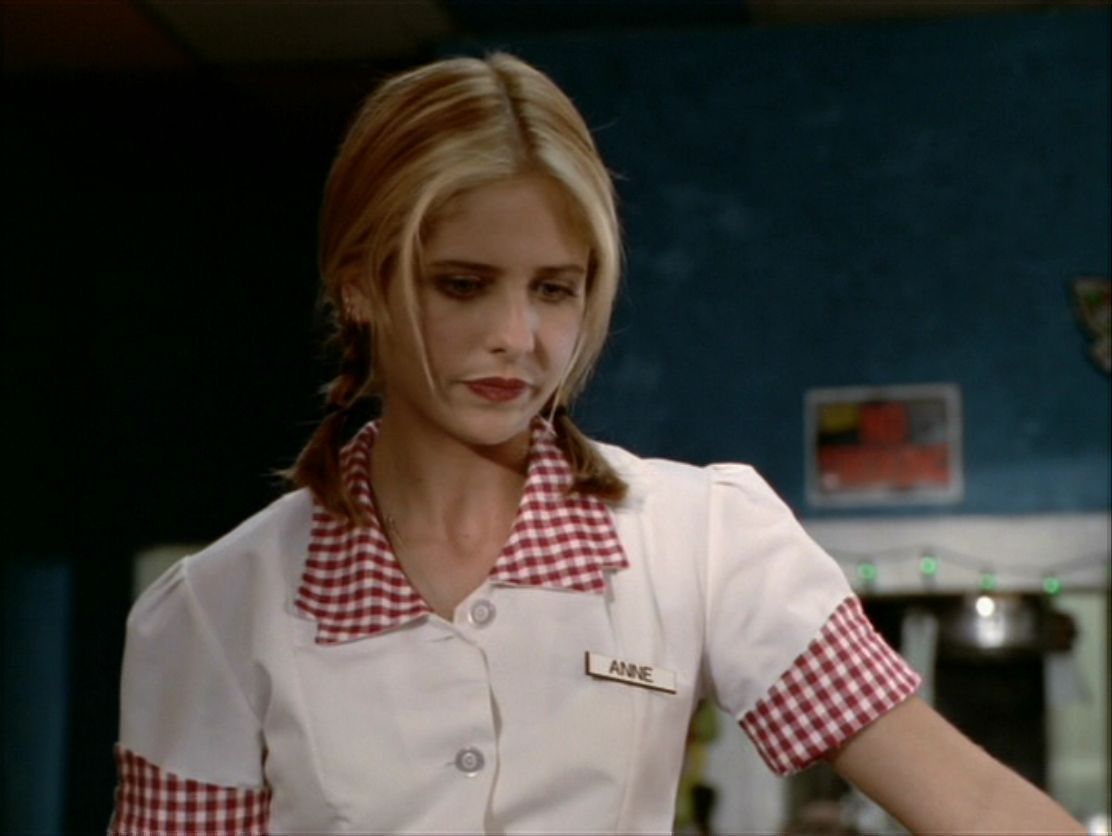 She’s someone.
We see it first and maybe most blatantly at the beginning of Season 3, when, in order to deal with her grief over killing her one true love and consigning him to hell (teenagers!), Buffy has run away to Los Angeles. As this episode opens, we find that she has literally become another person: Anne. She’s a waitress at Helen’s Kitchen, which, ha ha. And to Alderman’s point, Anne is Buffy’s secret self, her internal opposite: the normal girl. Powerless even against the most run-of-the-mill villains, the men casually harassing her at the diner.
But of course Buffy finds she can’t really outrun herself, because she’s recognized by a girl she’d saved before, who then went by Chanterelle, and is now going by Lily. The girl’s boyfriend disappears, and Buffy finds him horribly dead, aged overnight, and though Buffy—reasserting her identity when it counts—kills the demon responsible and saves Lily from the same fate, in the end Lily is left to grieve, and so she too takes on a new identity: Lily becomes Anne, and Anne goes back to being Buffy, though not quite the Buffy she was before, and not just because of the terrible chunky highlights.
Of course this isn’t actually the first time grief has changed anyone in this show. Consider Angel: After centuries of murderous rampaging, Angelus has his soul returned to him as a punishment—itself a function of the grief of his victims—and is flooded by that grief, and the guilt of having to remember all he’s done. Everything that Angel becomes after that is a response—he is forever trying to atone. But what’s really interesting about Angel in this context is that he represents the other side of the coin, because once he lives in grief, if he experiences a moment of true happiness—grief’s opposite—he will lose his soul again and transform back into his evil self. So the principle cuts both ways. Joy too can be transformative. It just doesn’t come up quite as often.
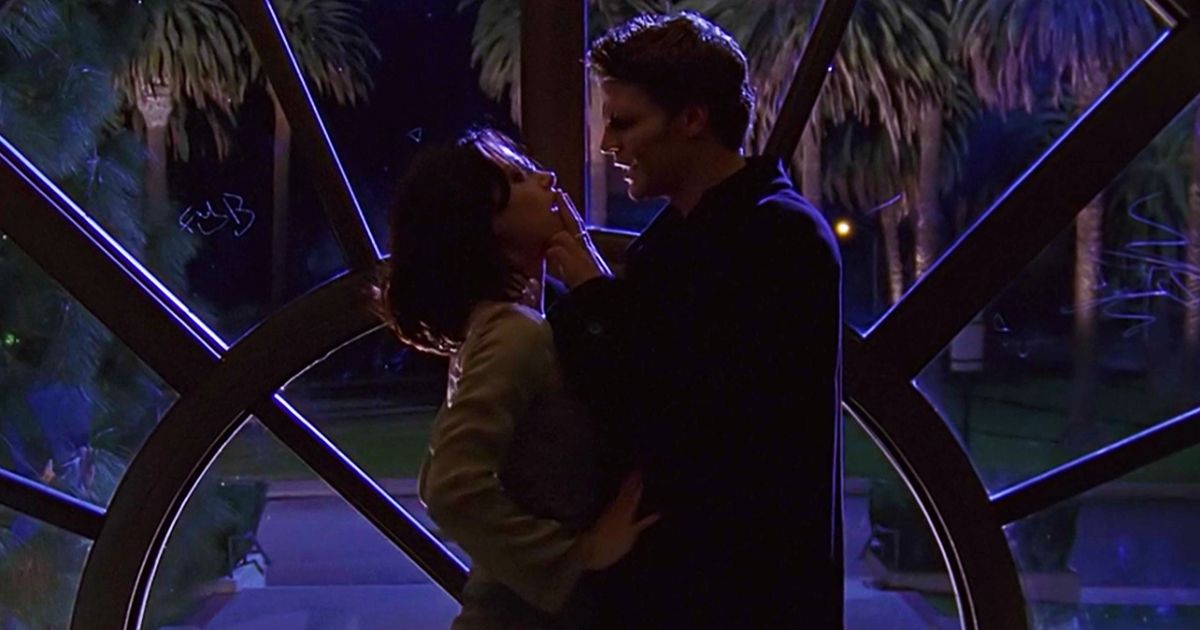 A shocking twist.
By the way, Angel, or really Angelus, also shows us another use for grief: as a weapon. After he kills Jenny Calendar in season 2’s “Passion” (a truly shocking episode, and the show’s first really significant death), he stages an elaborate romantic scene with her body to torture and traumatize Giles, with the intention of causing him as much grief as possible. He wants to change Giles—to weaken him, and by extension Buffy, and he does, or at least he goads him into doing two very un-Giles-like things: head off alone on a suicide mission, and allow himself to be tricked by Drusilla’s hypnosis. When she manipulates him into seeing her as Jenny, he is taken in enough to tell his enemies everything they need to know to end the world. (Compare to Wesley’s refusal to let Illyria be Fred, though that’s all he wants: “The first lesson a Watcher learns is to separate truth from illusion.” But we’ll get to that.)
Of course Angel did the same thing to Drusilla herself, when she was a pious woman whom he drove insane by telling her she was evil. Both of these uses for grief read as deeply perverse, as indeed they are.
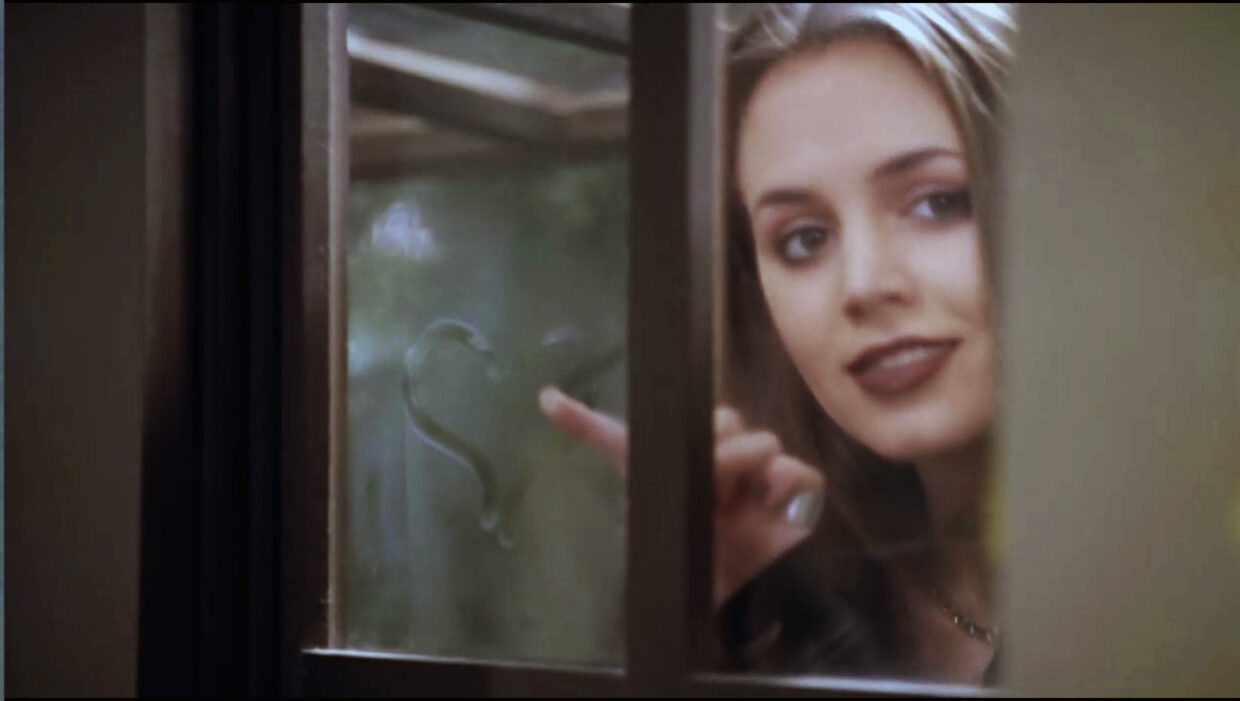 This one’s for you.
But let’s go back to Season 3. In “Bad Girls,” a pivotal episode despite the fact that they’re fighting the silly bathtub demon, Faith—Buffy’s dark double, the Other Slayer, but here still on side—seduces Buffy into breaking the rules, which seems like it’s working fine until Faith accidentally kills a human, the technically evil but essentially non-threatening Allan, the Mayor’s deputy. The episode ends with Faith clearly upset, and channeling Lady Macbeth, scrubbing at bloodstains in the sink, but when Buffy comes to check on her, Faith tells Buffy starkly “I don’t care” before the show cuts jarringly to black.
This is the action that starts turning Faith from a “bad girl” into a bad girl. She doesn’t let herself grieve, or come to terms with the guilt and horror of what she’s done—but whether she accepts it or not, the grief is there, and her inability to deal with it is what begins her turn to the actual dark side. It’s a subtle echo of what Buffy did at the beginning of the season—Faith is running emotionally from the grief and guilt, but she can’t actually beat it without changing herself entirely. Which of course she does, becoming the Mayor’s best girl. For now.
Interestingly, Cordelia is exempt from this phenomenon, at least in Buffy proper. Her romantic grief over Xander does not cause her to become another person, but it does, in “The Wish,” make everyone else into another person.
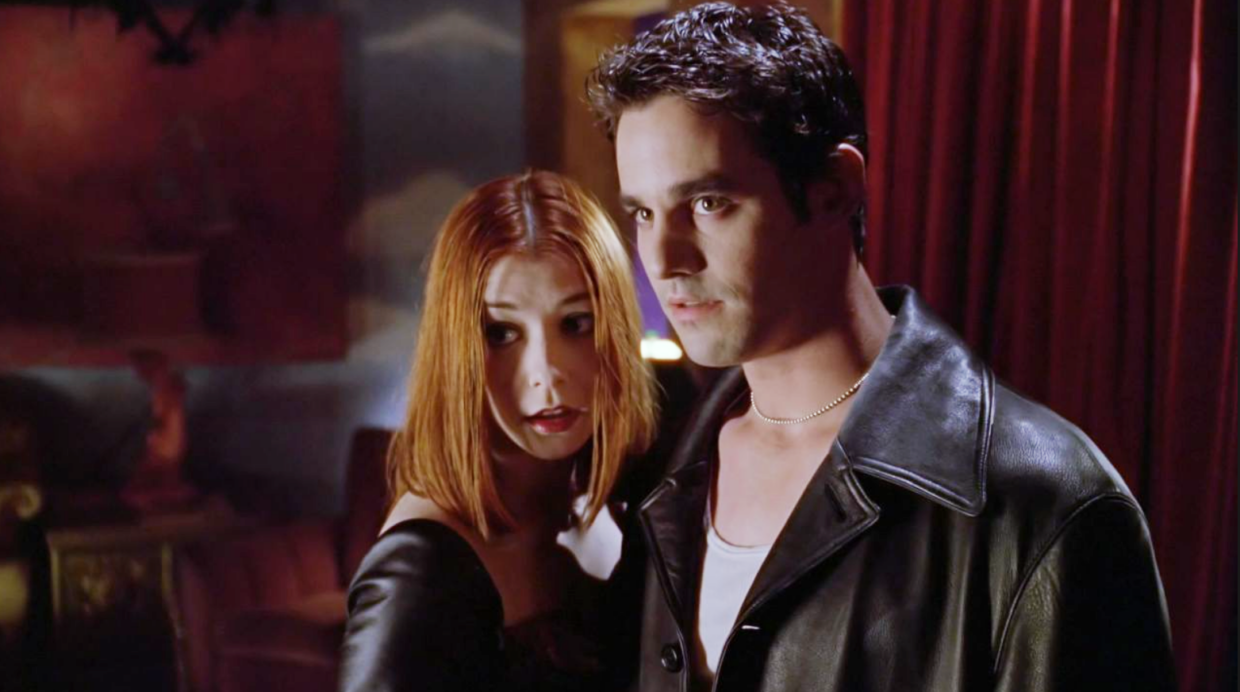 Leather = evil?
Fitting, somehow, for the girl who is the only one saying what she’s thinking and thinking what she’s saying at all times. This holds true until we get to the final episode of the first season of Angel, in which a demon opens Cordelia’s mind to all of the suffering of humanity at once, and when she comes out of it, she’s making everybody sandwiches. “I know what’s out there now,” she explains, and though she still makes the odd sassy remark, after this moment she’s the heart of the group, and the show, instead of the edge. Not her role before at all. So in Buffy, Cordelia’s grief changes the world, but in Angel, the world’s grief changes Cordelia. A distinction I think she would like.
Incidentally, it is this same phenomenon—feeling the pain of all the world—that turns Dark Willow from merely murderous to fully apocalyptic, so did we really just discover that Cordelia has a stronger moral core than Willow? But I’m getting ahead of myself again. Before Dark Willow, we have to talk about Joyce.
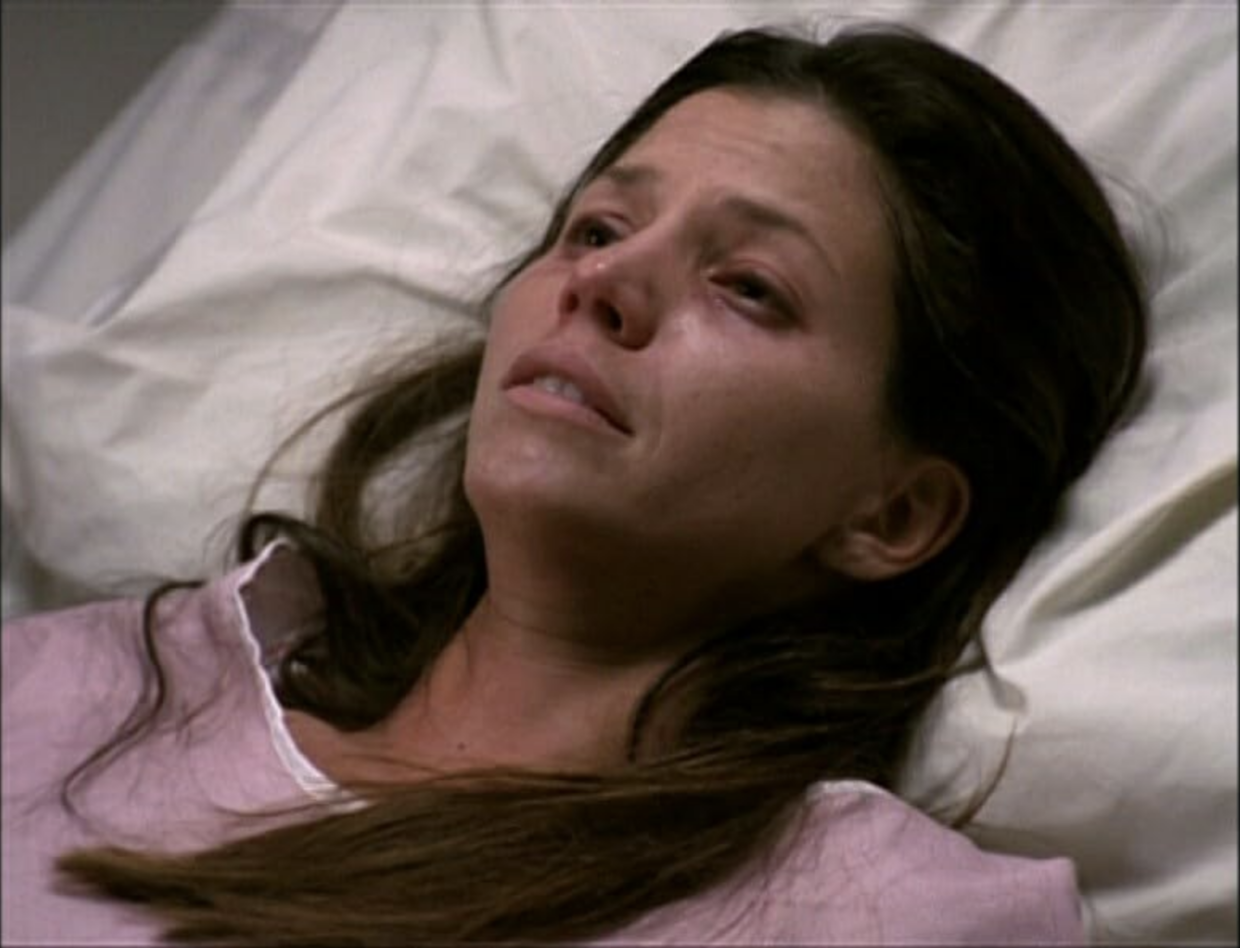 A cheerleader, a princess, and a warrior.
So much has already been said about “The Body,” which is by any measure an extraordinary episode of television. I’m not sure what I can add to the formal conversation, but I will say this. When I watched it to prepare for this talk, it was the first time I’d seen it since my father died. Similarly to Joyce, really. Sudden, too young. It was difficult to watch, which is of course a testament to how good it is. “The Body,” more than any other art I’ve encountered, gets at the surreality of sudden death. The big buttons on the phone, the misaligned camera that doesn’t quite capture the paramedic talking. The zoom into Buffy’s face when she realizes that Joyce’s skirt is riding up. The repeated fantasy of everything being all right. It also illustrates how quickly, despite the surreality, you must playact that this death is real to you. If you’re the person who needs to do things, you have to act like it’s real long before you believe it’s real, and that break in perception makes it harder to ever accept it at all.
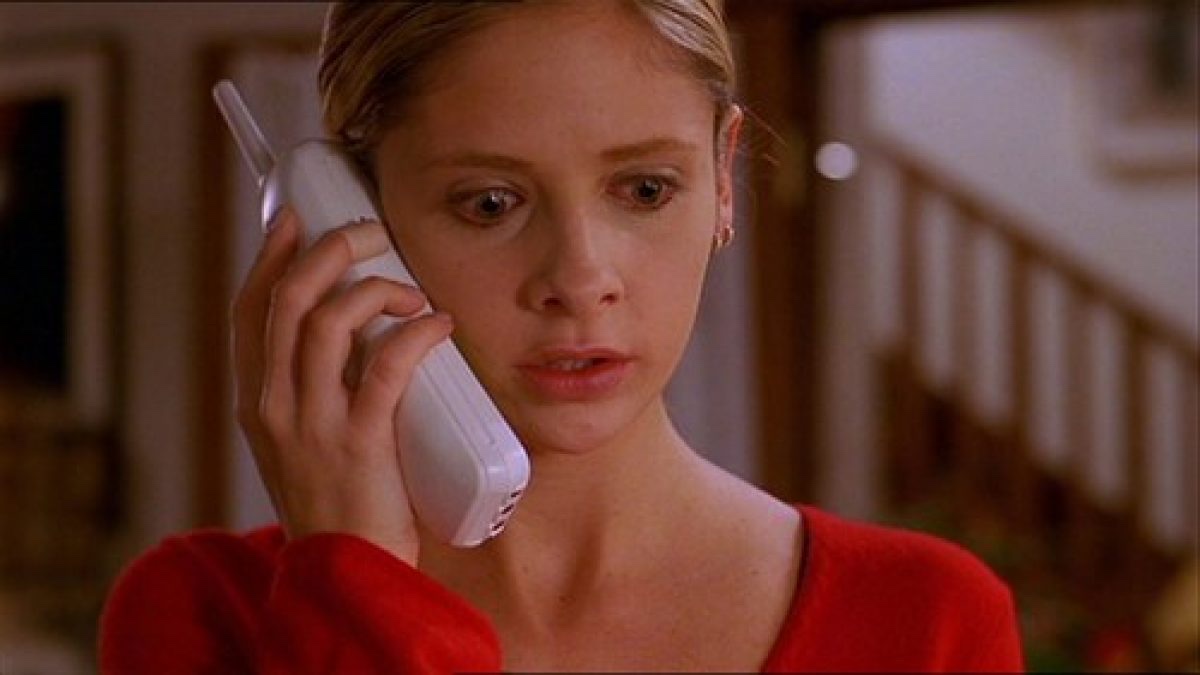 She’s at the house.
Of course, this is Buffy’s big source of grief in Season 5, and it’s a turning point in the series. It is as much a reordering of the known world as Dawn was. But it’s not when Buffy becomes an adult. It’s when she is forced into the shape of an adult, before she’s ready. First, however, she is obliterated.
“Everybody wants to help,” she says. “I don’t even know if I’m here.” She tries to be strong and stoic—and again the change is reflected in her hair, that low tight pony she always wears when she’s really white knuckling it—but in “Forever,” she finally breaks down with Dawn, who says, “No one’s asking you to be Mom,” and Buffy responds, “Well who’s gonna be if I’m not?” And in that moment she does become mother enough for her sister, who has been secretly trying to resurrect Joyce. Dawn ends the resurrection spell in response, belying her own statement.
The death of a parent is often the catalyst for the end of childhood, in fiction and in life. But it has special weight here for the forced end of Buffy’s childhood, because Joyce is the only one who is her childhood’s true witness. Nobody else—neither her friends nor Giles—actually knew her as a child. Even Dawn has been manufactured as a result of Buffy’s transformation into the Slayer. The death of Joyce is also the deletion of whatever was left of Buffy’s innocence.
But of course the death that changes Buffy the most is her own. Well, the second one, anyway.
I know opinions vary, but I’m someone who loves Season six. Yes, I will tell you now I am a Spike apologist. I also have to say that the season is chilling to rewatch considering that its Big Bad, much like in the year of our lord 2026, is a group of absolute loser nerds.
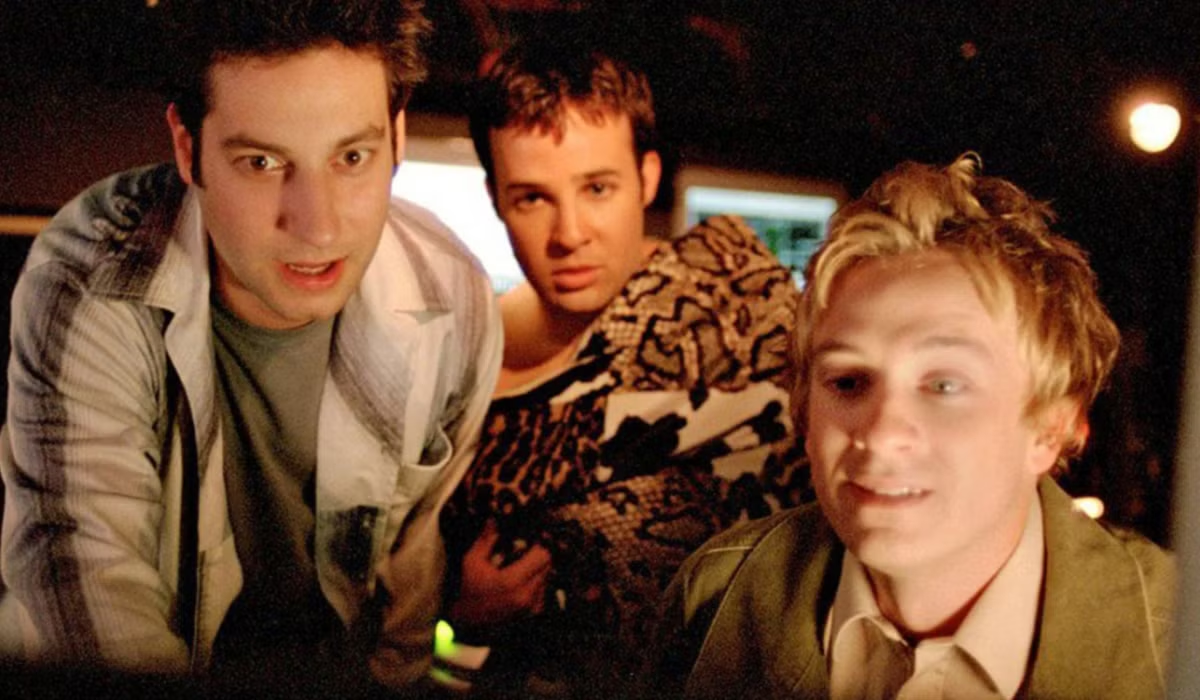 We’re your arch nemesis-es.
Not coincidentally, at least in regards to my thesis here, all of season six is driven by Buffy’s grief. She has now been faced with the worst possible thing. Not her mother’s death, and not even her own. It’s the fact that death is now at last real—and in fact season six makes so much literal that was previously metaphorical—but crucially, not for her. She experiences heaven, where she has what she has always wanted, she has finally achieved the mission: she knows everyone she loves is safe. (As a parent, the allure of this is basically indescribable.) And then she is returned to reality. Buffy will not be allowed to rest.
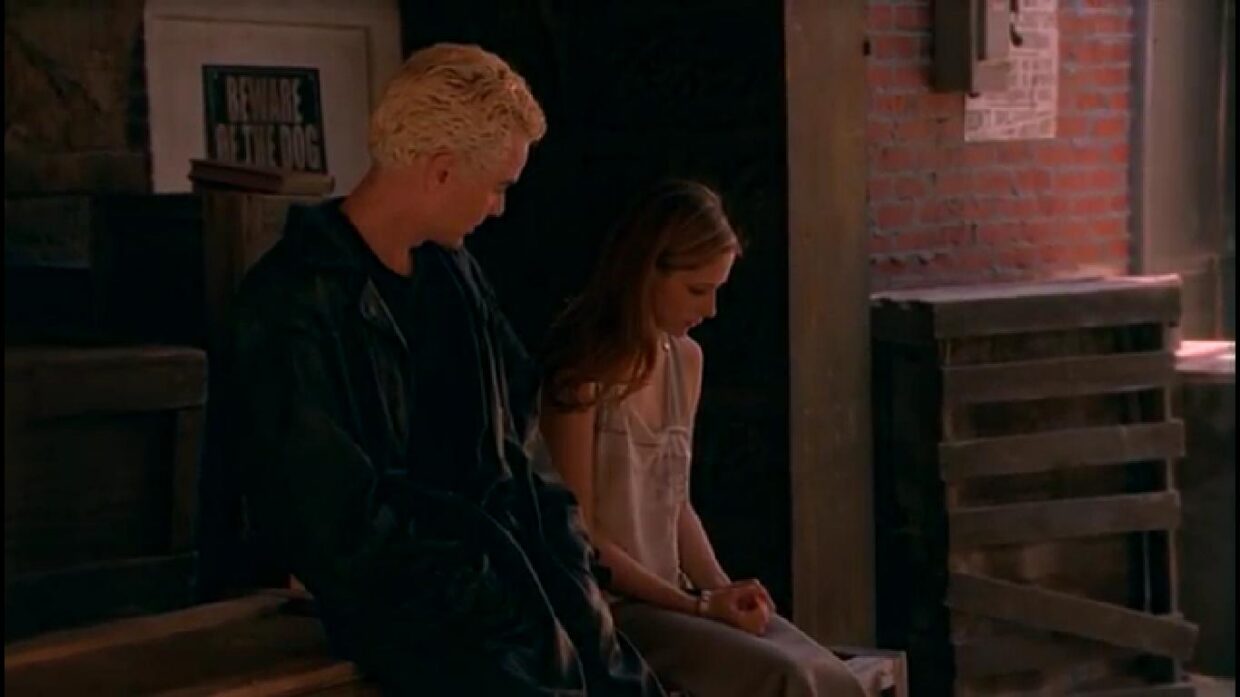 I was torn out of there. By my friends.
Obviously, she’s depressed. But as the season goes on, Buffy’s unhappiness becomes less about what she’s lost and more about what she’s become. She has been transformed not only by her death and resurrection but by her reaction to it. When she discovers that Spike can hit her again, despite the chip that keeps him from hurting humans, she begs Tara to figure out whether she is in fact still human at all, or whether she “came back wrong.” When Tara says she’s the same person she always was, Buffy breaks down. She can’t recognize herself. She feels she shouldn’t want what she wants. And it’s worse that there’s no mystical reason for it, because it means there’s no mystical solution for it either.
By the way, Buffy’s breakdown in this scene—begging Tara not to forgive her, not just for sleeping with Spike (for which Buffy hates herself to a tiresome degree), but also for treating Spike badly—is a direct echo of Faith’s breakdown in the first season of Angel, the end of her bad girl arc, where she ruthlessly tortures Wes, and then, when Angel comes to the rescue, fights him, but loses steam when Angel stops fighting back, and dissolves into her grief and guilt over what she has become, and winds up begging him to kill her because she’s “bad” and “evil.” This too is a recurring theme in this universe: self-excoriation as the worst possible punishment, and being forced to rely on your friends—on love—to rescue you from becoming truly evil. We will see this again.
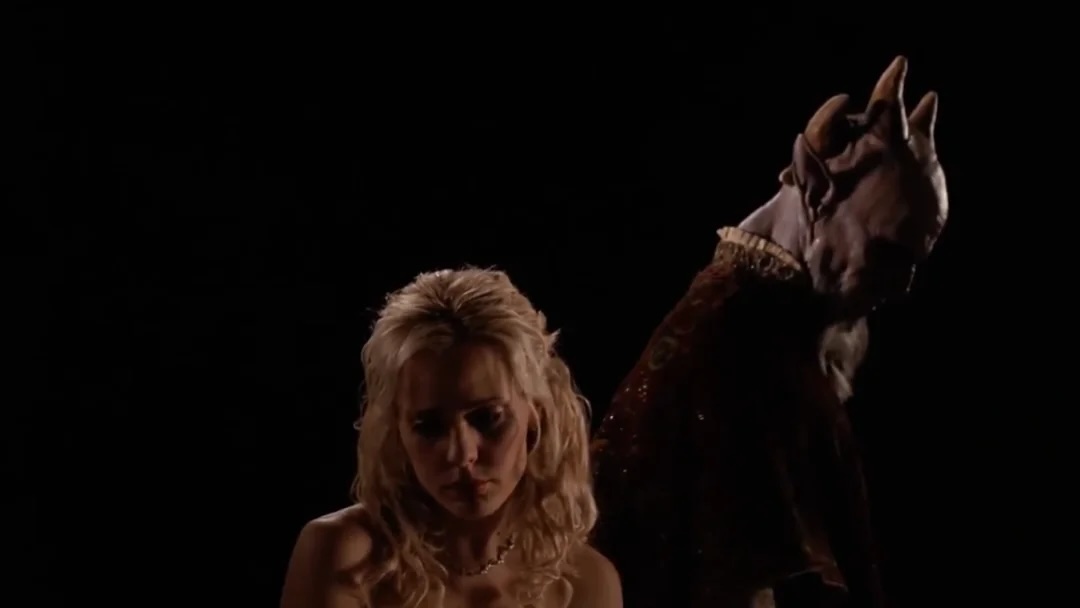 The return of Anyanka
Next, because Season six is relentless, Xander leaves Anya at the altar, and what happens? That’s right, in her grief, she becomes someone else: returning to the fold as a vengeance demon. Then Spike tries to force himself on Buffy, in maybe the most harrowing scene in the entire show, and becomes so disgusted with himself—really with his inability to be either fully evil or fully good—that he rides off to also become another person, by getting his soul back.
Now I will have a sidebar about how much I love Spike. I know, I know, he’s evil. I know, some of it’s unforgiveable (see above). But he’s so much fun.
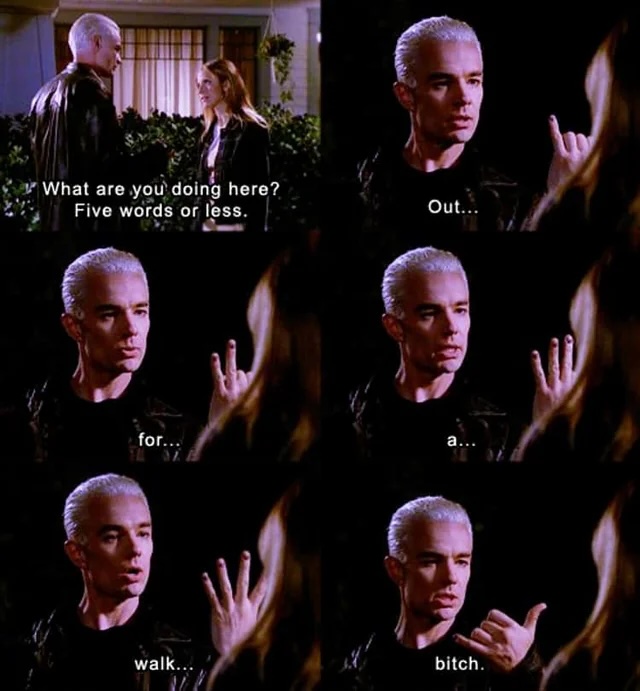
Everything Spike does is motivated by love. The man’s a poet, after all. The writers can’t decide whether Spike’s a badass or not—he can either fight almost as well as Buffy, and on one memorable occasion better than Angel, or he gets immediately knocked down, depending on the narrative requirements of the scene—but the way he loves is consistent. He goes all in, no matter how embarrassing it may be. As he tells us in season three, “I may be love’s bitch, but at least I’m man enough to admit it.” Kurt Vonnegut famously said, in a list of advice to writers, that every character should want something, even if it is only a glass of water. And Whedon knows what he’s doing—everyone in both shows always wants something. But no one—no one—is thirstier than Spike. You really have to love him for it.
Then there’s Willow. When Warren kills Tara, Willow’s grief is so immense that it not only transforms her into another person, but it almost destroys the entire world.
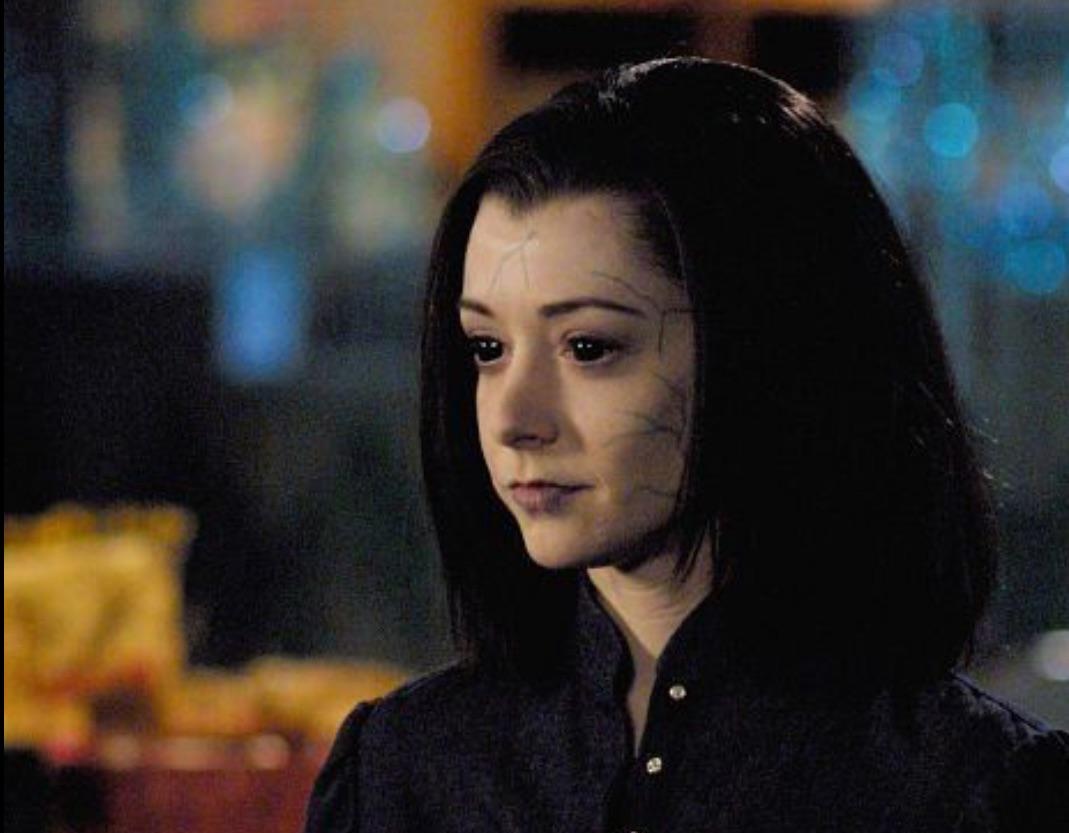 Was I a good witch or a bad witch?
What I really love about the Dark Willow arc is how quickly and subtly the show manipulates our sympathies and sense of morality. I’ll just speak for myself and say that in “Villains,” the episode after Tara’s death, I’m on Willow’s side. She wants to hunt and kill Warren? Get him, girl. It’s shocking, because of the show’s internal morality system, to see him flayed like that in the forest, but it’s not not satisfying. I know Buffy’s got her code, and we’ve been primed, via Faith, to understand that killing another human is at least the door to the path of no return, but the man clearly deserves it, and the show does nothing to convince us otherwise. I still trust Willow in this moment, and no tears will be shed for Warren.
This is of course despite the fact that right before she kills Warren, she says “bored now,” which we have heard her say before, but only as a soulless vampire. Chef’s kiss, writers, and another example of how the show continues to return to these same questions: What causes you to become another person? And then what is the relationship of that person to whoever you were before? Honestly, we could talk for a whole other hour about the relationship between people’s selves and vampire selves—it wasn’t Angel who killed Jenny Calendar, we tell ourselves, it was Angelus. But the borders are porous. Buffy says “You die, and a demon sets up shop in your old house, and it walks, and it talks, and it remembers your life, but it’s not you.” But that’s not entirely true, is it? It’s more complicated than that. Spike was lovesick in life and he is lovesick in unlife. Drusilla was driven insane before she was killed, and she stayed insane. Vampire Willow is “kinda gay” long before Willow knows she is—which doesn’t have great implications, despite the show’s later groundbreaking work in this area, but goes to show that the vampire is more than just a demon wearing the skin of its victim. The demon is inextricably connected to its victim. They may even be one and the same, two sides of the same coin.
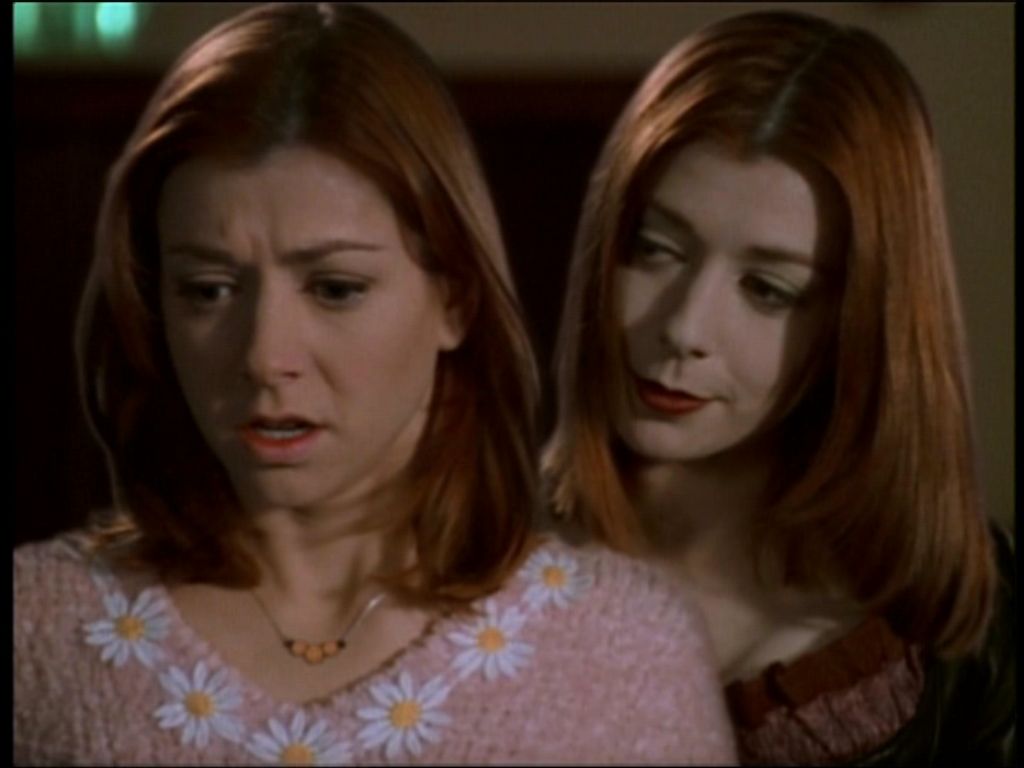 The sweater.
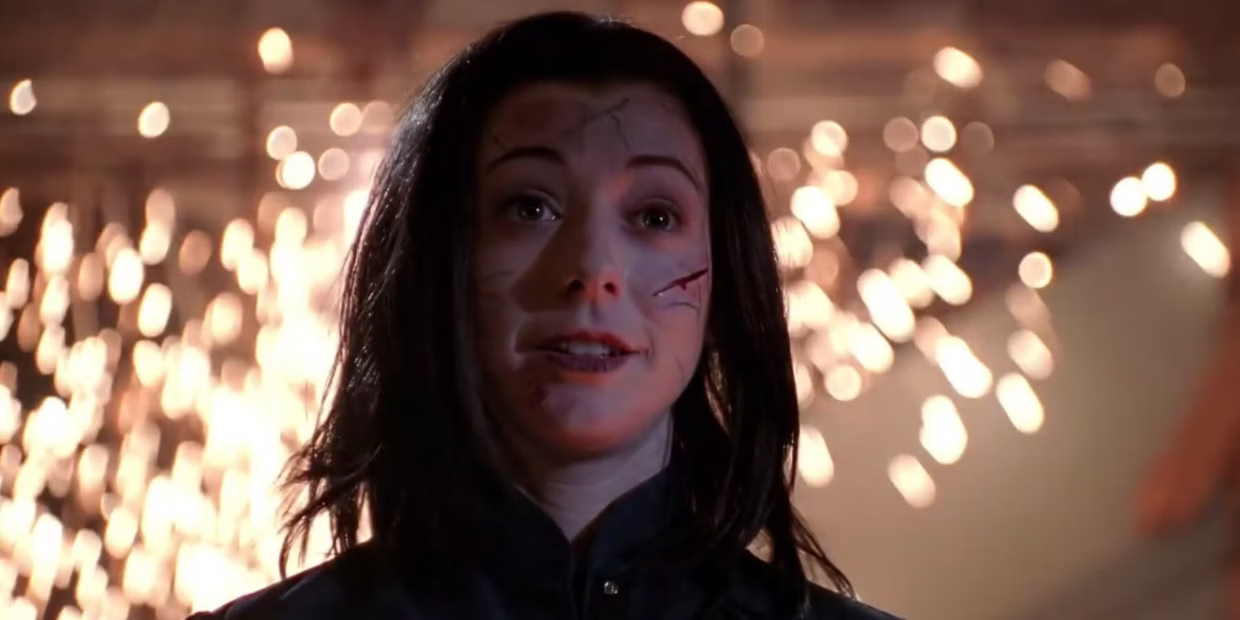
Anyway, I still trust Willow at the end of “Villains,” until the very next moment, when she says “One down.” The implication being clear: she’s going to kill the rest of the Trio. Warren is evil, and Andrew is kinda evil, but Jonathan is really not. (Wasn’t he, not so long ago, presenting Buffy with a bejeweled umbrella to thank her for saving everyone’s life so much?) And then, in the next episode, cunningly titled “Two to Go,” Willow becomes increasingly unpalatable, because she becomes increasingly not herself, despite her friends’ insistence that she is.
“This is still Willow we’re dealing with, right?” Xander asks at the beginning of the episode. This is the question.
“I hope so,” Buffy tells him.
 Or a rank, arrogant, amateur?
When Buffy confronts Willow in Rack’s den, she affirms it, somewhat speculatively: “you’re still Willow,” she says. But Dark Willow has disavowed her previous self, except for one aspect. It’s right there in the pronouns. “Let me tell you something about Willow,” she says. “She’s a loser and always has been. She got picked on through junior high, high school, right up until college. With her stupid mousy ways. And now? Willow’s a junkie. The only thing Willow was ever good for…the only thing I ever had going for me were those moments, just moments, where Tara would look at me and I was wonderful. And that will never happen again.”
Here the grief of losing Tara so unmoors Willow that it almost entirely separates her from herself, to the point where she wants to obliterate the person she was before. As Dark Willow, she is actively trying to kill her own childhood. Compare this to Buffy’s retreat into duty at the loss of her mother, her last true connection to her childhood, and Xander’s desperation to cling to his own, in his parents’ basement, before pushing it away by proposing to Anya, until he realizes that he actually can’t force himself to grow up, and that he’s not ready.
 You call this natural?
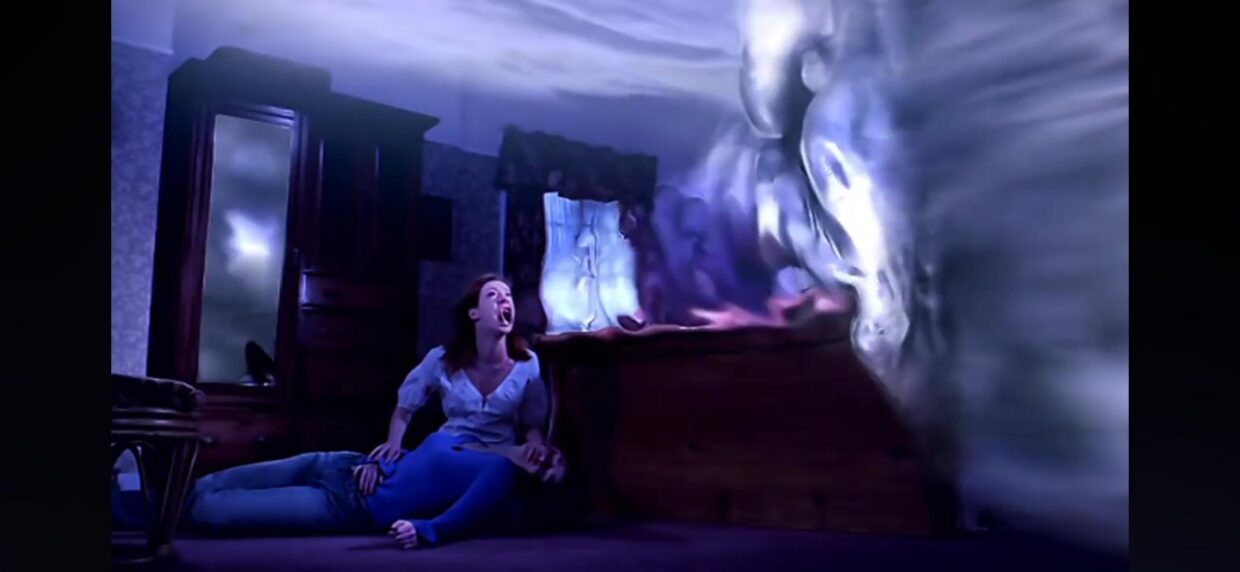
As with Joyce’s death, there’s nothing that all the Scoobies’ amassed and amassing powers can do about Tara’s death, because it is “natural.” And again, these sequences carry real emotional weight for the audience, because this is what death and grief really feels like: being faced with our utter powerlessness against the universe, when the rest of our lives are built around the fantasy that we have at least some measure of control. This episode dramatizes the shock of experiencing something truly irreversible.
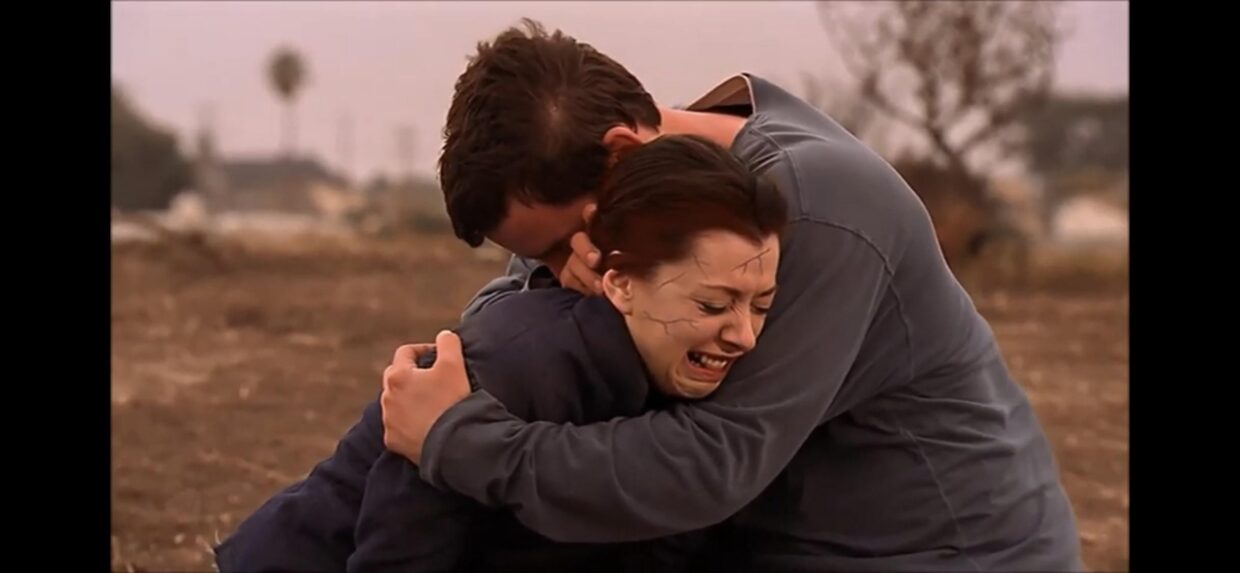
The Dark Willow sequence ends, of course, with Xander bringing Willow back by telling her repeatedly that he loves her—plus the “good” magic Giles brought from Devon—and alas, we repeat the “powerful woman beating weakly at the chest of a man being kind to her while breaking down” scene we’ve seen before. But even as it’s devastatingly corny, it still makes me tear up. Such is the power, and so on.
 Color theory in action.
“Killing people changes you,” Buffy says in this episode, and she’s right. But clearly so does living while other people are killed.
Of course none of this exists in a vacuum.
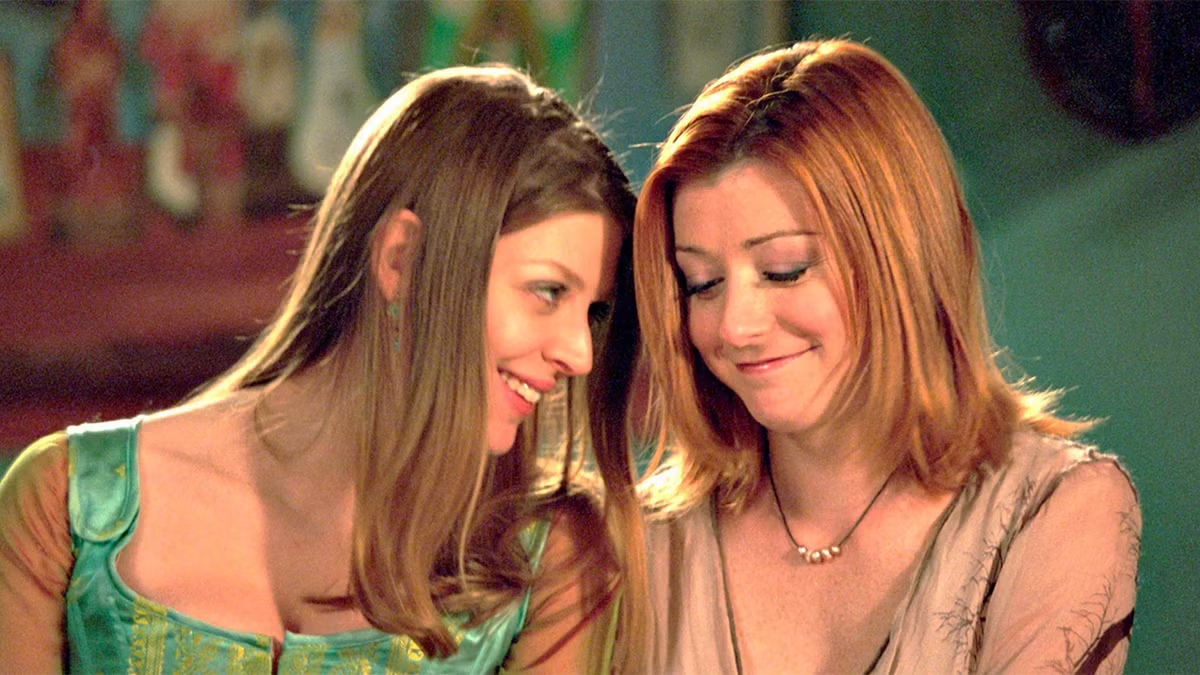
As the characters experience grief, and are changed by it, so too are the fans. This is not specific to Buffy, but can happen in anything with such a strong fandom: the grief of the characters and the grief of the viewers is intertwined. Tara and Willow were groundbreaking characters at the time, and Tara’s death caused real grief in fans who did not expect the Bury Your Gays trope to appear in this show. When Amber Benson, the actress who plays Tara, was asked to reappear as the First Evil, who could impersonate anyone dead, she said no, because she thought that seeing Tara be evil would be too painful for the fans. She wanted to protect the people who saw themselves for the first time on television in Tara and Willow’s relationship from having to feel further grief. Supposedly, Whedon was even going to write Tara back in at the end of season seven, bring her back to life with basically a wish, and Benson refused even that, because she didn’t trust him with the character. Good on her.
 I know what they see in me.
My father was a Buddhist, and he would say that everything is impermanent, and ultimately, all grief comes from the delusion that it isn’t. It is the result of holding on too tightly to the people and things and ideas we love and understand. It comes from the difficulty of change. So again, Buffy is all about grief, because Buffy is about being a teenager, and being a teenager is, ultimately, about change. But there’s another kind of grief, too, which is not about change at all, but about stasis—or at least about accepting, or failing to accept, the inevitable. This is something I am becoming familiar with as I become middle-aged. And this is what Angel is about.
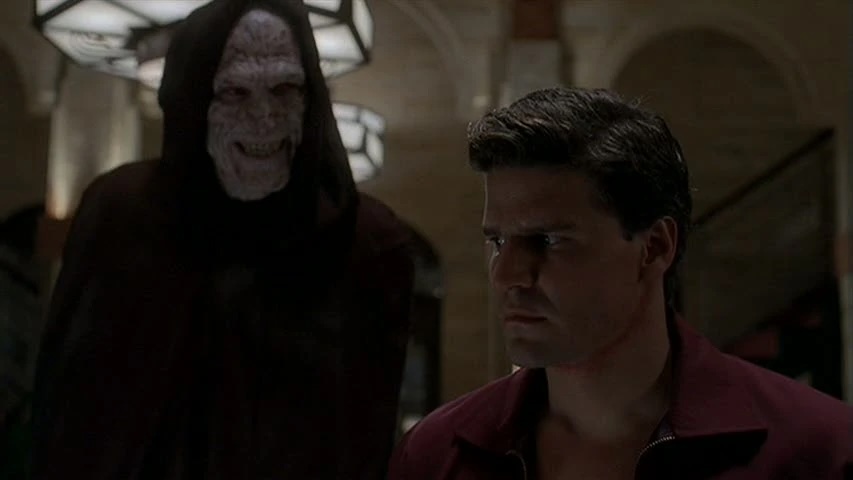 Are you now, or have you ever been?
Consider the way Angel, the show, deals with Buffy’s death—with the caveat that this moment coincides with the two shows’ debuts on different and competing networks, so there’s some incentive to get past it quickly. At the beginning of season 3, Angel returns after three months in a monastery, where he went to go “deal,” offscreen, with the death of the love of his life. (For some reason, even though he’s been there for months, he only realizes the monks are demons on the last day.) Upon his return, he kills a vampire wearing a necklace, realizing too late that he’d known her back in his cutting-a-swath-through-Europe days. She’d been madly in love with another vampire, James, who then of course shows up to take his revenge, having cut out his own heart to become temporarily invincible, before dissolving into dust. Another case of grief being transformative, and another case of love as sacrifice. But the message here is really contrary to what we’ve seen in Buffy. James’s obsessive love, his unwillingness to go on without his beloved, is treated as childish, if not a version of sweaty insanity.
In their confrontation, Cordelia tells James that Angel loved someone too, and that she died, but James can’t believe that Angel truly loved someone, “because when she died, or when some bastard killed her, it would have killed everything in you.”
“That’s your idea of love, James?” Angel asks scornfully. “It’s not real unless it kills you?”
“Yeah, what’s yours?” he replies. “It’s fun as long as it doesn’t cost me anything?”
At the end of the episode, Cordelia asks Angel what’s wrong; she thinks he’s still feeling grief over Buffy. But Angel tells her that the problem is that he is okay, that losing Buffy didn’t kill him, and it feels like he’s betraying Buffy somehow by continuing to exist. Codelia says that he’s honoring her by continuing to fight and help people. And then . . . they get back to work. Compare that to the way that Buffy dealt with Angel’s death, and the way that Willow dealt with Tara’s death. Angel asserts itself then as subscribing to a different code: a more adult mode of acceptance.
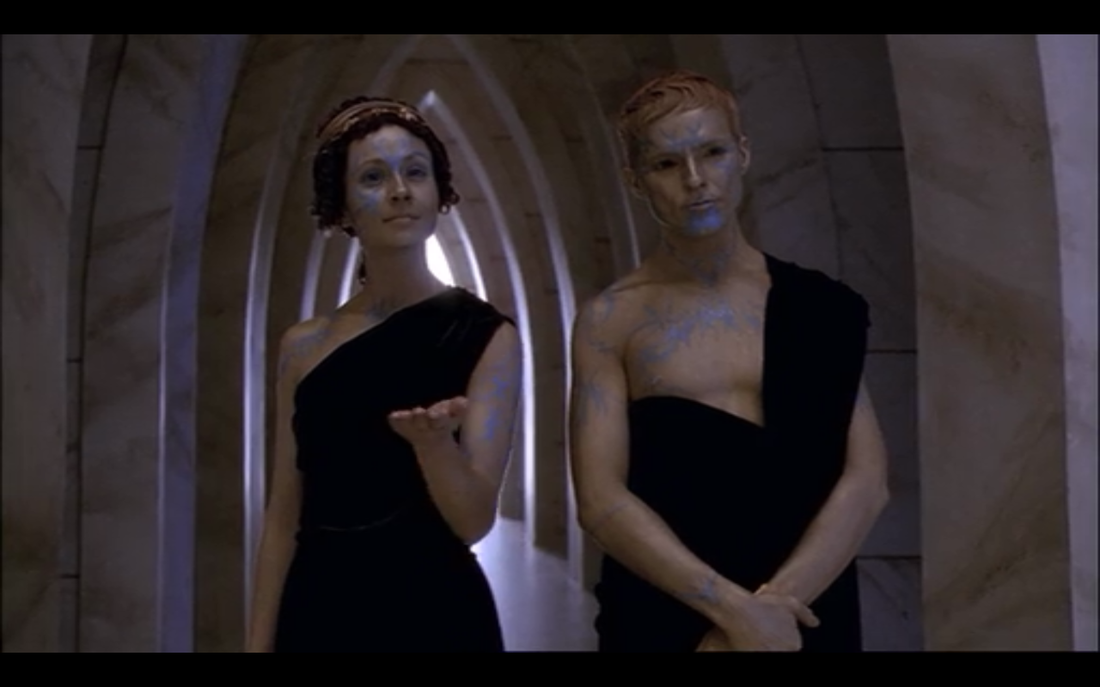 Historically accurate.
Relatedly, Angel is much more concerned with the idea of fate and free will than Buffy is. Neither show has a particularly coherent relationship to religion, but in Angel there are the Powers That Be, with corporeal (or at least killable) Oracles dressed in vaguely Grecian outfits, not to mention senior partners with variously embodied conduits, and most importantly, prophecies. While season one of Buffy does feature one prominent prophecy, the prophecy is a major repeated device in Angel. The main one is obviously the Shanshu Prophecy, which declares that the vampire with a soul will play a pivotal role in the apocalypse and then become human; there’s also the one that sends Wesley into his final form, which is an entirely different deep dive that, to be honest with you, I had to cut for length. The contrast is this: in Buffy there’s always the sense that the Scoobies have agency, that things can be changed if they just figure out the key, the plan, the secret weakness. Just look at how the show ends: with no other path forward, the characters literally change the show’s premise. They remake their own reality. But in Angel, our heroes know that they are always fighting a losing battle. There is no path, forward or back. There is only attrition, if they’re lucky. They’re always betting against the house, sometimes very literally; they’re always fighting City Hall, until, in season five, they become it. And then they still have to fight it, only from within.
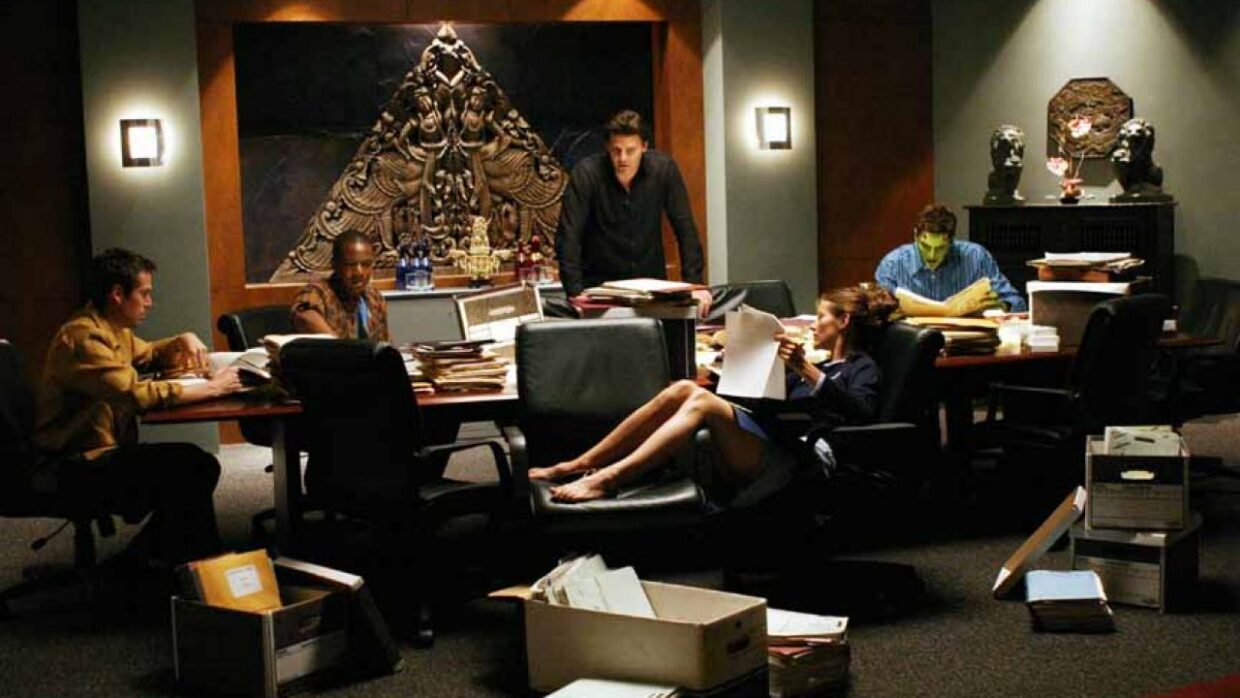 Death and taxes.
At the end of Season 4 of Angel, which is a mess except for the Jasmine arc, an undead Lilah offers the gang Wolfram and Hart, as a reward, sort of, for ending world peace by defeating Jasmine—because in Angel, no matter what you do, you do evil too. Angel’s son Connor has his own version of the Willow crisis, wiring a bunch of civilian hostages up to bombs, including a comatose (but still showing up for work) Cordelia. “There’s only one thing that ever changes anything, and that’s death,” he says. “Everything else is just a lie. You can’t be saved by a lie. You can’t be saved at all.” And lest we suspect that this is only a moody complaint from the teenager from hell (literally), Angel gives ghost-Spike a similar speech at the beginning of season five: “You think any of it matters? The things we did, the lives we destroyed, that’s all that’s ever gonna count. So yeah, surprise: you’re going to hell. We both are.”
“Then why even bother?” Spike asks. “Try to do the right thing, make a difference.”
“What else are we gonna do,” says Angel.
So if Buffy is about the grief of being a teenager, Angel is about the grief of adulthood: Of having to face reality. Of recognizing the Sisyphean task ahead, the endless, unchanging road diminishing in the distance, and taking another step anyway. Even at the end, when it’s THE apocalypse, not AN apocalypse, Lindsey tells Angel it’s actually been in progress all along. “The world keeps sliding toward entropy and degradation.” Don’t we know it.
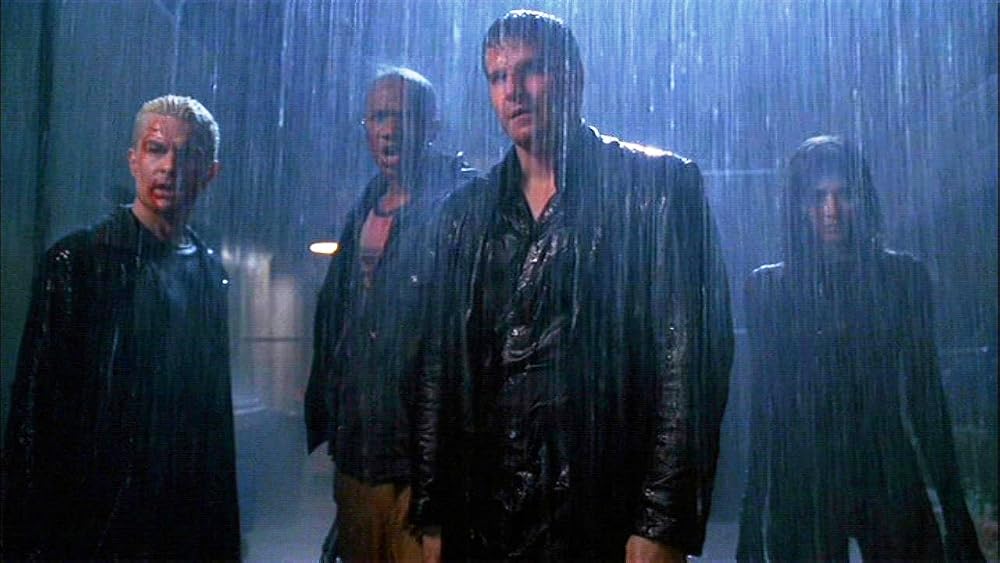 One last stand.
I promised to talk about why writers love Buffy, so I’ll end with that.
Plenty of high profile writers have talked publicly about their love for the show. I already mentioned Women’s Prize for Fiction winner Naomi Alderman. There’s also Kelly Link, recipient of a MacArthur Genius Grant, who wrote a short story—it’s the title story of her collection Magic for Beginners—about the experience of watching Buffy. It reads sort of like a love letter and also like a wish. She’s said that she wondered what the characters of her favorite fantasy shows might themselves like to watch on television and started from there, but the thing that I really appreciate about this story as it relates to Buffy is that it’s a literary representation of the kind of slippage you feel when you’re this connected to a cultural artifact. It’s both dream Buffy and dream watching-Buffy.
There’s bestseller Lev Grossman, who says he couldn’t have written The Magicians without Buffy.
The Booker Prize-winning novelist—and I’m mostly telling you everyone’s accolades here so we can all feel in good company about our correct opinions—Marlon James has called Buffy “the only show I can remember that often left me breathless and in wonder, or put another way, the only show that without fail had at least one instant each episode that had me saying I wish I wrote that.”
I think that’s it, on the most basic of levels. I think we all wish we wrote it.
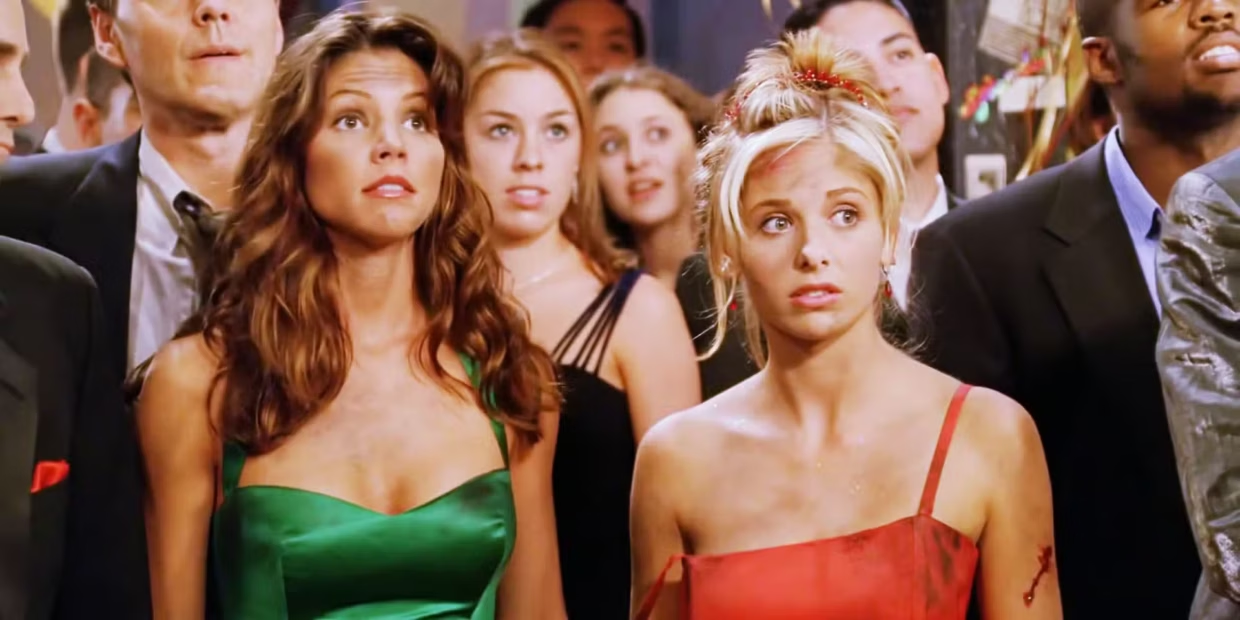 Competition. Competition is a beautiful thing. Makes us strive. Makes us accomplish. Makes us kill.
People come to literature for many different things. More things, I’d argue, than they come to television for. As a lifelong Nabokov dork, I come for language, and for play, but the thing I really crave is quality of mind. I’m always looking for a unique consciousness, some other way of seeing the world, that is inaccessible to me otherwise. This might come from language, or narrative voice, or perspective. Quality of mind is something that novels tend to do better than any other medium, because of their natural bent toward interiority. Film and television are mostly shot in the third-person. Setting aside the magical powers of voiceover, we can’t hear what anyone is thinking. We don’t know what the inside of their mind feels like. We watch what is done and said and emoted, but the internal texture of the characters is typically absent. The closest we can get in visual media is some kind of connection to the director via their choices. Think Wes Anderson or Quentin Tarantino, both examples of directors who have punishingly cohesive viewpoints. But this isn’t quite the same as a representation of a fictional consciousness. And anyway, that kind of auteurism is less common in television, particularly pre-Peak TV streaming six-episode season television, because of the format, and the number of writers, and other constraints.
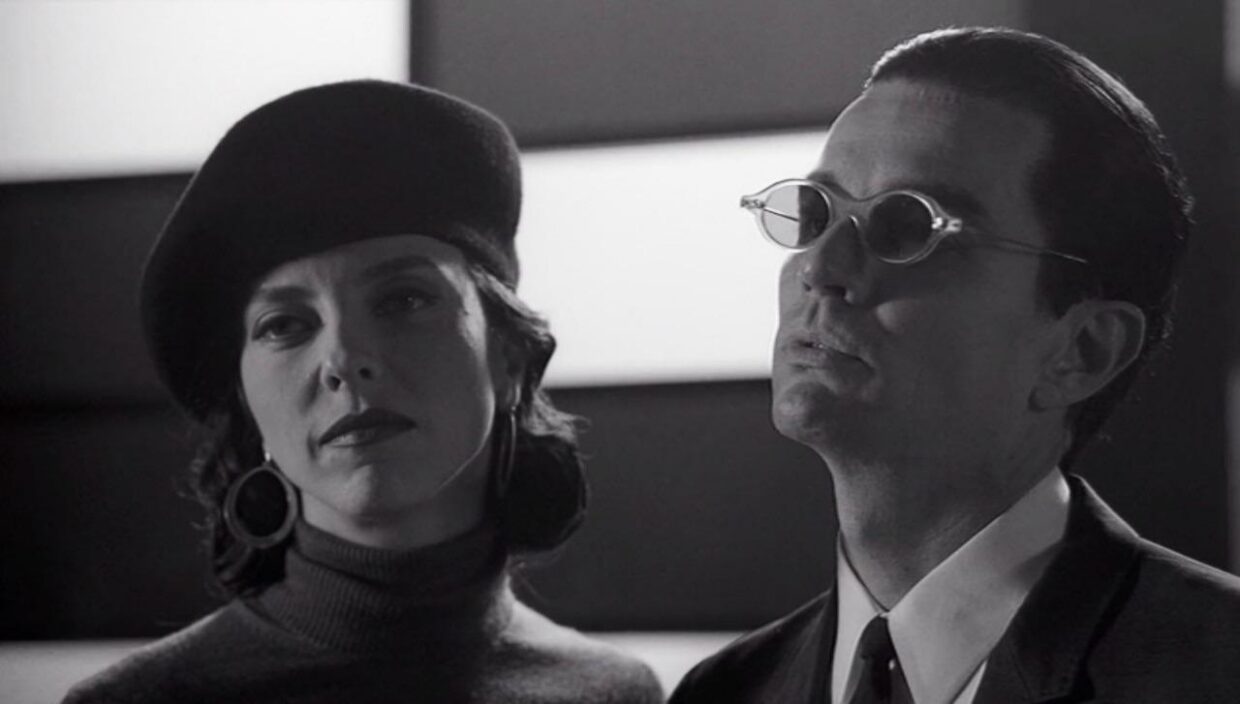 Ciao.
Ciao.
But in Buffy and Angel, because of the density of the storytelling and worldbuilding, it does feel as though there is a kind of larger quality of mind at play. It’s not literal; there isn’t a character narrating this story, unless you count Andrew in his smoking jacket, or Buffy cooking away in the insane asylum—which, there’s an argument. On the whole, though, there is an element of the interior in these shows that is hard to put a finger on. It’s in the language, the self-referential intertextuality, the sense of humor, the overlapping metaphors. It’s in what we’ve been talking about here, the many different approaches to the same concept, the mirroring and repetition, stretched over years, the shows turning over the same concerns, worrying the same images, in the internal overriding logic of the narrative that feels, despite the many writers, like a kind of universal intelligence. It’s a kind of consciousness built on accumulation.
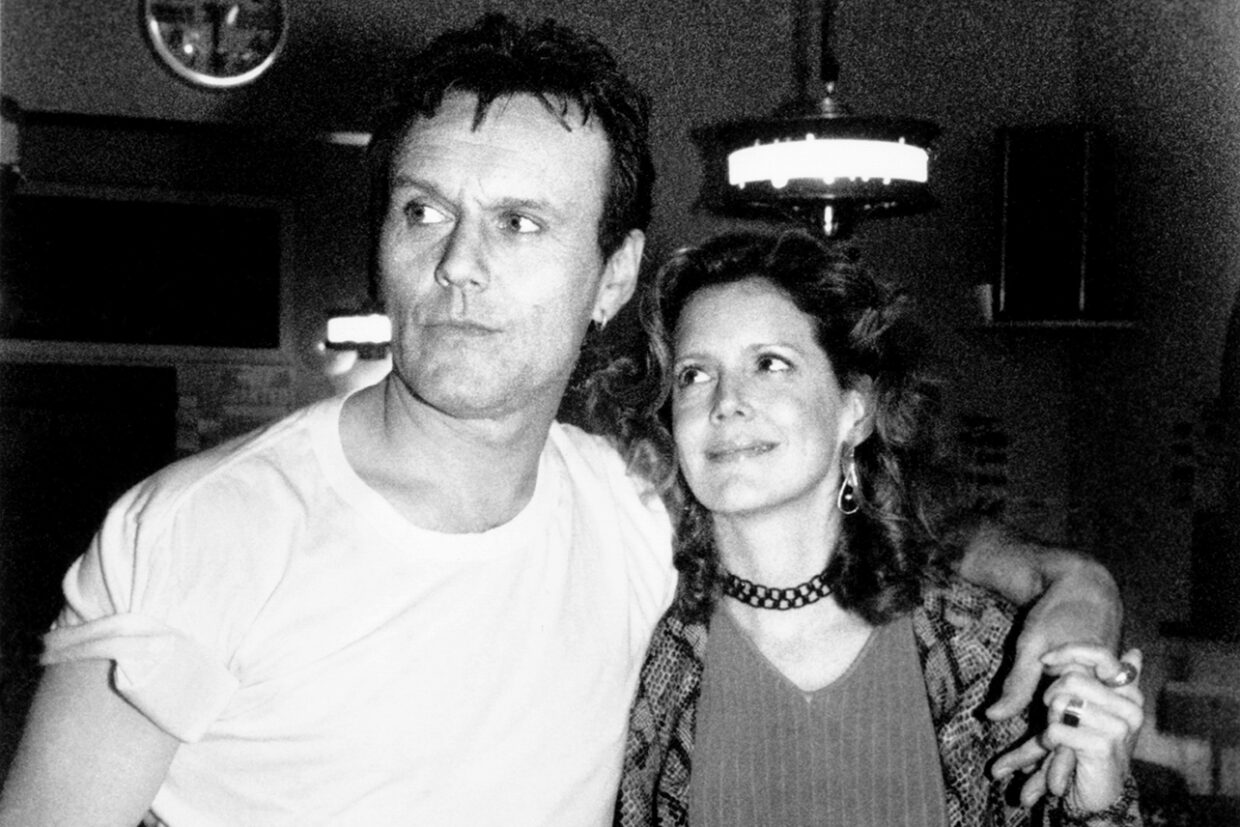 Call me, Ripper.
There’s also the fact that Buffy and especially Angel still feel, after all this, like secrets. Fellow “The Pack” convert and critic Emily Nussbaum has written that the show’s low-budget visuals, its inherent campiness, kept it from being widely viewed and appreciated when it aired—as she points out, the flashy, and also brilliant/groundbreaking The Sopranos was on at the same time, and because of its production value, network, and (I’d argue) its maleness, was written about everywhere, treated like literature immediately. Yet the very campiness of Buffy is part of its literary appeal. Buffy is not slick. It is touchable. It feels, despite the enormity of the themes, like you can hide it under your bed. It is paperback size. Again, I know plenty of writers who love The Sopranos, not to mention, say, Love Island. But not the way they love Buffy. There’s something about Buffy that feels like it belongs to us.
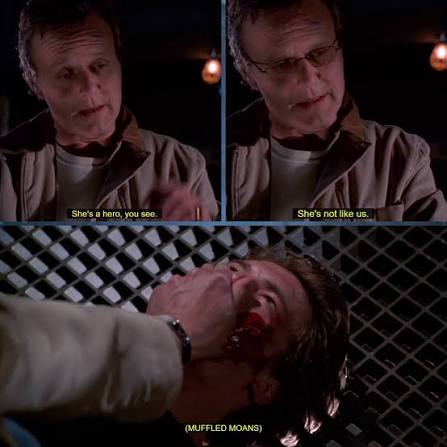 My favorite moment of the series.
One of the first ways I was taught to interpret literature was through a symbolist lens—maybe they still teach this way. When Gregor Samsa wakes up as an enormous insect one morning, what does it really mean? What is Hemingway trying to tell us with these hills? And so on. And there is something satisfying in tracking clues and decoding references. But as a writer, I’ve realized that by treating fiction of any kind like a code to be broken ultimately distracts from the point. “Stories aren’t about things,” Bret Anthony Johnson has memorably written. “Stories are things. Stories aren’t about actions. Stories are, unto themselves, actions.” Too much intention, too much Trying to Say, too much overarching metaphor, can deaden your work.
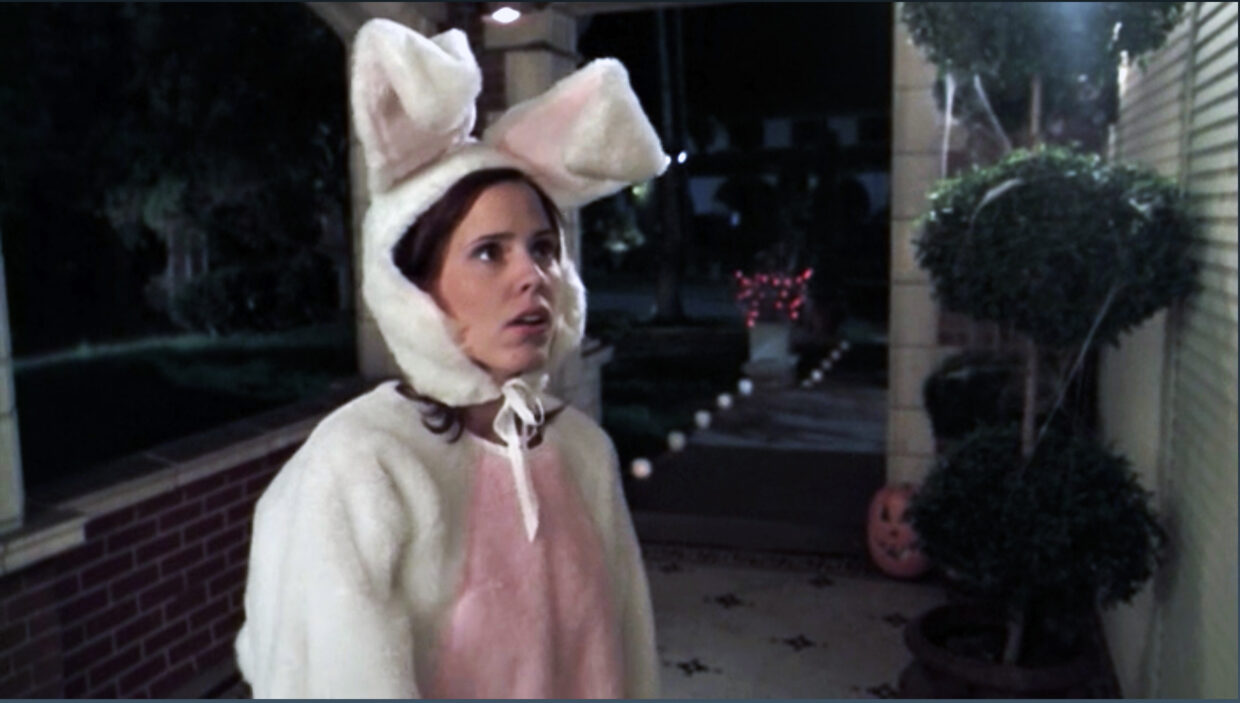 Bunnies, bunnies, it must be bunnies!
But Buffy is full of those codes and metaphors, sometimes painfully obvious—and vehemently excepting “Beer Bad,” it usually works. Because Buffy and Angel both manage to do both: they manage to be codes and actions. The most obvious general interpretation of Buffy’s project is that the show transmutes real teenage anxieties into monsters; every villain is a metaphor. High school is hell. But that would be hollow without the sense that the characters’ emotions, and therefore our emotions, are real—that the story, though it might have been born from metaphor, has literal, intrinsic meaning. That’s why we feel something when we watch it. Like all good literature, Buffy and Angel are more than one thing at once. They are full of mirrors and doubles and layers of meaning and shifting sands. Like all good literature, Buffy changes. And like all good literature, Buffy changes us.
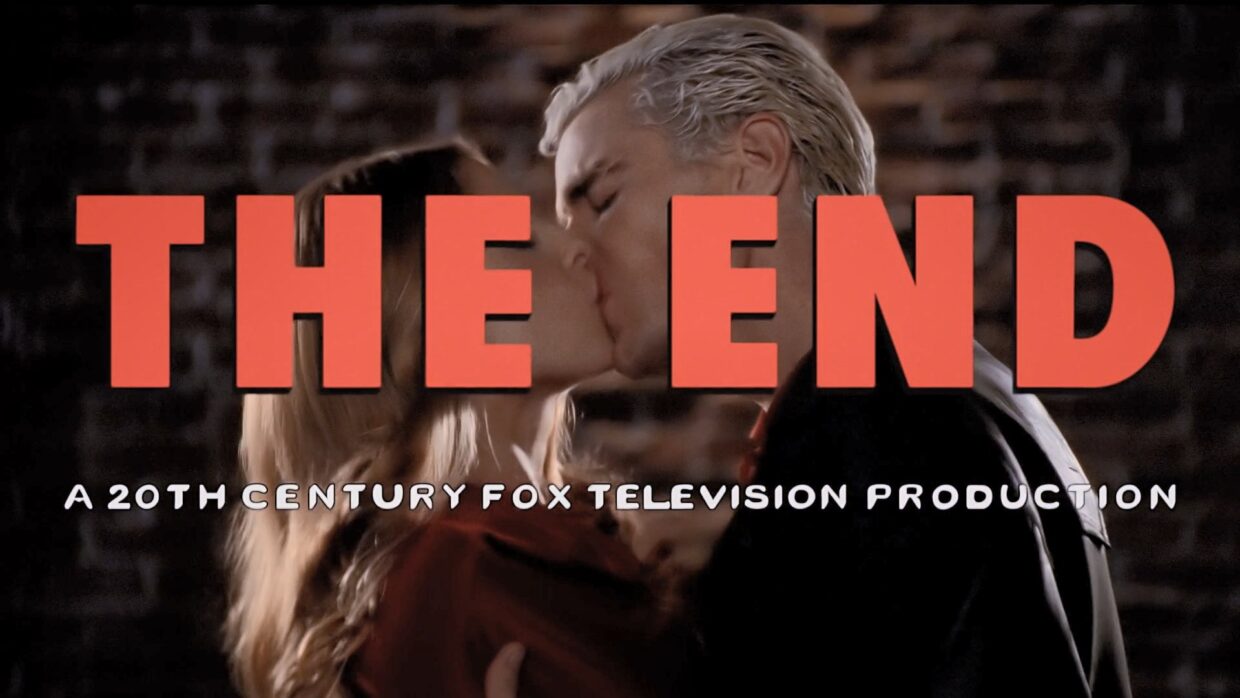 With the rising music, and the rising…music.
So this last year, I’ve been feeling grief—for Anthony Stewart Head and Nicholas Brendan and Michelle Trachtenberg, and their families, and for my dad, and for the world—and that’s okay. Because grief is good. It’s what makes us human. It’s how we know we have a soul. Sometimes you can’t find it until it hurts.
















 English (US) ·
  French (CA) ·
  French (FR) ·