

 2 months ago
96
2 months ago
96
PROTECT YOURSELF with Orgo-Life® QUANTUM TECHNOLOGY
Orgo-Life the new way to the future Advertising by Adpathway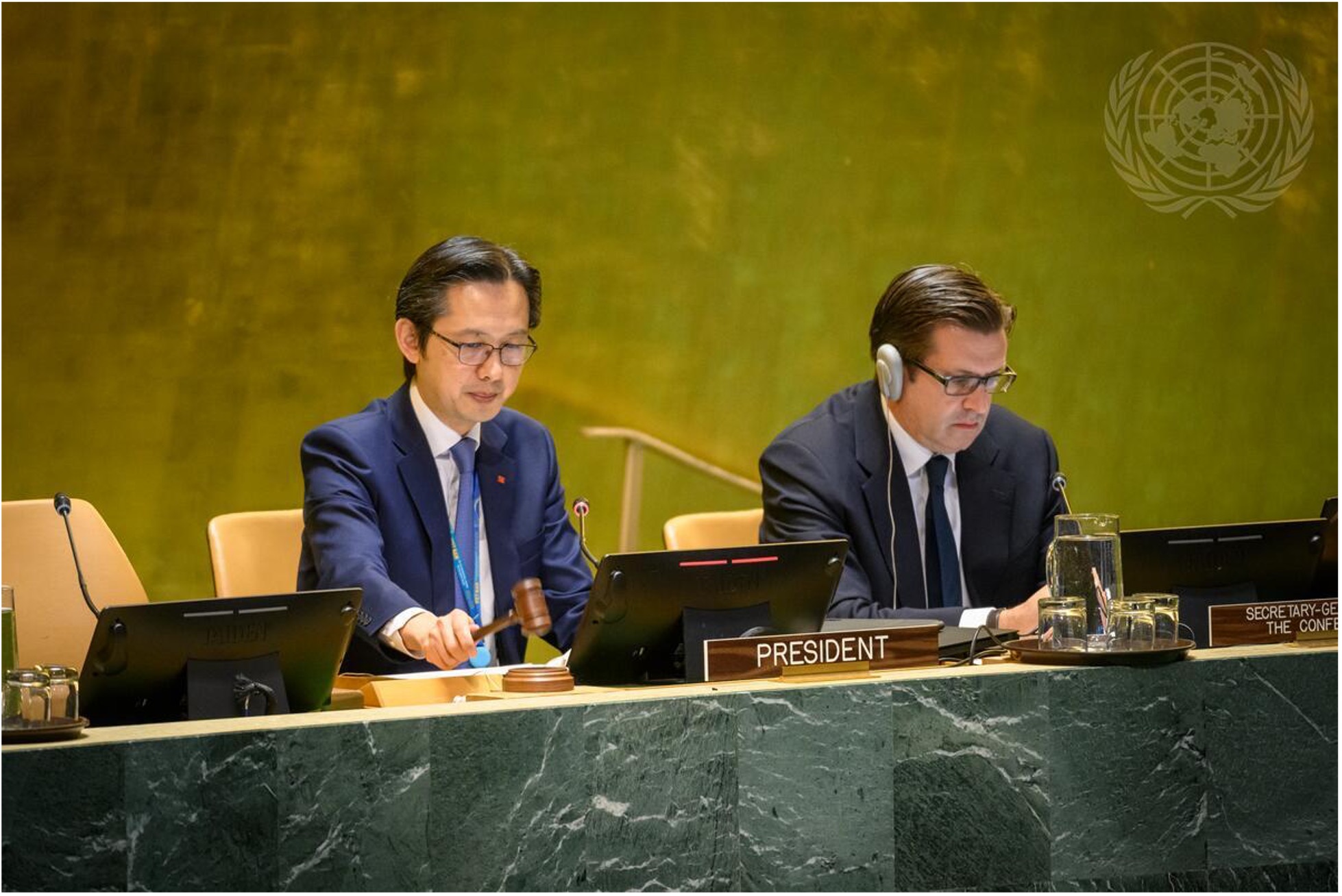 Du Hung Viet (left), President of the Eleventh Review Conference for the NPT 2026, chairs the closing session of the NPT Review Conference (27 April-22 May). Credit: UN Photo/Loey Felipe
UNITED NATIONS, June 15 (IPS) - On principle, the nonproliferation of nuclear weapons is an issue that unites the international community. But for a select few states, these principles came with conditions and a refusal to compromise on their security strategy.
The Eleventh Review Conference of the Parties to the Treaty on the Non-Proliferation of Nuclear Weapons (NPT) concluded on May 22, 2026 without member states reaching consensus on a final outcome document. It was the culmination of four weeks of extensive debates starting on April 27, along with the special meetings, consultations and briefings that preceded the conference.
Compared to earlier editions shared before and during the conference, the final draft weakened much of the language surrounding the obligations of nuclear states, including those that related to disarmament efforts. Yet even with these concessions, for the third time in a row after 2015 and 2022, the NPT parties failed to adopt an outcome document.
At the closing session of the conference, Do Hung Viet, President of the NPT Conference and the UN Permanent Representative of Vietnam, remarked that the collective threat posed by nuclear weapons requires a collective response. He warned that in 2031, the NPT would pass 20 years without an outcome. It was the responsibility of state parties, he said, to uphold the NPT until Article VI, which calls for parties to pursue disarmament measures in good faith, could be implemented, and they needed to bolster the treaty as a tool to address modern threats.
Following the closing of the conference, Viet told reporters that the current state of the international environment requires “urgent action” in the face of recent tensions. Although the conference could not reach consensus, Viet attempted to find some positives in the proceedings, in that the engagement “highlights the value of the NPT and multilateralism as a whole”. Yet he expressed concern for the health of the treaty going forward as it related to state parties’ commitments.
Izumi Nakamitsu, UN Under-Secretary-General and High Representative for Disarmament Affairs, added that if parties to the NPT wanted to prevent a “further decrease of confidence” in the nuclear nonproliferation regime, then they “need to visibly make a commitment” through measurable steps.
She remarked that the international community at large needed to take lessons from the proceedings, starting with the acceleration of disarmament commitments under existing treaties. There were also increased calls for a “strengthening of the review process”, or enhancing accountability and transparency measures over the implementation of countries’ commitments to the NPT.
“Nonproliferation and disarmament are two sides of the same coin, and it is simply wrong for nuclear weapons states to assume that nonproliferation obligations will be just adhered to without nuclear weapons states’ commitment and implementation of disarmament commitments under Article 6,” said Nakamitsu.
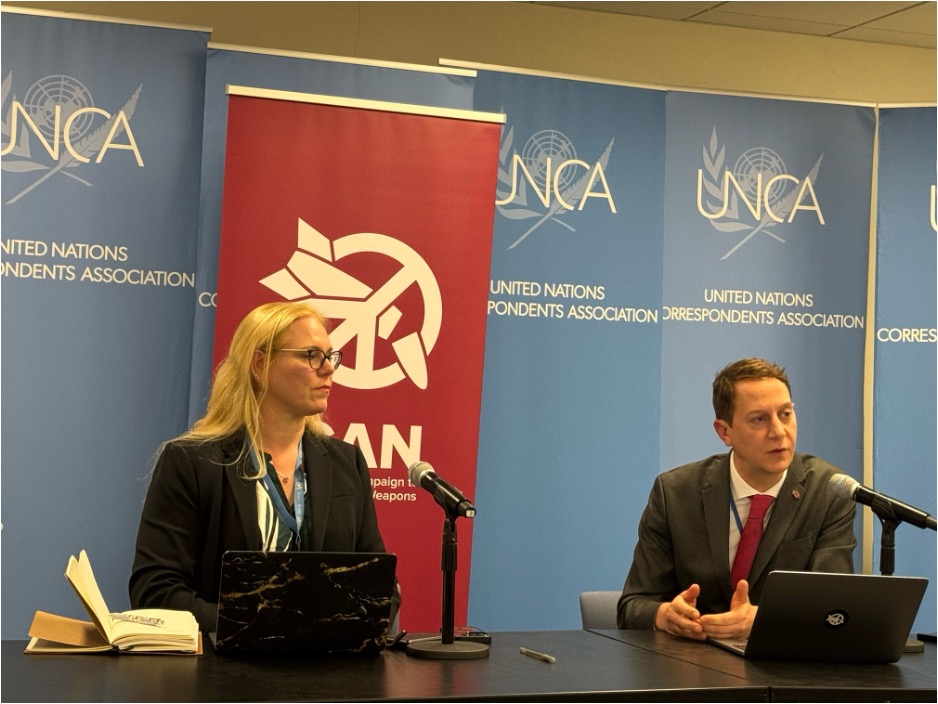 Susi Synder (left), ICAN Director of Programmes, and Seth Sheldon (right), ICAN’s UN Liaison, at a press briefing held on the final day of the NPT 2026 Review Conference. Credit: Naureen Hossain/IPS
Parties to the NPT, including nuclear-armed states, repeatedly acknowledged the NPT as a “cornerstone” for multilateral diplomacy and the nuclear disarmament regime. However, when it came to other nuclear treaties, such as the Comprehensive Nuclear-Test-Ban Treaty (CTBT) and the Treaty for the Prohibition of Nuclear Weapons (TPNW), such acknowledgements were scarce. The final outcome draft makes a limited few references to these treaties but does not elaborate on the disarmament requirements outlined in them.
The final outcome document draft was noteworthy for its references to the humanitarian and environmental impacts of nuclear testing for the first time in the context of the NPT Review Conference. Experts from the International Campaign Against Nuclear Weapons (ICAN) noted that this was possible thanks to the advocacy efforts of civil society and of the communities impacted by nuclear weapons use and testing.
In particular, the draft “recognise[s] the growing calls for assistance to the people and communities affected by nuclear weapons use and explosive nuclear testing and for environmental remediation following nuclear weapons use and explosive nuclear testing” and “welcome[s] efforts already undertaken in this regard”.
The draft also included a call for member states to “take concrete measures to raise awareness of the public, including through education, on all topics relating to nuclear disarmament and non-proliferation” by sharing the experiences of peoples and communities affected by nuclear weapons use and testing.
Recognition of the NPT stood in contradiction to the actions and statements made by nuclear-armed states. These states, which include the five permanent members of the UN Security Council, all maintain positions that contradict the principles of the NPT and broader efforts toward disarmament. These states have openly made plans to expand their nuclear arsenals and weave in the salience of nuclear weapons into their security strategy by justifying it through concepts of ‘extended nuclear deterrence’ and nuclear sharing with other countries considering their own nuclear expansion. Two members of the Security Council are engaged in separate, active conflicts that have only exacerbated geopolitical tensions, while also dredging up anxieties around nuclear weapons as a security strategy. With seemingly no end in sight to these conflicts, those anxieties have only deepened, and has shaped global and regional security policies for years to come.
For a civil society group like ICAN, the lack of outcome for the NPT is emblematic of increasing risks of proliferation among nuclear-armed states and their allies.
“There is a reason why the countries that claim protection from nuclear weapons are afraid of discussion of what these weapons actually do to people and the environment. They simply don’t want people to know the true extent of the horror and cruelty nuclear weapons wreak, because acknowledging these harms will eliminate any credible legitimacy for retaining nuclear weapons,” said Susi Snyder, ICAN’s Director of Programmes.
What will it take, therefore, for these countries to reverse their positions? Synder told Inter Press Service that “increasing the stigmatisation” of nuclear weapons would be one such tactic. Reinforcing the nuclear taboo by raising awareness among the populations of these countries is critical for them to recognise the complete destruction that a nuclear weapon would bring about, and the impact this would have on targeted communities and on themselves. Synder noted the literal cost of proliferation, claiming that in 2024 nuclear-armed states spent over USD 3000 per second on their arsenals.
Finally, security doctrines built on the theory of nuclear deterrence need to be challenged. Seth Sheldon, the UN liaison for ICAN, noted that if nuclear weapons can be seen as useless from a military perspective and unsustainable from a policy perspective, nuclear-armed states would reevaluate their positions. “Nuclear weapons are irrational. Nuclear deterrence is a fable. And all technology is abandoned once it is seen as no longer useful,” Sheldon said.
Though the 2026 NPT Review Conference ended without consensus, member states still have other avenues to pursue the nuclear disarmament agenda, both within and outside the NPT process. There still remain specific nuclear weapon-free zone agreements among countries and treaties like the CTBT and the TPNW which also contain legally binding obligations for its signatories. Synder confirmed that the TPNW will host its first review conference at the end of this year. Meanwhile, the NPT remains in its current form and state parties recognise its obligations and safeguards on the nuclear regime.
In 2024, the UN General Assembly pushed to establish an independent scientific panel on the effects of a potential nuclear war, whose panellists will present their findings in 2027.
Galvanising the world public opinion on the nuclear regime is critical to restoring faith in the nuclear regime. Otherwise, Nakamitsu warned, the world is in “the trajectory of a very dangerous path.
“Let’s get back to a path that is more sustainable peace rather than creating arms race dynamics.”
Note: This article is brought to you by IPS Noram in collaboration with INPS Japan and Soka Gakkai International in consultative status with ECOSOC.
IPS UN Bureau Report
© Inter Press Service (20260615052757) — All Rights Reserved. Original source: Inter Press Service













 English (US) ·
  French (CA) ·
  French (FR) ·