

 2 months ago
42
2 months ago
42
PROTECT YOURSELF with Orgo-Life® QUANTUM TECHNOLOGY
Orgo-Life the new way to the future Advertising by Adpathway5 min readNew DelhiMay 4, 2026 02:50 PM IST
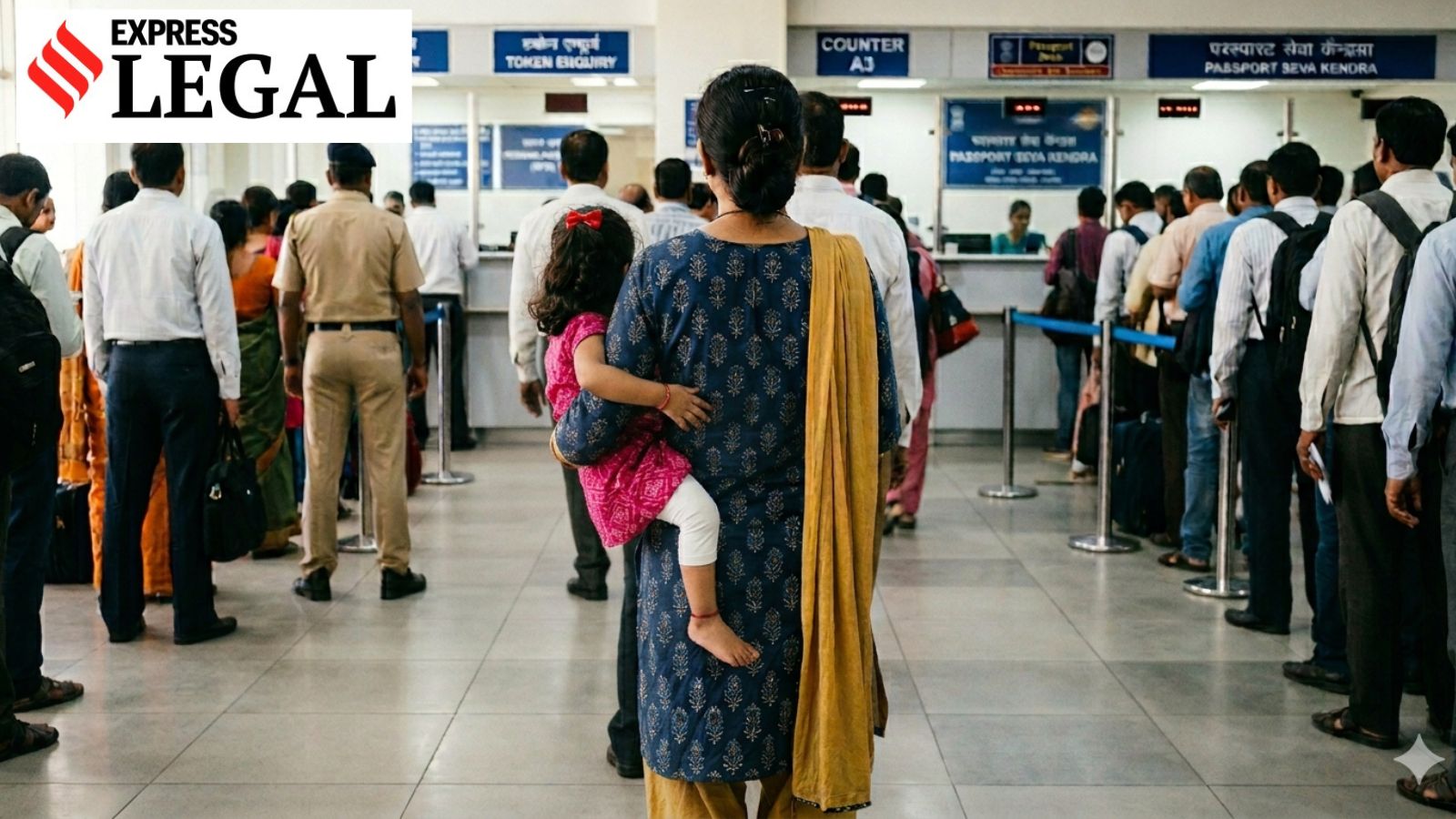 Rejecting the stand of the passport authorities, the Andhra Pradesh High Court noted that the issue had been settled through multiple judicial precedents across high courts. (AI-generated image)
Andhra Pradesh High Court news: Reinforcing the rights of single parents, the Andhra Pradesh High Court has held that a mother can apply for and obtain a passport for her minor child without the father’s consent or signature, provided there is no legal bar, and directed the passport authorities to process such applications without insisting on divorce or judicial separation documents.
Justice Battu Devanand was hearing a plea filed by one Shaik Shabana, who had challenged the refusal of authorities to process her four-year-old daughter’s passport application.
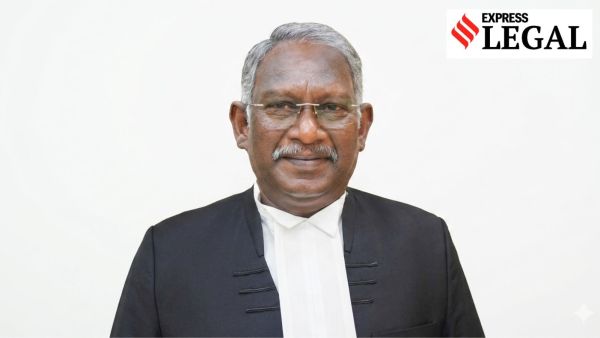 Justice Battu Devanand directed the regional passport officer to process the application.
“The petitioner, a single parent, is entitled to make an application for a passport for her minor child without the consent or signature of her husband,” the Andhra Pradesh High Court said on May 1, referring to “various High Courts”.
Court’s reasoning
- A single parent is entitled to apply for a passport for his/her minor child without the consent or signature of the other parent.
- It is inconceivable in this day and age that a single parent who is no longer in touch with the other parent of the minor child “for whatever reason” would be made to suffer a statutory embargo in applying for a passport for the minor child.
- Rejecting the stand of the passport authorities, the Andhra Pradesh High Court noted that the issue was no longer res integra (an untouched matter) and had been settled through multiple judicial precedents across high courts.
- The court referred to rulings from the Bombay, Telangana, Kerala, Madhya Pradesh, and Madras high courts, all of which consistently held that a single parent could apply for a minor’s passport without the other parent’s consent, provided the required declarations were submitted.
- The Andhra Pradesh High Court observed that the Passport Rules, 1980, and related guidelines explicitly accommodate situations where one parent is unable to obtain the consent of the other “for whatever reason,” allowing the application to proceed based on affidavits and declarations.
- It further underlined that denying a passport in such cases could infringe upon fundamental rights under Articles 19 (protection of certain rights regarding freedom of speech) and 21 (protection of life and personal liberty) of the Constitution, including the right to travel abroad.
Background
- The petitioner, a 33-year-old resident of Nellore district, had applied for a passport for her four-year-old daughter on August 28, 2025.
- However, the regional passport office put the application on hold, insisting that she furnish proof of divorce, judicial separation, or court orders regarding her marital status.
- Shabana, who has been living separately from her husband since 2022 due to matrimonial disputes, argued that she had clearly declared herself as a single parent in the application and submitted the required Annexure C and D declarations.
- She also pointed out that criminal proceedings under Section 498A of the Indian Penal Code (IPC) and the Dowry Prohibition Act were pending against her husband, which explained the absence of his consent.
- Section 498A of the Indian Penal Code (IPC) makes cruelty to a woman by her husband or his relatives a criminal offence. It is a non-bailable, cognisable offense punishable by up to three years in prison and a fine, designed to curb domestic violence and dowry harassment.
- Despite a formal representation dated September 8, 2025, the authorities failed to act, prompting her to approach the Andhra Pradesh High Court.
Legal issue
The key question before the court was whether a passport could be issued to a minor child based solely on the application of one parent, particularly the mother, without the father’s consent, in the absence of any prohibitory order from a competent authority.
The respondents argued that the consent of both parents is generally required and that the petitioner had failed to submit supporting legal documents, such as divorce proceedings.
The Andhra Pradesh High Court was examining whether the consent of both parents is mandatory in cases where the mother is a single parent living separately and has complied with the prescribed declarations.
Directions issued, broader implications
Allowing the writ petition, the court directed the regional passport officer to process the application and issue the passport to the minor child within two weeks from the date of receipt of the order.
Story continues below this ad
The ruling is expected to provide relief to many single parents across the country who face procedural hurdles while applying for passports for their children.
By reiterating that administrative practices cannot override statutory provisions and constitutional rights, the Andhra Pradesh High Court has reinforced a more practical and rights-oriented approach to passport issuance.
Legal observers say the judgment aligns with evolving social realities, where non-traditional family structures are increasingly recognised by courts, and bureaucratic processes are expected to adapt accordingly.

Vineet Upadhyay is an Assistant Editor with The Indian Express, where he leads specialized coverage of the Indian judicial system. Expertise Specialized Legal Authority: Vineet has spent the better part of his career analyzing the intricacies of the law. His expertise lies in "demystifying" judgments from the Supreme Court of India, various High Courts, and District Courts. His reporting covers a vast spectrum of legal issues, including: Constitutional & Civil Rights: Reporting on landmark rulings regarding privacy, equality, and state accountability. Criminal Justice & Enforcement: Detailed coverage of high-profile cases involving the Enforcement Directorate (ED), NIA, and POCSO matters. Consumer Rights & Environmental Law: Authoritative pieces on medical negligence compensation, environmental protection (such as the "living person" status of rivers), and labor rights. Over a Decade of Professional Experience: Prior to joining The Indian Express, he served as a Principal Correspondent/Legal Reporter for The Times of India and held significant roles at The New Indian Express. His tenure has seen him report from critical legal hubs, including Delhi and Uttarakhand. ... Read More
© IE Online Media Services Pvt Ltd



















 English (US) ·
  French (CA) ·
  French (FR) ·