

PROTECT YOURSELF with Orgo-Life® QUANTUM TECHNOLOGY
Orgo-Life the new way to the future Advertising by Adpathway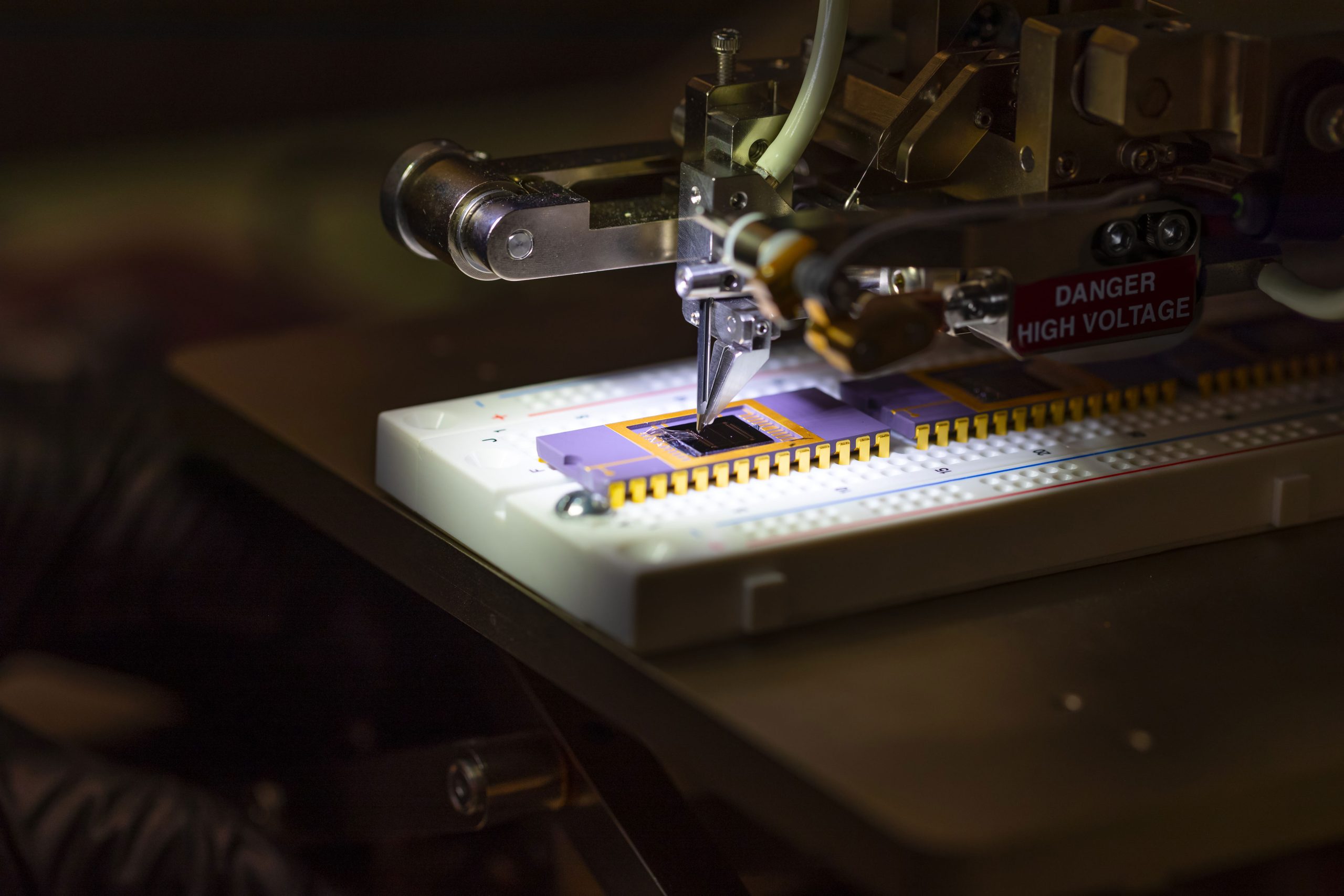 Soldering a graphene-based sensor. Credit: Russell Cothren
Scientists have developed a tiny temperature sensor that harvests energy from magnetic fields near electrical wiring.
Electrical wiring produces weak electromagnetic fields that typically go unnoticed, but researchers have found a way to turn some of that energy into a power source for tiny electronic devices. Scientists at the University of Arkansas (U of A) and the University of Michigan have developed a graphene-based energy harvester capable of powering an ultra-low-power temperature sensor without a conventional battery.
The prototype operates using energy collected from its immediate surroundings, consuming power measured in nanowatts, or billionths of a watt. It represents another advance toward the team’s goal of developing autonomous sensors that could function unattended for decades.
Turning Electrical Wiring Into a Power Source
The technology captures energy from magnetic fields generated by electrical wiring carrying alternating current. In the United States, electricity typically operates at 60 hertz, meaning the current changes direction 60 times each second. The researchers designed their sensor to harvest energy from these low-frequency fields.
A graphene inductor collects the energy and sends an alternating electrical signal to a custom circuit, which converts it into direct current. That electricity charges capacitors that store energy for the sensor to use. Unlike a battery, a capacitor stores energy in an electric field rather than through chemical reactions.
“The inductor adds charge to these capacitors at a slow rate,” explained University of Arkansas physics professor Paul Thibado, “but it’s faster than the rate the sensor uses up the charges from the capacitors.”
Because the sensor consumes energy more slowly than the system replenishes it, the capacitors can maintain an electrical reserve. Thibado estimates that this stored energy could keep the device operating for at least 24 hours during a power outage, potentially extending to a week.
Building Sensors That Can Power Themselves
The new device is the second graphene-powered temperature sensor developed by the research team. Their earlier work demonstrated that graphene-based solar cells could supply enough electricity to operate temperature sensors, establishing another possible source of energy for autonomous electronics.
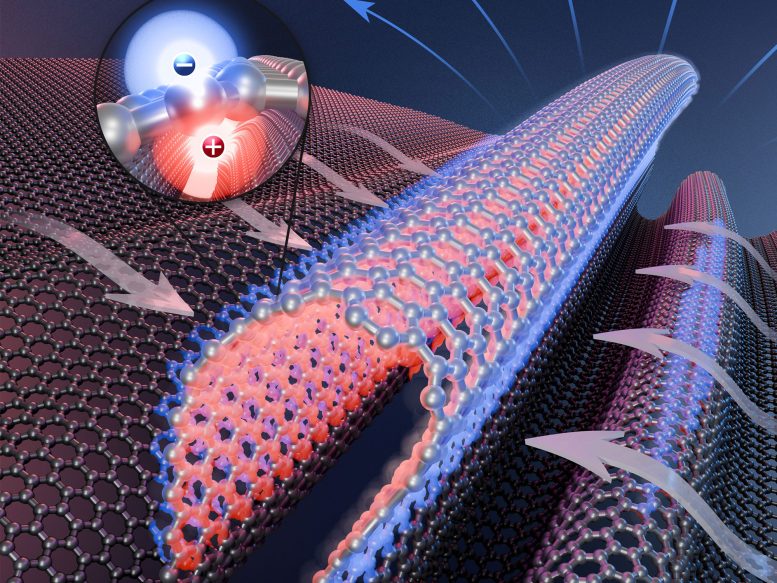
Graphene, a material consisting of a single layer of carbon atoms, has electrical properties that make it useful in energy-harvesting technologies. Thibado has investigated these properties for more than a decade and invented the graphene energy harvesters used in the team’s research.
The researchers ultimately want to combine several methods of collecting environmental energy, including sunlight, heat, sound, motion, and ambient electromagnetic fields. A sensor equipped with multiple harvesting systems could continue operating when one energy source becomes unavailable, reducing its dependence on any single power supply.
Applications Beyond Temperature Monitoring
Although temperature measurement provides a practical demonstration, the technology could eventually support sensors used in agriculture, environmental monitoring, medical tracking, wearable electronics, and supply chain management. These applications often require devices to operate in locations where replacing batteries is expensive, inconvenient, or impractical.
Thibado describes the long-term vision as “set it and forget it,” with sensors designed to operate for extended periods without routine battery replacement. Eliminating disposable batteries could also reduce maintenance demands and electronic waste, although decades of reliable operation have not yet been demonstrated.
The research was published in the Journal of Vacuum Science and Technology B, with MD Rezaul Kabir, a doctoral candidate in materials science and engineering at the University of Arkansas, serving as first author. The project also involves researchers at the University of Michigan, including electrical engineering and computer science professor David Blaauw, whose work focuses on low-power wireless sensors and embedded systems.
Commercial Development and Future Possibilities
NTS Innovations, a nanotechnology company, holds the exclusive license to commercialize the graphene energy-harvesting technology. The company has supported patent development, business planning, and efforts to identify potential customers and commercial partners.
More than 60 parties have expressed interest in testing the technology and exploring ways to integrate it into products. Ongoing discussions are helping establish practical requirements, including the minimum electrical power needed for different applications.
The researchers envision networks of self-powered sensors that can collect information for years with little human intervention. Combining graphene-based energy harvesting with electronics that consume extremely small amounts of electricity could help make that goal achievable, particularly as connected devices become more common in homes, industries, and environmental monitoring systems.
Reference: “Graphene powerline energy harvester powers a batteryless sensor” by Md R. Kabir, Ashaduzzaman, T. B. Amin, J. M. Mangum, S. M. Rahman, H. Do, G. Carichner, D. Blaauw and P. M. Thibado, 20 October 2026, Journal of Vacuum Science & Technology B.
DOI: 10.1116/6.0005814
Never miss a breakthrough: Join the SciTechDaily newsletter.
Follow us on Google and Google News.



















 English (US) ·
 French (CA) ·
 French (FR) ·