

 2 months ago
26
2 months ago
26
PROTECT YOURSELF with Orgo-Life® QUANTUM TECHNOLOGY
Orgo-Life the new way to the future Advertising by Adpathway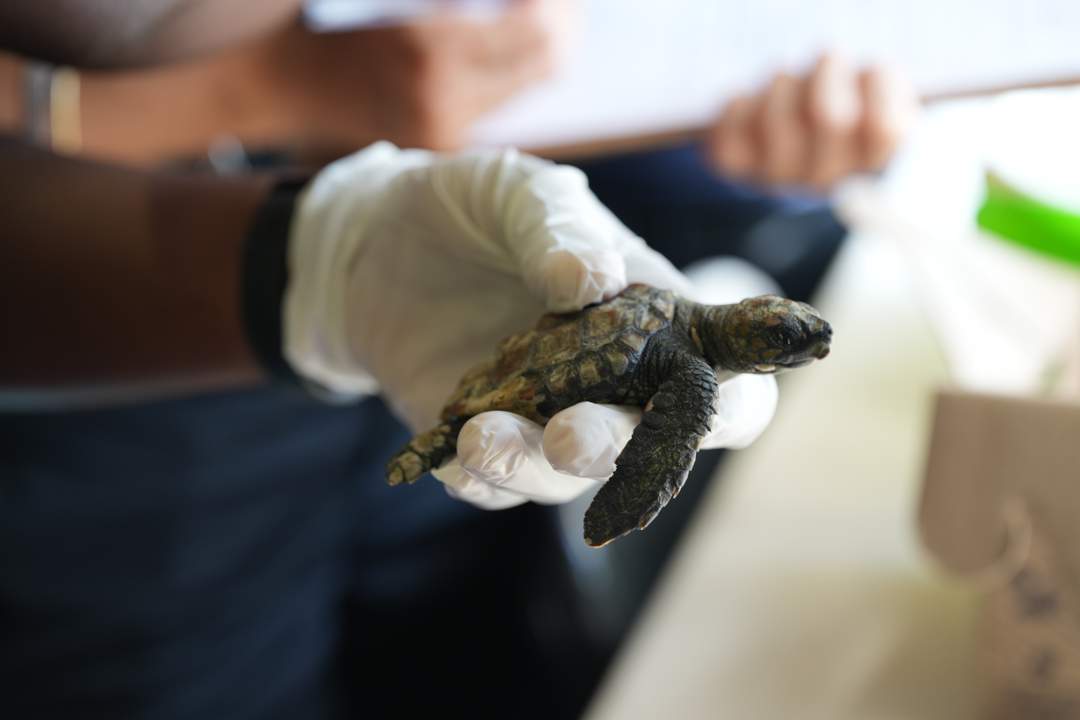
Every year, hundreds of turtles strand along the Western Cape coastline over five months. But a network of 2 000 people is helping rescue the endangered species and transport them to safety at the Two Oceans Aquarium in Cape Town.
Two Oceans Aquarium Foundation/Supplied
- Hundreds of endangered turtle hatchlings strand along the Western Cape coastline each year between March and July.
- A volunteer network of more than 2 000 people scans beaches from Lambert’s Bay to Gqeberha, rescuing stranded turtles and transporting them to the Two Oceans Aquarium in Cape Town.
- Conservationists say the community-driven effort is critical, as only a tiny fraction of hatchlings survive to adulthood and human threats like plastic pollution continue to endanger all sea turtle species.
Every year, hundreds of turtles strand along the Western Cape coastline over five months. But a network of 2 000 people is helping rescue endangered species and transport them to safety at the Two Oceans Aquarium in Cape Town.
Talitha Noble, head of the aquarium’s turtle conservation centre, said that turtle stranding season happens every year between March and July. It follows the female loggerhead and leatherback turtles laying their eggs in Maputaland between October and December.
After the hatchlings emerge between January and March, they make their way down to the sea, where they join the warm, fast Agulhas Current.
Baby turtles drifting southward face significant challenges as the current slows and interacts with the cold Benguela Current along the southern coastline. This dynamic environment exposes the turtles to cold coastal waters, causing a drastic drop from 25°C to 11°C, which is particularly harmful to reptiles that rely on external temperatures.
The turtles also often ingest plastic, sustain injuries, and experience cold shock.
Seasonal winter storms and strong onshore winds further exacerbate the situation, pushing the weakened turtles onto beaches, particularly in bays along the coastline, such as those near Hermanus. This predictable phenomenon occurs annually from March to July, with specific weather and ocean conditions determining the timing and locations of these strandings.
Two years ago, stormy weather saw the stranding of 600 turtles, said Noble, but most years between 100 and 150 baby turtles wash up on our shores. This month, the aquarium has received the first two hatchlings.
But the rescue operations are only possible because of a network of dedicated individuals spanning an area from Lambert’s Bay to Gqeberha, Noble said.
“In the Western Cape, pretty much every kilometre of beach is covered by people who are in our network. There are over 2 000 people, and they all live in those areas. It’s people who walk their dog on the beach or travel on the N2 regularly. This means that when a turtle strands, someone who knows what to do is going to find it,” she said.
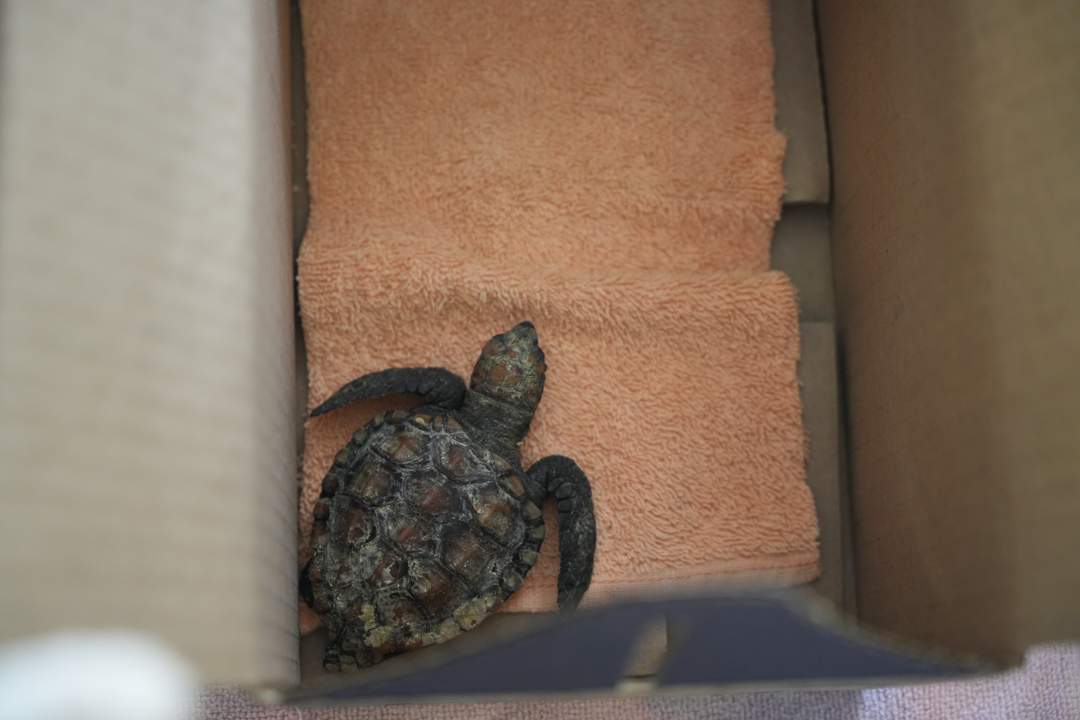
The rescue operations are only possible because of a network of dedicated individuals spanning from Lambert’s Bay to Gqeberha.
Two Oceans Aquarium Foundation/Supplied
Noble added that this knowledge is key to saving the hatchlings – instead of returning them to the ocean, anyone who finds a stranded turtle should call the turtle rescue hotline on 083 300 1663.
“It’s a whole community focused and working together to get the little turtle to our facility. It’s a very special thing to be a part of,” she said.
Turtle rescue coordinator Tracy Whitehead started volunteering to rescue stranded turtles almost a decade ago. Today, she helps manage the network of people searching for stranded turtles, as well as those who transport them to the aquarium.
“We realised that if we didn’t find these turtles that were stranded, we couldn’t help them, especially as the coastline of the Western Cape is so massive, never mind the Eastern Cape. So we started the process of looking for people along the coast in strategic places,” she said.
“That has just grown and grown and grown. I’ve been blown away by the response from the public.”
WATCH | From beach rescue to ocean marathon: DJ the turtle’s epic 600km journey
Whitehead added that part of the network’s work is to monitor sea and weather conditions and alert residents of conditions that might result in strandings.
“People are willing to go out in all sorts of weather – even pouring rain or howling storms – and walk the beaches and rocks to look for for turtles, which is very humbling for all of us and allows us to do our job,” she said.
“The second part of the network is actually moving them. We can find a turtle on the beach, but we still have to get it to the hospital in Cape Town.”
Each rescue remains special to Whitehead – from a 20g hatchling to a 70kg adult – and she records the details of every rescue, along with the volunteers who helped. If she’s not personally involved in a rescue, she’s on the other end of the phone, coaching volunteers through what to do next.
“We’ve had very sad ones where they’ve already died because they washed up and they were entangled in fishing line, and we’ve had absolutely wonderful rescues in which someone has carried the turtle on their chest across inaccessible beach areas,” she said.
Whitehead says seeing the results of their work keeps her and the other volunteers motivated.
She said:
When we put these turtles, that we 100% thought were going to die, back into the ocean, and here they are, happy, healthy, and feisty, that gives you the oomph to carry on.
Saving every turtle is vital conservation work, Noble said.
“There are seven species of sea turtle in the world, and all of them are threatened with extinction. And the reason they’re threatened with extinction is the human-made challenges they face at sea.
Turtles live their entire life in the open ocean, and the biggest threats they face there are plastic pollution and ghost fishing gear,” she said.
“Only one or two in every 1 000 little turtles actually become an adult. There’s a huge amount of natural predation and mortality that they experience when they’re young.
ALSO READ | Teeny turtle #1 marks the beginning of hatchling stranding season
But by the time they become adults, they have so few natural predators that they can go on to contribute to the population for decades. But those turtles are being wiped out indiscriminately by our human impact.
“And so our mission is to rescue every single turtle that strands in the Western Cape, and release them back into the sea where they belong.”
If you have a great story to tell, email [email protected].
Newsletter
Weekly
Wake Up To Good News
Good News editor Paul Herman delivers a morning round-up of stories that remind you why you fell in love with South Africa.



















 English (US) ·
  French (CA) ·
  French (FR) ·