

 2 months ago
19
2 months ago
19
PROTECT YOURSELF with Orgo-Life® QUANTUM TECHNOLOGY
Orgo-Life the new way to the future Advertising by Adpathway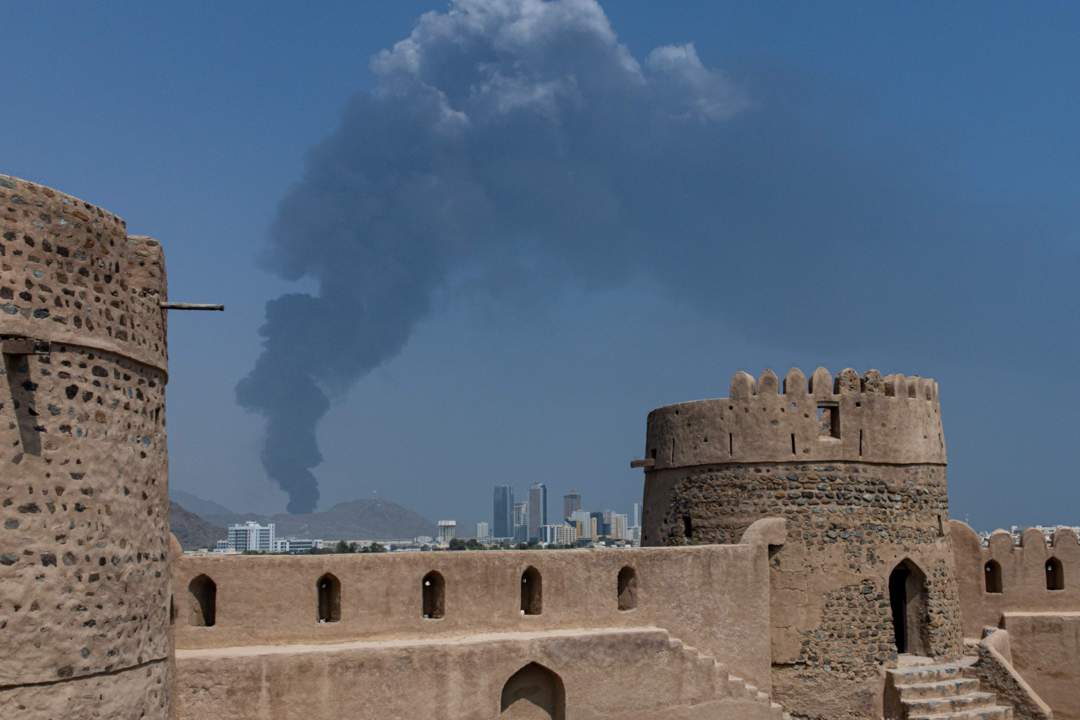
Smoke rises after an explosion in the industrial zone, caused by debris after interception of a drone by air defence, according to the Fujairah media office in Fujairah, United Arab Emirates.
Christopher Pike/Getty Images
- Iran launched attacks on energy installations in Gulf nations on Monday.
- Bahrain, Qatar, Saudi Arabia, the UAE and Kuwait all reported new attacks.
- Oil prices increased and many travellers are stuck in the Middle East.
Iran launched fresh strikes on energy installations in the Gulf on Monday, including a petroleum complex in Bahrain, as oil prices soared on fears over supply disruptions due to the Middle East war.
Bahrain’s sprawling Al Ma’ameer oil facility was hit, causing a fire and damage, with the country’s state-owned energy firm Bapco declaring force majeure - the latest Gulf producer to activate the legal clause.
Energy producers in Qatar and Kuwait earlier made similar declarations.
Bapco said it “hereby serves notice of force majeure on its group operations which have been affected by the ongoing regional conflict in the Middle East and the recent attack on its refinery complex”, according to a statement posted by the company.
Asian stock markets plunged on Monday as oil prices soared, with investors running for the hills as crude rocketed to its highest level since the Russian invasion of Ukraine in 2022.
READ | Iran names Mojtaba Khamenei supreme leader as Trump threatens ‘he’s not going to last long’
Reuters reported that surging oil prices and the escalating US-Israeli war with Iran hammered airline stocks in Asia on Monday, piling pressure on carriers already navigating tight airspace as travellers scramble to evade the Middle East conflict.
The war has driven up fuel prices, with oil jumping 20% in early trading on Monday, hitting its highest since July 2022, amid fears of tighter supply and prolonged disruptions to shipments.
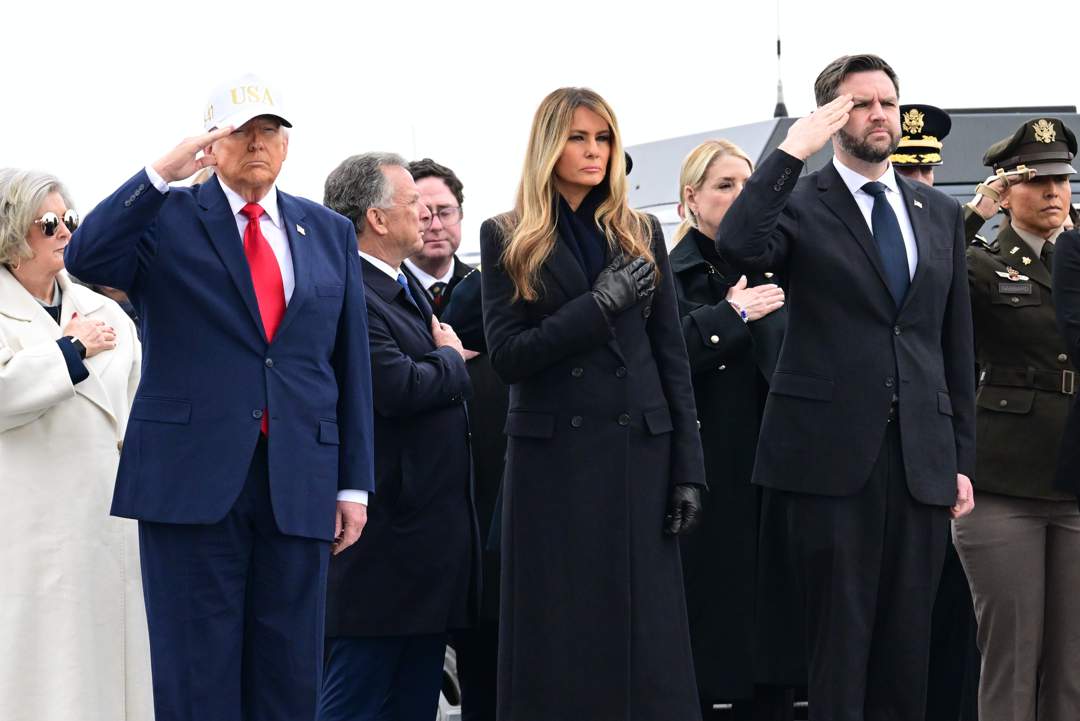
US President Donald Trump (L), first lady Melania Trump (C) and US Vice President JD Vance (R) salute as a US Army carry team moves the flagged-draped coffins containing the remains US soldiers killed in the retaliatory Iranian strike on Kuwait's Port of Shuaiba, in Dover, Delaware, US.
Kyle Mazza/Anadolu via Getty Images
Stranded passengers have been paying huge sums of money to escape the Middle East, with last-minute dashes to the airport, overland trips to less impacted hubs and fighter jets, at times, escorting passenger planes out.
With most airspace in the region still closed over missile and drone concerns, some people have turned to private jets as charter flights and limited commercial services struggle to evacuate tens of thousands of travellers.
The market instability came as Iran continued to target the Gulf with missile and drone barrages, hours after Washington ordered embassy staff to leave Saudi Arabia, according to AFP.
The State Department said in a travel advisory it had “ordered non-emergency US government employees and US government employee family members to leave Saudi Arabia due to safety risks”.
Drones hit the US embassy in the Saudi capital Riyadh last week, and drones have also caused damage at the US diplomatic missions in Kuwait and the United Arab Emirates.
On Monday, Bahrain said another Iranian drone attack on the island of Sitra had injured 32 people overnight.
All of the wounded were Bahraini citizens and there were four “serious cases”, including children, the health ministry said in a statement carried by the state news agency.
They included a 17-year-old girl who suffered severe head and eye injuries, and a 2-month-old baby, according to the ministry.
Bahrain said the attack on its Al Ma’ameer oil facility had caused a fire, but the blaze had been brought under control.
"If you kill Americans, if you threaten Americans anywhere on earth, we will hunt you down without apology and without hesitation and we will kill you." - Secretary of War Pete Hegseth pic.twitter.com/l0jkXxI74y
— U.S. Central Command (@CENTCOM) March 8, 2026Several explosions were also heard on Monday in the Qatari capital Doha, AFP journalists said, as Qatar, Saudi Arabia, the UAE and Kuwait all reported new attacks.
Doha has been targeted by waves of drones and missiles since Iran launched a retaliation campaign across the Gulf in the wake of US and Israeli attacks against the Islamic Republic.
Qatar’s defence ministry said on Monday that its forces had intercepted a missile attack.
Saudi Arabia’s defence ministry said the kingdom intercepted and destroyed two waves of drones heading towards the Shaybah oil field in the southeast of the country.
In the UAE, authorities said in a statement on X that air defences responded to “a missile threat”.
⭕️ The IDF can now reveal that the IRGC’s Air Force Headquarters, the main command-and-control center used to direct the regime’s air force activity, was targeted during wide-scale IDF strikes on dozens of Iranian terror regime targets. pic.twitter.com/7fJCoVi5Hh
— Israel Defense Forces (@IDF) March 8, 2026Kuwait, which was targeted by seven missiles and five drones on Sunday, according to authorities, announced another missile and drone attack on Monday.
The defence ministry said air defences were working to intercept the attack.
Gulf countries have borne much of Tehran’s response after the United States and Israel launched a massive aerial campaign against Iran on 28 February.
A total of 21 people have been killed in the Gulf since Iran began its attacks, including 10 civilians and seven US service members.
Iran’s President Masoud Pezeshkian has warned that the Islamic Republic “will be forced to respond” against its neighbours if their territory is used to attack it.


















 English (US) ·
  French (CA) ·
  French (FR) ·