

 2 months ago
82
2 months ago
82
PROTECT YOURSELF with Orgo-Life® QUANTUM TECHNOLOGY
Orgo-Life the new way to the future Advertising by AdpathwayA notable feature of the July 2026 NATO Summit in Ankara was the absence, for the second year in a row, of the four leaders of NATO’s Indo-Pacific partner countries, collectively known as the IP4: Australia, Japan, New Zealand, and South Korea. It may be tempting to see this as evidence that NATO-IP4 relations are on the downturn, but a deeper analysis does not support such a conclusion.
First, the main variable affecting the presence of the IP4 leaders was not the interest of NATO and IP4 countries in continued engagement, but the nature of the summits themselves. In addition, it is not clear that regular leader-level attendance at annual NATO summits is still a necessary driver of NATO-IP4 relations. The logic for continued cooperation between NATO and the IP4 is as strong as ever in the current geopolitical climate.
Rather than the optics of NATO-IP4 relations, the underlying substance and direction of engagement, the subleader level institutionalization of these relationships, and their application at the practical level are the critical elements for gauging commitment.
Summits Fit for Purpose
The key difference between the summits in 2022, 2023, and 2024 and the summits in 2025 and 2026 is in their structure. All three of those earlier summits involved two days of North Atlantic Council (NAC) meetings at leader level. The latter two summits had only one. Getting that attenuated timeline required cutting out the NAC leaders’ meetings with partner countries.
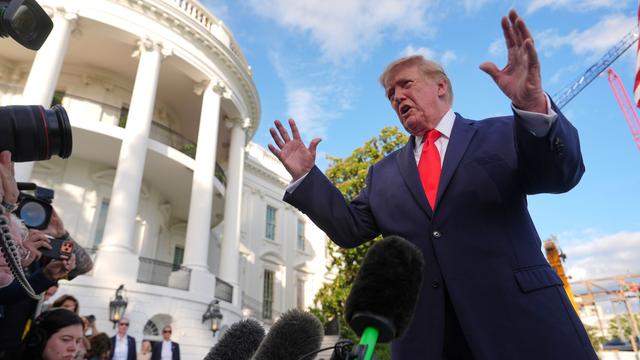
That change in structure primarily reflects the realities of the United States. To paraphrase the words of an allied official, NATO understands that President Donald Trump does not have the interest or attention span for a two-day summit, so the summits had to be shortened – simply as a matter of practicality and realistic expectations.
It is true that the IP4 leaders were still invited, and that most did not attend – that fact is indisputable. This decision becomes much more understandable when examined in context, however. Without an opportunity to take part in NAC discussions, the IP4 leaders were effectively invited to the rehearsal dinner, but not to the wedding itself. From the potential perspectives of busy heads of state, such an invitation simply does not carry the weight necessary to edge out competing domestic and regional priorities. It’s a nice opportunity, but – in combination with the simultaneous attendance of their defense ministers at complementary summit events for those peers – not a compelling one.
It would be a mistake, however, to equate summit representation with the current health of the partner-alliance relationships. Leader attendance at the 2022, 2023, and 2024 summits, which each featured a NAC leader-level session with IP4 partners, was critical to moving NATO-IP4 relations forward, establishing their importance publicly, and creating the momentum from the top necessary to activate national bureaucracies. Those goals have now been met substantially, making continued leader-level attendance less vital.
By 2024, all four of the partner countries had signed new Individually Tailored Partnership Program (ITPP) documents to map out their bilateral NATO relationships. They all had dedicated ambassadors to NATO at embassies in Belgium, and were engaged in specific NATO-IP4 priority areas of cooperation: Ukraine, cyber defense, disinformation, and technology.
Certainly, leader-level attention is the best driver for continued internal momentum within each country and for the further deepening of these relationships. That said, top leaders’ absence from regular summit-based intervals could be offset, to a significant extent, by the greater involvement of defense and foreign ministers and the continued visits of high-level NATO officials to the region. There is a clear effort being made at NATO to create such opportunities and by IP4 partners to respond.
The IP4 ministers of defense (minister of defense industry for Australia) attended the Ankara summit and met with their NATO counterparts at a NAC defense minister-level working dinner and a NATO defense industry forum, expanding on defense and foreign ministerial engagements from recent years. In 2025, new NATO Secretary General Mark Rutte traveled to Tokyo to meet with Japan’s prime minister and other high-level NATO officials visited the region, continuing a trend from the past few years. Perhaps most importantly, the NATO-IP4 relationships – bilaterally and as the IP4 – are already institutionalized at the ambassador and working levels in Brussels.
Geopolitical Drivers for Continued Engagement
There are at least four clear geopolitical drivers for continued engagement between NATO and its Indo-Pacific partners, based on mutual interests and benefit. These are the existence of related demands and expectations from the United States, the interconnected nature of security in the Indo-Pacific and Euro-Atlantic theaters and the prospect of multi-theater conflict, mutual support for a rules-based international system, and opportunities for defense industrial cooperation. In addition to the NATO-IP4 priority areas of cooperation agreed at the Washington Summit in 2024 (Ukraine, cyber defense, disinformation, and technology), and the ITPPs, these drivers create a clear basis for further relations.
As countries that are all close U.S. allies (or in the case of New Zealand, a key partner), the IP4 and NATO nations can exchange best practices and views on the now more fragile U.S. alliance relationship, including by coordinating messaging and consulting on how to keep the United States engaged constructively beyond the Western Hemisphere and within recognized rules and norms on the use of force. In other words, there is a clear utility in having friends that are sharing similar experiences regarding their ally the United States, particularly as the U.S. president issues sets of connected demands and expectations for U.S. allies, regardless of location. This was evident mostly recently in Trump’s calls for increased regional burden-sharing and assistance with the Israeli-U.S. war against Iran.
Mutually shared concerns about multi-theater conflict involving China and Russia also underscore the need to coordinate. As the war in Ukraine has made abundantly clear, security challenges in the Euro-Atlantic theater have significant, if indirect, security consequences for the Indo-Pacific theater and vice versa. The complications of inter-theater deterrence and defense dynamics have not gone away because the United States has shifted its attention away from Europe. Nor has the fear of coordinated multi-theater conflicts by China and Russia.
Continuing strong relations between NATO and the IP4 is critical for thinking through together what would be necessary to prepare for and address simultaneous Chinese or North Korean and Russian led contingencies. The IP4 partners are also incorporating lessons from the Ukraine war into their own security assessments, with Japan – where the lessons of Ukraine are expected to feature prominently in the updated national security and defense documents expected later this year – as a prime example.
Similarly, NATO and the IP4 share a desire to support a rules-based international system or critical parts of it. This is particularly true in areas where the partners can work well together, such as norm setting, public diplomacy, countering disinformation, coordination of political statements, and support for Ukraine. For the IP4 countries, along with many middle powers in Europe, security and prosperity has rested on a predictable, rules-based system. There is still an unwillingness to back away from that despite Russian, Chinese, and now U.S. propensities to undermine such a system.
There is also the very practical issue of coordination on defense industrial cooperation. A number of potentially accessible avenues for such coordination between IP4 countries and NATO allies exist. Joint development and co-production of defense technologies and equipment is one. Here for example, NATO is reportedly in talks with the IP4 partners about participating in its Starlift project, an alliance network for sharing space satellite launch capabilities. Japan is also exploring access to NATO’s Defense Innovation Accelerator for the North Atlantic (DIANA), focused on next-generation technologies. Japanese participation in DIANA could open new defense export opportunities in European markets now that Tokyo has further relaxed restrictions on arms exports.
Another avenue is the diversification of defense-related supply chains, especially away from competitors and toward allies like Australia, Japan, or South Korea. A third is coordinating on munitions production and stockpiling, given that the shortfall in munitions has been a key lesson of the wars in Ukraine and now Iran.
A fourth major avenue is greater interoperability through joint acquisition/procurement and the integration of technical standards across equipment/munitions. South Korea and NATO are in talks for a joint procurement agreement coming out of the Ankara Summit, for example. Australia signed an agreement with NATO’s Support and Procurement Organization in 2025.
On to Tomorrow
NATO’s interest in and engagement with its IP4 partners – and vice versa – continues, if simply less publicly. That makes sense going forward, for the near term at least. Now that the NATO-IP4 relationships have been established, normalized, and largely institutionalized, the focus should transition to maintaining regular engagement on important areas of mutual interest and to deepening through practical, substantive cooperation.











 English (US) ·
  French (CA) ·
  French (FR) ·