

 3 weeks ago
34
3 weeks ago
34
PROTECT YOURSELF with Orgo-Life® QUANTUM TECHNOLOGY
Orgo-Life the new way to the future Advertising by AdpathwayBrazil · Judiciary
Key Facts
- The case — a writ of mandamus seeking Senate building entry and exit logs for eight named people, covering February 2019 to February 2026.
- Who filed it — Guilherme Kilter, a Curitiba city councillor for the pro-market Novo party who is running for Congress. The respondent is Senate President Davi Alcolumbre.
- The names — among them Viviane Barci de Moraes, the justice’s wife; Banco Master founder Daniel Vorcaro; and President Lula’s son, known as Lulinha.
- The sequence — drawn as rapporteur on Friday 18 September 2026; the Moraes recusal came on Monday 21 September, hours after the draw became public.
- The grounds — article 144, item IV, of the Code of Civil Procedure, which bars a judge when a spouse is a party.
- The catch — the file went to the court’s presidency to be redrawn. No new rapporteur had been reported by Tuesday morning.
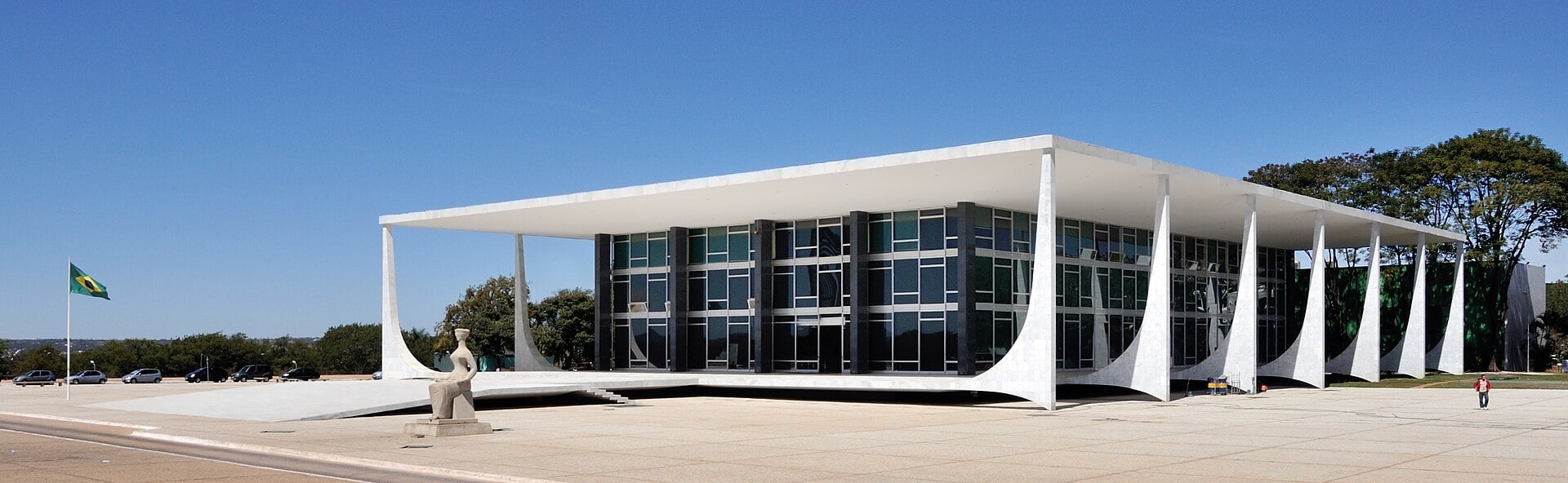
A routine electronic draw put Brazil’s most prominent justice in charge of a case seeking records of his own wife’s movements. He stepped aside three days later.
The Moraes recusal is the kind of procedural note that would normally pass without comment, and it has not. Alexandre de Moraes, a justice of Brazil’s Supreme Federal Court (STF), was randomly assigned a case seeking Senate entry records that included his wife’s. On Monday 21 September he declared himself disqualified from hearing it.
One-stop reference
Company Intelligence
Every listed company in Latin America — financials, ownership and structure for 1,450+ companies across 26 exchanges, in one place.
What the case is actually asking for
This is not a criminal investigation and not a parliamentary inquiry. It is a mandado de segurança, a writ used to force a public body to obey the law. What it asks for is dull on its face. It wants the Senate’s records of who walked in and out of the building between February 2019 and February 2026, for a named list of visitors.
Guilherme Kilter, a Curitiba councillor for the pro-market Novo party running for Congress, requested the logs under the freedom of information law. The Senate ombudsman refused, citing the personal data protection law (LGPD) and a 2012 decree. Kilter went to court to overturn that refusal.
He named eight people, among them the justice’s wife, lawyer Viviane Barci de Moraes, and Daniel Vorcaro, founder of the failed Banco Master. The list also includes President Lula’s son Fábio Luís Lula da Silva, or Lulinha, and his brother José Ferreira da Silva, or Frei Chico.
Another name is Antônio Carlos Camilo Antunes, nicknamed “Careca do INSS”, a figure in the investigation into unauthorised deductions from social security pensions. Three other men complete the list.
Being on that list carries no accusation. Nothing in the filing alleges that any of them did anything improper in the Senate. The request is simply to find out whether they were there.
Why the Moraes recusal happened when it did
The case did not start at the Supreme Court. Kilter filed in a federal court in Curitiba. The 1st Federal Court of Curitiba ruled that a case against the Senate president belongs to the Supreme Court. The file reached Brasília on 17 September.
The electronic draw assigned it to Moraes on Friday 18 September. The news site Metrópoles reported the assignment late on Monday morning, and the recusal was reported early that evening.
Before the recusal, Poder360 quoted Kilter as saying Moraes “must declare himself barred” and the case should go to another justice. Moraes wrote: “Com fundamento no art. 144, IV, do CPC, declaro-me impedido de atuar no presente feito.”
In English: “Based on article 144, IV, of the Code of Civil Procedure, I declare myself barred from acting in this case.” Impedimento is the code’s objective, automatic category, stronger than suspeição, which covers doubts about impartiality.
The Banco Master background
None of this would matter without the bank. The Central Bank shut Banco Master in November 2025, triggering the largest payout in the history of the FGC, the banks’ deposit guarantee fund.
Poder360 reported in March that the FGC owed R$51.8 billion (about US$10.1 billion) to clients of Master and two linked banks. Amounts are converted at a rate of 5.15 to the US dollar, the 18 September 2026 close reported by InfoMoney.
Vorcaro has been in preventive detention since 4 March 2026. He is under investigation and had not been charged as of mid-September.
On 1 September Justice André Mendonça lifted secrecy on a 218-page Federal Police report drawn from Vorcaro’s phone. It describes a January 2024 retainer between Banco Master and the Barci de Moraes law firm.
That contract was worth R$131.3 million gross (about US$25.5 million) over three years. A second deal, from May 2025, with Vorcaro’s holding Viking Participações, was worth up to R$50 million (about US$9.7 million). Neither the firm nor Viviane Barci has been charged.
That is the context in which a routine draw put Moraes in charge of a case touching his own household. Details of the recusal come from the case file, as reported by CNN Brasil, Metrópoles and Gazeta do Povo.
What happens next, and what to watch
After the Moraes recusal, the file went to the court’s presidency, held by Edson Fachin, to be redrawn. The bench has ten sitting justices, because the Senate rejected Jorge Messias for the eleventh seat in April.
No new rapporteur had been reported by Tuesday morning.
Keep this case separate from a similar-sounding one. On 15 September Senator Alessandro Vieira announced a writ at the same court to force Alcolumbre to open a parliamentary inquiry.
That inquiry would examine the ties of justices Dias Toffoli and Moraes to Vorcaro. Different filer, different remedy, different case.
For anyone with money or a business in Brazil, the thing to follow is not the gossip. It is whether the court can handle a case touching one of its own without the outcome looking predetermined.
The immediate test is small and concrete. A new rapporteur has to be named, and then someone has to decide whether the Senate’s visitor book is public information or protected personal data. That question has nothing to do with Moraes, and it will now be answered in a case that everyone will read as being about him.
Frequently Asked Questions
What does impedimento mean in Brazilian law?
It is a formal disqualification that applies automatically in defined situations, rather than a judge choosing to step back over an appearance of bias. Moraes cited the clause covering a judge whose spouse is a party to the proceedings.
Is Viviane Barci de Moraes accused of anything in this case?
No. The case seeks Senate entry records for eight named people and makes no allegation about any of them. Separately, her law firm’s contracts with Banco Master and a Vorcaro company appear in a police report released this month; she has not been charged.
What is Daniel Vorcaro’s legal status?
He has been held in preventive detention since 4 March 2026 and remains under investigation in the Banco Master case. He had not been charged as of mid-September, when his lawyers asked the court to release him.
Who decides the case now?
The file has gone to the court’s presidency to be redrawn among the other justices. No replacement rapporteur had been reported by Tuesday morning.
This article was produced by The Rio Times’ automated newsroom system. How we use AI · Report an error
The Rio Times · Power Map
See who really holds power in Latin America
Click to open the Power Map →
















 English (US) ·
  French (CA) ·
  French (FR) ·