

 2 months ago
74
2 months ago
74
PROTECT YOURSELF with Orgo-Life® QUANTUM TECHNOLOGY
Orgo-Life the new way to the future Advertising by AdpathwayMexico · Economy
Key Facts
— The ambition. Mexico wants to multiply its chip output many times over within three years as supply shifts away from Asia.
— Who said it. Economy Minister Marcelo Ebrard laid out the plan to investors in Mexico City this week.
— A real plant. A factory in Queretaro is more than 90% built and aims to start making simple chips by late 2026.
— The opening. The United States leans on Asia for up to 70% of chips, pharmaceuticals and electronics inputs.
— Pharma too. Ebrard pointed to a vast US medicine market worth around 1.4 trillion dollars that Mexico barely supplies.
— The hurdles. Power, water, talent and patient capital all stand between the pitch and the product.
Mexico wants to turn its modest role in chipmaking into a far bigger one, with a Mexico semiconductors plan that pairs a new factory in Queretaro with a pitch to investors, as the world rethinks its heavy dependence on Asian supply.
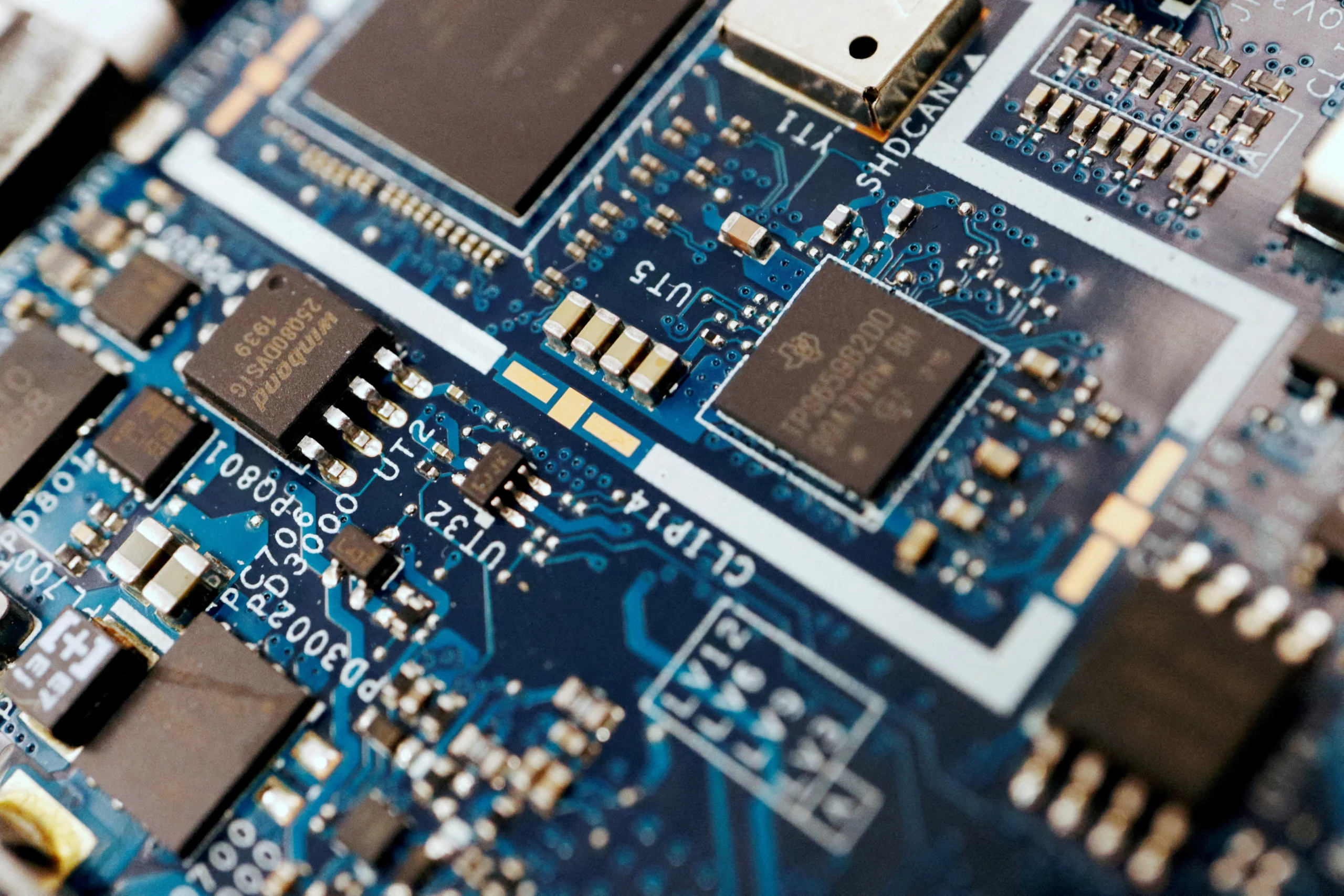
A bold pitch to investors
Speaking this week to venture-capital funds and tech founders at a private-equity gathering in Mexico City, Economy Minister Marcelo Ebrard set out an unusually direct ambition: to multiply Mexico’s semiconductor production many times over within three years. He framed it as a once-in-a-generation chance created by a simple shift in the global map. As he put it, keeping all the world’s chips flowing out of Asia is becoming too costly and too complicated, and a slice of that production is going to move. His question to the room was blunt: of the share that leaves Asia, how much does Mexico want to keep?
For a foreign reader, Ebrard is Mexico’s top economic official and the public face of its drive to attract factories. The audience he chose matters too. Rather than pitch governments or giant multinationals, he was courting the investors who fund young companies, a hint that Mexico sees part of its chip future in homegrown start-ups rather than only in foreign plants.
Why the Mexico semiconductors bet makes sense now
The logic rests on a single number Ebrard keeps returning to. The United States, Mexico’s neighbour and main customer, depends on Asia for as much as 70% of its chips, medicines and electronic components. Washington has been pushing for more of that to be made within North America, both to cut costs and to avoid being cut off in a crisis. That is the heart of nearshoring, the trend of moving production closer to the customer that has already drawn waves of factories to Mexico.
Chips are the prize because they sit inside almost everything modern, from cars to phones to medical scanners. Mexico already plays a small part in the industry, mostly in assembly, testing and packaging rather than making the chips themselves. The new goal is to climb that ladder and capture more of the value, not just the final, low-margin steps.
From slogan to factory floor
What separates this from earlier promises is a building you can point to. In the central state of Queretaro, a plant led by a Mexican firm is reportedly more than 90% complete, with engineers now installing the sealed, dust-free cleanrooms and specialist equipment that chipmaking demands. The investment behind it has been put at roughly 10 to 12 billion dollars, and the plan is to start turning out silicon wafers and simpler chips by the end of 2026, aimed at home-market needs in industries such as cars, medical devices and electronics.
Ebrard describes the wider effort as rolling out in thirds: one part already under way, a second mapped for the years to 2029, and a third decided in principle but still waiting on a site or final approvals. The thread tying it together is digital infrastructure, with chips, data centres and the critical minerals that feed them treated as one package rather than separate bets.
The pharmaceutical prize
Chips are only half the story. Ebrard singled out medicines as the other big opening, and the gap he described is striking. The US pharmaceutical market is worth roughly 1.4 trillion dollars, against which Mexico‘s drug exports are tiny. The government’s argument is that the same logic of moving supply closer to the customer applies to medicine cabinets as much as to gadgets, and that Mexico could win far more of that business than it does today. Drug shortages in Mexico’s own public health system add a domestic motive to build more capacity at home.
The gap between ambition and reality
The obstacles are as concrete as the factory. Ebrard himself admitted how hard it is to raise money for this in Mexico, citing a homegrown chip company with confirmed customers that spent a year and a half hunting a relatively modest 20 million dollars in private financing without success. That is a small sum against the industry’s needs, and it shows how thin the local pool of risk capital still is.
Beyond money, chipmaking is brutally demanding on power and water, two things Mexico’s industrial heartland is already short of, and it needs a deep bench of specialised engineers the country is still training. Investors will also be watching the review of the regional trade pact with the United States and Canada, due to formally open in July, since the rules it sets will shape where companies choose to build. None of this sinks the plan, but it explains why a factory that is 90% built is still the exception rather than the rule.
For now, Mexico has done the easy part, which is to name the prize. The harder test, turning a compelling pitch into running production lines, is the one that will decide whether this becomes a genuine industry or another well-argued ambition.
Frequently Asked Questions
What is Mexico planning for semiconductors?
Mexico aims to multiply its chip production several times over within three years, capturing more of the supply that is shifting away from Asia. A plant in Queretaro is expected to begin making simple chips by late 2026.
Why is this happening now?
The United States relies on Asia for up to 70% of its chips, medicines and electronics inputs and wants more made in North America. That shift opens a window for Mexico, which already sits next door and hosts a large manufacturing base.
What could hold the plan back?
Scarce financing, strained power and water supplies, and a shortage of specialised engineers are the main risks. The outcome of the regional trade-pact review, due to open in July, will also shape where companies decide to invest.
Connected Coverage
Sheinbaum Launches Plan Mexico Acciones to Speed Up the $407B Pipeline
Nearshoring Mexico 2026: The Complete Guide
The Rio Times · Power Map
See who really holds power in Latin America
Click to open the Power Map →














 English (US) ·
  French (CA) ·
  French (FR) ·