

 1 month ago
58
1 month ago
58
PROTECT YOURSELF with Orgo-Life® QUANTUM TECHNOLOGY
Orgo-Life the new way to the future Advertising by AdpathwayEnergy
Key Facts
—The bids. Guatemala’s power institute is weighing two offers to electrify 133 rural villages.
—The money. The work is funded by a 120 million dollar loan, split evenly between the IDB and a Korea facility.
—The reach. The wider programme aims to connect about 40,000 households and 221,000 people.
—The gap. Guatemala trails almost all of Latin America on electricity coverage, ahead of only Haiti and Honduras.
—The setback. An earlier attempt drew just one bidder and was scrapped before this relaunch.
Guatemala is edging closer to bringing power to some of its darkest corners, with help from an unexpected partner. A push for rural electrification is being funded partly by South Korea, through a loan channelled by a regional development bank.
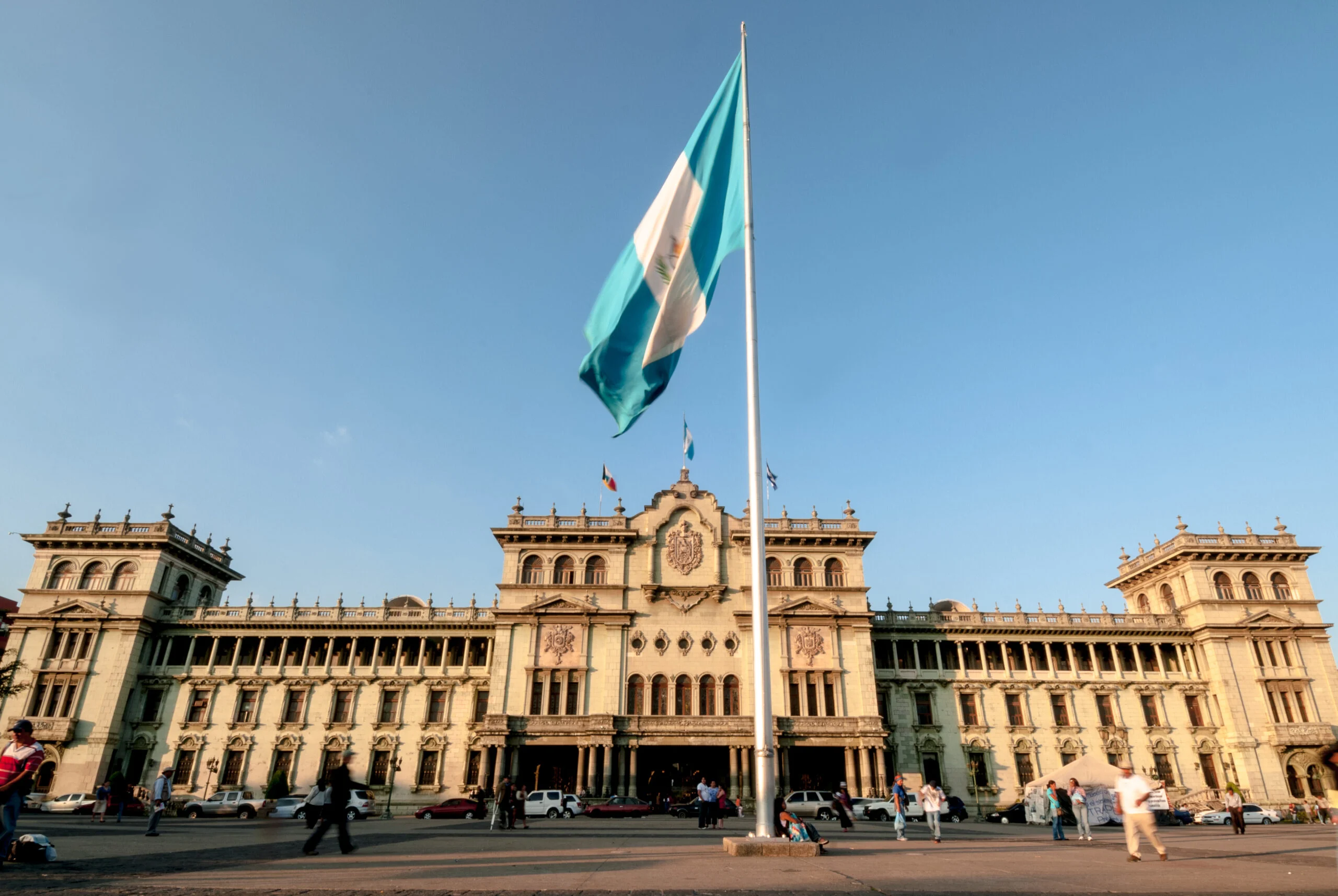
The state power institute has just received two bids to wire up 133 villages. They lie in the northern highland departments of Alta Verapaz, Baja Verapaz, Huehuetenango and Quiché, among the poorest and least-connected in the country.
For a foreign reader, the detail worth noting is who pays. Half the money comes from South Korea, a reminder that Asian capital is quietly reaching deep into rural Central America.
Rural electrification means extending the electricity grid to villages and homes that have never had a connection. In practice, it involves stringing medium-voltage transmission lines across mountains, valleys and forests, then installing transformers and household meters so families can switch on a light for the first time.
One-stop reference
Company Intelligence
Every listed company in Latin America — financials, ownership and structure for 1,450+ companies across 26 exchanges, in one place.
How the rural electrification loan works
The programme rests on a single large loan. Guatemala’s Congress approved 120 million dollars in late 2024, to be spent over five years by the national power institute, known by its Spanish initials INDE.
The financing is split down the middle. Half comes from the Inter-American Development Bank’s own capital, and the other half from a Korea facility for cofinancing infrastructure in Latin America, which the bank administers.
The Inter-American Development Bank, or IDB, is a multilateral lender owned by member countries across the Americas and beyond. It finances infrastructure, social programmes and economic reforms, acting as a bridge between international capital and national governments that lack the budget or borrowing power to fund large projects alone.
The scale of the ambition is national. Across its phases, the programme aims to connect around 40,000 households, benefiting more than 221,000 people, with further tenders planned into 2027.
Each round is designed to be large. Officials expect every tender to cover between 125 and 130 communities and to string roughly 500 kilometres of medium-voltage line across difficult terrain.
Why Guatemala’s coverage lags
The context is a striking gap. Guatemala lifted its national electrification rate from just over half in the mid-1990s to about nine in ten today, yet it still trails almost the entire region.
On coverage, officials say the country sits near the bottom of Latin America, ahead of only Haiti and Honduras. In some rural municipalities, only one family in four has a connection.
The hardest-hit areas are concentrated. Alta Verapaz, a largely Indigenous highland department, has among the lowest coverage in the country, with well over a hundred thousand homes still unconnected.
Geography and demography explain much of the lag. Mountainous terrain, dispersed settlements and limited road access make every kilometre of new line expensive to build and maintain, while many unconnected families live in areas where population density is too low to justify commercial investment without subsidy.
A false start, then a relaunch
The road here has not been smooth. The first tender, launched in August 2025, drew only a single bidder and was declared unsuccessful in March, forcing officials back to the drawing board.
The rules were then reworked to attract more interest. The relaunched process, opened in March and received in July, has now produced the two competing offers the institute is evaluating.
The eventual bill for full coverage dwarfs this loan. Reaching every remaining home would cost an estimated 900 million to a billion dollars, a sum Guatemala cannot raise from its own budget alone.
That is why the mix of lenders matters. For a country with limited fiscal room, blended finance from the development bank and Korea is the mechanism turning a universal-access goal into actual poles and wires.
The loan is not the only effort under way. Using its own money, the power institute reports dozens of smaller rural projects in construction this year, having connected around a thousand more homes in the first half of 2026.
The government has also set a longer horizon. A national strategy unveiled this year targets universal coverage by 2032, reaching hundreds of thousands of homes still waiting in the dark.
Whether that timeline proves realistic will depend on factors beyond this tender. Can the institute attract enough qualified bidders for future rounds, and will the fiscal space exist to layer on additional loans or grants as the easier connections are exhausted and only the most remote villages remain?
Frequently Asked Questions
Who is funding Guatemala’s rural electrification?
The current programme is backed by a 120 million dollar loan approved by Guatemala’s Congress in 2024. Half comes from the Inter-American Development Bank and half from a South Korea facility for cofinancing Latin American infrastructure, administered by the bank and executed by the state power institute, INDE.
How many people will it reach?
Across its phases, the programme aims to connect roughly 40,000 households, benefiting more than 221,000 people in rural areas. The latest tender alone would wire up 133 villages in four northern highland departments.
Why is Guatemala’s electricity coverage so low?
Rugged terrain, scattered rural populations, poor roads and protected areas make extending the grid costly and slow. Coverage sits near the bottom of Latin America, and reaching every home is estimated to cost close to a billion dollars.













 English (US) ·
  French (CA) ·
  French (FR) ·