

 1 week ago
11
PROTECT YOURSELF with Orgo-Life® QUANTUM TECHNOLOGY
Orgo-Life the new way to the future Advertising by Adpathway
Article content
Around the world, economists, technologists, politicians and philosophers are debating AI’s likely transformative yet highly uncertain potential for good and ill. As Canada grapples with challenges from a debilitating trade war and self-inflicted economic weaknesses, decision-makers have a historic opportunity to harness AI in the national interest.

THIS CONTENT IS RESERVED FOR SUBSCRIBERS ONLY
Subscribe now to read the latest news in your city and across Canada.
- Exclusive articles from Barbara Shecter, Joe O'Connor, Gabriel Friedman, and others.
- Daily content from Financial Times, the world's leading global business publication.
- Unlimited online access to read articles from Financial Post, National Post and 15 news sites across Canada with one account.
- National Post ePaper, an electronic replica of the print edition to view on any device, share and comment on.
- Daily puzzles, including the New York Times Crossword.
SUBSCRIBE TO UNLOCK MORE ARTICLES
Subscribe now to read the latest news in your city and across Canada.
- Exclusive articles from Barbara Shecter, Joe O'Connor, Gabriel Friedman and others.
- Daily content from Financial Times, the world's leading global business publication.
- Unlimited online access to read articles from Financial Post, National Post and 15 news sites across Canada with one account.
- National Post ePaper, an electronic replica of the print edition to view on any device, share and comment on.
- Daily puzzles, including the New York Times Crossword.
REGISTER / SIGN IN TO UNLOCK MORE ARTICLES
Create an account or sign in to continue with your reading experience.
- Access articles from across Canada with one account.
- Share your thoughts and join the conversation in the comments.
- Enjoy additional articles per month.
- Get email updates from your favourite authors.
THIS ARTICLE IS FREE TO READ REGISTER TO UNLOCK.
Create an account or sign in to continue with your reading experience.
- Access articles from across Canada with one account
- Share your thoughts and join the conversation in the comments
- Enjoy additional articles per month
- Get email updates from your favourite authors
Sign In or Create an Account
or
Article content
Advertisement 1
Article content
One critical issue is whether AI can rescue Canada from 10 years of productivity stagnation resulting from falling Canadian real investment per worker, which was down a grim 15 per cent between 2014 and 2023 — compared to up 21 per cent in the U.S., 13 per cent in the Euro area and 11 per cent in the OECD.
Article content
Article content
By signing up you consent to receive the above newsletter from Postmedia Network Inc.
Article content
Also critical is whether Canada’s regulatory, energy and investment policies will allow the country to exploit its early AI research advantage, given our historic weakness in converting innovation into higher productivity and global-scale companies.
Article content
Canada was one of the birthplaces of modern AI, with crucial work done by Geoffrey Hinton in Toronto, Yoshua Bengio in Montreal and Richard Sutton in Alberta. Yet the AI giants are overwhelmingly American: Nvidia, Apple, Google, Microsoft, Meta, OpenAI and Anthropic. Canada’s private AI investment gap with the U.S. last year was enormous — US$286 billion versus US$4.3 billion, or 67 times more in an economy that is about 13 times the size of Canada’s.
Article content
According to Stanford University, there were 1,953 newly funded American AI companies in 2025 versus 79 Canadian ones.
Article content
Advertisement 2
Article content
Statistics Canada cites estimates about how much AI could increase annual Canadian labour-productivity growth over the next decade that range from 0.4 to 1.1 percentage points. It reports that in the second quarter of this year 19.2 per cent of Canadian businesses had used AI to produce goods or services during the previous 12 months, which is roughly comparable to U.S. numbers.
Article content
Article content
But adoption, capital investment and commercialization have been limited. According to the Bank of Canada, more than two-thirds of business leaders personally use AI during a typical week, yet only eight per cent apply it significantly in their core operations, while another 50 per cent report only low or moderate core use. Really large economic gains could come from enhancing productivity in energy, mining, construction, manufacturing, transportation, agriculture and health care, where AI adoption is currently much lower.
Article content
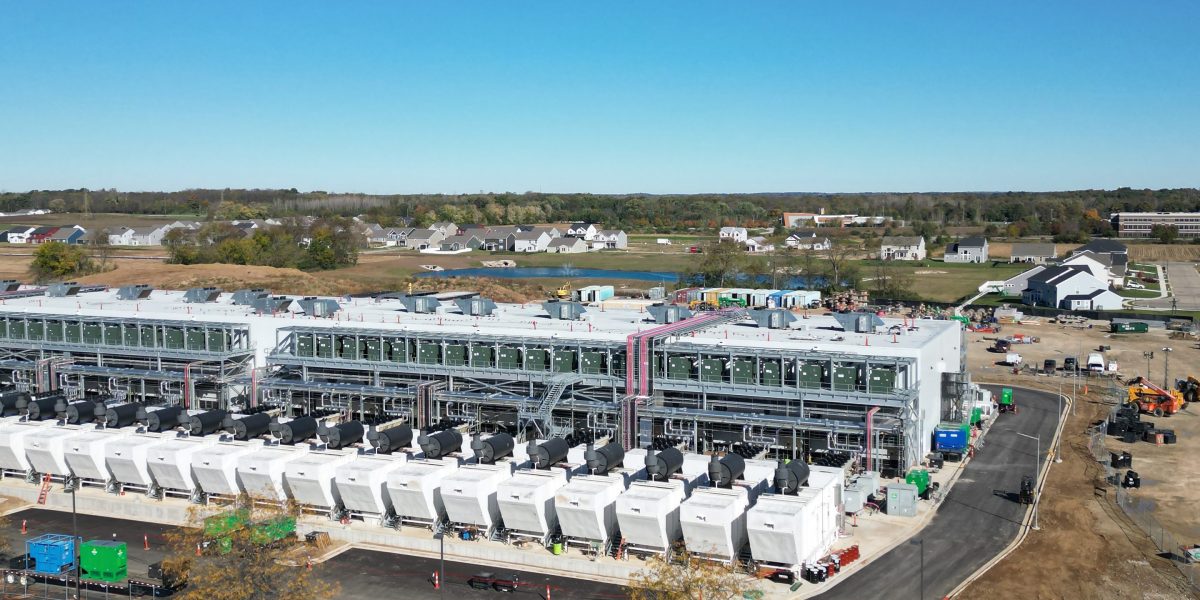
The government identifies Canada’s cold climate and hydro, nuclear and other electricity resources as competitive advantages in AI. But we need vastly more generation, transmission and other infrastructure to meet projected demand for 5.5 GW of AI compute by 2030, which is only a little over three years away. Ottawa says it wants to double the electricity grid by 2050, but it is not at all clear our regulatory and permitting systems can deliver that much new infrastructure in a timely manner.




















 English (US) ·
 French (CA) ·
 French (FR) ·