

 2 months ago
21
2 months ago
21
PROTECT YOURSELF with Orgo-Life® QUANTUM TECHNOLOGY
Orgo-Life the new way to the future Advertising by AdpathwayOn May 5 in Manila, Japanese Defense Minister Koizumi Shinjiro and Philippine Defense Secretary Gilberto Teodoro agreed to establish a bilateral working group to push ahead with the transfer of Japanese Maritime Self-Defense Force (MSDF) equipment, including destroyer escorts and aircraft.
At a joint press conference, Koizumi said he aims to achieve the early export of destroyer escorts through working-level consultations.
If realized, the deal could become Japan’s first export of lethal military equipment under its revised framework – an outcome with significant implications not only for Japan’s defense industry but also for regional security dynamics. The plan signals a deeper transformation in Tokyo’s security posture and its emerging role as a provider of military capability in the Indo-Pacific.
For decades, Japan maintained strict limits on arms exports under its “Three Principles on Transfer of Defense Equipment and Technology.” While these restrictions were partially relaxed in 2014, the April 21, 2026 revision represented a more consequential shift, explicitly allowing the export of lethal systems under certain conditions.
The proposed transfer of warships to the Philippines would thus serve as a test case for Japan’s evolving approach. It reflects a growing recognition in Tokyo that defense equipment transfers can function as strategic tools – enhancing interoperability, strengthening partnerships, and shaping the regional balance of power.
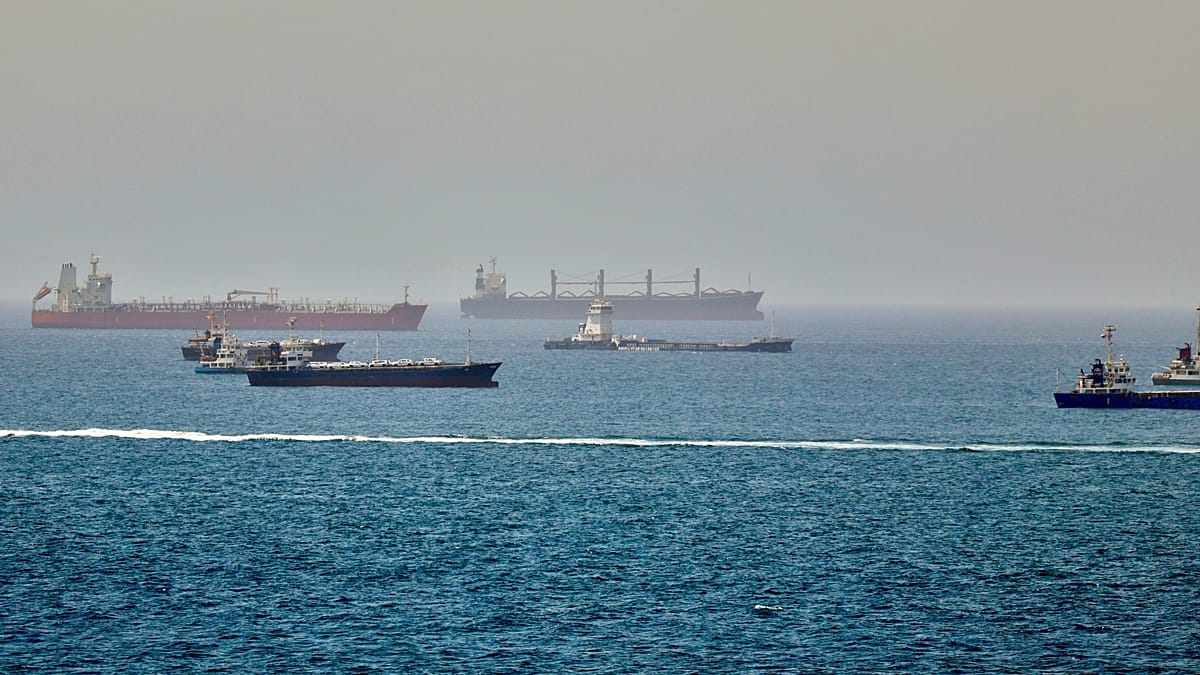
In this context, the Philippines is a natural partner. Often described in Japanese policy circles as a “quasi-ally,” the Philippines occupies a strategic position along critical sea lanes linking the South China Sea and the Western Pacific – routes that are vital to Japan’s energy security and broader economic stability. That includes the Bashi Channel between Taiwan and the Philippines.
The timing of the initiative is no coincidence. China’s expanding naval capabilities and increasingly assertive behavior in the East and South China Seas have sharpened threat perceptions across the region.
China’s navy now operates more than 400 vessels, including aircraft carriers, destroyers, and submarines. By contrast, the Philippine Navy remains a relatively modest force. Even with recent modernization efforts, it fields only a limited number of modern surface combatants, including a small number of frigates and a single operational corvette.
This asymmetry has created strong incentives for Manila to seek external support. Even used Japanese vessels offer an immediate means of enhancing maritime capacity at relatively low cost. Philippine interest in the MSDF’s Abukuma-class destroyer escorts reflects this pragmatic calculus.
The Philippines’ modernization program – structured into Horizon phases – has made incremental progress but continues to face structural constraints.
While Horizon 1 and Horizon 2 introduced key platforms such as FA-50 aircraft and new frigates, implementation has been uneven. A significant number of projects remain delayed or under procurement, while financial pressures from multi-year contracts continue to weigh on defense budgets.
The expanded “Re-Horizon 3” program, which runs through 2033, aims to address external threats more comprehensively, with a projected budget of around 2 trillion pesos. However, near-term capability gaps are likely to persist.
In this environment, second-hand platforms are not merely stopgap solutions – they are strategic enablers. The MSDF’s Abukuma class, though aging, offers a balanced set of capabilities suited to coastal defense and anti-submarine warfare, particularly in archipelagic settings like the Philippines.
Ultimately, the significance of the proposed transfer extends beyond the hardware itself. It represents a broader shift in how middle powers in the Indo-Pacific are adapting to a more contested security environment.
For Japan, exporting defense equipment is no longer simply an industrial or economic question – it is part of a wider strategy to contribute to regional stability. For the Philippines, deepening defense ties with Japan complements its longstanding alliance with the United States and reflects a multi-layered approach to security.
The establishment of a working group may appear procedural, but it signals intent. If negotiations proceed, the transfer of Abukuma-class vessels could become a tangible expression of a changing regional order – one in which partnerships, rather than alliances alone, play an increasingly central role.
As geopolitical competition intensifies, such initiatives may prove to be less about individual platforms and more about shaping the strategic architecture of the Indo-Pacific.










 English (US) ·
  French (CA) ·
  French (FR) ·