

 1 month ago
38
1 month ago
38
PROTECT YOURSELF with Orgo-Life® QUANTUM TECHNOLOGY
Orgo-Life the new way to the future Advertising by Adpathway5 min readNew DelhiJul 4, 2026 03:30 PM IST
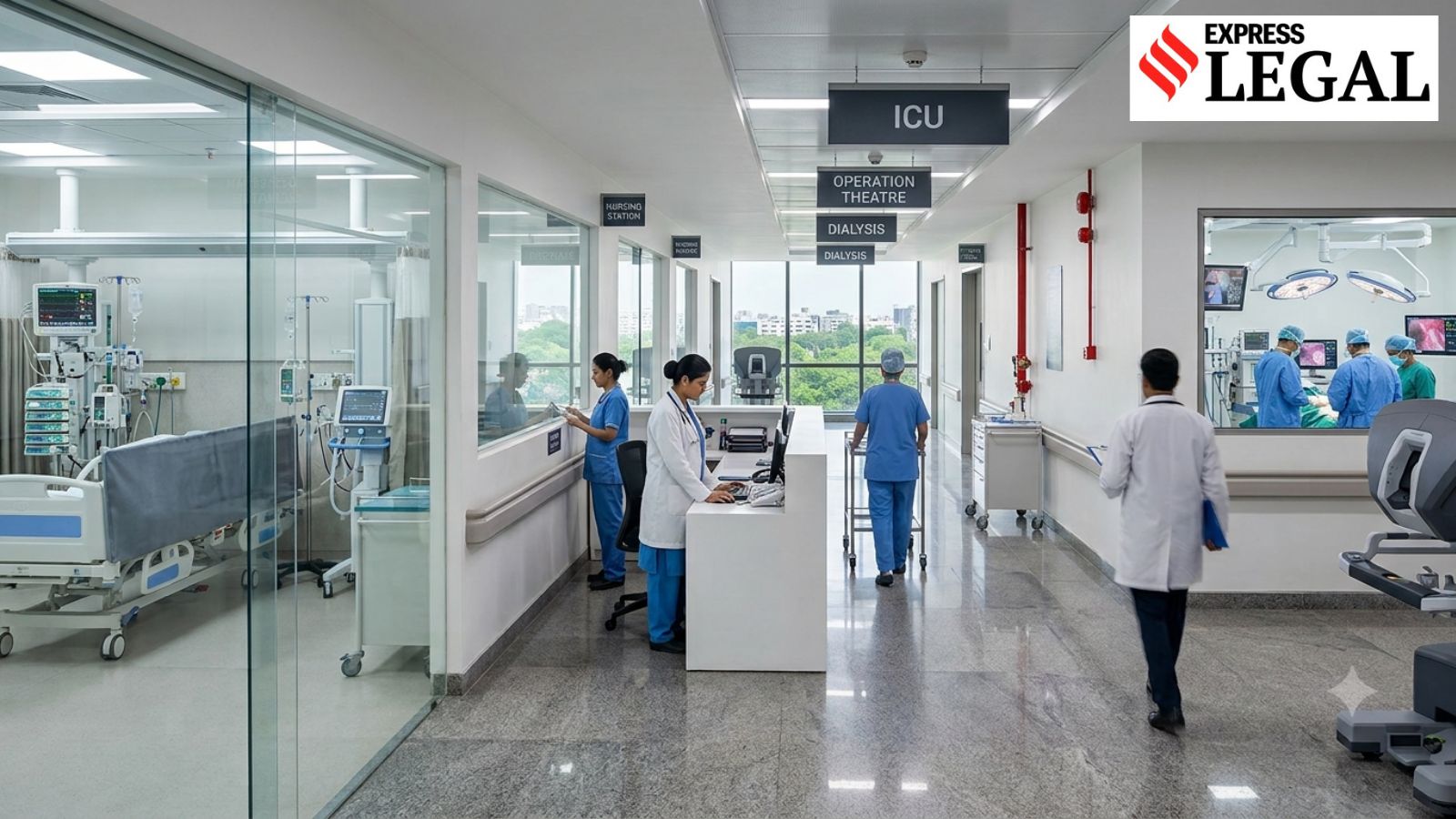 The medical infrastructure within India possesses world-class expertise, state-of-the-art diagnostic tools, and therapeutic facilities capable of treating the petitioner's condition, said the court. (Image generated using AI)
The Chhattisgarh High Court has refused to allow a man accused in a money laundering case to travel to Abu Dhabi for medical treatment, noting that India has world-class healthcare facilities.
The court said “personal preference cannot be equated with absolute medical necessity” when equivalent healthcare is readily available domestically.
Justice Narendra Kumar Vyas was hearing a petition filed by businessman Sunil Kumar Agrawal, an accused in the alleged Chhattisgarh coal levy money laundering case. Agrawal had challenged the June 6 order of the special court under the Prevention of Money Laundering Act (PMLA) in Raipur, which refused him permission to travel to Abu Dhabi, UAE, for treatment at the Khan Kinetic Treatment (KKT) Orthopaedic Spine Centre.
“Even otherwise, the medical infrastructure within India possesses world-class expertise, state-of-the-art diagnostic tools, and therapeutic facilities capable of treating the petitioner’s condition. The choice of an accused to be treated in a specific foreign country cannot override the mandate of law when equivalent medical treatment is readily accessible domestically. Personal preference cannot be equated with absolute medical necessity,” the court said on July 2.
The case arose from Agrawal’s plea seeking permission to undergo specialised Khan Kinetic Treatment (KKT) therapy in Abu Dhabi after he claimed to be suffering from pain in his left leg, particularly around the hamstring and calf muscles, while playing badminton. He told the court that doctors at Mumbai’s Lilavati Hospital and Research Centre had diagnosed his injury and advised surgery, but he preferred the non-surgical KKT treatment available in the UAE, asserting that it was unavailable in India.
KKT Therapy is a non-invasive, non-surgical treatment primarily used to manage chronic back, neck, and joint pain, as well as spinal distortions.
 Justice Narendra Kumar Vyas said that the petitioner has failed to establish an exceptional case of medical exigency. (Image enhanced using AI)
The high court found that Agrawal had failed to produce any convincing medical material to show that treatment in Abu Dhabi was mandatory, further observing that while OPD records from Lilavati Hospital, X-ray reports and consultation papers were referred to, none of the treating doctors had specifically recommended KKT therapy abroad.
Story continues below this ad
Nor had any medical board, orthopaedic specialist or government hospital certified that equivalent treatment was unavailable in India. The court observed that the petitioner’s claim regarding the non-availability of KKT treatment rested largely on internet printouts rather than authoritative medical evidence.
‘Serious offences require greater scrutiny’
The high court also examined the allegations against Agrawal in the money laundering case. According to the ED, Agrawal, promoter of the Indermani Group, allegedly assisted co-accused Suryakant Tiwari in acquiring coal washeries and other assets using proceeds of crime generated through the alleged illegal coal levy racket.
The agency alleged that properties worth around Rs 96 crore were acquired through sham transactions, with only Rs 34 crore routed through banking channels while the remaining consideration was allegedly paid in cash.
The ED further alleged that Agrawal knowingly participated in layering proceeds of crime and acted as a benami for Tiwari in several transactions. Accepting the agency’s submissions, the high court observed that the petitioner possessed significant financial resources, influence and international connections.
Story continues below this ad
Serious nature
- The petitioner has failed to establish an exceptional, bonafide case of medical exigency that outweighs the state’s interest in the uninterrupted progression of the criminal trial.
- The prosecution’s apprehension that the petitioner poses a potent flight risk is therefore neither imaginary nor illusory but a well-founded probability.
- The record of the case would demonstrate that the petitioner is involved in a money laundering case which is of a serious nature and if the petitioner is granted permission for treatment abroad, he may evade prosecution and may drag the trial.
- The right to travel abroad is a valuable one and an integral part of the right to personal liberty.
- Still, equally, it is a well-settled principle of law that travelling abroad is dependent upon the nature of the allegation levelled against the accused in a criminal case, the conduct of the accused, and above all, the need to ensure that he does not pose a risk of evading the prosecution.
- The petitioner can choose not to return to the territory of India; the process of bringing an absconding accused back through international extradition channels is a protracted legal battle that would effectively derail the trial indefinitely.
The court underlined the “crucial stage” of the criminal proceedings, stating that the trial presently involves 26 accused, including senior bureaucrats.
















 English (US) ·
  French (CA) ·
  French (FR) ·