

 3 weeks ago
40
3 weeks ago
40
PROTECT YOURSELF with Orgo-Life® QUANTUM TECHNOLOGY
Orgo-Life the new way to the future Advertising by AdpathwayDaily Brief
The morning intel from across Latin America. Free.
By subscribing you agree to our privacy policy. We never share your email.
Environment
Key Facts
—The find. New photos show an illegal gold mine deep inside a high-altitude wetland.
—The place. It sits above 3,000 metres in the Paramo de Santurban, near Bucaramanga.
—The stakes. The wetland supplies drinking water to more than two million people.
—The scale. One mountain of about 300 hectares now has over 200 mine entrances.
—The limbo. The wetland’s boundaries have been unresolved for nine years.
Illegal gold mining is carving into the Paramo de Santurban, a high-altitude wetland that waters millions of Colombians.

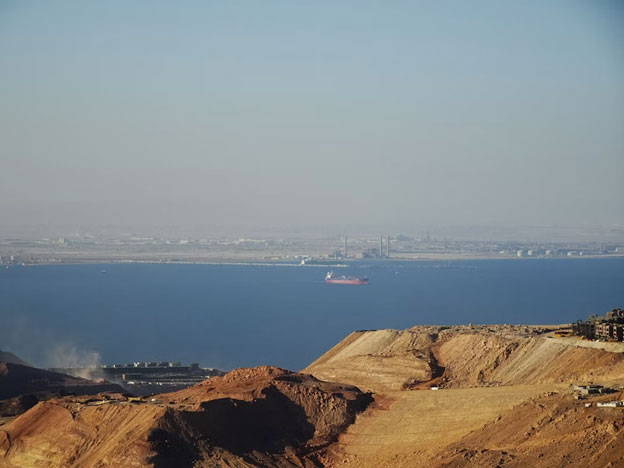
The evidence is new and vivid. A regional newspaper published what it calls the first photograph of an illegal mine shaft inside the wetland.
The image was taken above 3,000 metres. It shows a mine entrance in the municipality of California, in the Santander region of northeast Colombia.
One-stop reference
Company Intelligence
Every listed company in Latin America — financials, ownership and structure for 1,450+ companies across 26 exchanges, in one place.
What is happening in the Paramo de Santurban
The damage is not isolated. On one mountain of about 300 hectares, much of the vegetation is gone and more than 200 mine entrances have opened.
The rush drew outsiders. Traditional miners opened the first shafts, but a gold rush pulled in people from other regions and abroad.
The output is significant. Over seven years, the report says, tonnes of gold and silver have left these mines and fed the illegal metals market.
One shaft alone was striking. It reportedly produced up to 10 kilograms of gold in a single week, worth well over a million dollars at today’s prices.
Why the Paramo de Santurban matters
A paramo is a rare ecosystem. These cold, high wetlands act like sponges, storing and slowly releasing the water that feeds cities below.
Santurban is a big one. It supplies drinking water to more than two million people across two Colombian regions.
Mining threatens that supply. The work uses mercury and cyanide, toxic metals that contaminate the rivers feeding local water systems.
For a foreign investor, the read is cautionary. The scandal underlines the legal and reputational risk around any mining near Colombia’s paramos.
One name recurs in the debate. The Canadian firm Aris Mining, lead shareholder in a nearby project, says it is carrying out no mining there now.
The company points to the ban. It notes that the temporary reserve prohibits any extraction while it is in force, and that it has no project filed with the government.
Crime has followed the gold. Local officials have warned that armed groups are moving in to extort the miners and control access to the shafts.
The money involved is large. One financial-intelligence study estimated illegal mining in the area yields billions of pesos in profit each month.
The legal picture is tangled. A 2025 reserve bans extraction across 75,000 hectares, yet dozens of older mining titles still sit inside the protected zone.
The boundary fight drags on. A court ordered a new, community-backed delimitation nine years ago, and it still has not been finalised.
The politics are charged. Big mining companies, environmentalists and local communities have clashed for years over how far protection should extend.
Consultation is still under way. Officials are holding meetings with dozens of affected municipalities before drafting a single, binding rule.
For now, the photographs shift the debate. They turn an abstract argument over maps and titles into hard evidence of damage already done.
The incoming government adds a twist. Its environment minister-designate favours formalising mining through a large company, a stance critics in the region sharply oppose.
Live Market IntelligenceColombia — Live Market BoardInside: market breadth, the sector heatmap, currencies & rates, the Latin America scoreboard and the full instrument board.Rio Times · Live Market Intelligence
Colombia — Live Market Board
BVC · Bogotá
Jul 13, 2026 · 16:30
MSCI COLCAP · benchmark
2,307.67
+0.65%
Market breadth · 9 names
33% advancing
3 ▲ advancing6 declining ▼
Currencies, rates & key inputs
Sector heatmap · average move today
Other
+5.67%
BRENT, WTI, SOUTHERN COPPER
Mining
-0.58%
BUENAVENTURA
Industrials
-2.19%
TECNOGLASS
Financials
-2.64%
BANCOLOMBIA, GRUPO AVAL, CREDICORP
Latin America scoreboard
IndexLastTodayStrength
IbovespaBrazil
175,963
-1.07%
S&P/BMV IPCMexico
65,928
-0.85%
S&P IPSAChile
10,950
-0.96%
S&P MERVALArgentina
3,260,164
-0.61%
MSCI COLCAPColombia
2,307.67
+0.65%
BVL S&P PerúPeru
56,917.82
-0.73%
Full instrument board
| COLCAP | 2,307.67 | +0.65% | — | 9.04 | 9.05 | 9.02 | 4,133 |
| USD/COP | 3,242 | -0.11% | -19.18% | 3,246 | 3,248 | 3,237 | — |
| BRENT | 82.88 | +9.04% | +19.75% | 76.01 | 83.53 | 77.28 | 57,293 |
| WTI | 77.71 | +8.82% | +16.02% | 71.41 | 78.45 | 72.61 | 282,366 |
| ECOPETROL | 15.88 | +1.93% | +78.53% | 15.58 | 15.99 | 15.50 | 1,688,071 |
| BANCOLOMBIA | 81.23 | -2.08% | +81.23% | 82.95 | 83.41 | 80.75 | 79,960 |
| GRUPO AVAL | 4.92 | -2.96% | +70.83% | 5.07 | 5.20 | 4.90 | 58,431 |
| TECNOGLASS | 42.94 | -2.19% | -43.06% | 43.90 | 44.08 | 42.26 | 69,279 |
| CREDICORP | 389.30 | -2.87% | +75.34% | 400.81 | 403.30 | 389.24 | 111,761 |
| BUENAVENTURA | 29.83 | -0.58% | +78.50% | 30.00 | 30.09 | 29.32 | 578,025 |
| SOUTHERN COPPER | 174.32 | -0.86% | +79.66% | 175.83 | 179.75 | 172.64 | 540,899 |
Largest moves today
BRENT
82.88
+9.04%
WTI
77.71
+8.82%
GRUPO AVAL
4.92
-2.96%
CREDICORP
389.30
-2.87%
TECNOGLASS
42.94
-2.19%
BANCOLOMBIA
81.23
-2.08%
ECOPETROL
15.88
+1.93%
SOUTHERN COPPER
174.32
-0.86%
The session read
The MSCI COLCAP rose 0.65%, with breadth negative — 3 of 9 names higher. Other led, while Financials lagged.
From The Rio Times
Related coverage · 13 Jul 2026
Chilean Retail Giant Cencosud Keeps Buying as Its Stock Keeps Falling
Read →
Frequently Asked Questions
What is the Paramo de Santurban?
It is a high-altitude wetland, or paramo, in northeast Colombia that acts as a natural water store. It supplies drinking water to more than two million people in the Santander and Norte de Santander regions, which makes damage to it a direct threat to their water supply.
Why is illegal mining there so serious?
The mining strips vegetation and uses mercury and cyanide, which contaminate rivers that feed local water systems. New photographs show a mine shaft above 3,000 metres and one mountain with over 200 entrances, evidence that the activity is expanding inside a protected area.
What is being done about it?
A temporary reserve declared in 2025 bans gold and silver extraction across 75,000 hectares, but 57 existing mining titles still sit inside it. A nine-year effort to fix the wetland’s legal boundaries continues, with further consultation meetings under way.















 English (US) ·
  French (CA) ·
  French (FR) ·