

 9 minutes ago
2
PROTECT YOURSELF with Orgo-Life® QUANTUM TECHNOLOGY
Orgo-Life the new way to the future Advertising by AdpathwayGENEVA, November 9 (IPS) - This piece focuses on the responsibilities of other prominent figures, leaders of intergovernmental organizations, senior diplomats, and business tycoons for the world’s current appalling state and the calamities that may await future generations. When democracy fails; when people in authority remain silent and prioritize self-interest; when regional entities become redundant; when appearance becomes more important than substance; when diplomacy is outsmarted by warmongers; when prejudice infects minds; and when business chooses unlawfulness, I continue to assert:
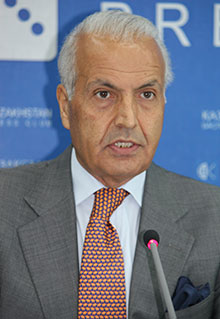 Saber Azam
I Accuse Other Prominent Figures
Other prominent figures—heads of political parties, senior members of legislative and judicial bodies, high-level bureaucrats and military commanders, and even some prominent artists—also bear significant responsibility for upholding their countries’ constitutions and for demanding accountability from their leaders. Many succumb to the influence of questionable lobbies or circles to strengthen their power base, secure re-election, obtain better positions, advance their careers, or defend particular interests.
Unlawful wars and mass killings occur live on camera, and major investigations and judicial processes sometimes appear to align with the political ambitions of those who rule their countries, regardless of the gravity of the crimes committed. Election rigging has become standard practice in many places around the world. White-collar and covert bribery is tolerated as long as it serves those in power or dominant circles. Underhanded tactics used to disqualify lawful competitors have become the bread and butter of many influential figures and even institutions. The rule of law often seems to apply most strictly to those with little or no means. Many high-ranking military officers appear to lack the resolve to resist unconstitutional orders.
Social and economic development, as well as political freedom, remain elusive in many “developing” countries decades after independence. Large segments of the population on earth still live in absolute poverty, while a small number of powerful figures in political, economic, and other key spheres amass vast wealth. As a result, many prominent figures worldwide have failed in their political, legislative, judicial, administrative, defense, or artistic responsibilities.
I Accuse Leaders of the Regional Intergovernmental Organizations
Contrary to the “world-loving” spirit of the United Nations (UN), regional intergovernmental organizations were established to safeguard peace and security and to promote social, political, and economic development within their respective jurisdictions. Yet they have not been immune to individual interests, superpower intervention, or the influence of economically prosperous countries and powerful industries.
To date, few regions appear politically stable. Internal crises, wars between neighbors, and regional conflicts persist across many parts of the world. Some regional entities’ resolutions remain unimplemented, fail to address underlying issues, or are framed unrealistically to “respect” the demands of actors who may not belong to the region but can influence it through military or financial power. Hidden actors exploit racial, ethnic, and religious divisions, undermining cohesion among states and peoples. Despite regional intergovernmental organizations’ obligation to address major peace, security, and development challenges collectively, many have failed to do so.
Few “poor countries” have emerged from the ocean of debt and mounting loan interest. Foreign companies often extract and exploit enormous natural wealth while paying little or nothing to its rightful owners. The regional organizations to which these countries belong either cannot rescue them or choose not to intervene. Violations of human rights and dignity follow a similar pattern. Western nations often apply these principles “à la carte,” while their defense has become rhetoric rather than a genuine concern for regional intergovernmental entities and their leaders, who, too, bear responsibility for the deplorable conditions prevailing in many parts of the world.
I Accuse Senior Diplomats
Diplomacy is defined as “an established method of influencing the decisions and behavior of foreign governments and peoples through dialogue, negotiation, and other measures short of war or violence.” It is also “the process and practice of communication and negotiation between actors in the international system to achieve their goals and resolve their conflicts and disputes.” The 1961 Vienna Convention on Diplomatic Relations establishes an international legal framework for diplomatic relations, privileges, and immunities. The definition and practice of diplomacy therefore imply a process characterized by negotiated outcomes and the absence of treachery and violence. This rationale is central to building trust between adversaries and to sustaining long-term peace and security.
However, like politics, multilateral and bilateral diplomacy seems increasingly to be the art of deceiving the interlocutor, whether friend or foe. The spirit of win-win scenarios seems abandoned. Military actions by powerful countries during negotiations undermine diplomatic efforts and erode trust. Likewise, providing diplomatic cover for espionage, even within multilateral institutions, and deploying career diplomats at tactical and operational levels in war zones create further contradictions. Senior diplomats from many “poor countries” aspire to secure prominent positions in international or regional entities that offer significant political and financial advantages. In contrast, most diplomats from wealthy countries rarely oppose their governments’ policies and actions, even when those policies and actions violate international norms.
Serving one’s nation in any capacity is an honor for a civil servant. The question, however, is why senior diplomats do not speak out when their governments’ policies and actions cross every imaginable red line of unlawfulness and abuse the status and principles of their profession. They therefore bear a heavy responsibility when regional or international peace and security are jeopardized.
I Accuse the Business Tycoons
Business is the lawful activity of producing, buying, and selling products or services for profit. Its foundations are legality, trust, quality, and honesty. Yet some prominent tycoons and institutions have transformed business into a platform for particular political interests. Maximizing returns at all costs, crushing competitors through unlawful acts, applying double standards, or deceiving customers also appear in supposedly “non-political” commerce. Powerful individuals have long manipulated markets in free economies, undermining lawful trade and fair risk-taking.
The weapons industry has become increasingly profitable. In addition to official transactions, the sale of light and semi-heavy weapons to non-state actors through dubious traffickers contributes to countless deaths each year and fuels proxy wars in many regions. While some countries maintain an “open-door” policy on private gun ownership, most nations restrict or prohibit their citizens from possessing and using firearms. Illicit trade, however, undermines these policies.
Beyond their devastating political dimensions, the current energy crises that threaten the peace, security, and safety of billions of people in “poor” or “developing” countries appear to benefit parts of the oil and gas industry, including actors engaged in illicit activity.
In many circumstances, bankruptcy has become an effective “legal” means of stripping ordinary people of their savings and wealth. Offshore companies can also harm national economies while benefiting only a few.
The quality of certain products on the market is increasingly questioned because some manufacturers use unsafe chemicals to make them more appealing to consumers. In many nations, particularly those with weak economies, quality control is inadequate, and child labor is practiced openly. Despite numerous international platforms that bring policymakers and financial actors together, too little is being done to curb wrongdoing. This endangers the foundations of market economies and seriously damages the social and economic progress of countless countries in Africa, Asia, Latin America, and the Oceanic Islands. Business leaders bear primary responsibility for keeping their fields of activity lawful, clean, and trustworthy.
[To be continued]
Saber Azam is a former UN official. He is the author of Soraya: The Other Princess and Hell’s Mouth: A Journey to the Heart of West African Jungles. His third book, Nowhere to Go, will be published soon.
IPS UN Bureau



© Inter Press Service (20261109061424) — All Rights Reserved. Original source: Inter Press Service
















 English (US) ·
 French (CA) ·
 French (FR) ·