

PROTECT YOURSELF with Orgo-Life® QUANTUM TECHNOLOGY
Orgo-Life the new way to the future Advertising by Adpathway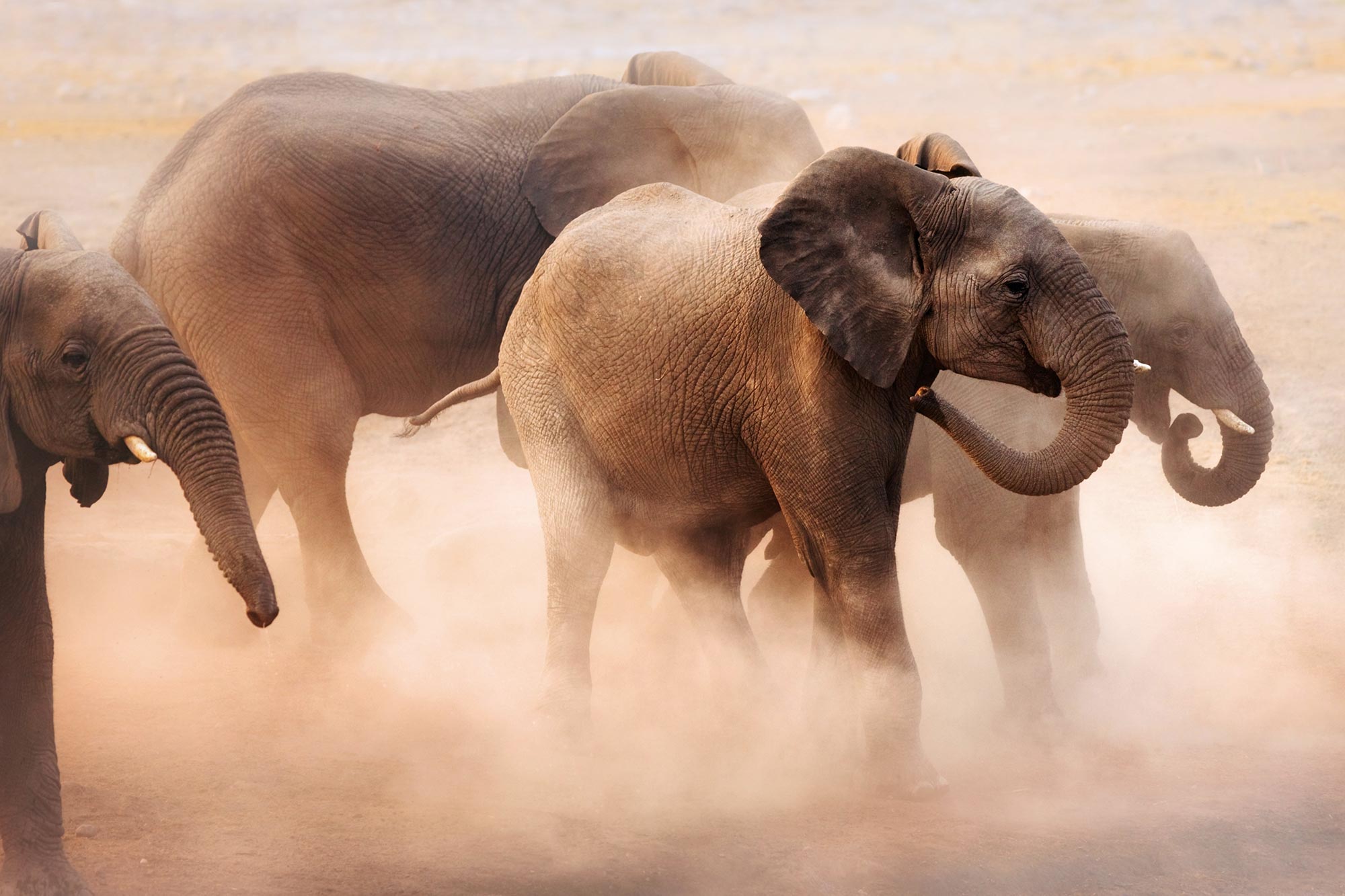 Human-elephant conflict occurs when elephants and people compete for space and resources, particularly in regions where farmland overlaps with elephant habitats. Credit: Shutterstock
Human-elephant conflict could intensify across Southern Africa as expanding farmland and increasingly dry conditions reshape the landscape.
By 2085, the area of Southern Africa facing a high risk of elephant crop raids could expand by 33% to 100%, according to a new study. Researchers predict that growing human populations, expanding farmland, and increasingly dry conditions will intensify encounters between elephants and farmers, with human land use playing the largest role.
Southern Africa is home to more than 290,000 African savanna elephants (Loxodonta africana), representing roughly 70% of the continent’s savanna elephant population. As agricultural communities expand into elephant habitat, crop raids can destroy valuable harvests, threaten household incomes, and undermine local support for wildlife conservation.
Expanding Farmland Is Driving Elephant Conflict
To understand what causes these encounters, Evan Patrick and colleagues analyzed reported elephant crop raids from 2004 to 2020 across 38 communal conservancies in Namibia. They combined statistical methods designed to identify causal relationships with machine learning models that predict where conflicts are most likely to occur. Their analysis extended across a larger landscape encompassing northern Botswana and parts of Angola and Zambia.
“We find that human population growth, cropland expansion, and climate-driven aridity in core elephant-protected areas drive conflict risk,” the authors write.
Population growth was linked to higher crop-raiding rates during both wet and dry seasons, while expanding cropland and developed areas were associated with increased incidents during the wet season. Drier conditions within protected elephant habitats also predicted more wet-season raids in neighboring communities, suggesting that shortages of natural resources may push elephants toward agricultural land.
Where Elephant Crop Raids Are Most Likely
The researchers mapped potential conflict hotspots by examining vegetation cover, proximity to rivers, roads and wildlife fences, population density, and vegetation productivity. Tree cover and vegetation greenness were particularly influential predictors, while roads and fences appeared to shape where elephants encounter human settlements.
High-risk areas included regions north of Namibia’s Etosha National Park, the northeastern Zambezi Region, and parts of northern Botswana surrounding the Okavango Delta and Moremi Wildlife Reserve. Many of these landscapes connect important elephant habitats with areas used for farming.
Crop raids also showed pronounced seasonal differences. Historical records revealed that average incidents per mapped grid cell were more than ten times higher during the wet season than during the dry season, when agricultural activity and vegetation conditions differ.
Conflict Could Increase Under Every Future Scenario
Using projections of climate, population growth, and land use, the team modeled potential changes through 2085. All four scenarios predicted increasing crop-raiding activity and a wider distribution of high-risk areas, although the magnitude depended on future development patterns.
The greatest increases occurred under a scenario involving substantial population growth and land conversion, known as “regional rivalry.” Under this pathway, projected wet-season crop raiding was approximately twice as high as under the more sustainable development scenario. Even the scenario with the most severe climate impacts did not produce the highest conflict levels.
“Aggressive human land-use expansion leads to the most dramatic increases in conflict, with climate impacts playing a significant but smaller role,” the researchers explain.
Reference: “An expanding human footprint drives escalating human–elephant conflict across a transboundary African landscape through 2085” by Evan Patrick, Maxwell Pepperdine, Christy Yu, Sophie Pesek, Olivia Somhegyi, Joana M Krieger, Nickolas McManus, Ezequiel Fabiano, Colgar Sikopo, Patrick R Roehrdanz and Ashley Larsen, 7 July 2026, PNAS Nexus.
DOI: 10.1093/pnasnexus/pgag205
Never miss a breakthrough: Join the SciTechDaily newsletter.
Follow us on Google and Google News.





















 English (US) ·
 French (CA) ·
 French (FR) ·