

 3 days ago
3
3 days ago
3
PROTECT YOURSELF with Orgo-Life® QUANTUM TECHNOLOGY
Orgo-Life the new way to the future Advertising by Adpathway Photo by Leeloo The First
Today’s post is excerpted from Change the World One Book at a Time by Nina Amir.
Five primary strategies help move people toward transformation. Implementing one or more of these as you write your book increases your readers’ likelihood of achieving transformation.
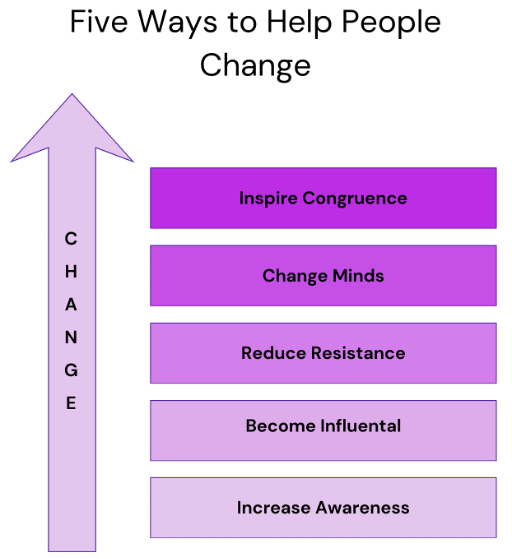
The first step is increasing awareness. Some people don’t realize they need to change. (Remember your blind spot?) If your audience is oblivious to this fact, first, increase their awareness level. Point out what’s lacking in their situation or the world and how change provides benefit. If they are already aware, increase their degree of awareness. The more conscious your readers become of an issue and their options for addressing it—or the pain or loss they will experience by not addressing it—the more likely it is they will decide to set change in motion. As Tony Robbins says, “It is in your moments of decision that your destiny is shaped. A real decision is measured by the fact that you’ve taken a new action. If there’s no action, you haven’t truly decided.”
Increase your readers’ awareness level with the following four strategies.
Use powerful questions
Daniel Pink, the author of Drive: The Surprising Truth About What Motivates Us, says that questions provide a critical tool for influencing behavior because questions elicit active responses and thought processes. Here’s a good example: During the 1980 U.S. presidential election, President Ronald Raegan asked, “Are you better off than you were four years ago?” That same question was used repeatedly in the 2024 U.S. presidential election. Questions make people aware of their own reasons for doing something and increase their desire to act.
T. Harv Eker, the author of Secrets of the Millionaire Mind, often asks his audience questions with two positive choices—both the same, such as “Good or good?” “True or true?” This makes people aware that they agree with him. For example, I could say or write: “Learning to author change helps you have a global impact. Yes or yes?”
Asking your readers rhetorical questions increases awareness, too. For example: “Wouldn’t you like to know you’ve made the world a safer place for your children?” or “It would be amazing to have changed the culture of your company even a little bit, right?”
You can also raise your audience’s level of awareness by asking thought-provoking questions like:
- “What do you want?”
- “Is your approach working?”
- “What will your life look like in three years if nothing changes?”
- “How would you like your future to look? Will it look like that if you keep doing what you’ve been doing?”
- “What stops you from taking new action?”
- “What would become possible if you changed?”
These queries make your readers aware of their struggles and aspirations, as well as their desire to bridge the gap between where they are now and where they want to be. The inquiry process avoids directly asking your audience to change, which can cause resistance, and instead allows them to come to their own decision to do so.
Stir the pot
To get people to make a purchase, marketers stoke the audience’s unhappiness or point out their pain points. Called “stirring the pot,” this strategy makes the audience aware of their level of dissatisfaction or discomfort. As a result, they decide to take action that provides relief.
Suppose you are working on a book about how to afford retirement. You might employ this strategy by writing: “You imagined you’d have achieved a greater level of success by now, and with it, financial security. Instead, the tiny bit of money you’ve managed to stash away for retirement isn’t enough to allow you to retire…ever.”
Your readers will relate to your description of their experience and know you understand their situation. Naturally, this piques their curiosity about how you can help them decrease their clear and present discomfort.
Of course, you don’t want to leave readers feeling uncomfortable. So, after stirring the pot, shift their focus from struggle to aspiration—what they want, not what they don’t want. You might ask, “What would it be like if you had more than enough money in the bank to retire? What would become possible?” Help them see a vision for a compelling future and believe they can achieve it. Then, they’ll become aware that change is possible.
At this point, you might share your strategy for creating personal change—one thing the reader can do to begin the process of transformation. For example, in Do One Thing, Sue Hadfield suggests busy professionals find greater satisfaction by altering one aspect of their personal life.
Tell stories
Stories provide an important transformational tool. Increase your readers’ awareness and motivation by sharing the story of your own transformation. Or share those of others creating change personally, professionally, or globally.
Craft your stories so the audience shares in your experience. For example, if you describe your first kiss, every member in your audience naturally sees and experiences their first kiss as if it was happening in the moment. Each story you share needs to paint a beautiful picture of the future you hope to create with your readers so they see and experience themselves in that mind movie.
Stories are accessible and enormously powerful because they create mental images, memory recall, and emotions. In addition, effective stories provide a link between struggle and success. For instance, if you tell your readers a story about how you turned your manufacturing company into a conscious business model, they see the possibility of accomplishing that transformation.
Stories also help you avoid telling people they are wrong, bad, or should do things differently. No one responds well to that approach. Instead, use your storytelling ability to help your readers see in their mind’s eye the potential for a new experience, a new way of being, and a new world. They will connect emotionally with the possibility and take it on as their own vision of the future. Memoirs, like Cheryl Strayed’s Wild or Elizabeth Gilbert’s Eat, Pray, Love, which inspired many women to go on vision quests of their own, provide examples of such storytelling.
Develop clarity
People who feel indecisive often lack clarity. The more clarity your readers have about what they want to change, why they want to change it, and their ability to navigate the transformational process, the more likely it is they will decide to act. Think of this like washing the dirty windshield of their cars so they can see the road ahead. Without clarity, they remain immobilized, with their feet firmly on the brake; with clarity, they put their feet on the gas and steer toward their destination.
To help your readers become clear enough to decide, help them understand:
- Their reasons (their “why”—the meaning change has for them)
- Their options (the tools, strategies, habits, mindsets, or outcomes from which they can choose)
- The steps they must take (doing X, Y, and Z to achieve A)
- The risks inherent in the process (what they might lose)
- What to expect of the process (what the needed action will feel or look like)
- The outcome they will achieve (the potential results or benefits of action)
Address each of these items as you write your book. The more clarity you produce in your readers, the more aware they become of the action they must take and the more able they are to decide and take action.

Nina Amir, the Inspiration to Creation Coach, is an 19X Amazon bestselling hybrid author. She supports writers on the journey to successful authorship as an Author Coach, Transformational Coach, and Certified High Performance Coach (CHPC®)—the only one working with writers.
Nina’s most recent book, Change the World One Book at a Time: Make a Positive and Meaningful Difference with Your Words, was published in January 2026 by Books that Save Lives. Previously, she wrote three traditionally published books for aspiring authors—How to Blog a Book, The Author Training Manual, and Creative Visualization for Writers. Additionally, she has self-published a host of books and ebooks, including the Write Nonfiction NOW! series of guides.
Nina is an award-winning journalist and blogger, as well as a successful nonfiction developmental editor. Some of her editing clients have sold 300,000+ copies of their books, landed deals with major publishing houses and created thriving businesses around their books.
To further support writers, Nina created the Nonfiction Writers’ University, where members access a huge archive of resources, such as courses, eBooks, and interviews with writing and publishing experts, and receive monthly group Author Coaching. Additionally, she created the Write Nonfiction in November Challenge and Author of Change Transformational Programs.
Nina also founded the Inspired Creator Community, which provides group transformational (spiritual and personal growth) coaching around the topic of creating what matters.

























 English (US) ·
  French (CA) ·
  French (FR) ·