

 2 months ago
32
2 months ago
32
PROTECT YOURSELF with Orgo-Life® QUANTUM TECHNOLOGY
Orgo-Life the new way to the future Advertising by AdpathwayFor as long as I’ve been in the publishing business, I’ve seen few efforts among publishers of any kind that help authors collaborate with each other on marketing and promotion or even promote learning from each other. Recently, at an industry conference, I overheard someone mention that when a major publisher created a private message board for a seasonal cohort of authors, it quickly devolved as authors fell into the comparison trap—who received a better deal, who was getting more support. (Perhaps it goes without saying, but the message board was shut down.) Aside from publishers’ disinclination to have authors compare notes in this way, I don’t think it’s often in their DNA to play matchmaker or facilitate community. Available resources typically focus on supporting books, not authors.
But there are publishers who have found ways to promote author collaborations as part of their own structured and directed efforts and to facilitate long-term relationships that last for years. When this is done well, everyone benefits. I interviewed more than a half dozen people—publishers plus an agent and author—to come up with principles of success.
At publishers where terms are relatively equitable, there’s little danger of a comparison trap. In my interviews, the publishers who run thriving author communities tend to be those where there isn’t much to compare. Joe Biel of Microcosm convenes his authors each season to walk through marketing plans together, and nothing embarrassing comes up. “We’re giving a fairly unilateral offer to each author,” he says. At Bindery Books, which publishes eight to 10 books per season, marketing director CJ Alberts says, “We’re in a lucky place where we really are able to treat all of our books like frontlist lead titles, because they are,” so they don’t have problems in having their authors all share a single online space. And of course hybrid publishers may have the easiest time of all because the authors are investing in their own projects.
Author Mike Michalowicz, who published numerous books with Portfolio (PRH), believes lack of communication among authors at big houses is no accident. “They’re trying to keep us in our different silos so that discussion doesn’t happen.” But Vida Engstrand, director of communications at Kensington, believes this instinct is a relic: “That’s so old school publishing, this idea of ‘Oh, let’s control who communicates with who and who has what information.’ If there’s more transparency, we don’t have to worry about these things.” An author who learns about a disparity from her publisher might be disappointed, while an author who finds out in an author group chat might feel deceived.
For a good experience, publisher facilitation and curation is required. Every success story I heard has an active organizer moving things forward. If publishers simply create message boards for authors to have conversations, then step back, nothing is likely to happen. Kensington tried the hands-off approach years ago with a Google group open to every author on its list, and while authors would introduce themselves and discuss ideas, nothing ever came of their conversations. “Putting all the authors into one pot and expecting them to kind of find their people in a virtual space is really challenging. I don’t think that works,” Engstrand says. “You need to have someone moving things forward and saying, ‘Oh, it’s great that you two connected. Now, here’s the resource for how to bring that to the next level.’”
At smaller publishers, like Authors Equity, an even more personal touch can be offered. CMO and deputy publisher Carly Gorga says they help create the conditions for author connection with seasonal author dinners and actively brokering introductions between authors. At hybrid publisher Page Two, co-founder Jesse Finkelstein personally leads the company’s in-person author salons and facilitates follow-ups. After each event, authors submit what she calls “gifts and takes” or “here’s what I could use help with, here’s what I can offer,” which the team circulates to the group.
For publishers who can’t or won’t be transparent about deals or support, curation or bringing the right authors together is especially critical. In other words: Don’t group authors by the very thing they should not compare. A seasonal cohort grouped by pub date can invite the wrong conversation if they all received a different deal or will get varying levels of marketing and promotion support. Group instead by genre, audience, or project type.
Kensington offers a strong model to follow: Each campaign manager owns a genre (e.g., mystery or romance), and within those categories, the campaign manager does much of the author matchmaking, although criteria go beyond genre. “You need to match authors based on their audiences, but also based on their personalities and their capabilities,” Engstrand says. “If you have a group of authors who love doing events and love touring, then put them together.” She pointed to Cozy Con, Kensington’s series of regional mini-conventions for cozy mystery authors, where they gather six to 12 authors for events that draw hundreds of readers. Participation is opt-in, and the relationships formed this way compound over time.
But curation doesn’t always have to mean same-genre pairing. Authors Equity looks for a shared theme rather than a shared category or genre. Gorga’s principle is that it’s on the publisher to point out where commonality exists—authors can’t be expected to know a list the way the publisher does. Two Authors Equity authors, one a commercial novelist and the other a nonfiction author, did a joint event built around creativity, a common foundation for conversation, even though their books sit on different shelves. Michalowicz, who has started his own imprint, Simplified, at Page Two, says an author writing on business finance and another writing on business efficiency may sit in different subcategories and have different readers, but pairing them together for online education exposes each to a unique group that can further word of mouth and opportunities.
It’s best to keep collaboration optional. The communities that fizzle out tend to arrive with obligations attached. Literary agent Sally Ekus, who regularly convenes her client authors on Zoom, offers specific framing that’s focused on celebrating, sharing, or listening. There is no expectation or requirement involved. “I have clients that have published their sixth, seventh book, and they’re taking notes on what a first-time author’s saying, and vice versa,” she says. Veterans who published before the marketing landscape shifted learn social media tactics from newer clients with big platforms, while debuts absorb lessons from the trenches. She compared this approach with cohorts where everyone has to post about each other’s books. To an author already drowning in marketing and promotion tasks, that kind of community isn’t support—it’s another job. Plus, she says, “Some clients are busy, or that’s just not their vibe or their style.”
Paradoxically, communities that aren’t about promotion tend to produce the best results. At Bindery, authors participate at whatever level suits their personality type and their interest, says Alberts, and the publisher doesn’t assign any “homework.” Yet the cohort keeps generating collaborative social content on its own. Organic, trend-based group posts outperform solo efforts because the authors are pooling their smaller audiences, and promotion happens because nobody demanded it. I did learn about one notable exception, Michalowicz’s Simplified imprint, where cross-promotion is written into the author contract, although requirements are light. Authors agree to collective title listings in the books, imprint branding on author websites, and reciprocal email marketing. Authors join knowing the deal is mutual promotion.
There is a resource cost to such efforts, and the return on investment may not always be obvious. Finkelstein calls it a “goodwill investment” and hopes the community that Page Two is building will attract loyalty and referrals. Engstrand hopes one day to see a dedicated role at Kensington, an author care person, who is focused on author education and community building. Authors have so much marketing and promotion burden already, she says, “We have to kind of carry some of it.”
Bottom line: The authors and publishers doing this well aren’t treating collaboration as just another tactic but as how books will increasingly get discovered. Finkelstein says publishing is at a dramatic inflection point, and meaningful connection—among authors, between authors and publishers, with readers—is needed for survival. “Collaboration is going to save us,” she says. If publishers want to offer authors something they can’t get elsewhere, this is one clear answer right in front of them.
Michalowicz says, “I’ve never met in my life a reader who said, ‘I only read [one author’s] books,’” and it’s why he tells authors they’re not on an island: “If other authors elevate you and you elevate them, everyone goes up with that tide.” And he shares this anecdote as evidence: He once promoted another author’s book aggressively—no mention of his own work, just enthusiasm—and noticed the next day that his own sales were jumping. When he spoke with a reader, she told him she’d bought the other book on his recommendation, but he’d been so genuine about it that she realized she’d never bought one of his. “Putting out that goodwill to other authors can even directly influence a reader to come back to you.”
More Tips for Fostering Author Collaboration
Here are some additional ideas from my conversations.
- For author onboarding meetings, when the pub date is two years away, Kensington suggests that authors promote other authors’ books (and hands them suggestions so they don’t have to research it on their own). Why? Kensington doesn’t think it’s yet time for the author to be promoting their own book—at least not that far out—so they should be talking about others.
- Attach author education to the royalty statement. Microcosm sends an author newsletter with royalty statements. Biel says it’s “part state-of-the-industry, part here’s what we’re doing, here’s what other people are doing that’s working.”
- Let authors teach others inside the publisher as relevant, so that best practices can be applied across the entire catalog. Gorga says, “We work so closely with our authors, they teach us specific things that we then apply to all of our books.” One author trained Authors Equity on TikTok Shop, and they now run that playbook list-wide. Notably, Michalowicz told me that during a meeting with Portfolio, he walked their team through his whole marketing playbook. “I told them everything. They sat there, and not a single one of those ideas got beyond that room.” He also described Portfolio as world-class and an exceptional experience, so it just goes to show that initiatives easily die without the publisher taking some ownership.
- Fund what authors build themselves. For example, several bestselling novelists partnered up on a podcast called Friends & Fiction, an effort that Engstrand admires. She says, “If they were my authors, I would be putting marketing budget into their podcast.”
- Set disclosure norms as needed. Ekus tells each client privately what’s appropriate for group discussions versus “a personally identifying part of their journey that is not for those group rooms or really anywhere.”
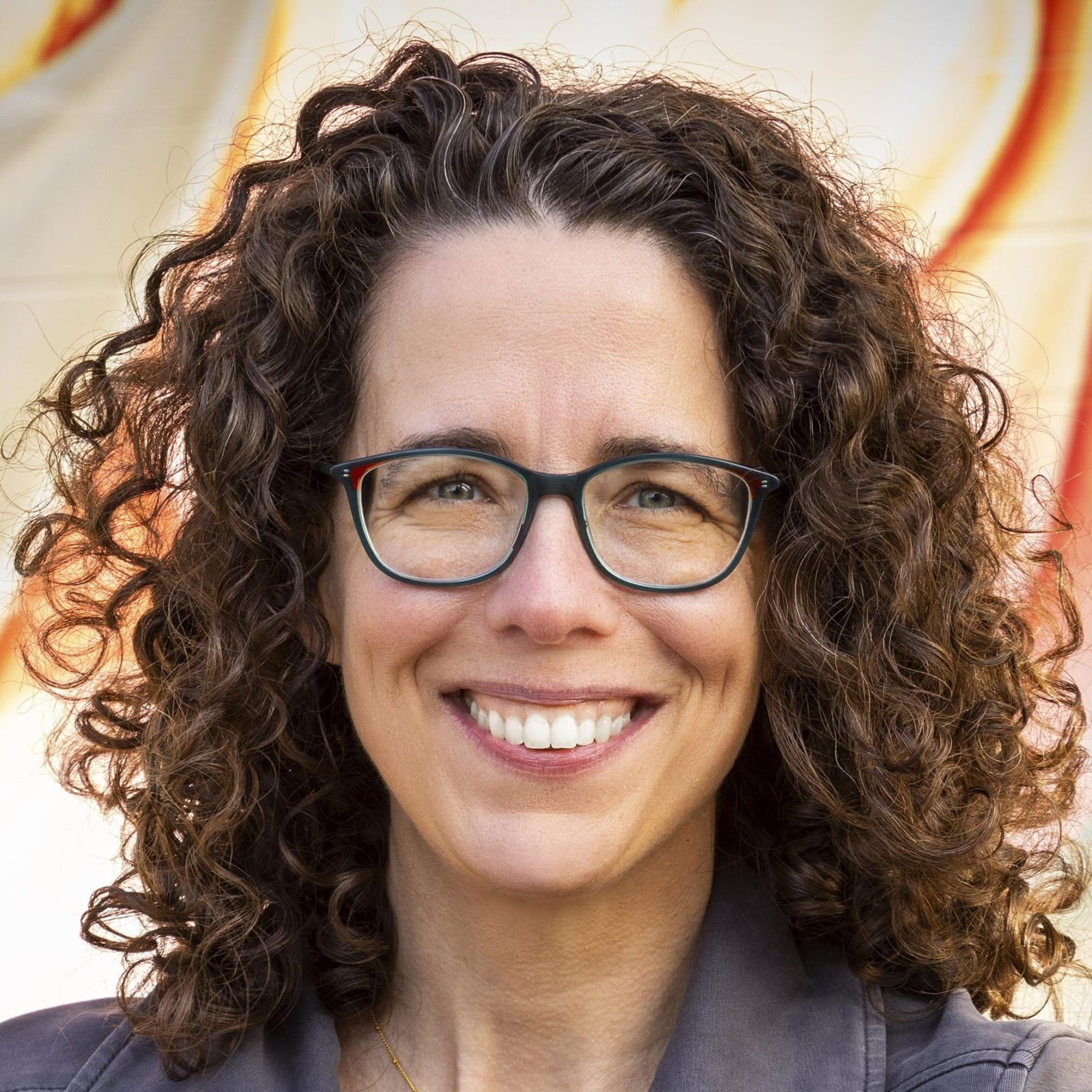
Jane Friedman has spent her entire career working in the publishing industry, with a focus on business reporting and author education. Established in 2015, her newsletter The Bottom Line provides nuanced market intelligence to thousands of authors and industry professionals; in 2023, she was named Publishing Commentator of the Year by Digital Book World.
Jane’s expertise regularly features in major media outlets such as The New York Times, The Atlantic, NPR, The Today Show, Wired, The Guardian, Fox News, and BBC. Her book, The Business of Being a Writer, Second Edition (The University of Chicago Press), is used as a classroom text by many writing and publishing degree programs. She reaches thousands through speaking engagements and workshops at diverse venues worldwide, including NYU’s Advanced Publishing Institute, Frankfurt Book Fair, and numerous MFA programs.













 English (US) ·
  French (CA) ·
  French (FR) ·