


The high cost of building on the moon has led to wide-ranging research on how to make use of the moon's most plentiful resource: the dusty regolith that covers its surface.
Right now, lunar shipping runs about $544,000 per pound ($1.2 million per kilogram), so anything that astronauts can make on the moon using existing materials could help a lot.
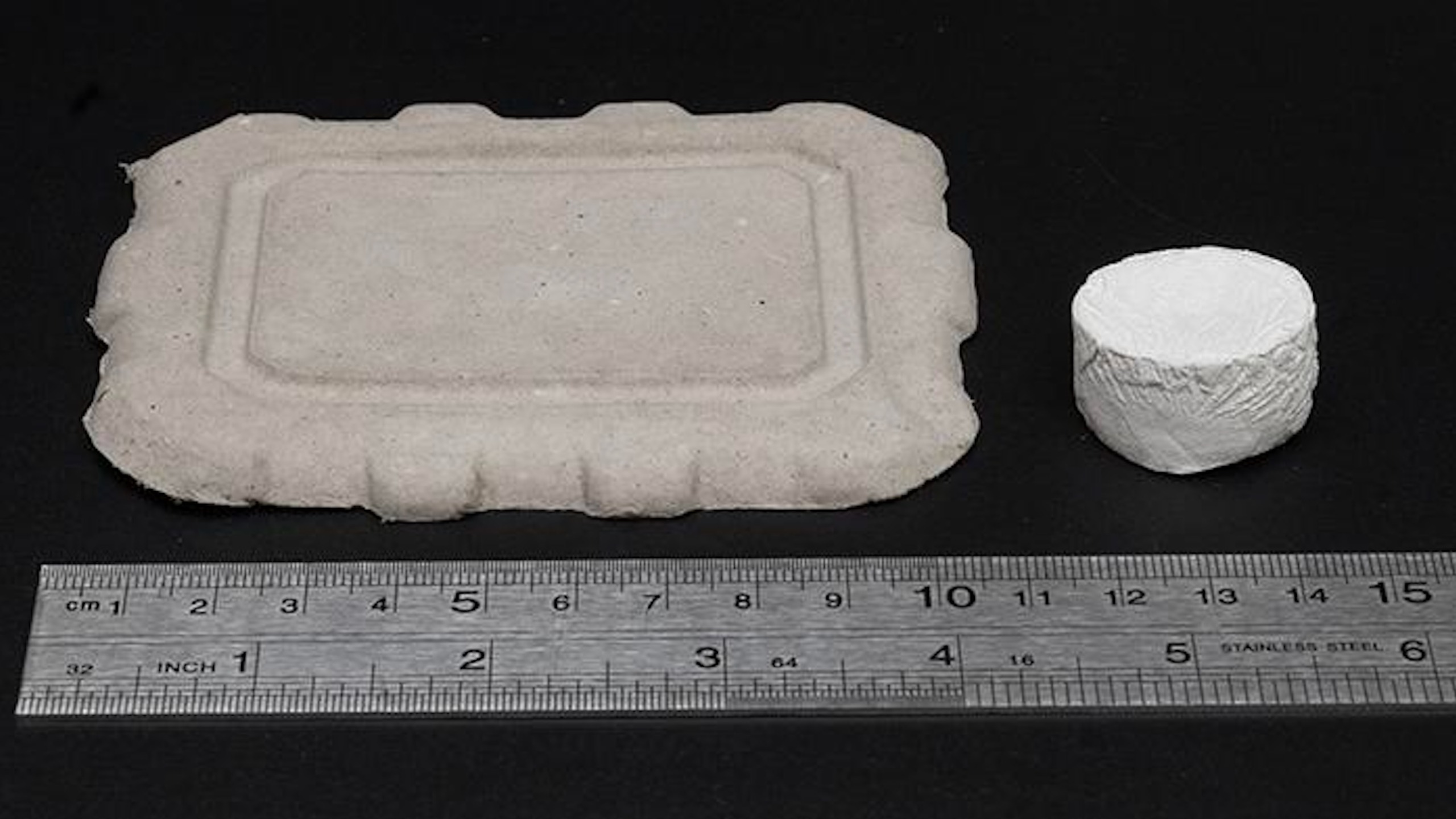
Scientists have already proposed using regolith for building 3D-printed bricks, solar arrays, and even as soil to grow potatoes. Now, a team of researchers from Purdue University in Indiana have developed an aerogel made from simulated regolith for insulating lunar habitats.
"Sustaining a long-term presence on the moon will require us to rethink how we use local resources," Wei, professor in Purdue's James Tarpo Jr. and Margaret Tarpo Department of Chemistry, said in a Nov. 19 statement.
NASA has said that it wants a long-term, sustainable moon base up and running by 2032, a goal it aims to achieve via its Artemis program.
"Rather than relying on Earth to supply everything we need, we're exploring how materials already available on the moon, including waste generated by its inhabitants, could be upcycled into something essential for safe and livable habitats," Wei said.
The aerogel that the Purdue researchers have been working on is a mix of fiber from cardboard waste, called cellulose, and a material that simulates regolith. They said that it could protect the people living in habitats from the moon's drastic temperature swings.
"Imagine an aerogel as a high-tech thermos for a lunar base," Jacob Staker, a graduate researcher working on the study, said in the same statement. "Most of it consists of empty space that insulates the interior, helping it maintain the temperature of what's inside."
The idea here is not to create the best aerogel possible, Wei said, but that "we're looking for the sweet spot where we can get the properties we need with the limited resources we have available" on the moon.
The research was published in September in the journal ACS Sustainable Chemistry & Engineering.



















 English (US) ·
 French (CA) ·
 French (FR) ·