

 3 days ago
2
3 days ago
2
PROTECT YOURSELF with Orgo-Life® QUANTUM TECHNOLOGY
Orgo-Life the new way to the future Advertising by AdpathwayIndia is globally perceived as an unsafe country for women, with its capital, New Delhi, often described as the “rape capital” of the country. Statistics from the National Crime Records Bureau (NCRB) affirm that Delhi is “the most unsafe metropolitan city for women” and children in the country.
The NCRB’s Crime in India 2024 report substantiates this with statistics. In 2024 Delhi recorded 13,396 cases of crimes against women – the highest among all metro cities. The capital also has the dubious distinction of having the highest number (1,058) of reported rape cases among all metro cities.
While these statistics reveal that crimes against women in Delhi continue unabated, the greater irony is that India’s capital is the most policed city in the country with the highest police to people ratio. Delhi has 410 police personnel per million population, three times the national average of 153 personnel per million population.
And yet, Delhi’s streets remain unsafe.
These crime statistics made the headlines once again recently, after a spate of rapes and sexual assaults in the capital in August and September.
On September 21, a 17-year-old girl was gang-raped by three men posing as policemen in Astha Kunj Park, in posh South Delhi, barely 2 kms from the prestigious Lady Sri Ram (LSR) College for Women. Police nabbed the suspects and shot one of them. The incident sparked nationwide outrage, and panic and anger among the student community.
Prior to that, in early September, another 17-year-old was gang-raped and murdered in northwest Delhi’s Swaroop Nagar. The accused allegedly raped and stabbed her to death, and then dumped her body in a field. What makes these rape cases particularly distressing is that the victims were minors. In August, an 11-year-old and a 6-year-old were reportedly raped in separate incidents. The gang-rape of a 16-year-old in a moving bus on the Delhi-Noida border the same month brought back memories of the gruesome gang-rape of “Nirbhaya” 14 years ago in the capital. That victim subsequently died of her injuries. The incident, which led to massive protests in Delhi and other cities, resulted in major changes in sexual assault laws, including the introduction of the death penalty for rape.
These recent shocking incidents occurred amid massive youth and student protests by India’s Gen Z in Delhi and other Indian cities since July this year. The wave of protests started over leaked question papers for medical entrance exams. Protests led by the Cockroach Janata Party (CJP) and leftist student organizations at Jantar Mantar in June-July forced Education Minister Dharmendra Pradhan to resign.
The success of the Jantar Mantar protests triggered realization among students that if they stand united, peaceful protests could yield unprecedented results. It has given them confidence to raise other pertinent issues like women’s safety.
So when a series of rapes occurred in the capital in August-September, youth anger erupted into widespread protests. On September 23, LSR students, triggered by the Astha Kunj rape and the failure of the authorities to ensure women’s safety, held a women-only solidarity march in Delhi University’s South Campus.
What distinguishes the recent protests against rape from earlier ones is the bold and unfiltered approach of the youth protestors. While some girl students held placards declaring, “Our body is our own,” others demanded freedom to step out at night without fear. Student protestors questioned the methods the authorities used to ensure women’s safety. The LSR college shifted to online classes to ensure the safety of their students, and police authorities mulled closing access to parks in the evening.
Instead of questioning patriarchy, they are restricting the movement of women, imposing late-night curfews for women living in hostels, and shifting classes online, the student protestors pointed out. “Smash the Patriarchy” was the theme of their protest march and they used catchy tunes, memes, and humor, making their anti-patriarchy slogans go viral.
The young women protesting against patriarchy are not intimidated by authority. They are demanding accountability from Home Minister Amit Shah while also lampooning him. Student wings of the opposition Congress and leftist parties organized protests against the failure of the Delhi Police to enforce the law. These protests were held amid ongoing protests in Delhi calling for the resignation of Chief Election Commissioner Gyanesh Kumar over election process irregularities.
Youth anger about women’s safety forced the Supreme Court to address the issue. Describing the recent spate of rapes as a clear “systematic failure” on the part of law enforcement authorities, a two-judge bench said that “accountability needs to be fixed.”
The judges stressed the need for a focused approach to prevent rapes and not on penalty. Merely installing CCTV was not enough, it pointed out, calling for the Delhi Police to monitor it around the clock. Better policing and patrolling would “instill fear in criminals,” it said, adding that public spaces, including parks and buses, should not become “high-risk” zones because of poor lighting and poor surveillance. Having strict laws was not enough, the court said, calling for effective implementation of laws to discourage serious offences like rape. The court will be taking stock of the progress made on its directives again next month.
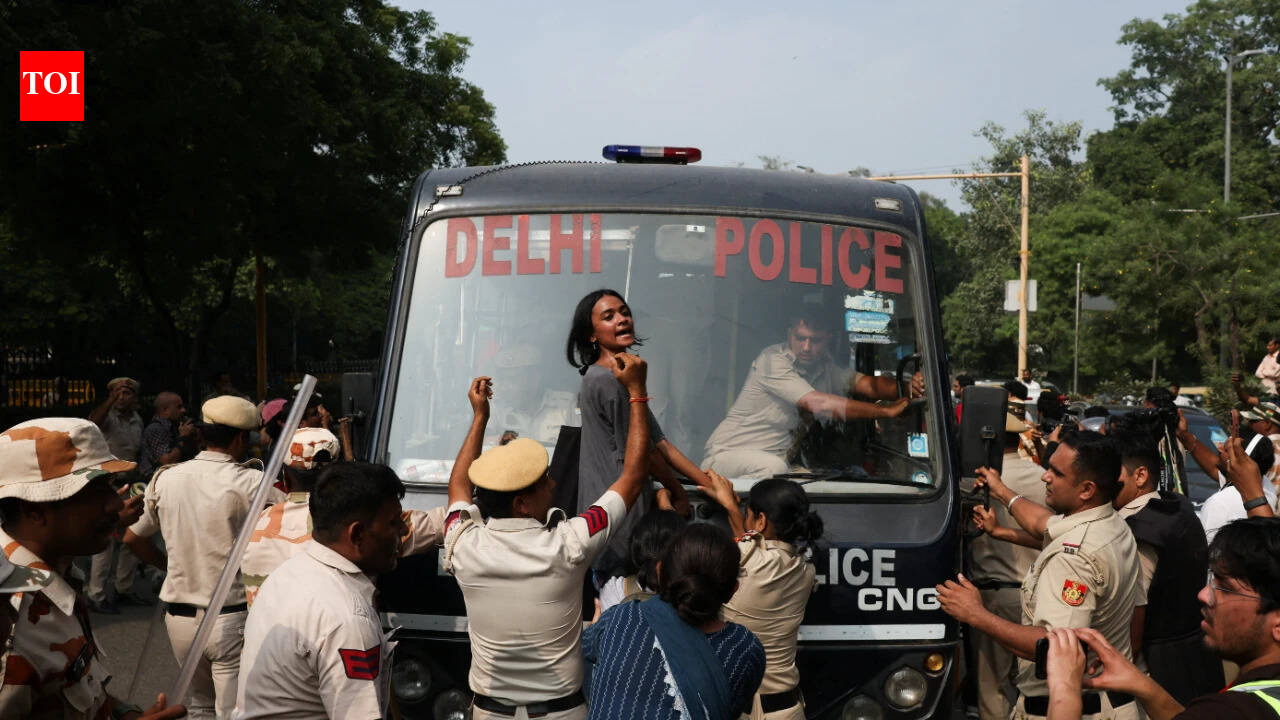
Young women have been turning up in large numbers at all student protests in Delhi, asserting their place and demanding equal rights. So, when Delhi Police cracked down on women students and journalists protesting at Jantar Mantar, even molesting some of them, they marched to the nearest police station demanding a case be filed against the police officials. On October 4, Neha Bora, president of the All India Students’ Association (AISA), led a Citizens’ March from India Gate to Jantar Mantar, calling attention to the fact that “from streets to protests, women are not safe.”
It is evident that women in India, at least in its cities, are refusing to be cowed down or slut shamed or policed for their attire, or forced to stay indoors in the evenings, to ensure their safety. Rather, they are now vocal in their demands for a safer city and, more importantly, a change in patriarchal mindset within homes and in society at large. As 17-year-old Subhani told The Guardian, “My generation is not afraid to stand up and protest. We know that society has to change.” As she summed it up, “The days of women being silent is over.”















 English (US) ·
  French (CA) ·
  French (FR) ·