

 48 minutes ago
7
48 minutes ago
7
PROTECT YOURSELF with Orgo-Life® QUANTUM TECHNOLOGY
Orgo-Life the new way to the future Advertising by AdpathwayStudent demonstrations over deteriorating schools, despite billions of euros in public education spending, are becoming a symbol of France’s wider turmoil. Analysts say the unrest is being intensified by the country’s worsening finances, President Emmanuel Macron’s weakened political center and increasingly assertive radical movements.
Simone Rodan-Benzaquen, senior envoy for Europe at the Foundation for Defense of Democracies, told News Outlet from Paris that the protests began in September with credible complaints about unsafe and poorly maintained schools. But she said political groups have increasingly used the demonstrations to provoke a broader confrontation with the government.
“The anger is genuine, but I would say the violence is organized,” Rodan-Benzaquen said, arguing that vandalizing or burning schools will not solve the education system’s longstanding problems.
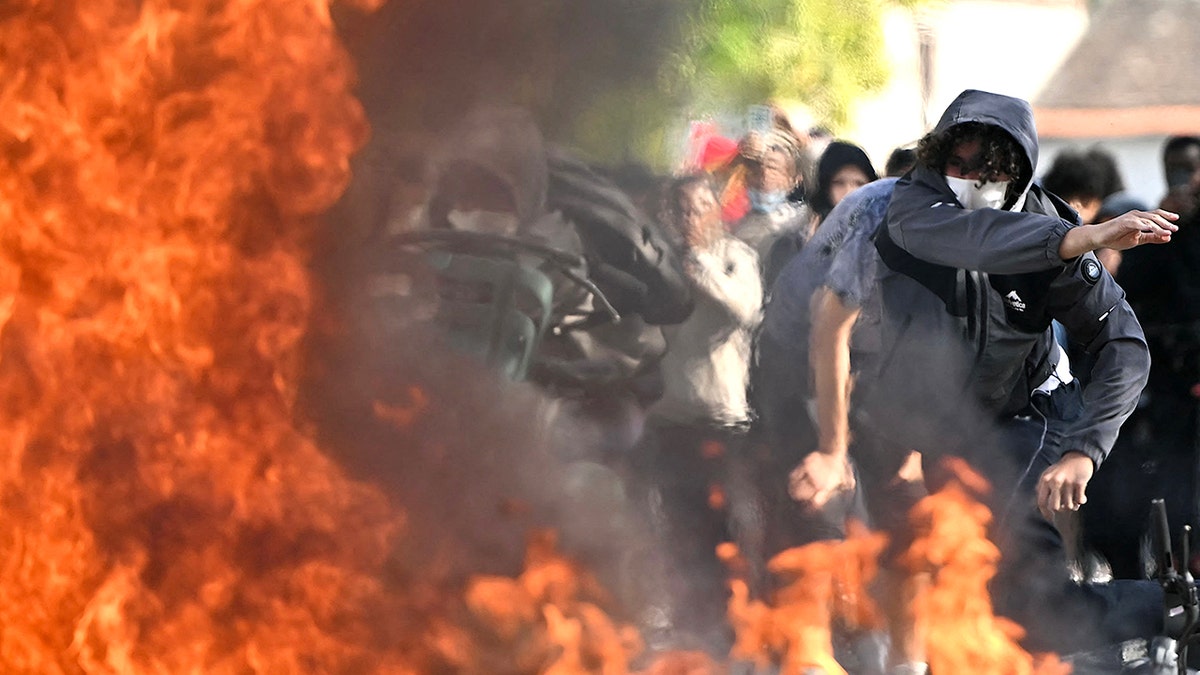
A protesting student feeds a burnt barrier during a blockading action outside the secondary school Le Corbusier, in Aubervilliers, northern Paris on Oct. 1, 2026. (Lou Benoist/AFP via Getty Images)
France’s Education Ministry said in its 2026 statistical overview that 72% of education spending goes toward salaries, social contributions and pensions for teaching and non-teaching staff. Only 8.5% is allocated to investment, including school buildings, infrastructure and equipment. The figures cover the full education system rather than high schools alone.
Harvey Feigenbaum, a George Washington University political science and international affairs professor who studies French politics, said the crisis reflects a government squeezed between costly social obligations, weak economic growth and demands to reduce public spending.
“France is deeply in debt and wants to cut its expenses,” Feigenbaum said. Years of budgetary strain, combined with the failure to adequately maintain school facilities, have helped turn frustration into anger among students and their supporters.
The numbers underscore the pressure facing Paris. Eurostat reported that French public debt reached 117.6% of gross domestic product in the first quarter of 2026, giving France the European Union’s third-highest debt ratio, behind Greece and Italy.
Rising borrowing costs and growing concern among investors have further restricted the government’s options, Reuters reported Oct. 8. In earlier protest crises, French authorities often responded with additional spending—an approach that is now far harder to sustain.
The financial squeeze is unfolding alongside a fractured political landscape. As confidence in mainstream parties declines, movements on both the left and right have found opportunities to turn public dissatisfaction into political momentum.
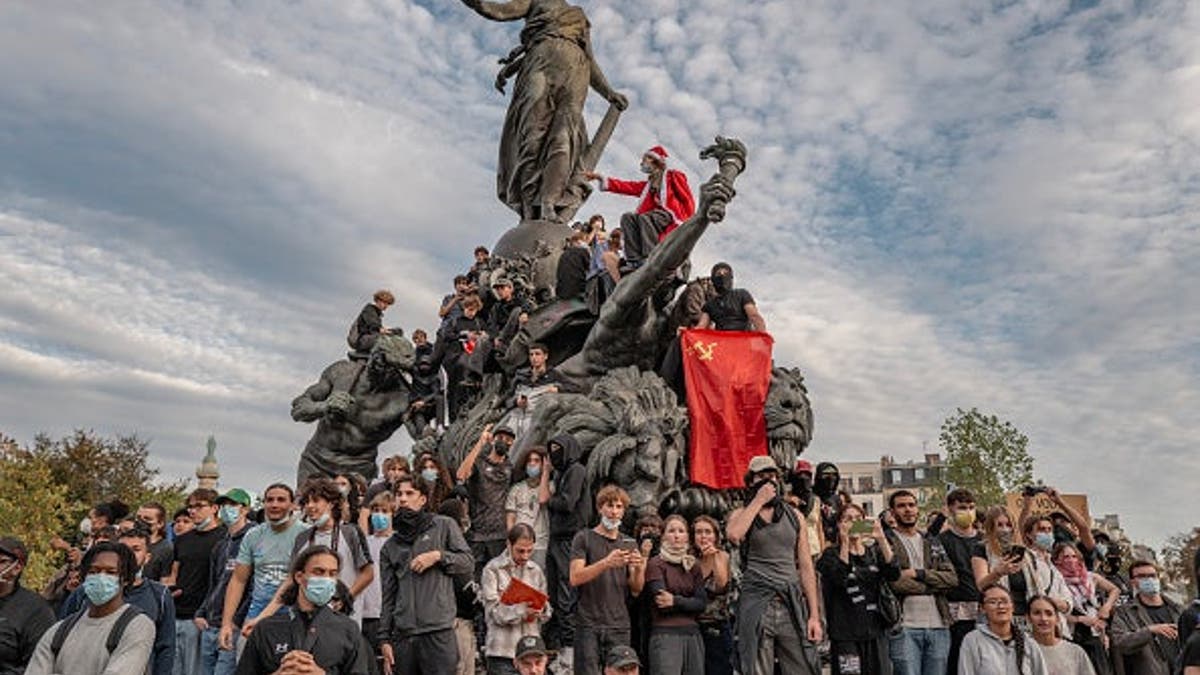
Protestors gather around the Monument à la République in Place de la République in Paris on Oct. 4, 2026, during nationwide demonstrations against an overcrowded, ill-equipped and understaffed education system. (Veronique de Viguerie/Getty Images)
Macron’s political center collapses
Feigenbaum said many of France’s current political problems can be traced to Macron’s approach to governing.
After winning the presidency in 2017, Macron pledged to break with the country’s familiar left-versus-right political divide. His plan was to combine elements of both traditions and build a new centrist movement.
Instead, Feigenbaum said, Macron drew moderate voters away from the established center-left and center-right parties, weakening them without building a stable coalition capable of replacing them.
“He attracted moderate voters from both the moderate left and moderate right, and essentially destroyed those parties,” Feigenbaum said.
The decline of France’s traditional center, he added, opened the door to political forces with more sharply defined and polarized agendas.
“Macron is a smart man, but he’s a terrible politician,” Feigenbaum said.
Macron’s pension overhaul showed how difficult it is to persuade French voters to accept cuts or changes to deeply established public benefits, Feigenbaum said. The reforms prompted mass demonstrations, and implementation of the 2023 retirement changes has since been delayed until 2028.
The political deadlock deepened after Macron called snap legislative elections in 2024. The vote produced a divided National Assembly in which no governing bloc secured a clear majority.
“Even if the government wanted to pursue a coherent policy, it simply doesn’t have the votes to do so,” Feigenbaum said.
That paralysis has left Prime Minister Sébastien Lecornu handling the immediate unrest while Macron faces questions about the stability of the political system he helped reshape.
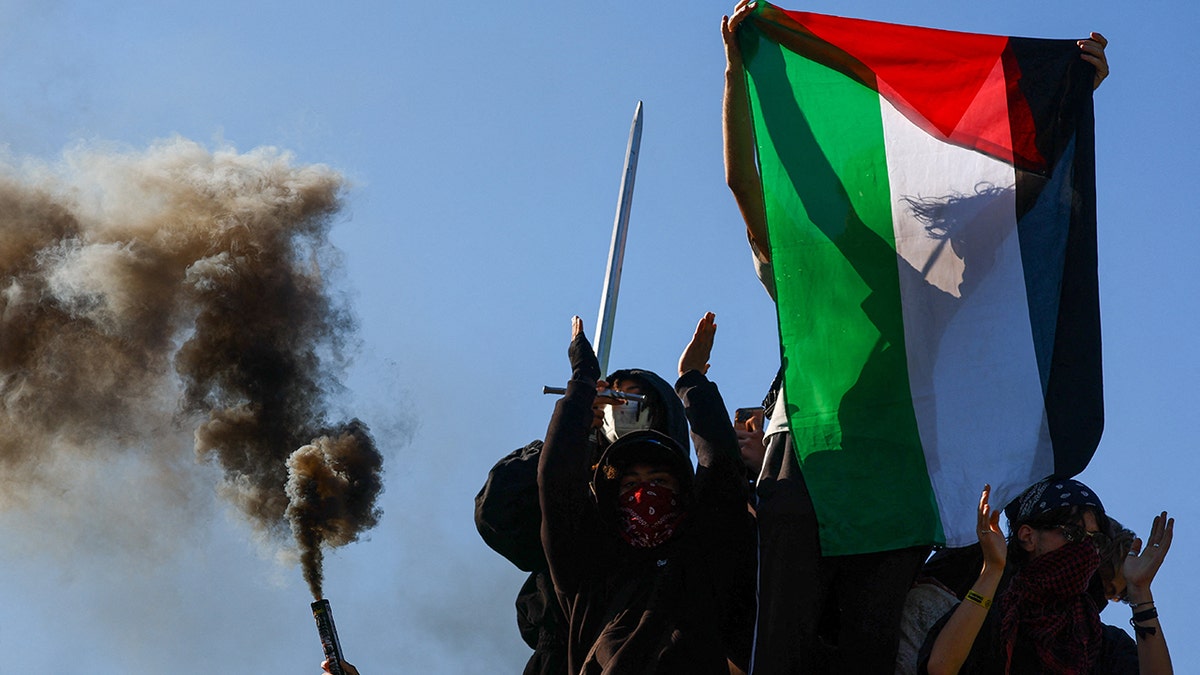
Protesters hold a Palestinian flag Oct. 6, 2026, the day French high school and university students attend a demonstration in Strasbourg as part of a nationwide day of protests and blockades, voicing anger over overcrowded classrooms, teacher shortages and dilapidated school buildings, which students blame on years of underinvestment. (Reuters/Kai Pfaffenbach)
Why are France’s schools struggling despite billions in spending?
The protests began in the Paris suburbs in September amid complaints about overcrowded classrooms, inadequate heating and cooling, aging buildings and teachers who were not replaced when absent.
Rodan-Benzaquen said the anger reflected years of educational instability, frequent ministerial changes and reforms that have failed to resolve persistent school problems.
She also pointed to a broader sense of anxiety among young people about their economic future, artificial intelligence, climate change and international conflicts.
According to the OECD’s September 2026 Education at a Glance report, France spent $16,674 in funding per student in general upper secondary education in 2023, compared with an OECD average of $12,421, adjusted for purchasing power.
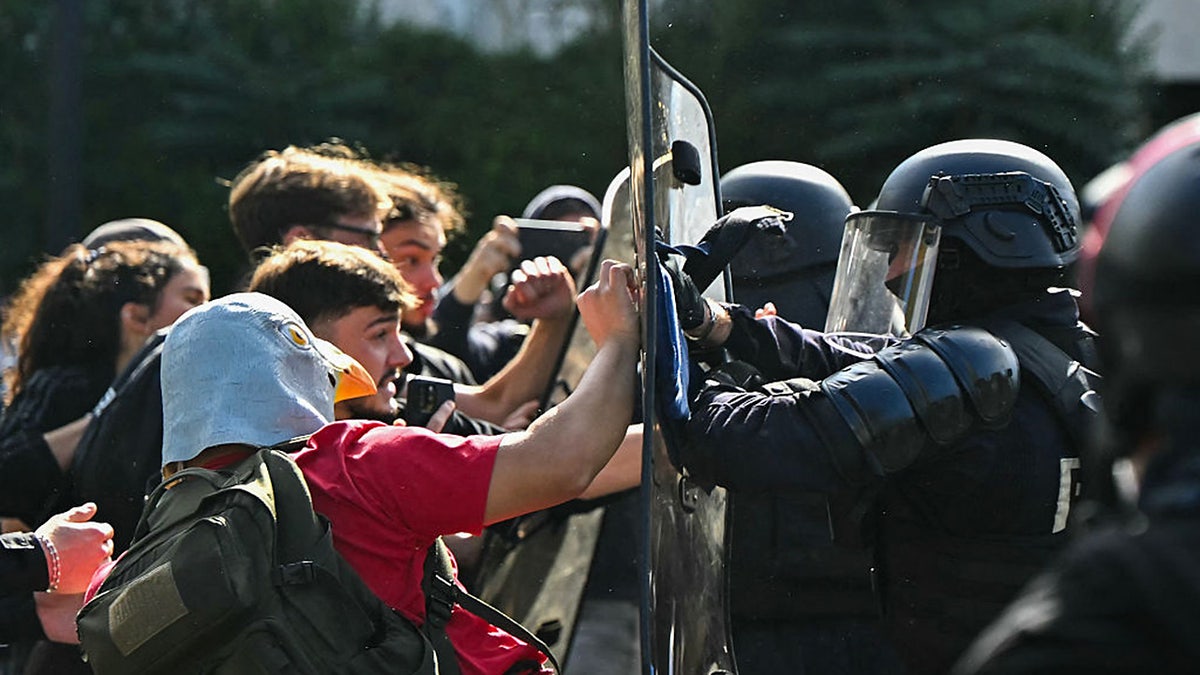
Anti-riot police officers face protesting students carrying out blockading action outside the secondary school Le Corbusier, in Aubervilliers, northern Paris Oct. 1, 2026. (Lou Benoist/AFP via Getty Images)
Yet teachers and students continue to complain about basic shortages.
Responsibility for public high school buildings and equipment falls to regional authorities, while the national government oversees much of the education system, including teacher staffing.
Feigenbaum said France’s centralized education structure makes national leaders the focus of public anger when schools fail to deliver.
The pressure has already forced a concession.
Reuters reported Friday that Education Minister Édouard Geffray announced an emergency plan to deploy 3,000 qualified educators to particularly affected schools, costing several dozen million euros.
Student unions welcomed the measure as an initial victory but pledged to continue demonstrating.
The spending figures raise broader questions about whether France’s financial and political priorities have left sufficient resources for maintaining school infrastructure and meeting students’ needs. They do not, however, establish that teachers’ unions or other organized constituencies have improperly diverted funding.
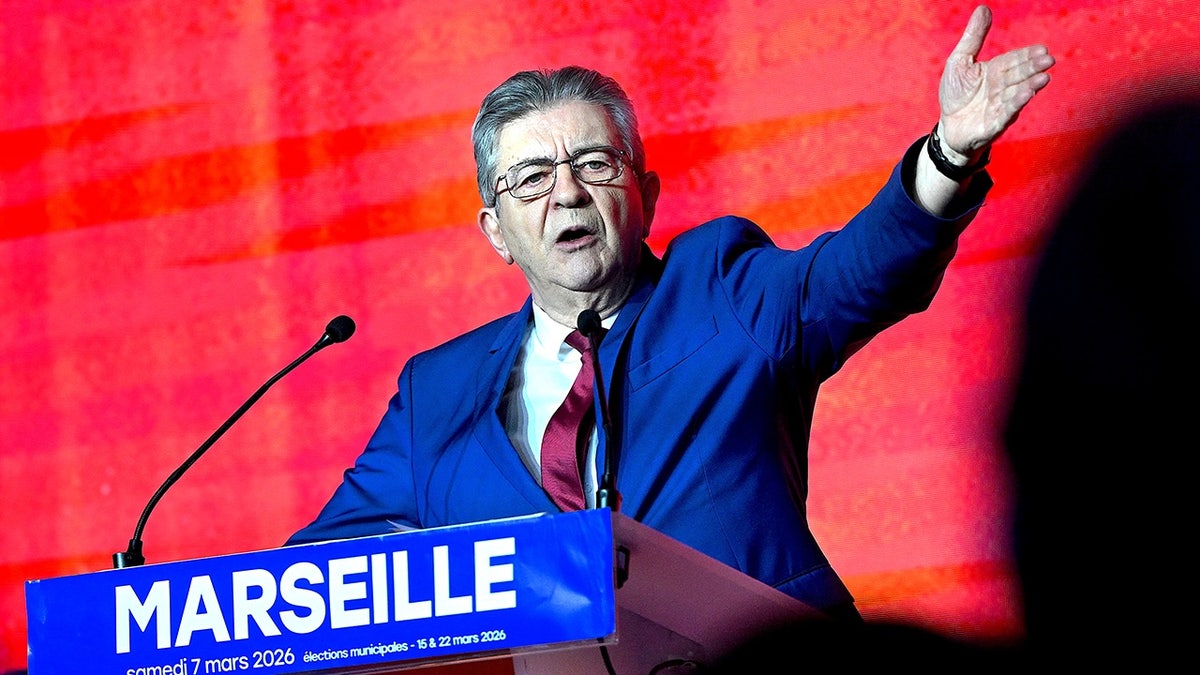
Jean-Luc Mélenchon, the leader of the French left-wing La France Insoumise party, delivers a speech during an electoral campaign meeting of the local LFI candidate for French municipal elections in Marseille, southern France, March 7, 2026. (Miguel Medina/AFP via Getty Images)
How the far left entered the unrest
As the demonstrations expanded, the involvement of France’s hard-left La France Insoumise party, known as LFI, led by Jean-Luc Mélenchon, became an increasingly contentious issue.
Reuters reported Oct. 1 that French intelligence agencies had told a government crisis meeting that LFI and affiliated activists played a role in fomenting the unrest. Interior Minister Laurent Nuñez also cited agitators moving between schools to encourage violence.
LFI has denied responsibility and accused authorities of aggravating tensions through their response.
Rodan-Benzaquen said far-left movements were capitalizing on students’ frustration.
“There is an obvious instrumentalization, obvious manipulation,” she said, arguing that activists were seeking to push some protesters toward violence.
She linked the unrest to what she described as Mélenchon’s broader political strategy ahead of France’s 2027 presidential election.
“His idea is that, on the one hand, he will scare voters on the right and on the far right, who will then go to vote for the far right, and, on the other hand, he would mobilize his own camp,” she said.
Rodan-Benzaquen argued that intensifying political confrontation could help Mélenchon consolidate his support among younger voters and immigrant communities, while portraying the far right as an increasingly serious threat.
She described it as a calculated political strategy rather than a spontaneous response to students’ concerns.
The involvement of LFI politicians has been documented by French media, although there is disagreement over whether the party helped initiate the demonstrations or became involved after the protests began.
An Oct. 2 investigation by Le Monde examined a police intelligence assessment describing radical left activity around schools in Seine-Saint-Denis but questioned whether the evidence established that the movement itself was politically orchestrated.
Feigenbaum offered a more cautious interpretation, describing some of the violent perpetrators as fringe provocateurs who exploit broader demonstrations without necessarily directing them.
“They’re not being organized by some, you know, some mastermind at the national level, at least as far as anyone knows,” he said.
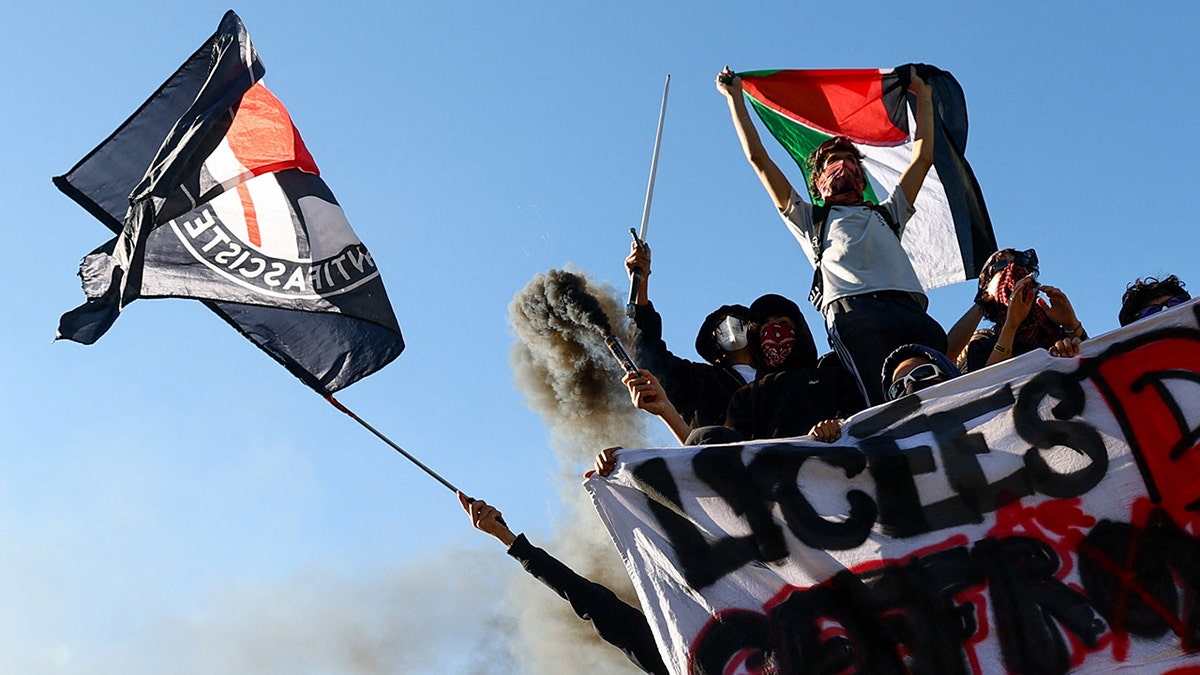
Protesters hold Palestinian and Antifa flags as French high school and university students attend a demonstration in Strasbourg, France, Thursday, Oct. 6, 2026. (Kai Pfaffenbach/Reuters)
Islamist influence or political solidarity?
The demonstrations have also raised questions about whether Islamist groups and pro-Palestinian activists are seeking to use the unrest to advance broader ideological causes.
Rodan-Benzaquen argued that Mélenchon’s emphasis on Gaza and the Palestinian cause has helped bring together political constituencies that might otherwise have little in common.
“It’s sort of the idea of sort of an intersection of different movements where they manage to bring together the different groups, the far left, Islamist movements, pro-Palestinian activists,” she said.
She pointed to Palestinian flags appearing during the demonstrations as an indication of how the movement has expanded beyond its original educational demands.
The FDD expert argued that Islamist elements were attempting to capitalize on the turmoil, although she cautioned against reducing the entire crisis to immigration or religion.
“But this goes far beyond the issue of immigration. It goes far beyond the issue of Islamism. It goes far beyond the issue of Islam,” she said.
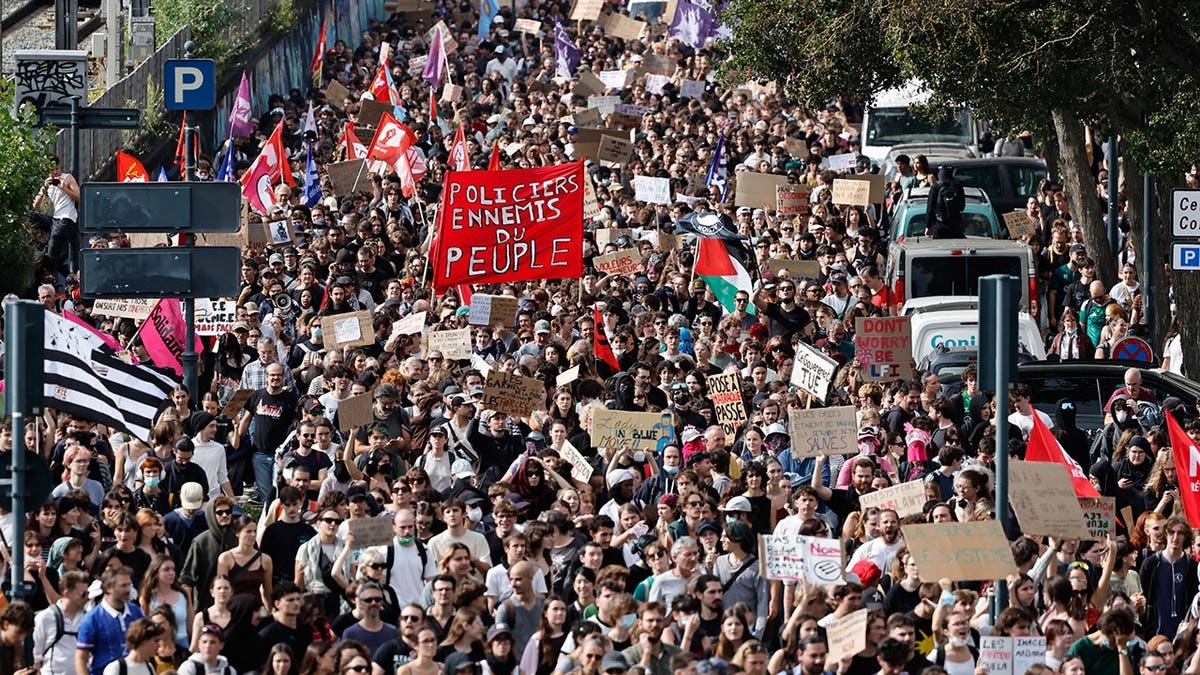
Students march with a large red banner reading “Police officers, enemy of the people” during a protest against under-resourced schools in Rennes, France, Tuesday, Oct. 6, 2026. (Jeremias Gonzalez/AP)
A crisis France cannot simply spend its way out of
The government’s latest concessions have not ended the protests.
According to Reuters on Friday, 141 schools remained closed while students continued demanding broader reforms. Nearly 10% of teaching hours in French public high schools remained unstaffed.
For Rodan-Benzaquen, one of the greatest dangers is that the demonstrations reflect a society increasingly divided into competing political realities.
She described how her 17-year-old son created separate left-wing and right-wing Instagram accounts and encountered radically different portrayals of the same unrest, one emphasizing police violence and the other violence by protesters.
“Now, if you live in two drastically different realities, it is very complicated to come to any form of dialog and end agreement,” she said.
Her warning extends beyond France’s current protests.
“We are in an extremely polarized environment,” Rodan-Benzaquen said, noting that social media can deepen divisions and allow confrontations to escalate rapidly.
Feigenbaum sees an additional structural danger of a government burdened by accumulated financial obligations and deprived of the political consensus needed to reform them.
The result is a country spending heavily to sustain its public institutions while struggling to deliver the services citizens expect and a political system increasingly consumed by conflict over how to fix them.
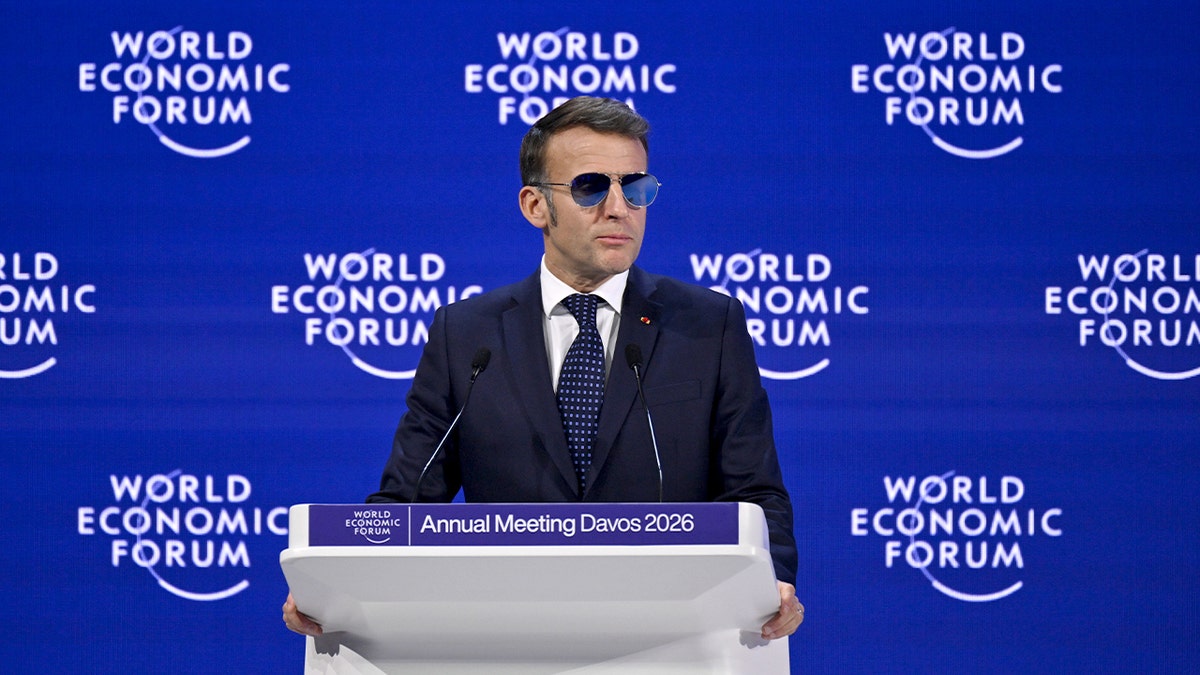
French President Emmanuel Macron delivers a speech during the World Economic Forum annual meeting in Davos, Switzerland, Jan. 20, 2026. (Harun Ozalp/Anadolu via Getty Images)
What began as a rebellion against broken classrooms has become a test of whether France can reconcile its costly promises with its financial reality before the divisions consuming its schools deepen further.










 English (US) ·
  French (CA) ·
  French (FR) ·