

 12 hours ago
3
12 hours ago
3
PROTECT YOURSELF with Orgo-Life® QUANTUM TECHNOLOGY
Orgo-Life the new way to the future Advertising by AdpathwayIran is set to have no oil at sea and no oil revenue this week for the “first time in history,” Treasury Secretary Scott Bessent said as Tehran’s top security official issued a rare warning over the country’s deepening economic crisis.
“For the first time in history, since they started pumping oil, they will have no oil on the water this week,” Bessent told The Axios Show on Saturday. “They will have no revenues.”
Bessent said the unprecedented situation is the result of a deliberate, three-stage campaign that began with the U.S. military assault earlier this year, moved to President Donald Trump’s blockade of Iranian commerce, and is now aimed at isolating Tehran economically.
The Treasury secretary traced the strategy back to the roughly six-week military campaign beginning in late February, which he said destroyed Iran’s navy and air force, substantially depleted its missile and drone capabilities and crippled its ability to rebuild them.
“We had kinetic,” Bessent said. “We destroyed their navy, their air force, substantially depleted their drone and missile capability, destroyed their chances of rebuilding that.”
Washington then moved to what Trump calls the “Iron Wall” — the U.S. naval blockade that has prevented Iranian oil exports while protecting international traffic through the Strait of Hormuz — before launching Operation Economic Outcast, the administration’s broader campaign to sever Tehran from remaining sources of trade and revenue.
“Then we went to what the president calls the Iron Wall and the blockade, which we’d never done before,” Bessent said. “And now we have Operation Economic Outcast, and we are isolating them economically like has never happened before.”
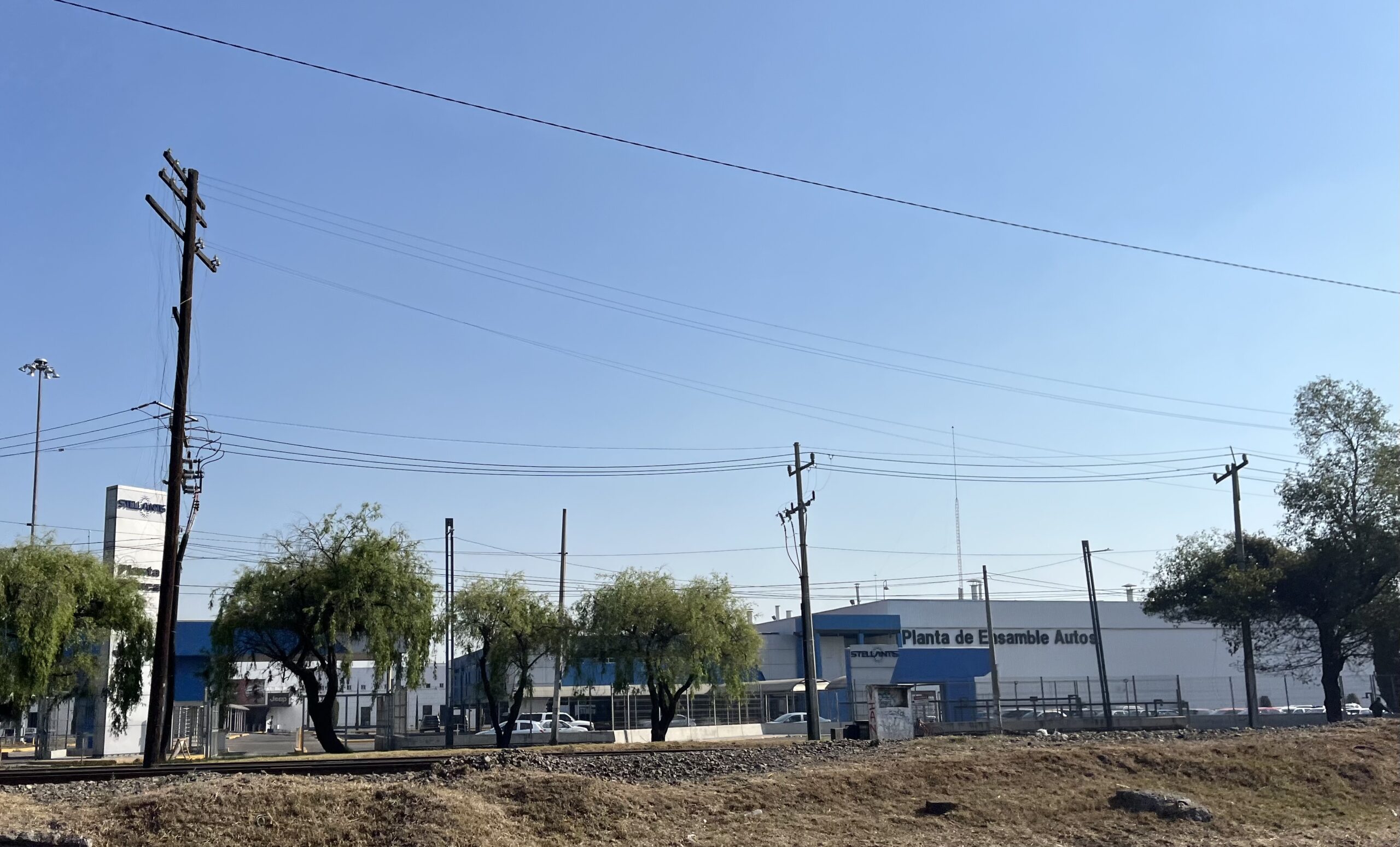
Treasury expanded that campaign Thursday with sanctions targeting Iran’s automotive and rail industries and foreign suppliers, seeking to further restrict the resources available to Tehran’s military, missile and drone programs, cyber operations, and the Islamic Revolutionary Guard Corps (IRGC).
Bessent said the strategy has effectively shut Iranian oil out of the strait even as U.S.-protected international commerce has continued moving through it.
“Right now, the score, in terms of barrels out of the strait: U.S. about 1.1 billion, Iran zero,” he said.
The prospect of Iran having no oil remaining at sea this week also brings forward a prediction Bessent made last weekend. At the time, roughly 15 million barrels loaded before the blockade remained aboard tankers, with the final cargoes headed largely to China. Bessent predicted that once those shipments were delivered, Tehran would have “nothing left to trade.”
One week later, he says that point is arriving.
The effects are becoming increasingly visible inside Iran — including in unusually stark warnings from the country’s own leadership.
Mohsen Rezaei, Iran’s top national security official, described the circumstances as among the most difficult periods the country has faced during a high-level government meeting Saturday with President Masoud Pezeshkian and senior ministers, according to the state-run IRNA news agency. Iranian state media did not publish Rezaei’s remarks verbatim.
Pezeshkian acknowledged at the same meeting that economic conditions had worsened and said his government had adopted a “new posture” to manage what he called the country’s “special conditions.”
The warnings came as Iran’s currency sank to another record low. The rial traded at roughly 2.69 million to the dollar Saturday after losing more than half its value over the past year, while inflation has climbed above 70 percent. Iran’s central bank has responded by offering up to $2 billion in U.S. currency through state banks in an effort to support the rial.
The damage extends beyond financial markets. Reuters reported that Iranians are exhausting savings, losing jobs, moving to less expensive areas and cutting spending on basic needs as soaring prices and the loss of oil revenue erode living standards. Fear of government repression and the immediate struggle to make ends meet, however, have so far constrained the economic discontent from developing into broader nationwide protests.
Iran’s collapsing exports increasingly stand in contrast to the recovery in oil shipments from the rest of the Gulf.
Energy Secretary Chris Wright said Sunday that supplies moving through Hormuz have continued to rise in recent weeks. Goldman Sachs analysts estimated Persian Gulf oil exports reached roughly 23.3 million barrels per day over the past week, returning to prewar levels even as Iranian crude loadings collapsed.
The administration says it intends to maintain that arrangement — allowing international energy traffic through the strait while continuing to block Iranian exports.
War Secretary Pete Hegseth said Saturday that Washington can maintain the blockade for as long as necessary and rejected Tehran’s repeated assertions that it controls the strategic waterway.
“Iran wants to play games with things like the Strait of Hormuz. They don’t control it. We do,” Hegseth said. “They have literally gotten nothing through. Our blockade’s been ironclad, and we’re running almost at prewar levels every single night through that.”
Hegseth said the result has left Washington in a “very strong position,” urging Tehran to “make the right choice” while Trump still has the option of resolving the confrontation without another major military escalation.
“If they don’t, the president’s going to have all the options he needs on the table,” he said.
Tehran is now seeking relief from that pressure as Washington and Iran exchange proposals over a possible agreement.
Iranian officials said Sunday that Washington had responded through intermediaries to Tehran’s latest proposal, which Trump had already rejected as insufficient, and that the U.S. response was now being reviewed by the Iranian government. Tehran has continued to demand sanctions relief and an end to restrictions on its maritime commerce as conditions for fully reopening Hormuz.
Parliament Speaker Mohammad Bagher Ghalibaf insisted Sunday that the strait would remain closed until Washington accepted seven Iranian conditions tied to the Islamabad Memorandum of Understanding — the June framework that established a ceasefire and a path toward reopening Hormuz and broader negotiations before Iran resumed attacks on commercial vessels and the agreement ultimately broke down.
“The Strait of Hormuz will not open until our seven conditions based on the Islamabad Memorandum are met,” Ghalibaf said.
Foreign Minister Abbas Araghchi, meanwhile, insisted that neither additional sanctions nor renewed military action would force Tehran to accept Washington’s terms.
“There is no military solution, nor any solution based on new sanctions,” Araghchi said, arguing that negotiations based on “justice and fairness” offered the only path to ending the conflict.
But Araghchi paired that appeal for negotiations with a warning, saying that if Iran’s enemies “again choose the path of military confrontation, our response will be stronger than before.”
Washington, however, is preparing for the possibility that Tehran still refuses to accept terms Trump considers sufficient.
Senior Trump administration officials met for several hours at Camp David on Friday to discuss Iran, with Vice President JD Vance chairing a previously unannounced gathering that included Secretary of State Marco Rubio, Hegseth, Bessent, CIA Director John Ratcliffe, White House envoy Steve Witkoff, and Joint Chiefs Chairman Gen. Dan Caine.
“Things were decided or at least deeply discussed,” one U.S. official told Axios.
Trump offered little detail when reporters subsequently asked what had emerged from the meeting.
“If I told you, you would have a major story,” he said Friday. “But you will see. It is working out very well. Iran is not doing well.”
A day later, Trump said he was approaching a decision.
“We have a decision that I’ll make about Iran,” he said Saturday. “Iran has been decimated. So the only question is it’ll either be the easy way or the hard way. We’ll have it the easy way or the hard way.”
Tehran, meanwhile, is preparing for the possibility that the confrontation again turns military.
Iran’s army announced Sunday that it has begun increasing the range and speed of its missiles after concluding from the conflict that U.S. forces are operating farther from Iranian shores. Brig. Gen. Mohammad Akraminia said the military intends to upgrade its missiles to reach adversaries operating at distances of up to 1,000 kilometers.
The announcement comes as Tehran seeks relief from a blockade Bessent says is days away from leaving Iran without oil at sea or the revenues those shipments provide. The Trump administration says it can maintain the blockade for as long as necessary if Iran refuses to accept an agreement.
Hegseth said the United States can maintain the blockade “as long as we need to,” urging Iran to “make the right choice” while it still can. If Tehran refuses, he said, Trump will have “all the options he needs on the table,” with U.S. forces prepared to act if called upon.
Joshua Klein is a reporter for Breitbart News. Email him at [email protected]. Follow him on Twitter @JoshuaKlein.















 English (US) ·
  French (CA) ·
  French (FR) ·