

 3 weeks ago
56
3 weeks ago
56
PROTECT YOURSELF with Orgo-Life® QUANTUM TECHNOLOGY
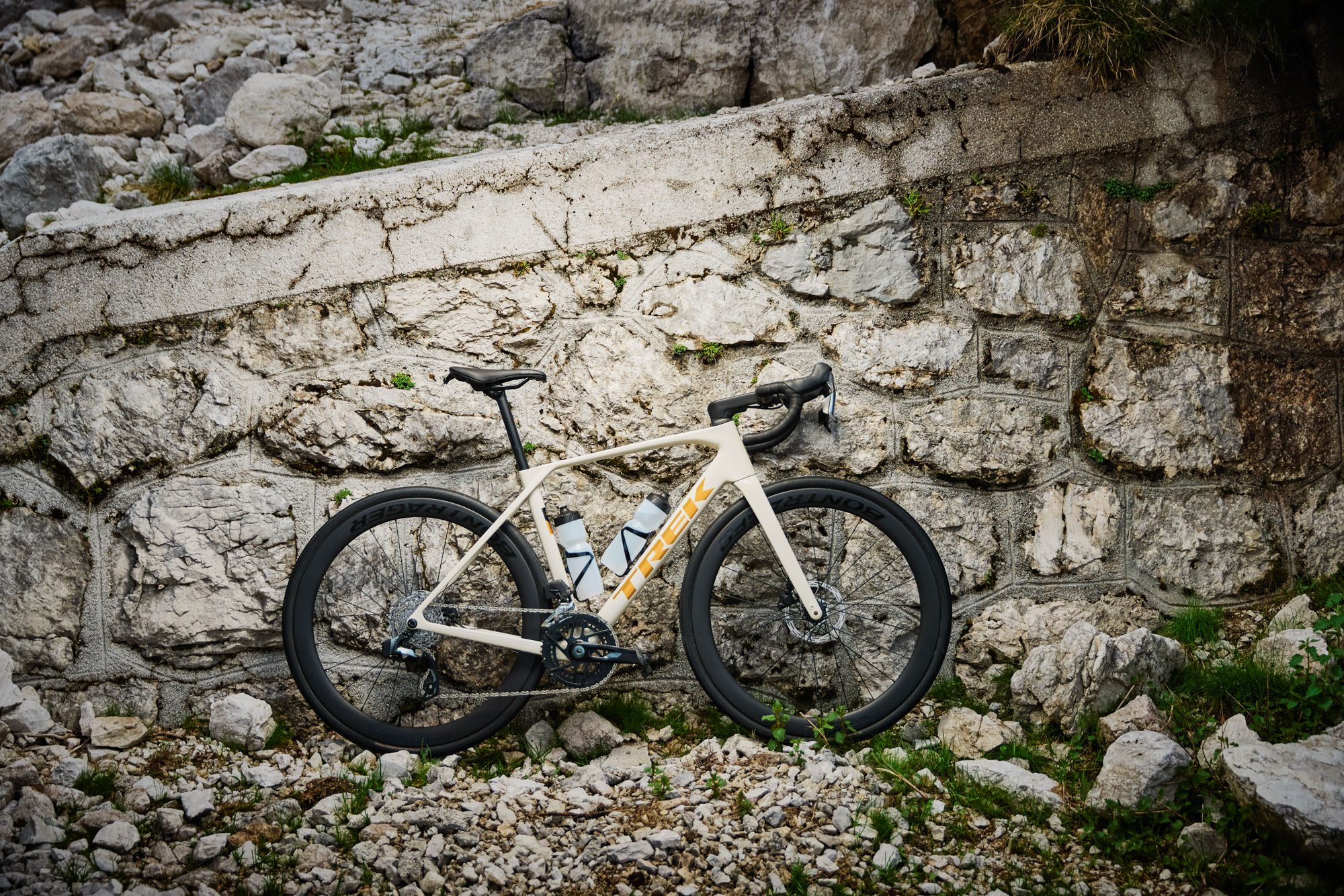
Orgo-Life the new way to the future Advertising by AdpathwayEndurance bikes are having a moment right now. Larger tire clearance and a comfortable geometry are given, but now brands are adding aerodynamics, stiffer chassis, and a much more attractive appearance. Trek is the latest to modernize its endurance machine, and it’s a hell of a transformation.
 (Photo/Trek)
Trek Domane SL/SLR – What’s New?
The updated Domane finally gets back to a cleaner road bike shape. The new Domane SL/SLR is still the brand’s endurance road platform. However, for this fifth generation, Trek has stripped out its iconic IsoSpeed dampener, dropped a notable amount of weight, added more tire clearance, and built a new comfort story. This time around, carbon layup, fit, seatpost flex, and bigger tires.
Dropping its most distinguishing feature is a pretty bold shift for a bike that has been tied to IsoSpeed since the first Domane. The original bike was built for rough roads, 25mm tires, rim brakes, and the kind of high-pressure setup that made frame compliance do a lot of the work. This new Domane lives in a different world, one with disc brakes, embracing much larger tires, and where the pros don’t always slam their stems.
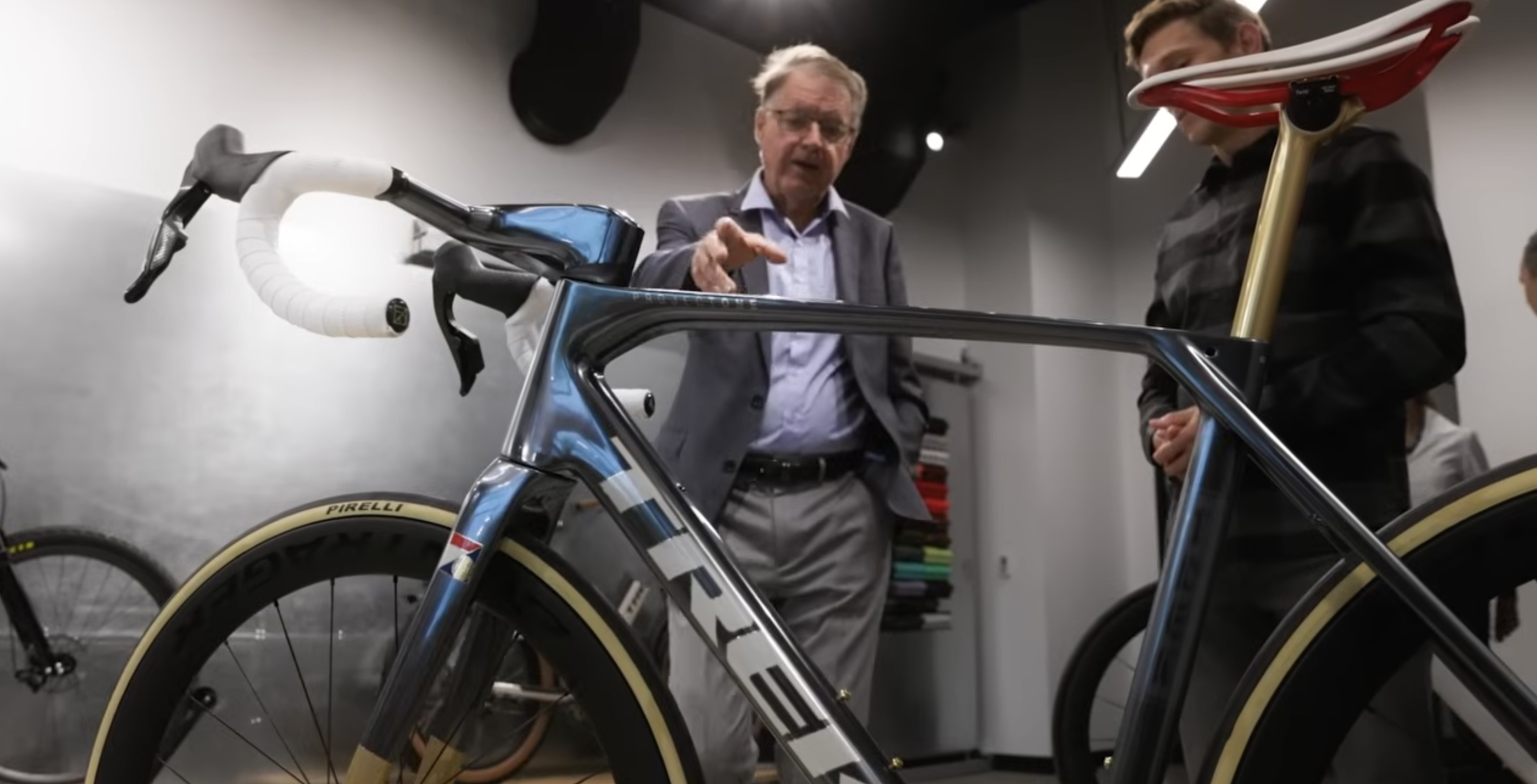 I can only imagine he’s saying “What the heck is this?!” (Image/Youtube)
Remember This Sneak Peek?
We also got an early look at this one, whether Trek meant for that to happen or not. Back in June, we spotted a mystery road bike hiding in the background of Trek’s own 50th anniversary documentary (they also hid a 32” race bike in the doc too). At the time, the round seatpost, missing IsoSpeed, and new frame shape made it hard to tell whether it was a future Domane, Madone, or something else. With the new Domane official, those clues line up pretty cleanly.
No IsoSpeed, Less Weight
The headline change is the lack of IsoSpeed. Trek is not pretending it is still there in some hidden form. The new Domane simply moves on from it. The tech was sound, and the benefit of the IsoSpeed design is notable in the older model on the Trek Boone and in the updated versions like the Checkmate (reviewed here). Its Achilles’ heel is the debris ingress and maintenance.
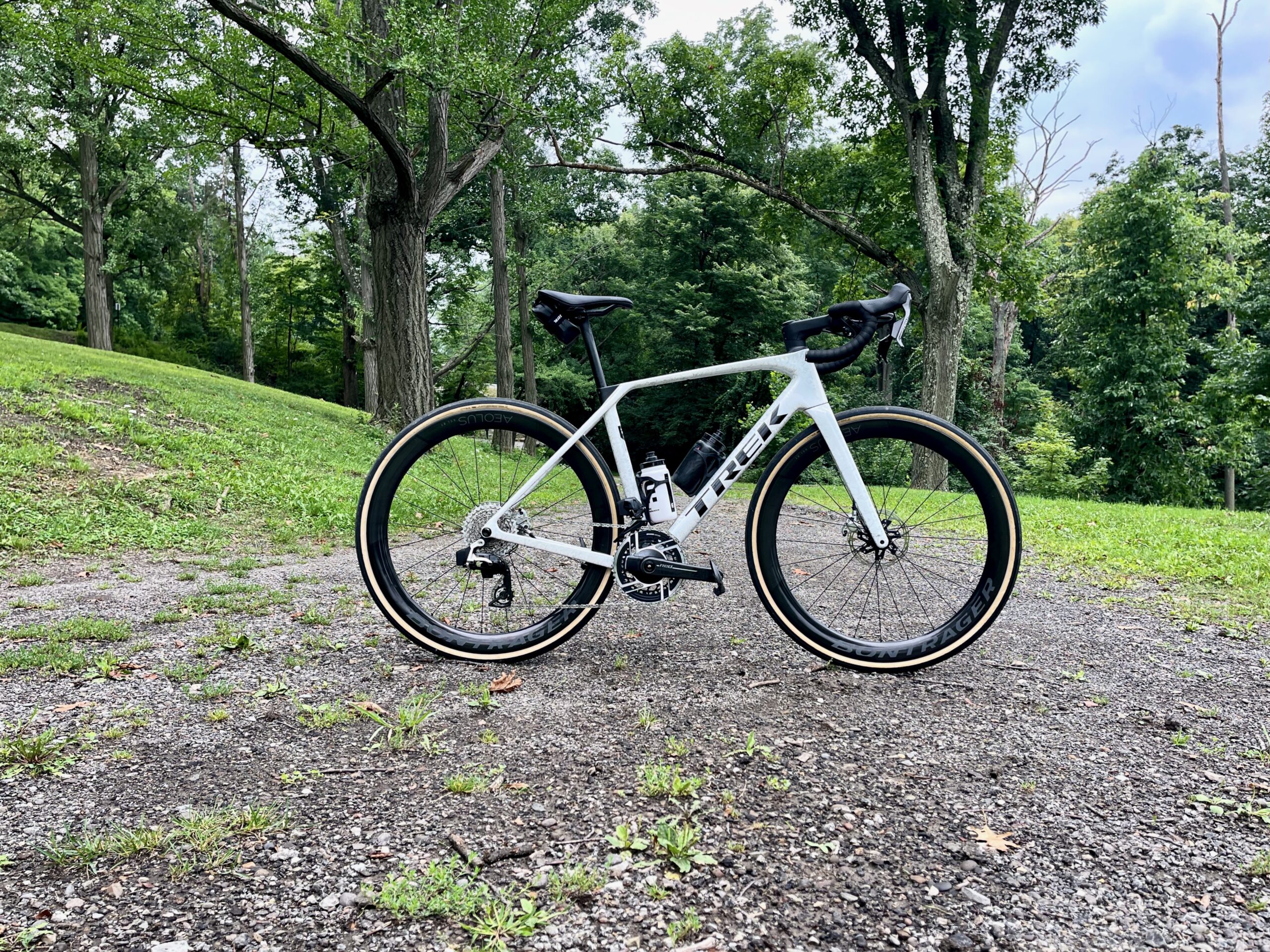
In exchange, the bike gets a simpler frame, a real weight cut, and a cleaner look. Trek says the new Domane SLR frameset is 305g lighter than the previous generation SLR frameset. Claimed weight for the SLR medium-large frame is 835g, with a 367g fork. The Domane SL frame is listed around 1055g, with a roughly 430g fork. Trek also says the lightest new build is 2.1lb lighter than the lightest previous-generation Domane build.
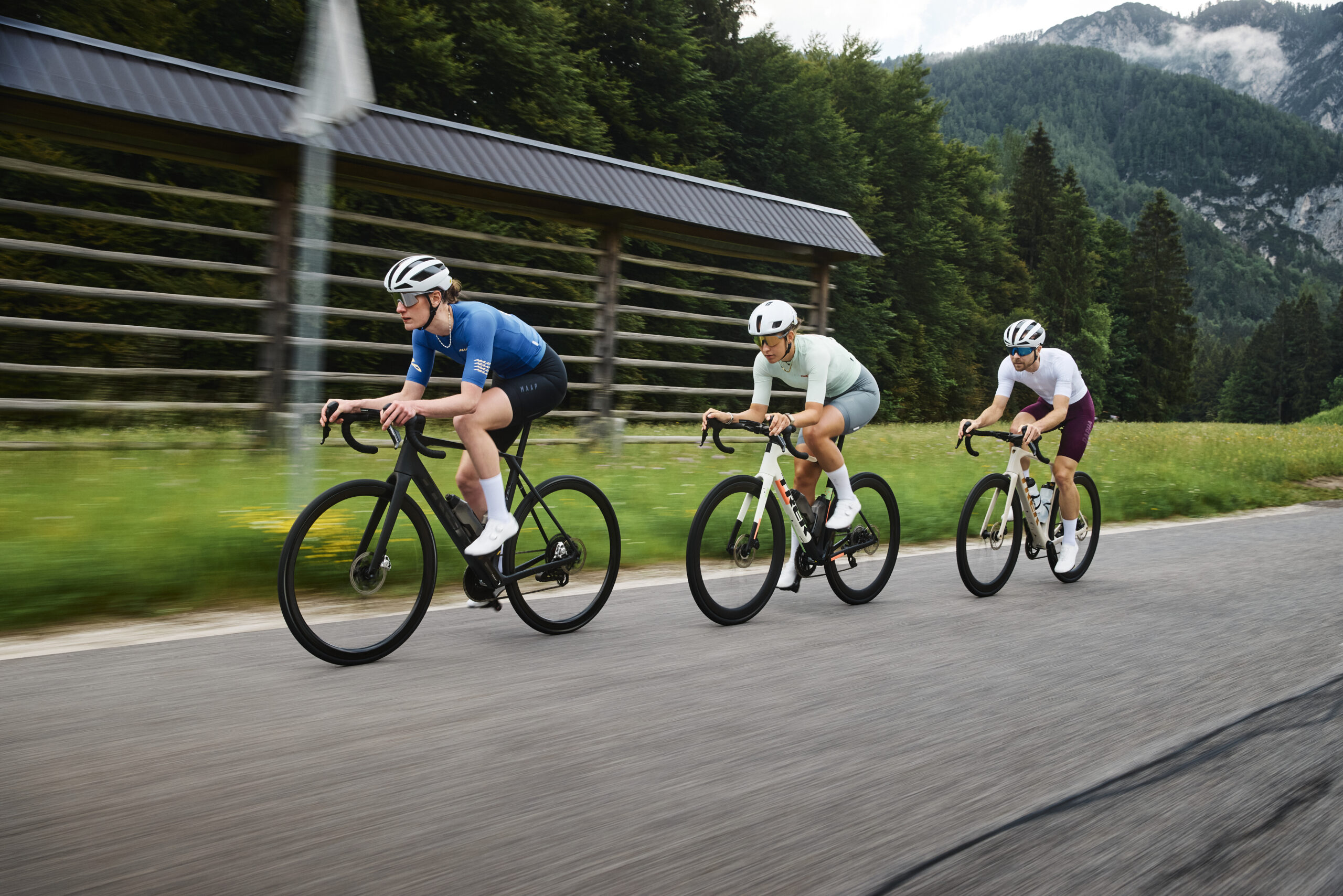 (Photo/Trek)
Let’s Talk Carbon
The Trek Domane SL models use 500 Series OCLV Carbon. SLR models move to Trek’s new 900 Series OCLV Carbon. Trek says the updated carbon frame is laid up to flex vertically for ride quality while staying stiff enough to keep the bike feeling responsive under power. (white paper)
 (Photo/Trek)
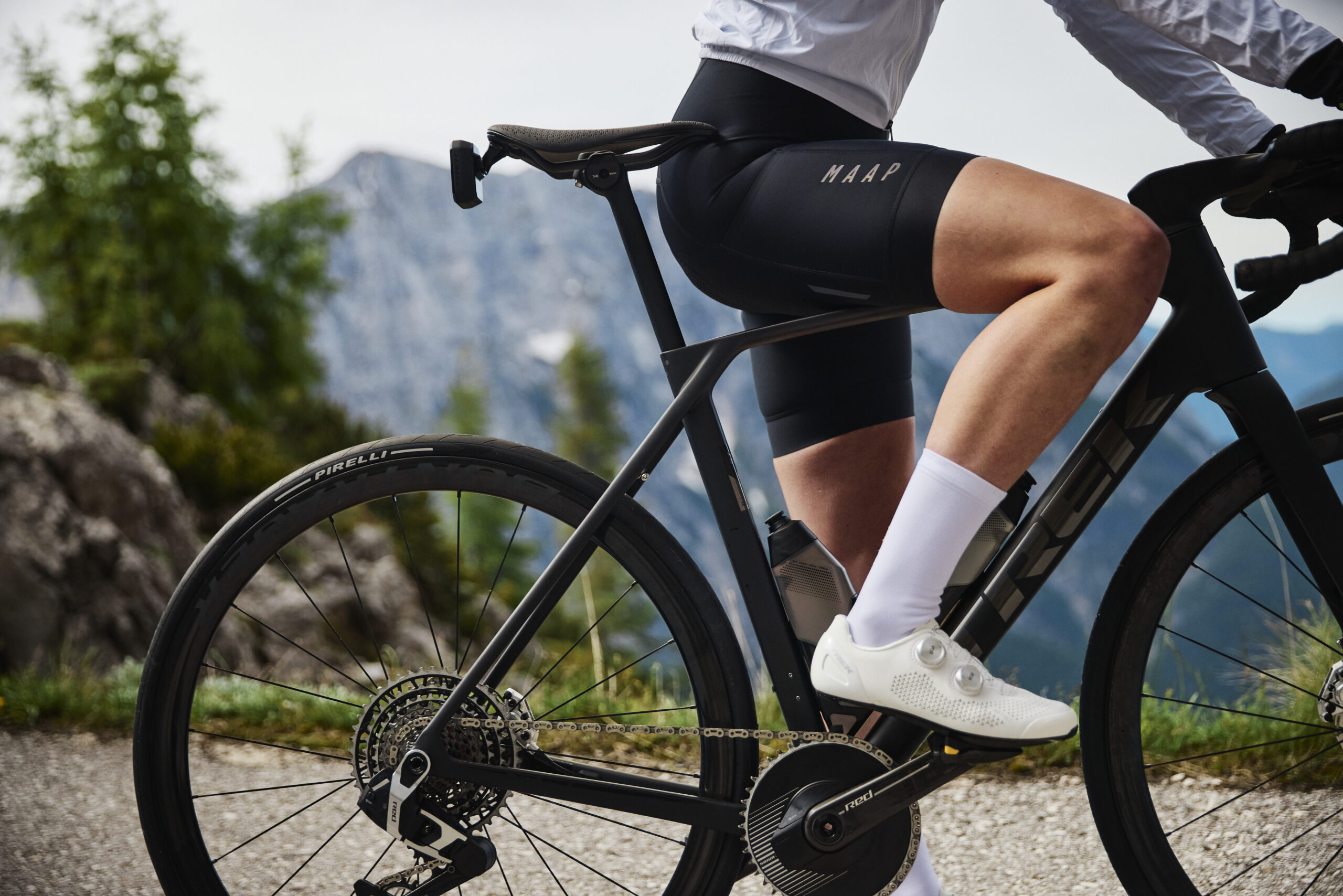
How Light Are We Talking? The lightest version is the Domane SLR 9 AXS 1x, which comes in at a claimed 6.63kg, or 14.62lb. That build gets SRAM RED AXS 1×13, an Aero RSL barstem, and Pirelli P Zero Race 28mm tires. It’s the outlier in the family, aimed at riders who want the lightest Domane possible more than the standard all-road tire setup. Personally, I would have spec’d 30mm tires, but we’re splitting hairs at this point.
 (Photo/Trek)
So, Where Did the Comfort Go?
Trek’s answer is pretty direct: tires, frame, seatpost, and fit.
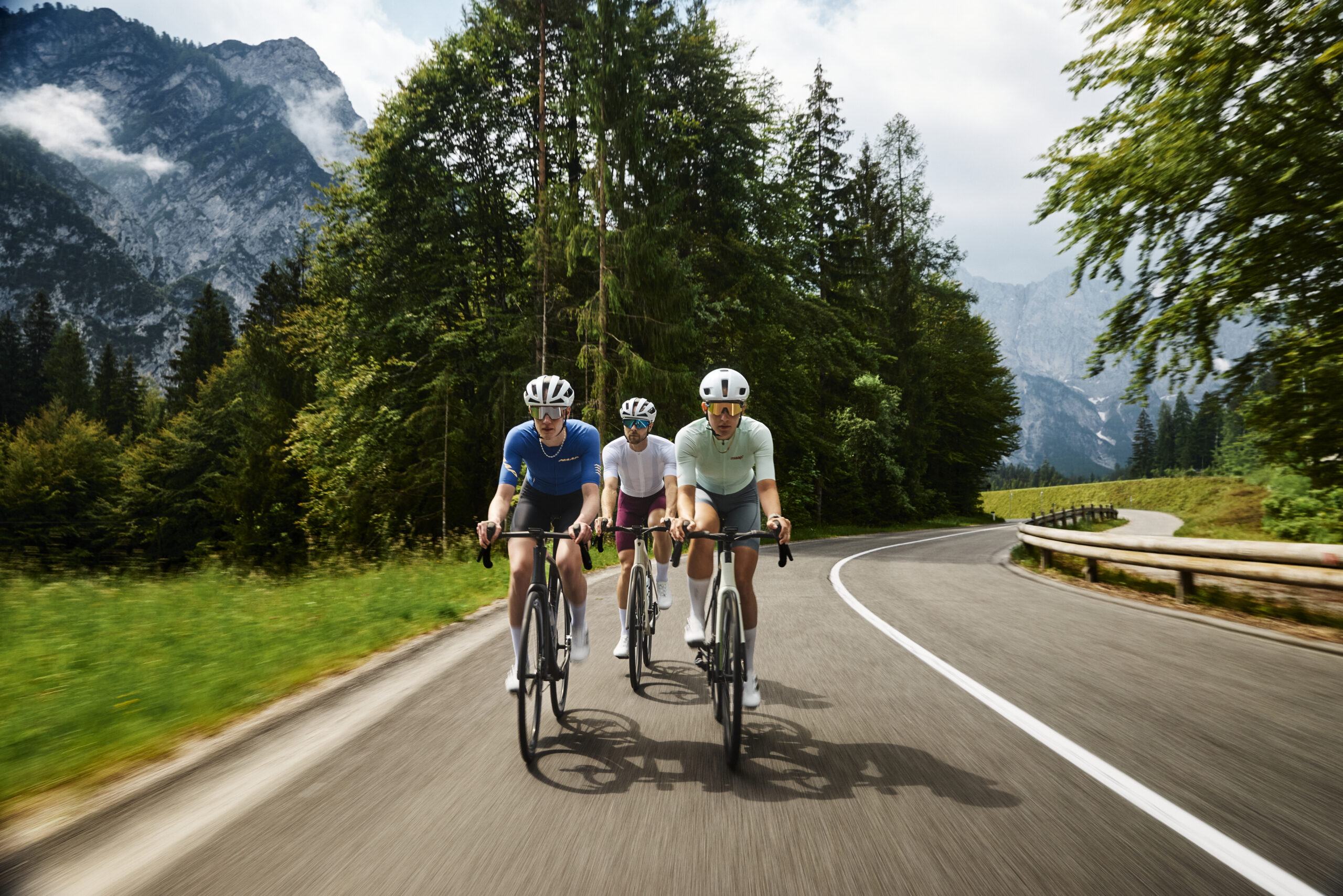
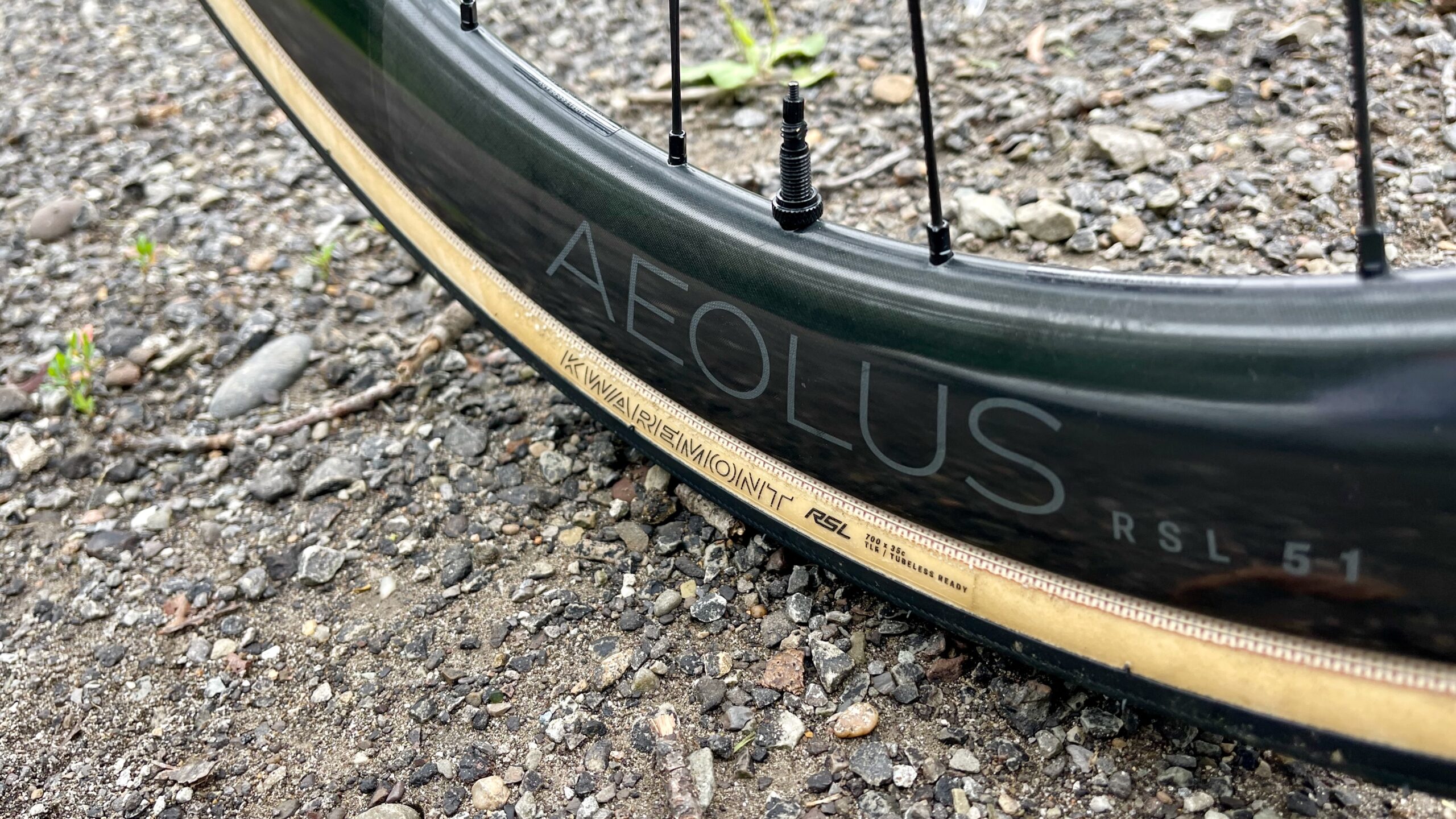
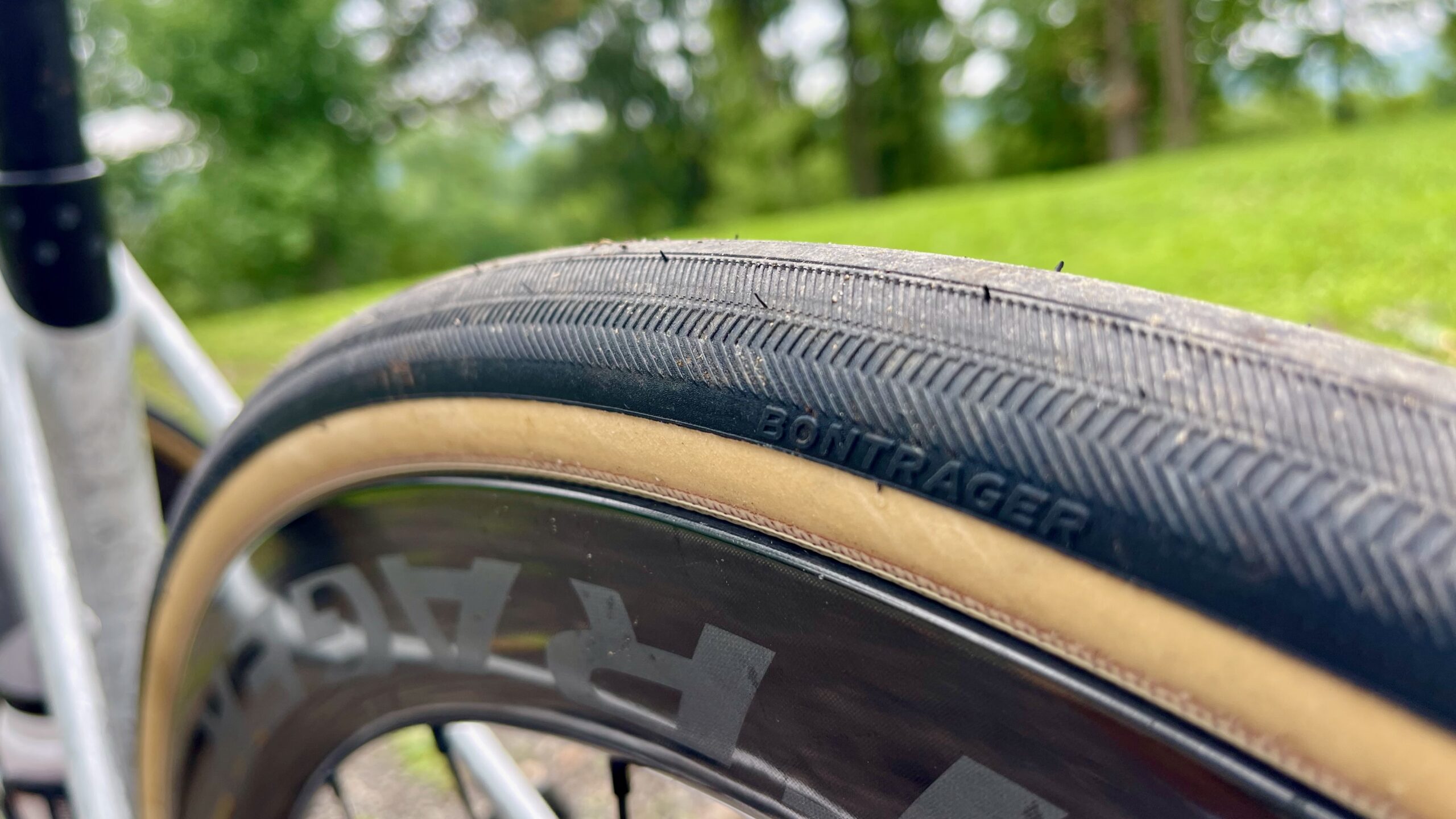
Most new Domane models come stock with 35mm tires, and the frame clears up to 40mm. That gives riders more volume, more grip, and more room to tune pressure for rough pavement or light gravel without jumping to a full gravel bike.
 (Photo/Trek)
Trek says the new bike stays within 5% of the previous generation’s vibrational energy performance when using spec tires. Trek calls this the “full-bike comfort metric”. It’s measured at the rider contact points rather than just hanging weight off a seatpost in a static test.
The Trek white paper gets into the details, but if you’re not ready to dig into that, let me paraphrase. Trek tested Gen 4 and Gen 5 Domane bikes with force-sensing saddles and handlebars. They then measured vibration transfer over a rough-surface treadmill (kinda like the one we saw for the Zipp XPLR 303 wheels). Trek says Gen 5 with 35mm tires came within 5% of Gen 4 with IsoSpeed and 32mm tires, while dropping weight and removing IsoSpeed maintenance from the frame.
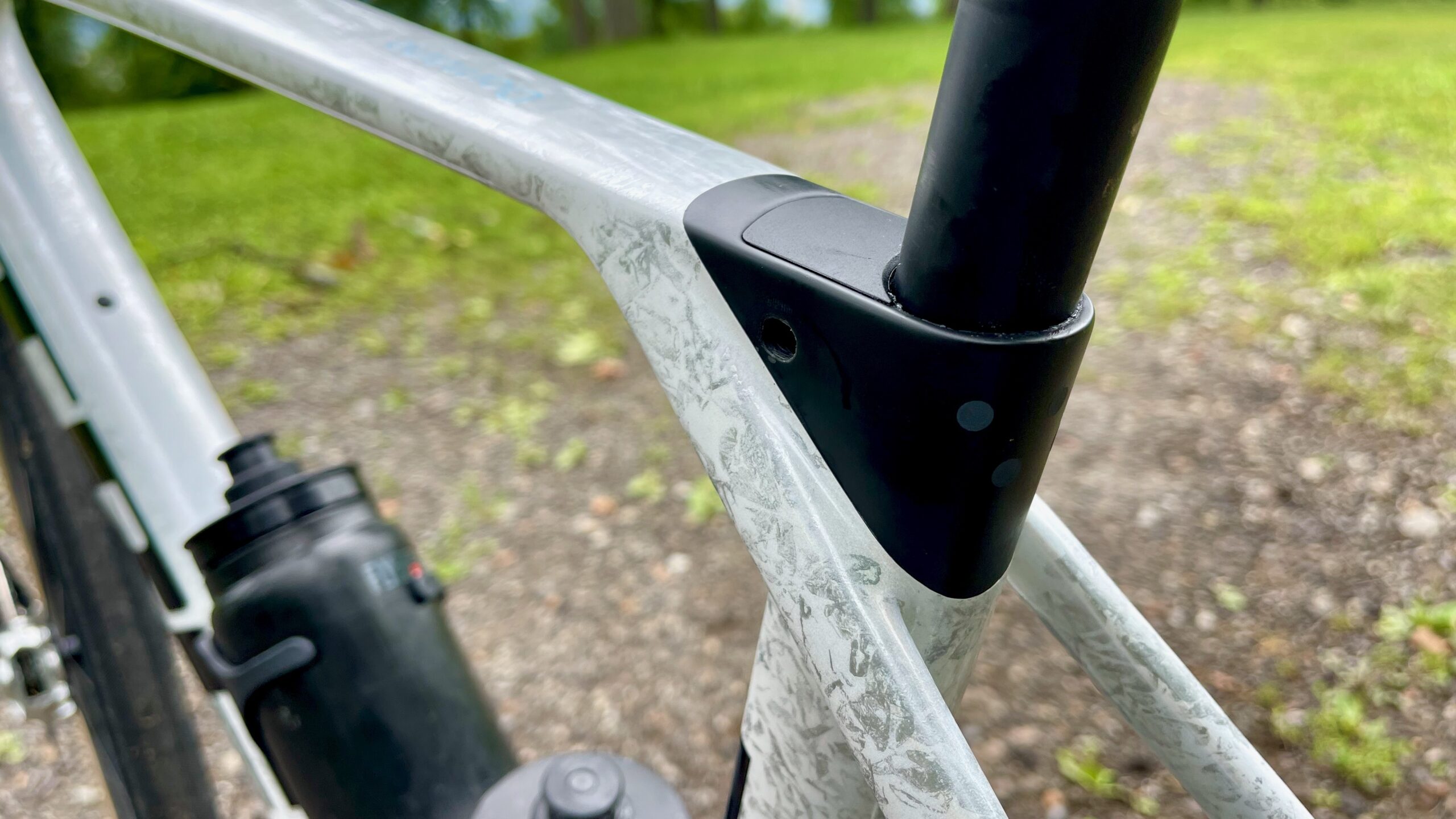
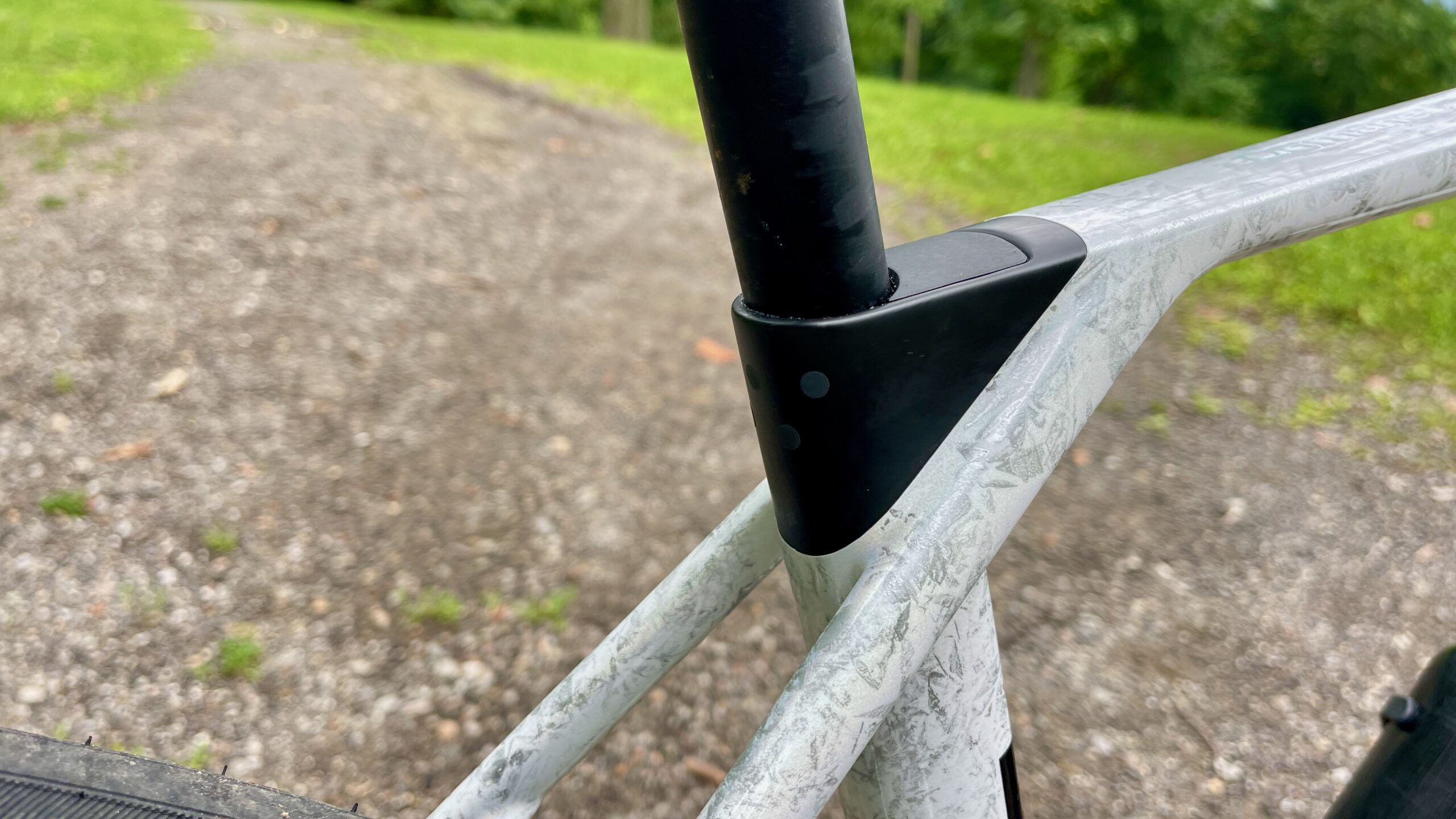
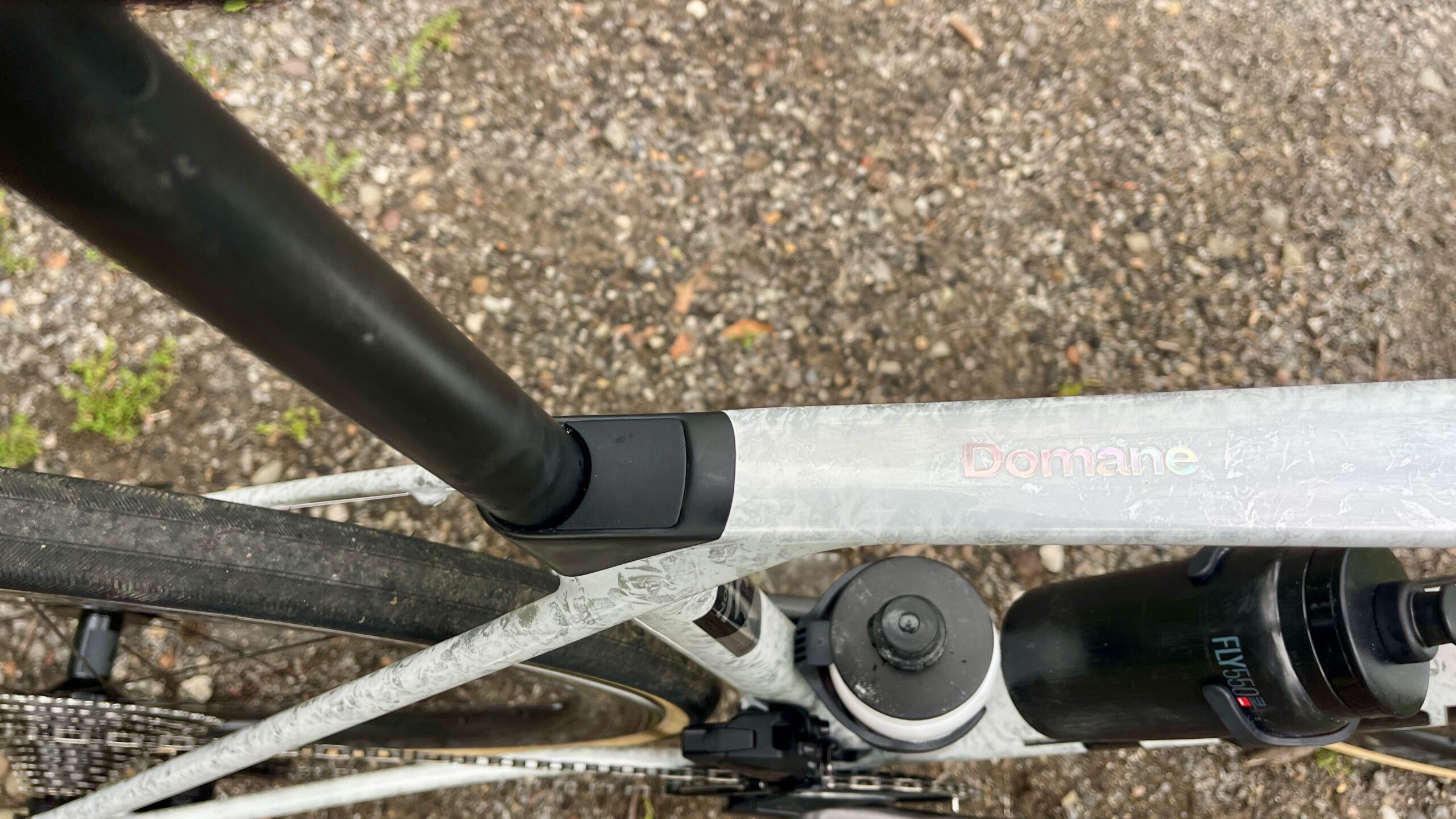
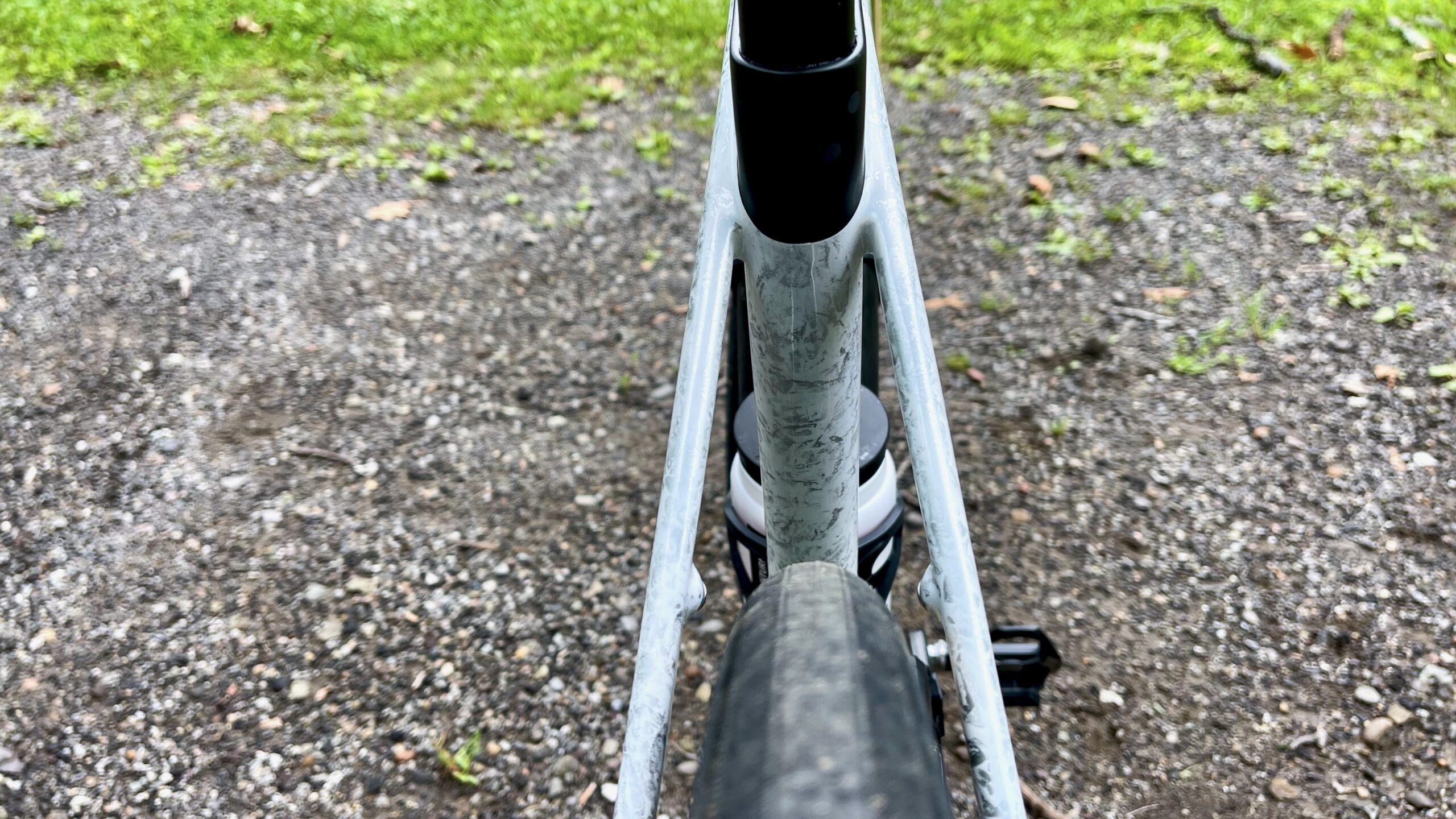
There is also a new round 27.2mm RSL seatpost. Trek says the post shape and carbon layup are tuned for vertical flex while keeping lateral stiffness. A round 27.2 post also keeps the back of the bike refreshingly normal.
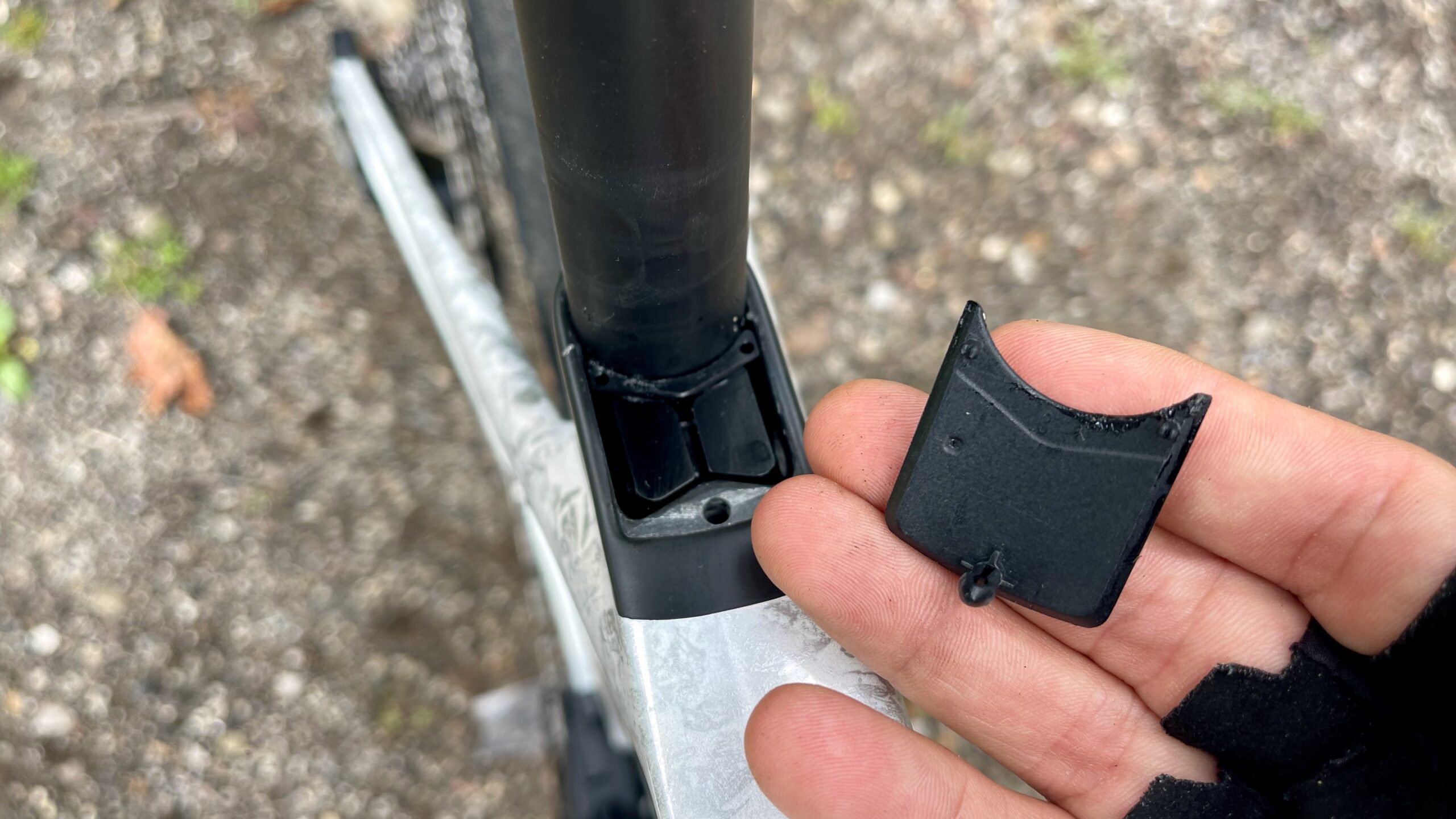
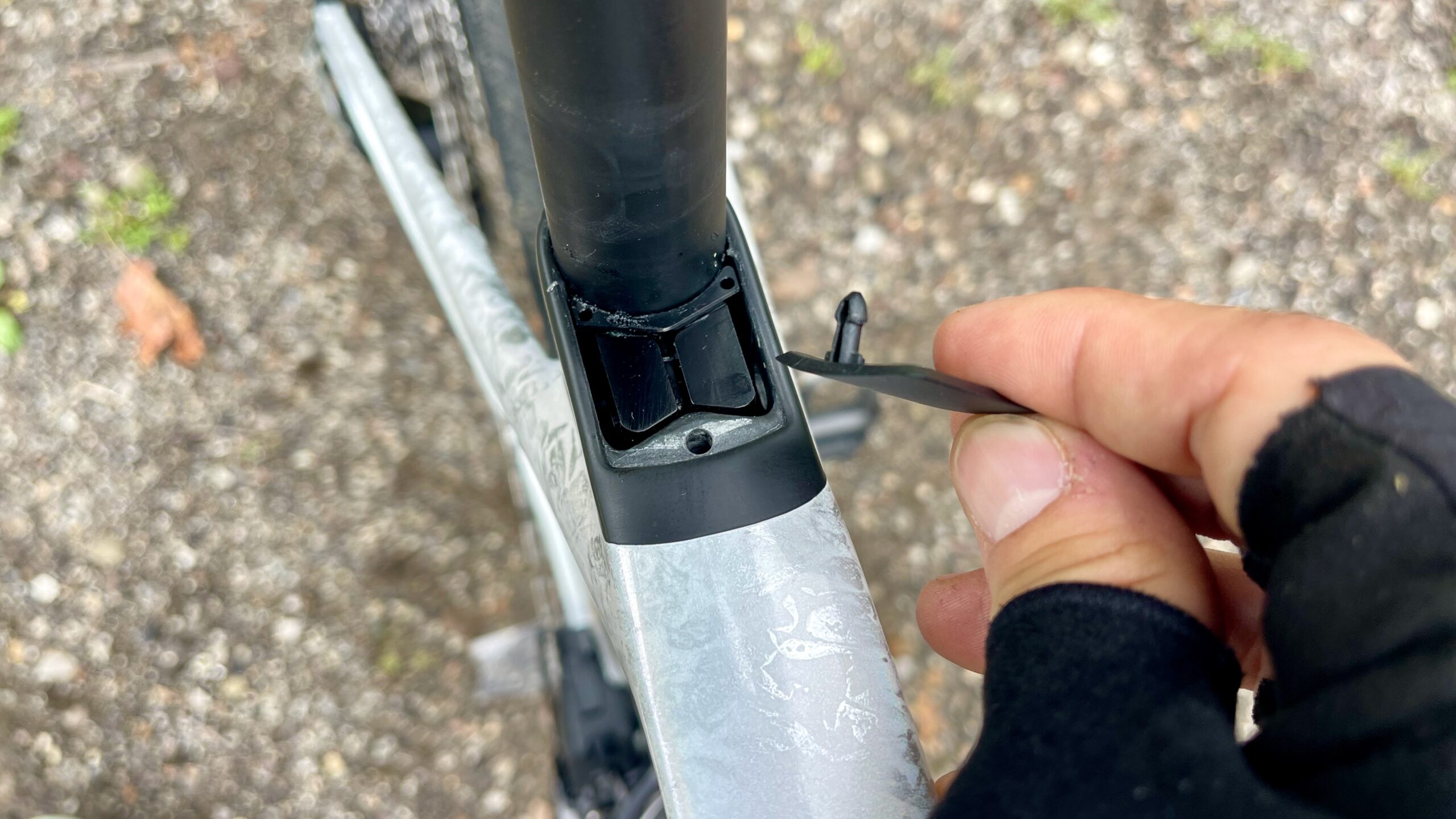
The new seatpost adds a new clamping mechanism, one that’s unique. The new seatpost clamp looks secure, but the rubber grommet protecting the internals from debris looks a bit underdressed. The only thing holding it in place is two pilot holes and a single push fitting. It doesn’t inspire confidence that it will keep up with the adverse terrain that the Domane will see. It’s a very different design from the Checkmate’s super robust design, but we can be surprised.
Bigger Tires, Same Speed Claim
A 35mm stock tire sounds like it should be slower than the older 32mm setup, at least in a straight aero argument. Trek says that is not how the full picture plays out.
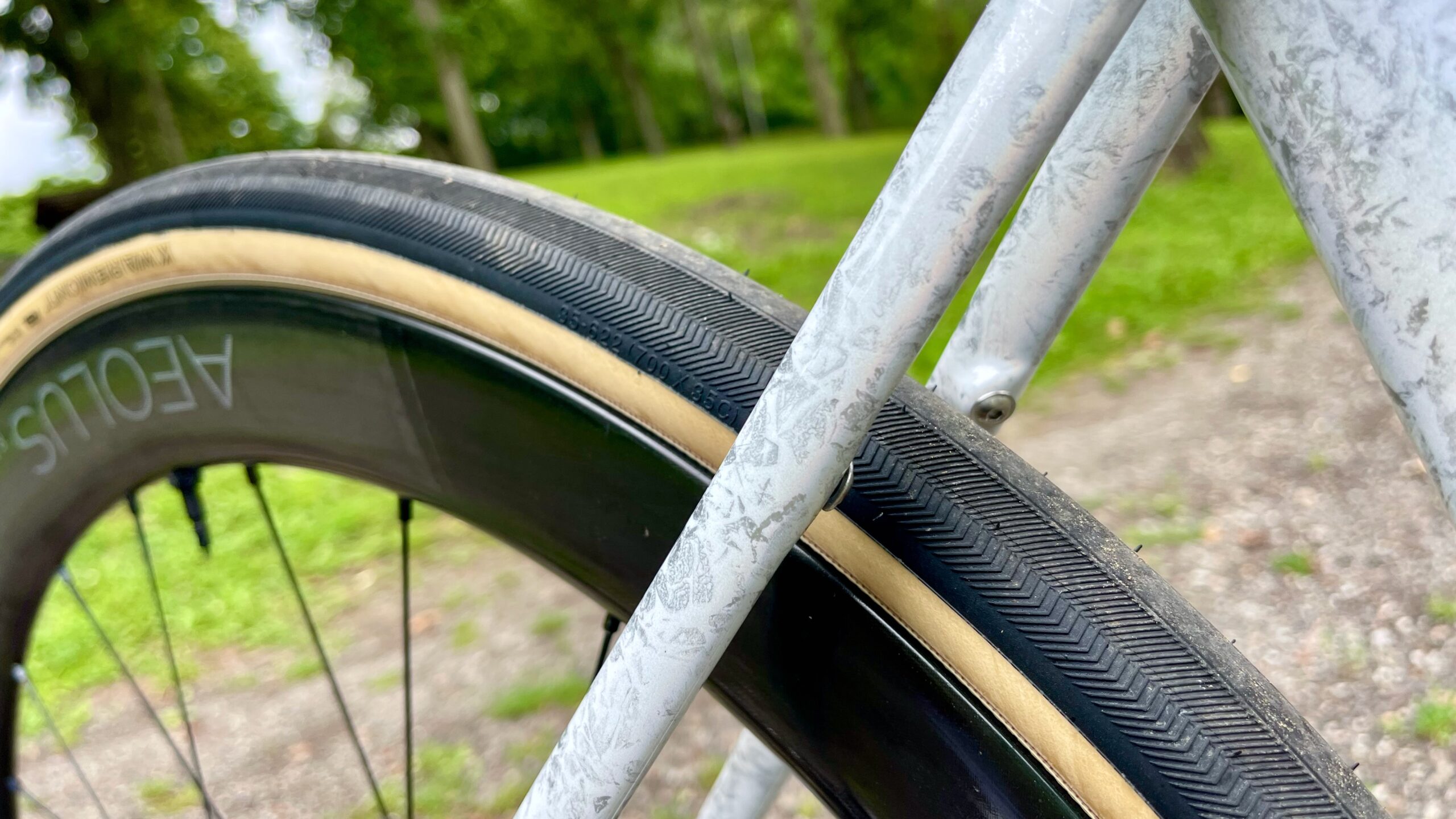
Trek says the 35mm tire setup is 0.9 watts slower aerodynamically, but 1.5 watts faster in rolling resistance when pressure is optimized for the larger tire, testing at 20mph. This data comes from Trek’s internal testing, but it’s not a new concept that the rolling savings more than cover the aero cost in the kind of riding this bike is meant for.
That feels like the right direction for Domane. It is not Trek’s pure race bike, but it’s racable for sure, and riders will want to roll fast on it.
 (Photo/Trek)
Trek Domane 5 Fit Updates
Domane keeps Trek’s Road Endurance Geometry, now across six sizes. The goal is still a more relaxed position than the Madone, with stable handling and a fit that makes sense for long days.
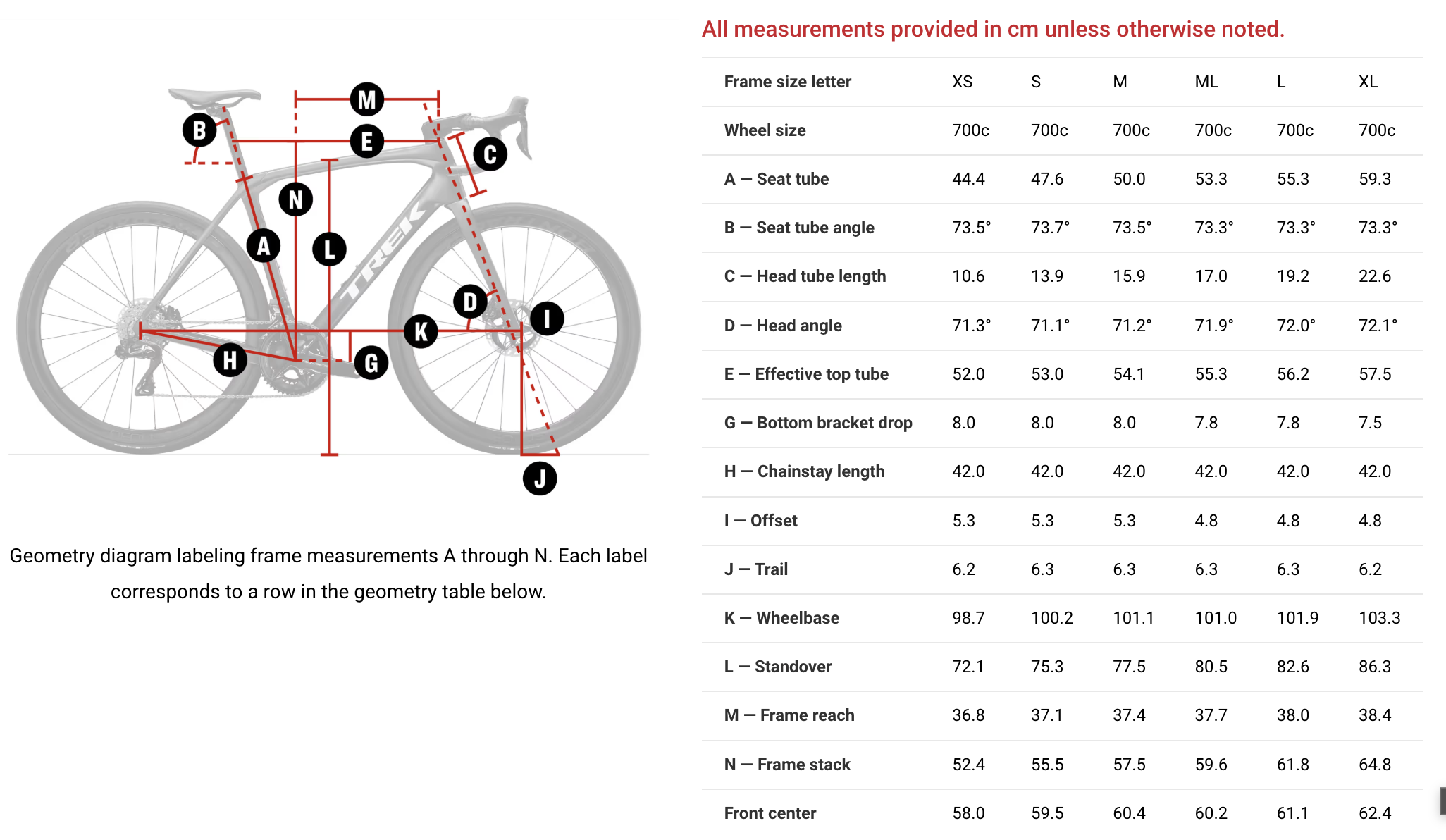 (Photo/Trek)
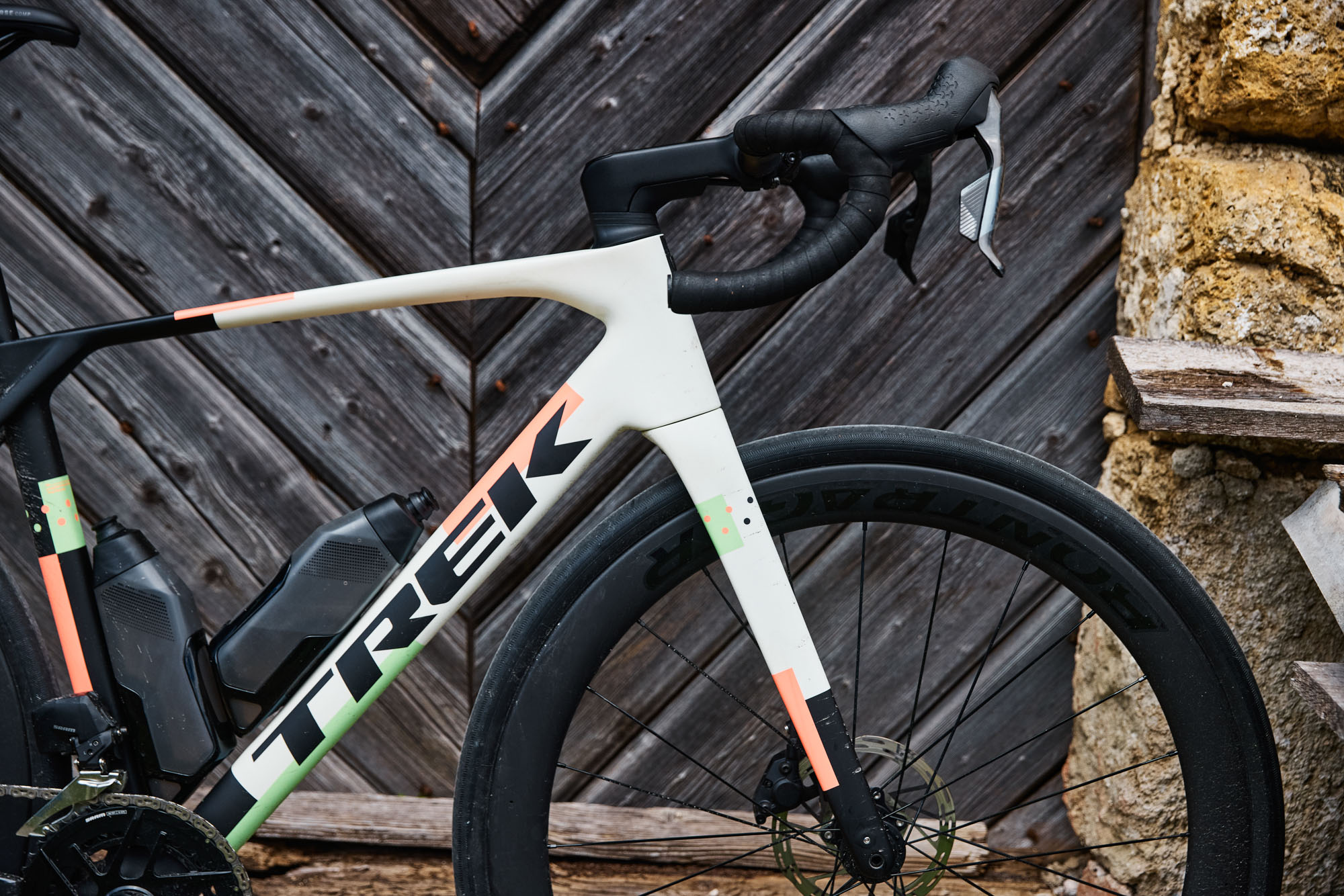
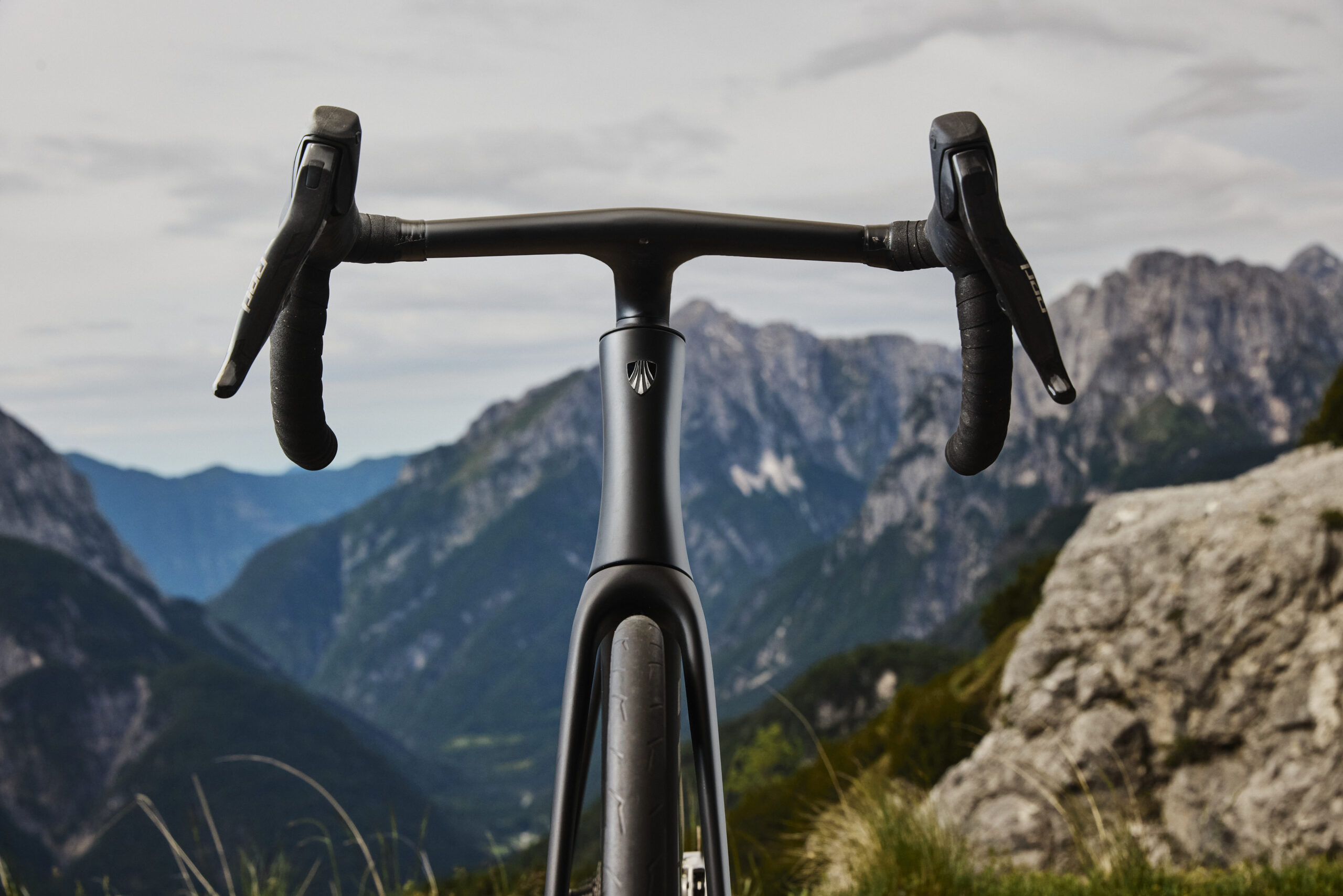
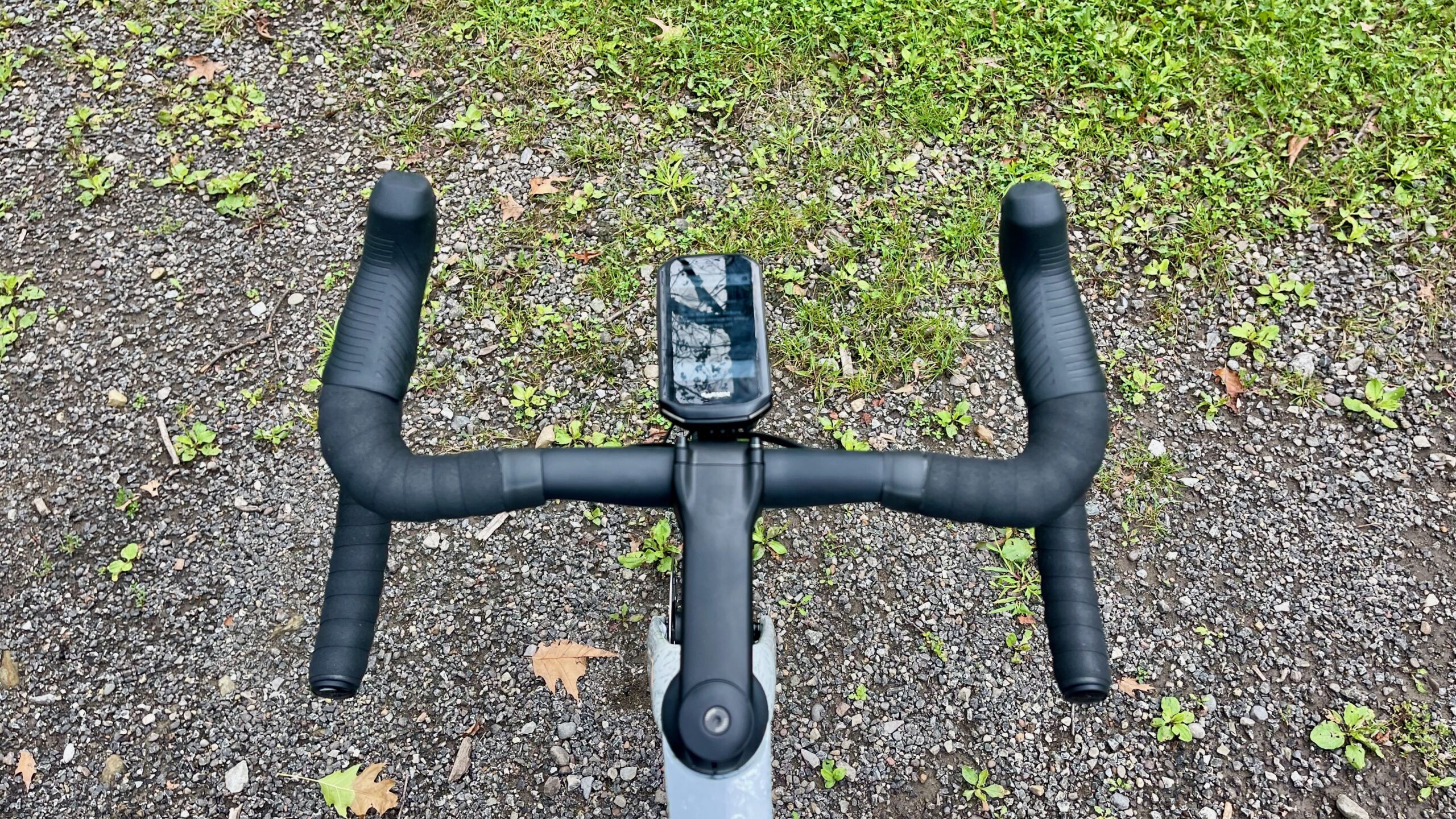
Trek also adds a new Bontrager riser bar. The bar gives 20mm of rise at the hoods, uses backsweep for a better tops position, and keeps 4cm between the hoods and drops for control. The Pro version adds IsoZone pads for extra hand comfort. Crank lengths also move shorter. XS and S get 160mm cranks, M and ML get 165mm, and L and XL get 170mm. The Domane SL 4 is the exception.
The Practical Stuff
This is where the new Domane still feels like the Domane we’ve known for years. The one that you see on the rails-to-trails, the long exploration rides, and the one bike that can do most.
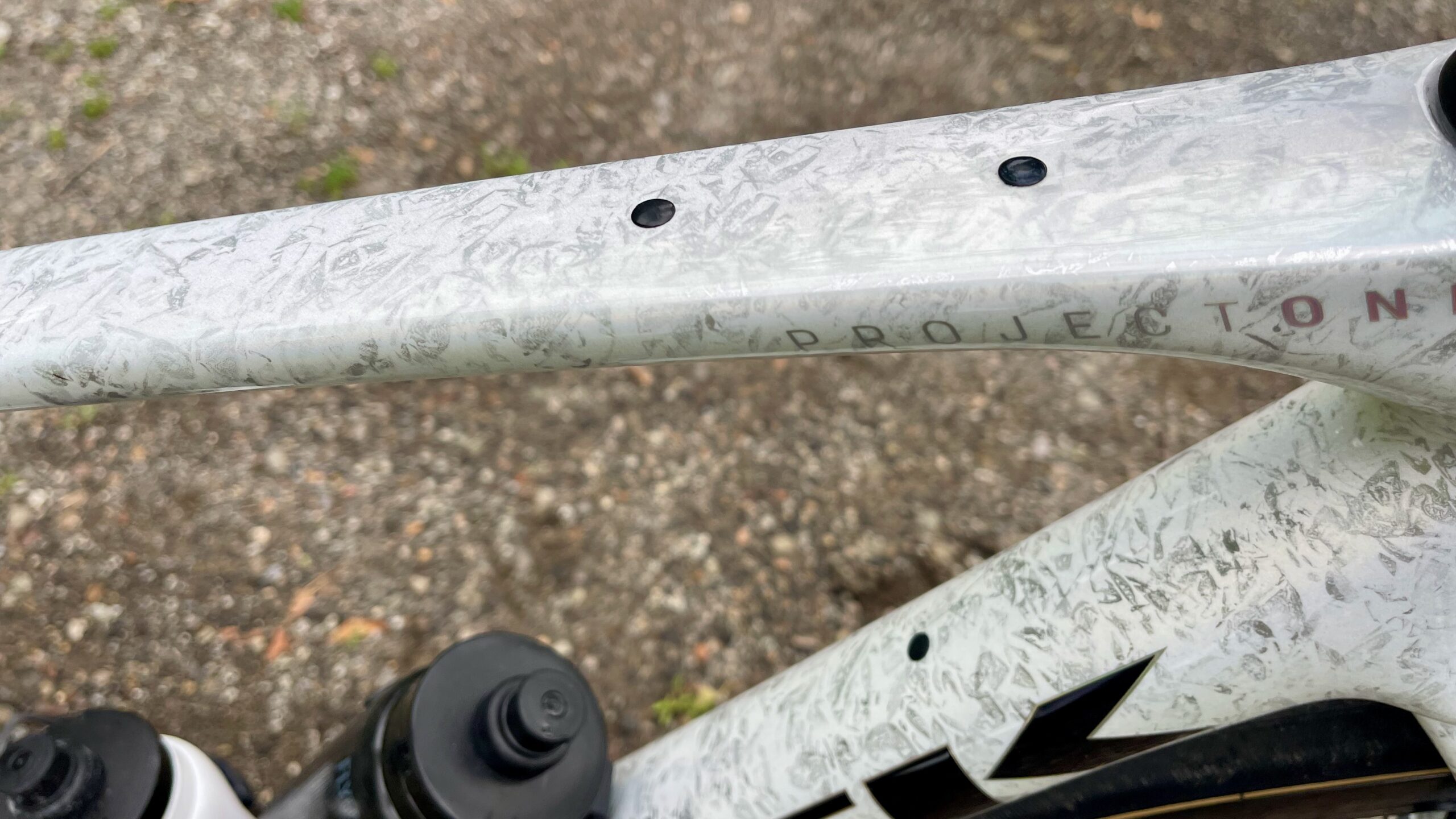
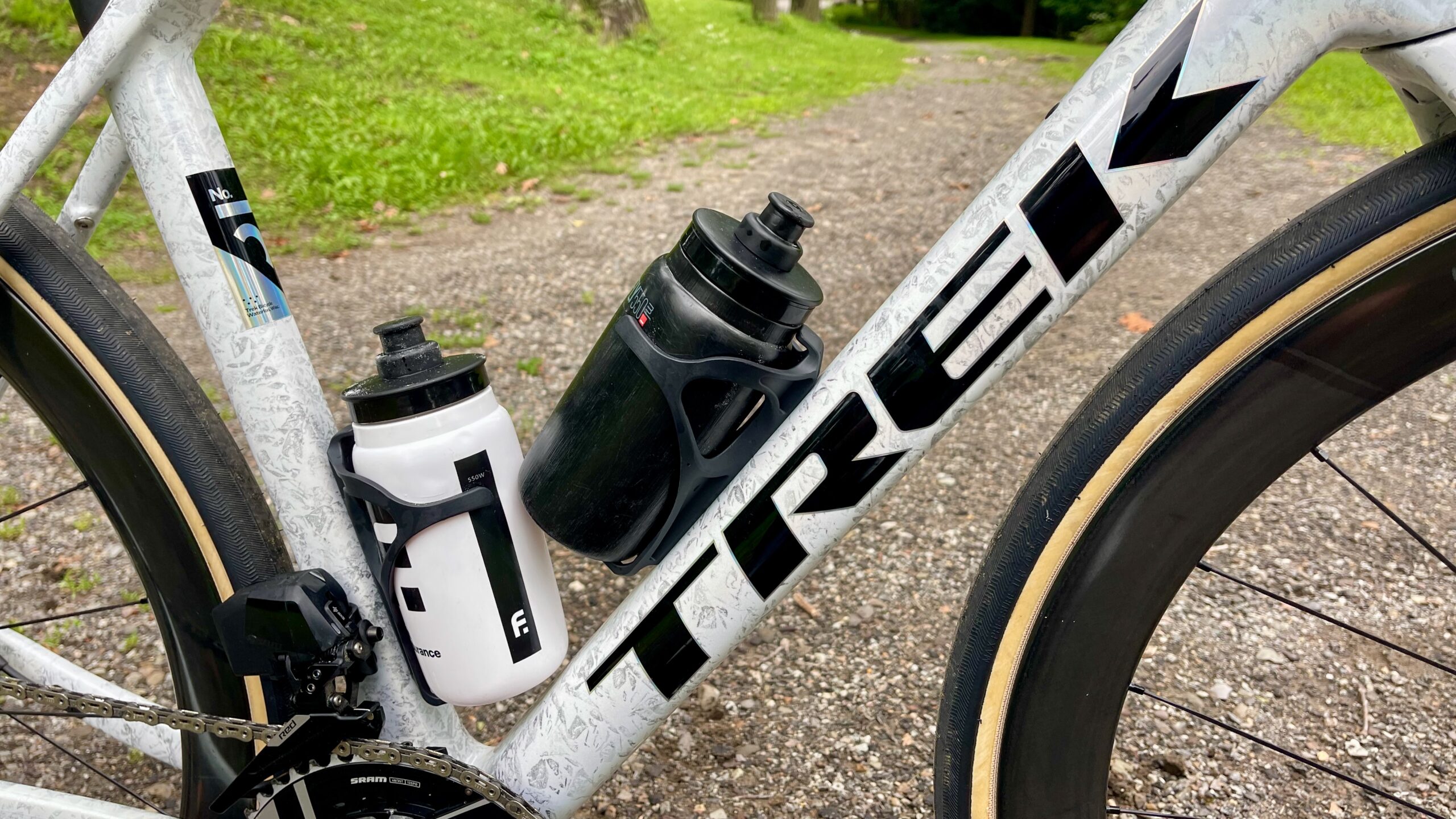
Trek adds more storage, with a top tube bag and triangle bag mounts. Other accessory mounts still exist, with hidden fender mounts for full fender access. Other not super exciting (but very needed) updates include UDH, Switch Pro thru-axles, a T47 threaded bottom bracket, a removable front derailleur mount with chaincatcher, RCS Headset System, and aero bottle compatibility.
It is a clean-looking road bike, but not a fragile, one-purpose road bike. You can build it light, build it with bigger tires, add fenders, strap on bags, or take it into Project One and make it as calm or loud as you want.
 (Photo/Trek)
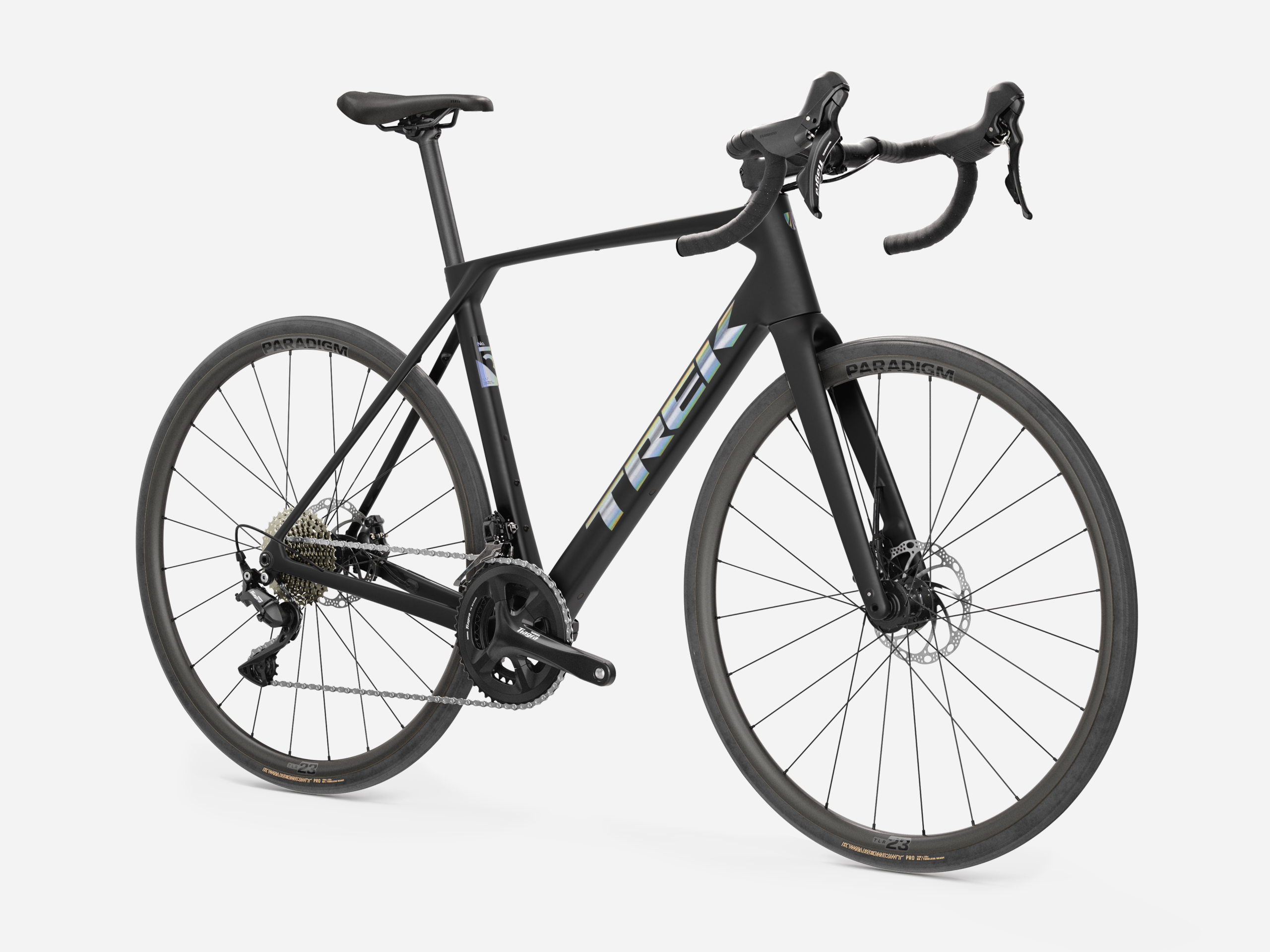
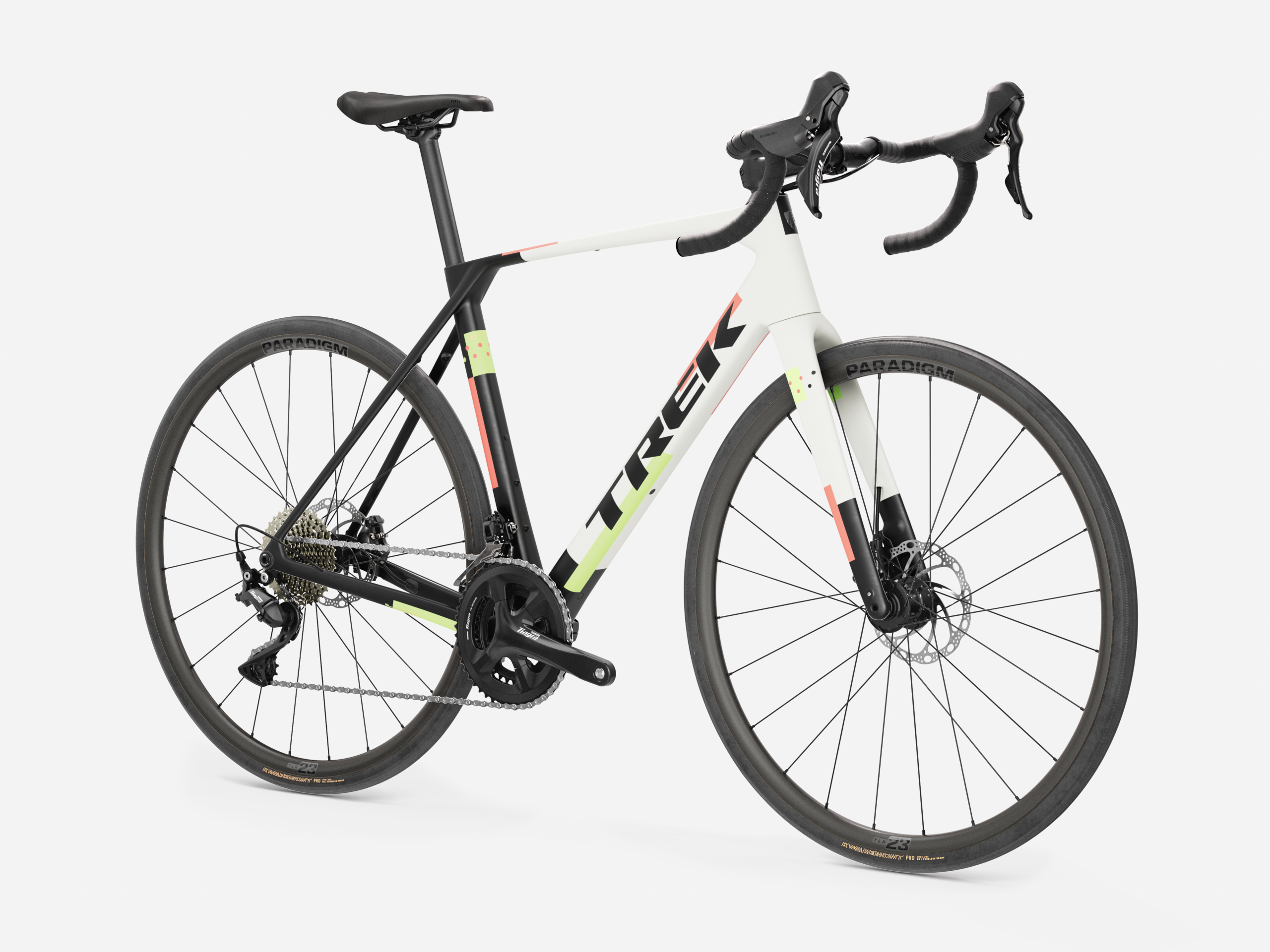
Trek Domane – Models and Pricing
The Domane Carbon lineup is split into SL and SLR.
What’s the difference? The SL line uses 500 Series OCLV Carbon and starts at a much more approachable price than most premium carbon endurance bikes. Models start at $2,399.99 and go all the way up from there. The Trek Domane SLR bikes use 900 Series OCLV Carbon and higher-end builds, starting at $7,999.99.
 (Photo/Trek)
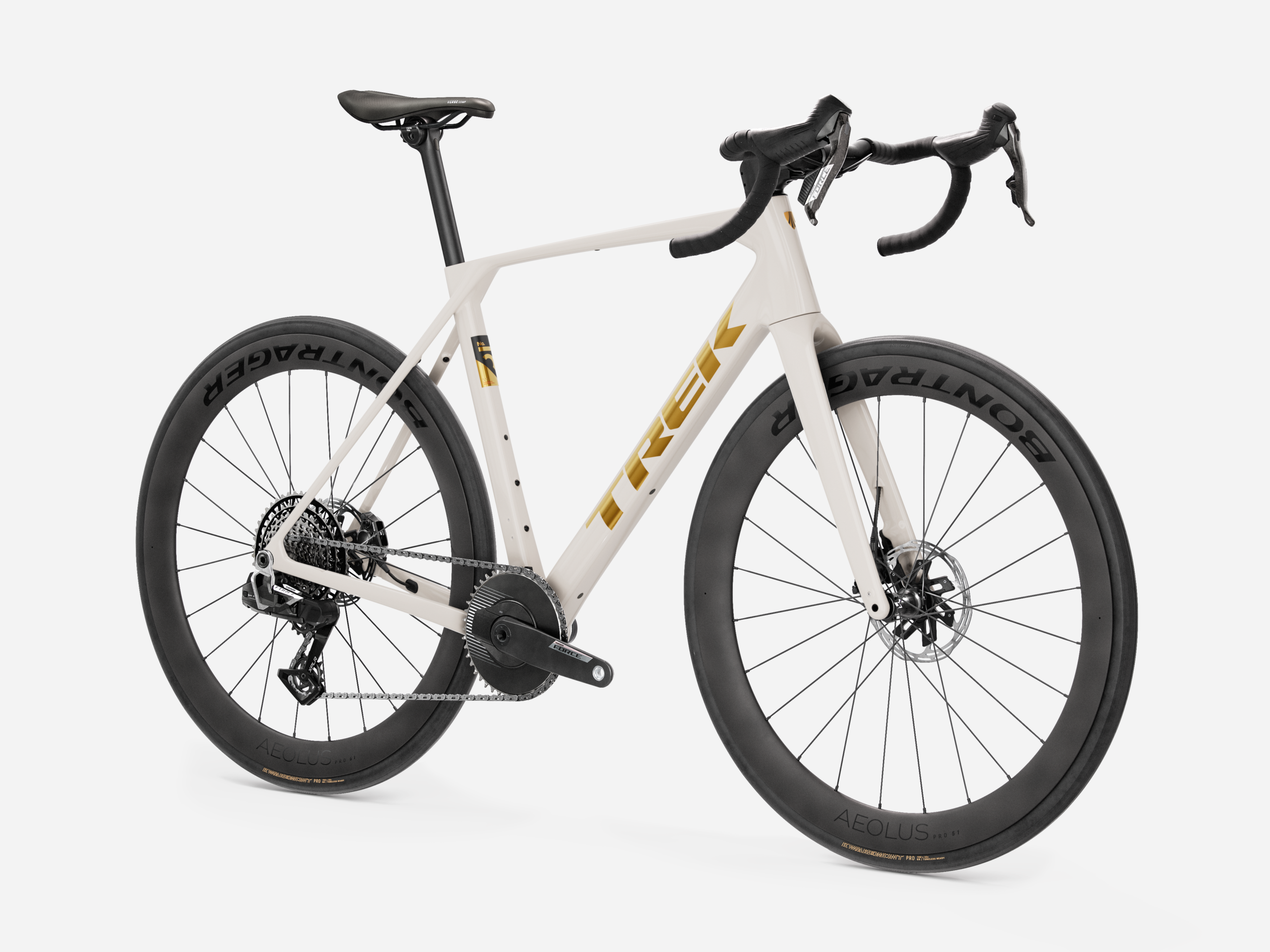
Trek Domane SL
- Domane SL 4 gets Shimano Tiagra 2x and starts at $2,399.99. It is not available in Europe.
- Domane SL 5 gets Shimano 105 2x at $2,699.99 / €2,499.
- Domane SL 6 AXS moves to SRAM Rival AXS 2x at $4,199.99 / €3,999.
- Domane SL 7 AXS 1x gets SRAM Force XPLR 1x with a power meter at $6,499.99 / €4,999.
 (Photo/Trek)
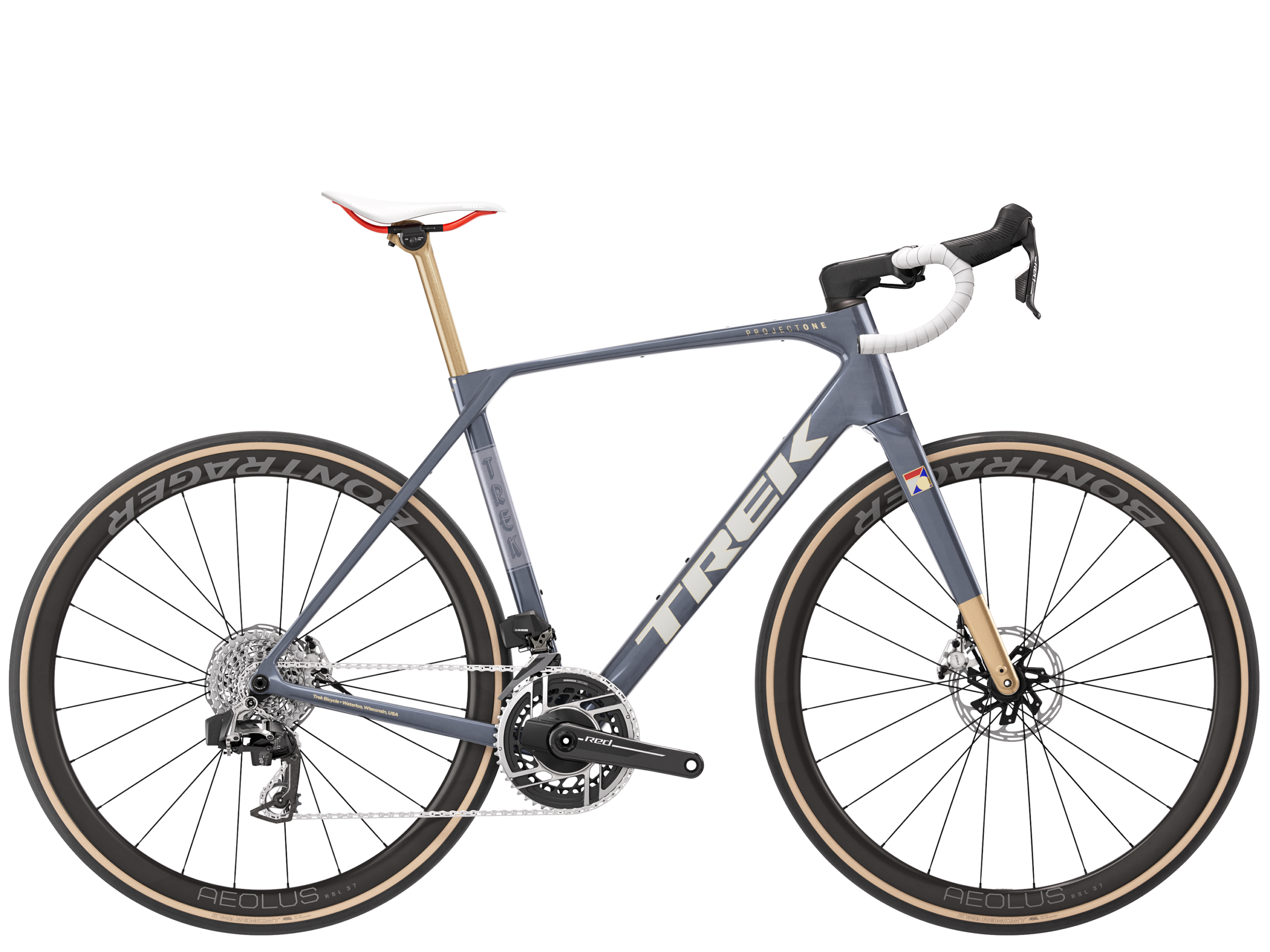
Trek Domane SLR
- Domane SLR 7 comes with Shimano Ultegra Di2 2x at $7,999.99 / €6,999.
- Domane SLR 7 AXS gets SRAM Force AXS 2x at $8,499.99 / €7,499.
- Domane SLR 9 gets Shimano Dura-Ace Di2 2x for $10,999.99 / €9,999.
- Domane SLR 9 AXS comes with SRAM RED AXS 2x at $11,499.99 / €10,499.
- Domane SLR 9 AXS 1x gets SRAM RED XPLR 1x at $11,499.99 / €10,499.
There is also a Project One ICON No. 76 edition, limited to 124 bikes worldwide. The scheme brings back Trek’s original logoset and heritage blue as part of the brand’s 50th anniversary celebration. It is available only on the Domane SLR 9 AXS platform and costs $14,999 / €12,999.
Project One Domane SLR also gets custom paint and parts options, including bar width, stem length, crank length, wheel choice, and thousands of hand-painted color options.
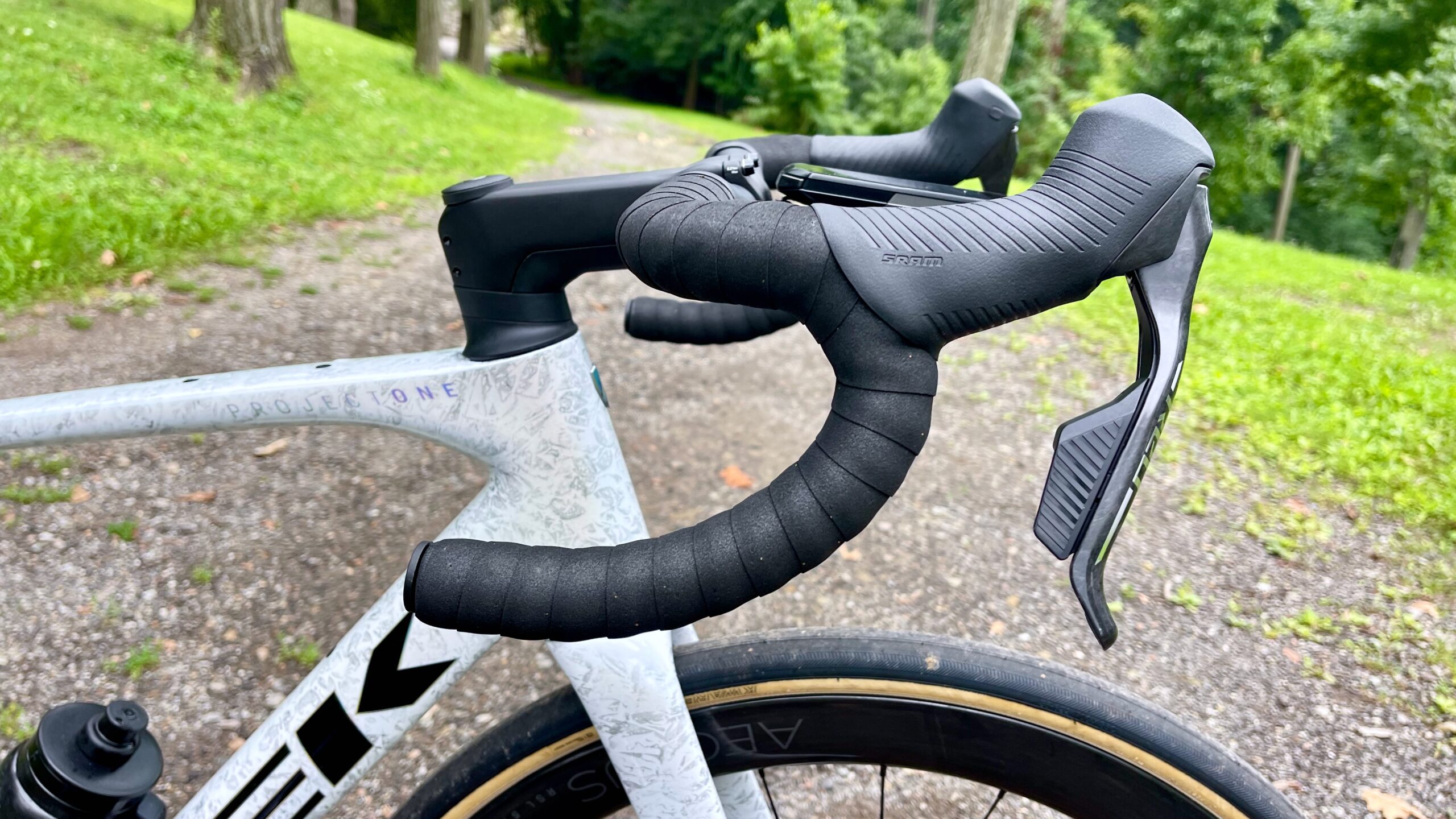
First Ride Impressions
We were lucky enough to get a sneak peek of the new Domane SLR 9 AXS before the launch. I arrived just in time to get a solid impression of the updated platform and some ideas about its capability.
Sizing can be a bit challenging if you’re used to the older Trek sizing, before they went for the T-shirt style. I’m 5’10” and fit well on the M (not the ML) and can mimic my road fit with a 120mm stem and some fit wizardry. If you’re in between sizes or you have specific fit needs, I suggest getting to a Trek dealer, test riding between two sizes, and seeing what works best for your needs. Because six sizes can be slightly confusing, and the upright nature of the geo (and new Bontrager riser bar) can feel slightly short and/or tall for some.
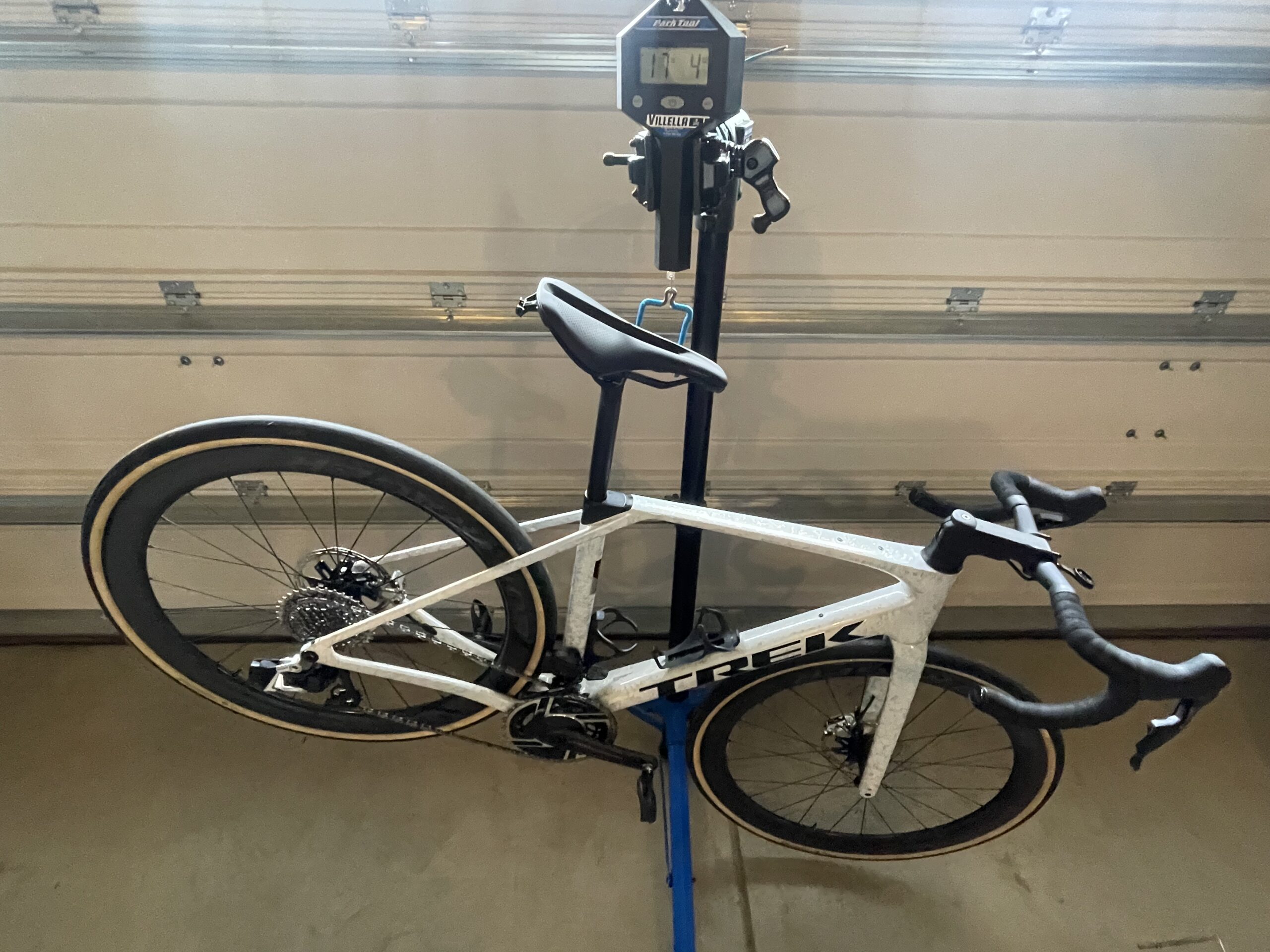
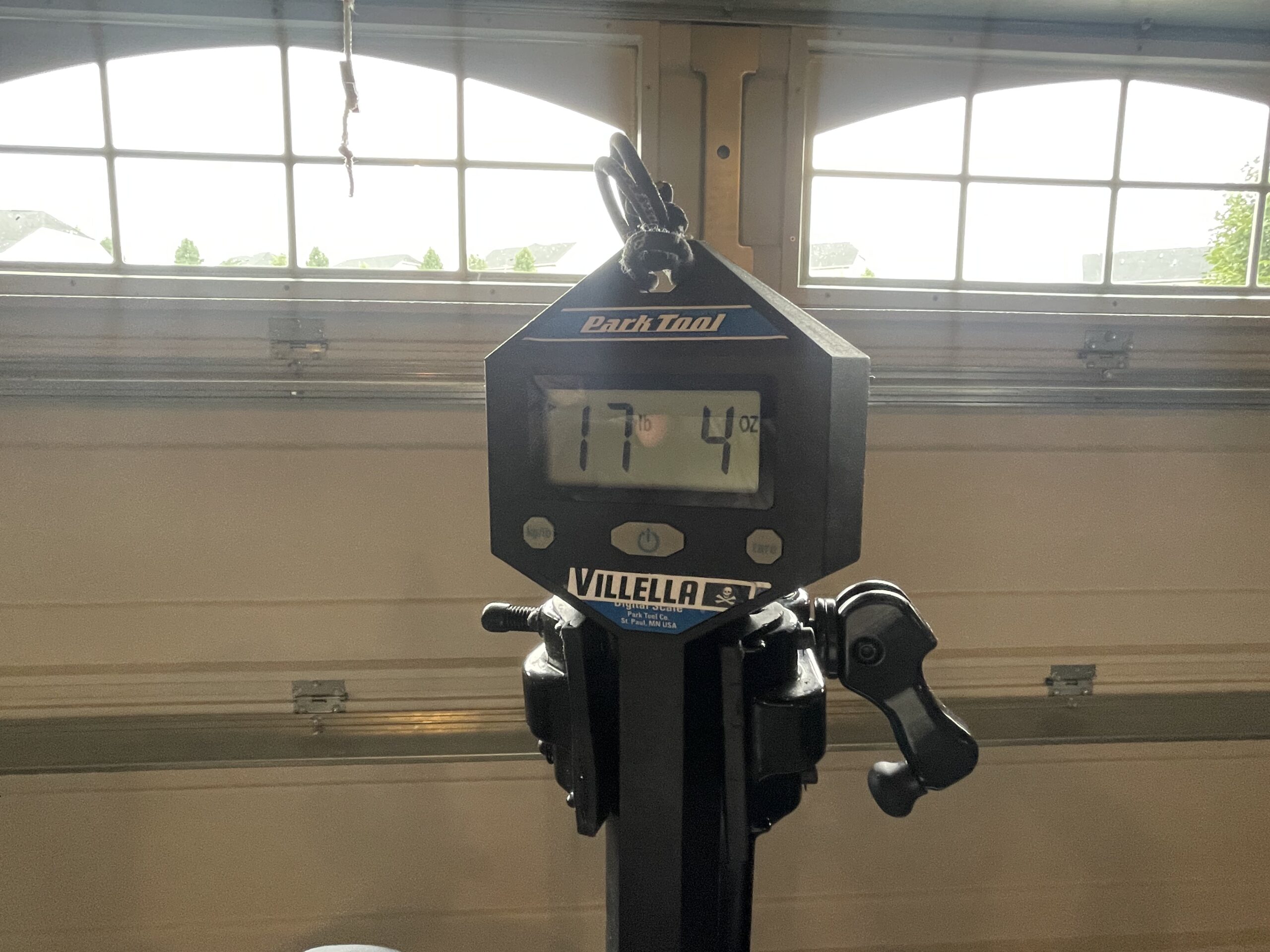
Weight-wise, our review ride weighs in at a respectable 17.04lbs with Dura Ace pedals, cages, and Bontrager computer mounts.
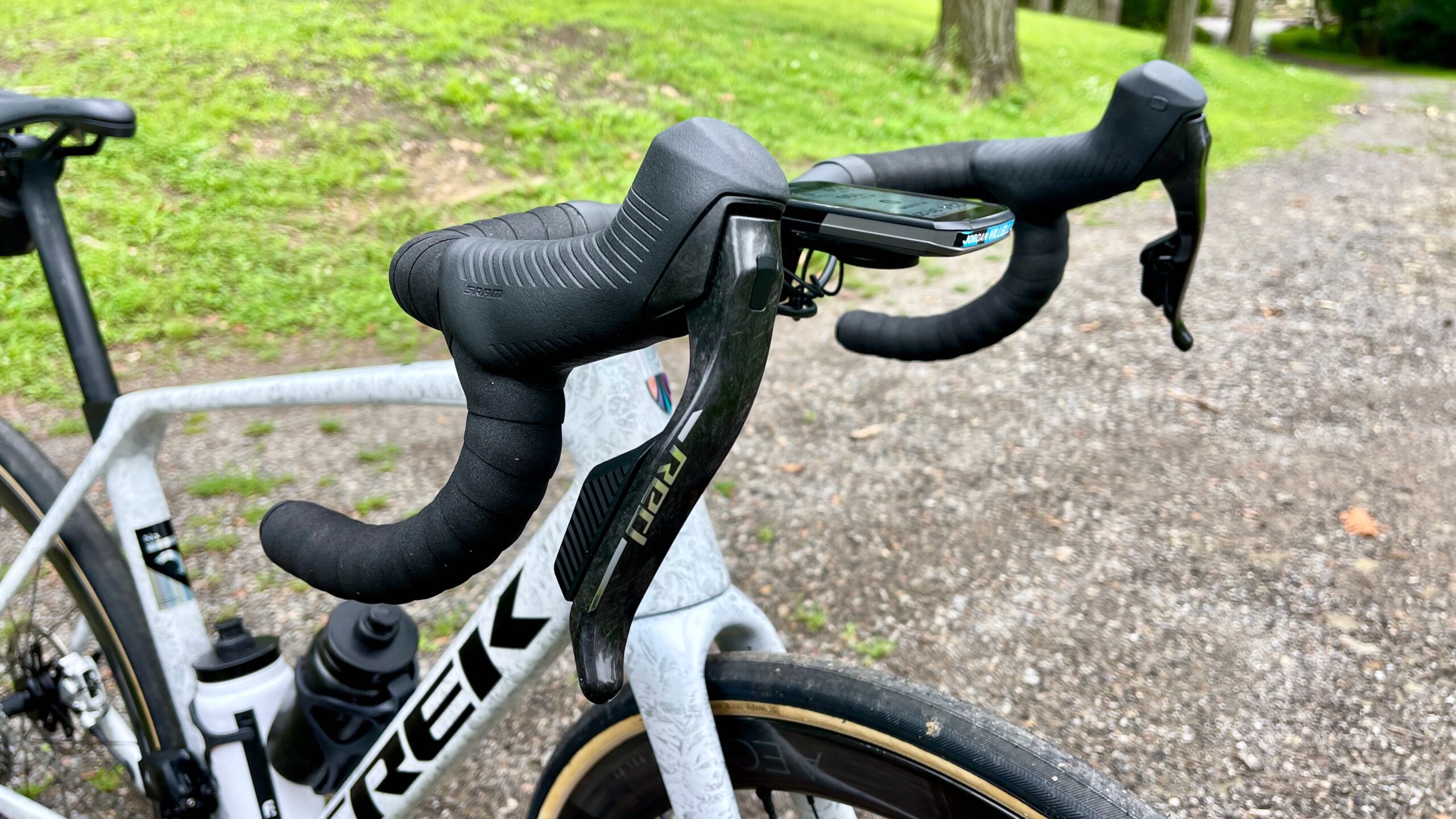
Race Bike Feel
Out of the box, the bike is stunning; it’s a huge improvement in terms of look over the past models of the Domane. From the headtube to the new toptube/seat tube junction, the bike looks elegant and strong.
Our review ride has a Project One paint job, and it sticks out, but not too much. It’s just enough to signal “this is a cool bike” but not the “it’s faster than the rider” kinda look.
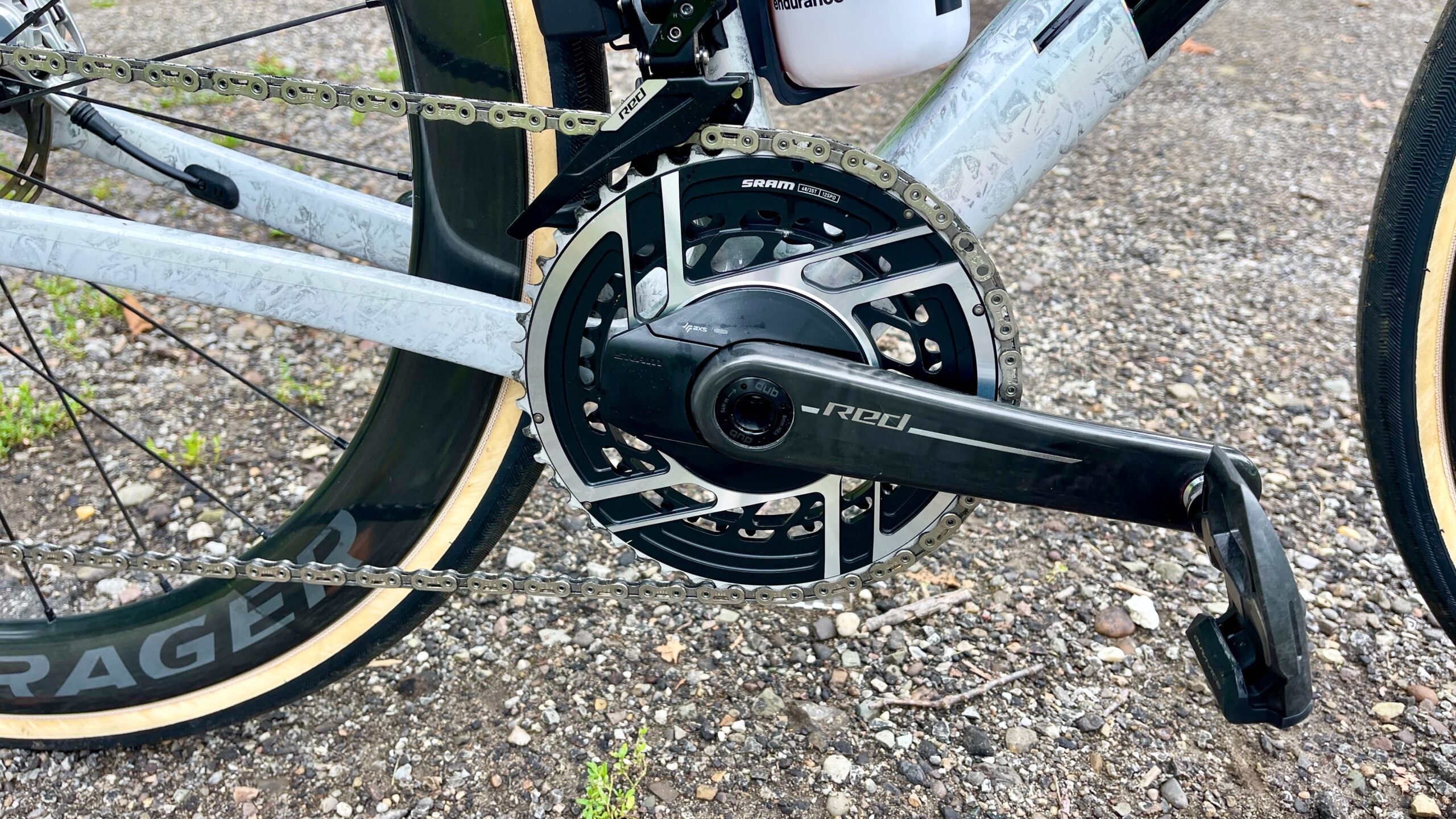
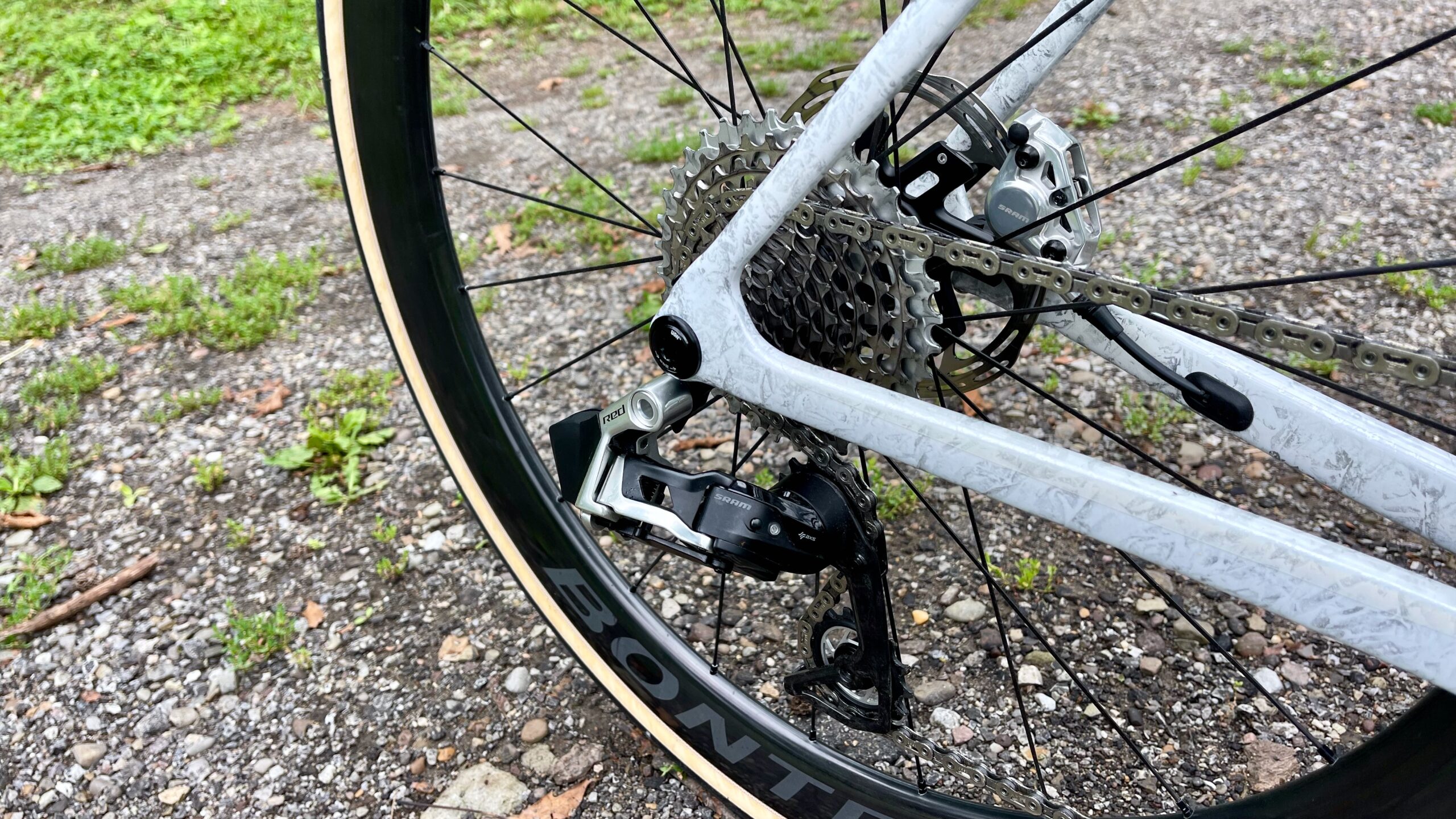
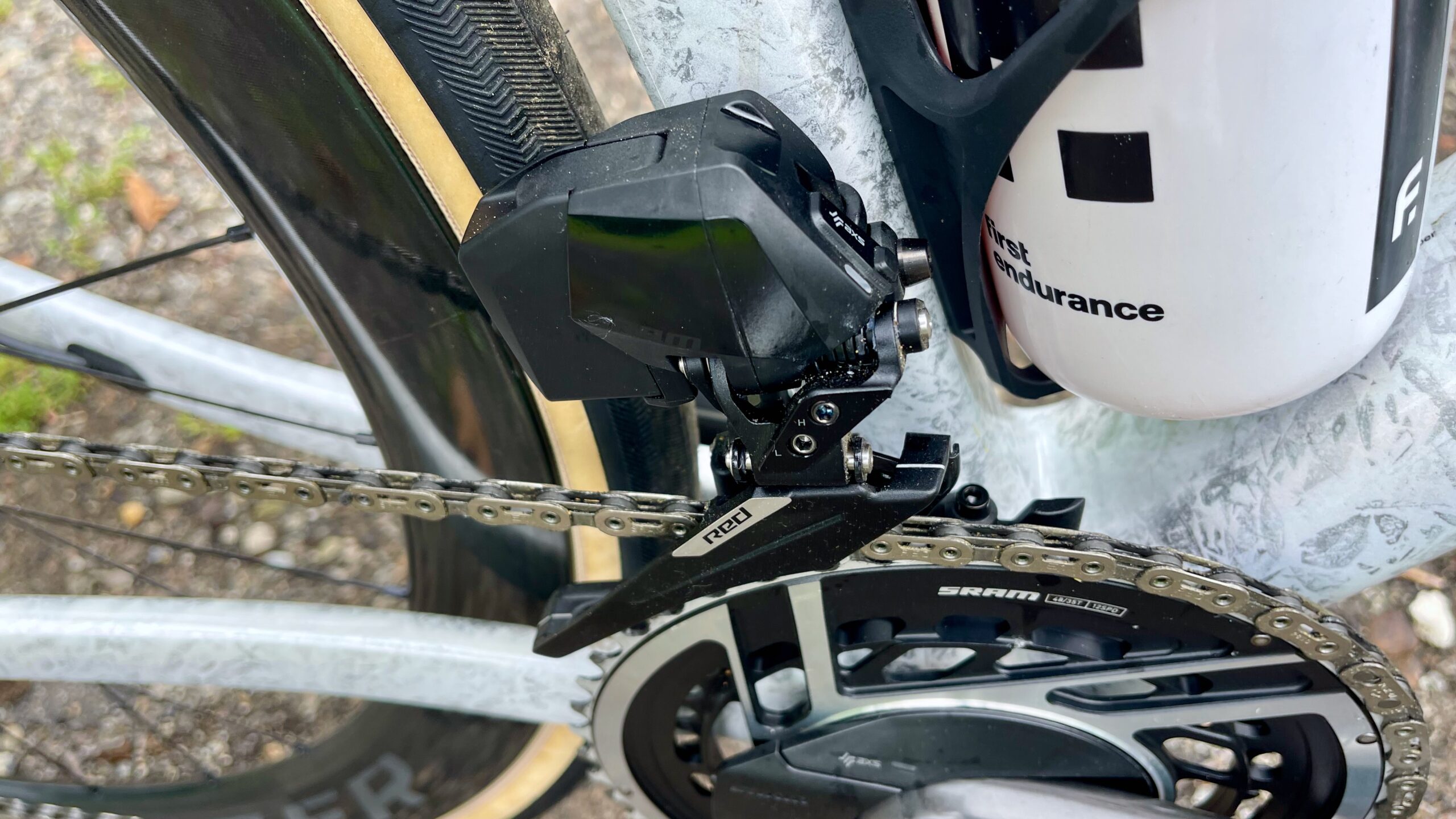
The spec is dialed for my current taste, with a full SRAM Red AXS setup, a 48/35T chainring, and a 10-36T cassette that’s enough to climb most and still race a crit (more on that later). The wheels are Bontrager RSL 51 with DT-180 custom hubs (nothing new for this launch) and accentuate the top-end feel of the SLR 9 build.
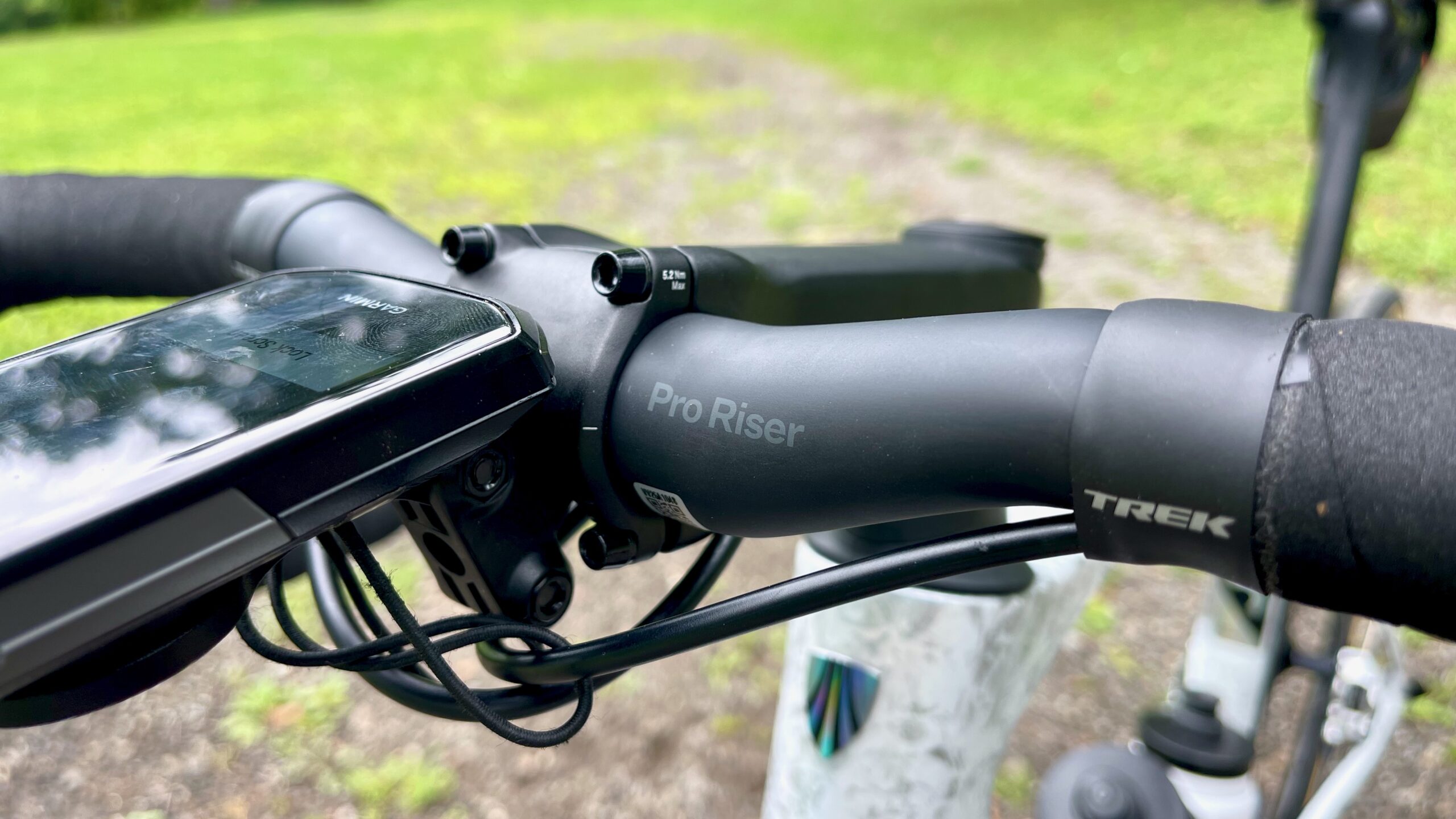
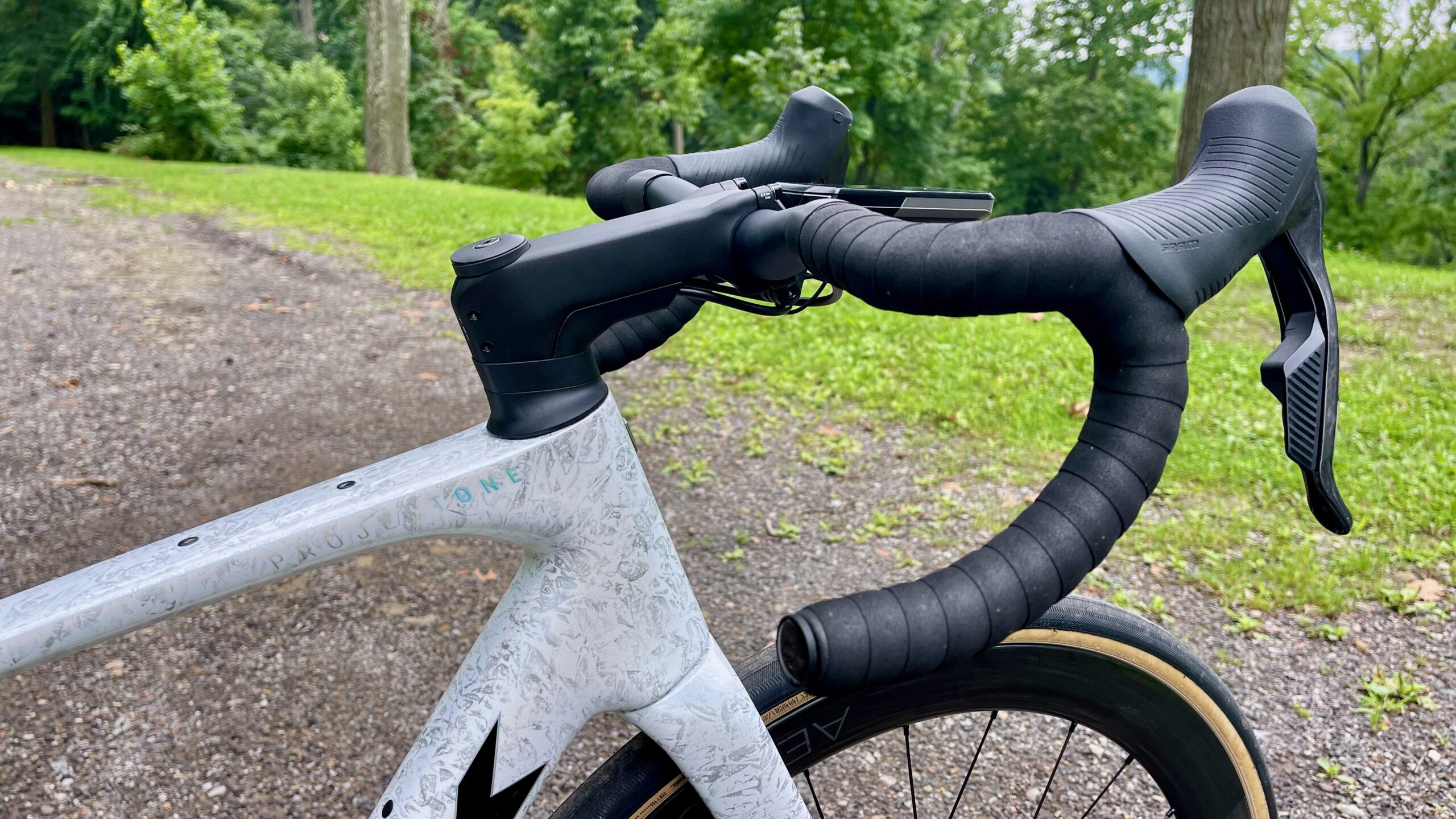
As for touch points, the new Bontrager riser bars are very comfortable. The 20mm bit of rise is nice, unexpectedly so. The bars have the same fit and sweep as the RSL Aero bars that I absolutely love, but with a little help for your lower back.
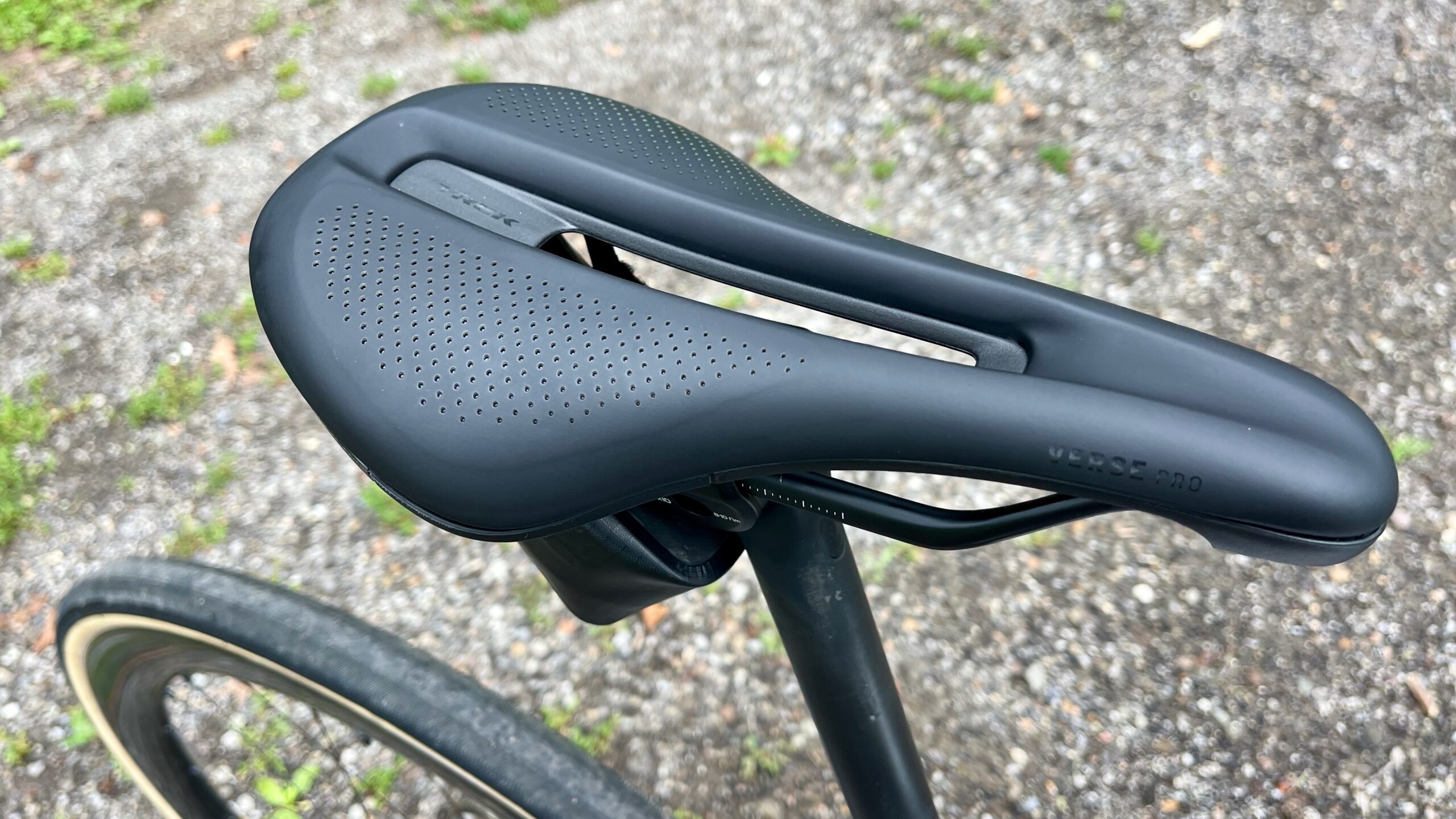
The Bontrager Verse Short Pro 145mm was another nice addition. I usually ride a Specialized S-Works Evo Mirror, but the padding on the Verse Short felt excellent, and so did the shape. It’s a very padded but sculpted design, one that lets you sit in the saddle and not on top of it. The shell offers some flex and feels like a nice complement to the bike’s endurance nature so far.
First Ride Impressions
My first rides and effort on the new Trek Domane SLR 9 were trial by fire. I did a super easy spin around my local road, dialing in my fit and feel on the bike. The Domane feels more like a complete road machine rather than a one-trick IsoSpeed pony than before. I wasn’t waiting for it to “do its trick”; I was riding comfortably along the roads and not noticing much, but feeling the bike for sure.
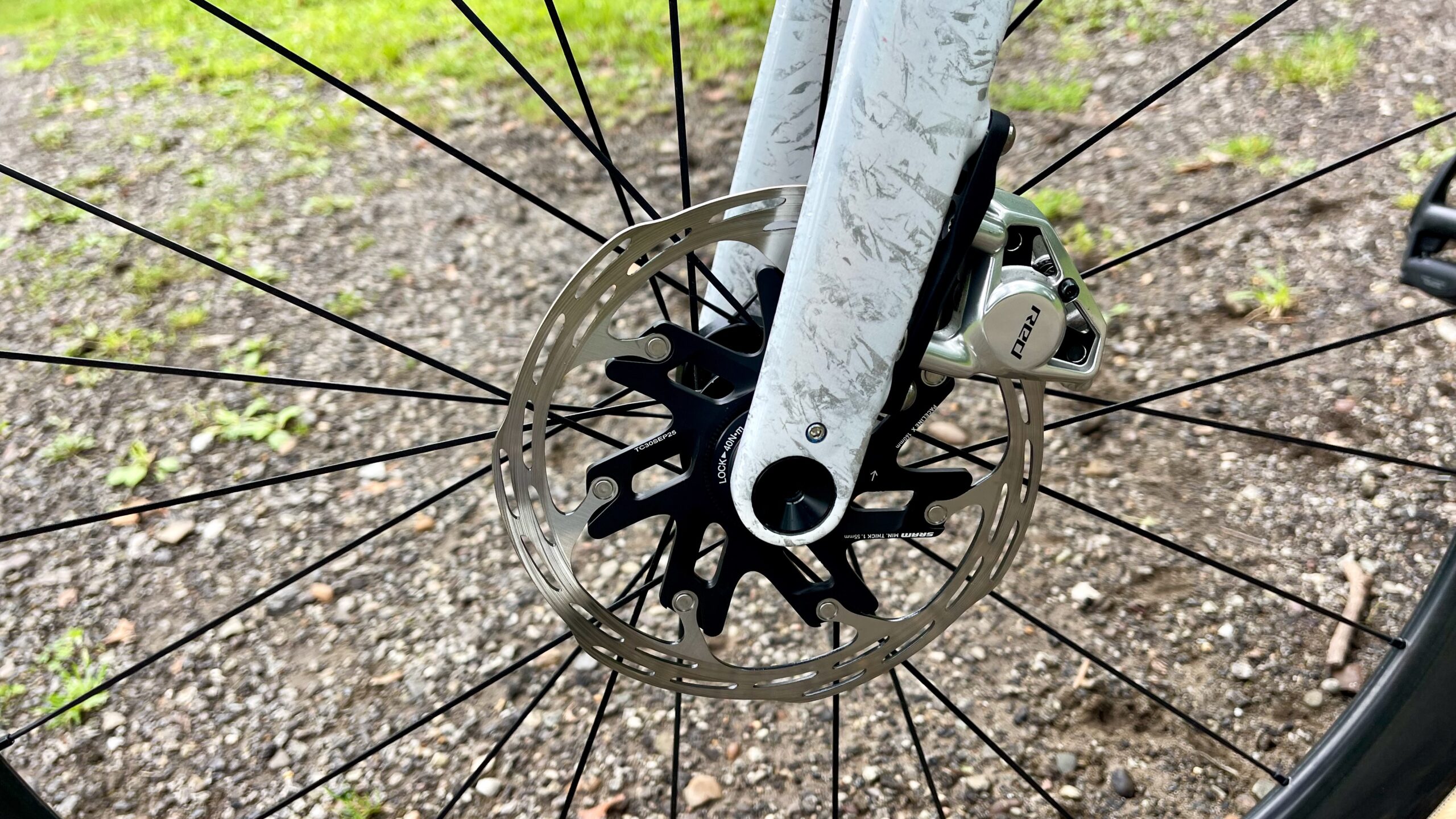
My first thoughts were “this feels like a race bike…I should race it”. The SLR is stiff and comfortable, especially when paired with the Bontrager Aeolus RSL 51. It’s not aero like “I’m super lean and low,” but it’s upright, giving you that “I can really hammer these pedals” kinda feel. So I took it to our weekly crit race to see how it felt under pressure and race brain.
Under Pressure
It seems odd to test an endurance bike at a crit race, but I’m glad I did. I had a ride to feel the comfort and the ease of the new frame/tire combo. It’s nice and feels pleasant, but I wanted to feel the frame updates and how the bike felt under pressure.
At the beginning of the race, I played my moves carefully. I was on a new bike with 35mm tires and didn’t feel as fast and aero as I do on my road machine. But an attack went, and I followed it, spinning right up to the wheel with minimal effort, a similar feel to my road race bike. It didn’t feel sluggish or heavy; it responded very much like a race bike.
Steering
The steering was another notable piece. Sometimes endurance bikes can steer like gravel bikes and need more coaxing around sharp corners, or at least time to get used to the feel of the bike. On the other hand, with the Domane SLR, I felt fairly confident in the steering and handling of the bike. It wasn’t a copy/paste from my road bike, but it wasn’t too far off. I didn’t feel like I had to pull the bars or steer correctly to get my line; I was able to lean the bike and trust it.
Look for a full review in the upcoming months with more time in Domane territory of light gravel, chip and seal road, and all that. But as of right now, the Domane has my attention as an excellent performance ride with the comfort to let more riders express their power thoughtfully. Not folded over like an aero pretzel to save a few watts, but you’re too uncomfortable to actually put any watts out.
Our review ride is top-of-the-line spec – it should be the clearest expression of the line, but I can see this performance trickle down.
A Cleaner-Looking, Better-Performing Domane
Some longtime Domane fans will probably miss IsoSpeed. Fair. It was the feature that made the bike famous. But modern tires are doing more work now, and Trek seems ready to let the frame be lighter and simpler because of it.
The result is a Domane that feels less like an endurance bike with a special trick and more like a modern road bike built for real roads. That is probably the smarter place for it to be.
















 English (US) ·
  French (CA) ·
  French (FR) ·