

 2 months ago
48
2 months ago
48
PROTECT YOURSELF with Orgo-Life® QUANTUM TECHNOLOGY
Orgo-Life the new way to the future Advertising by Adpathway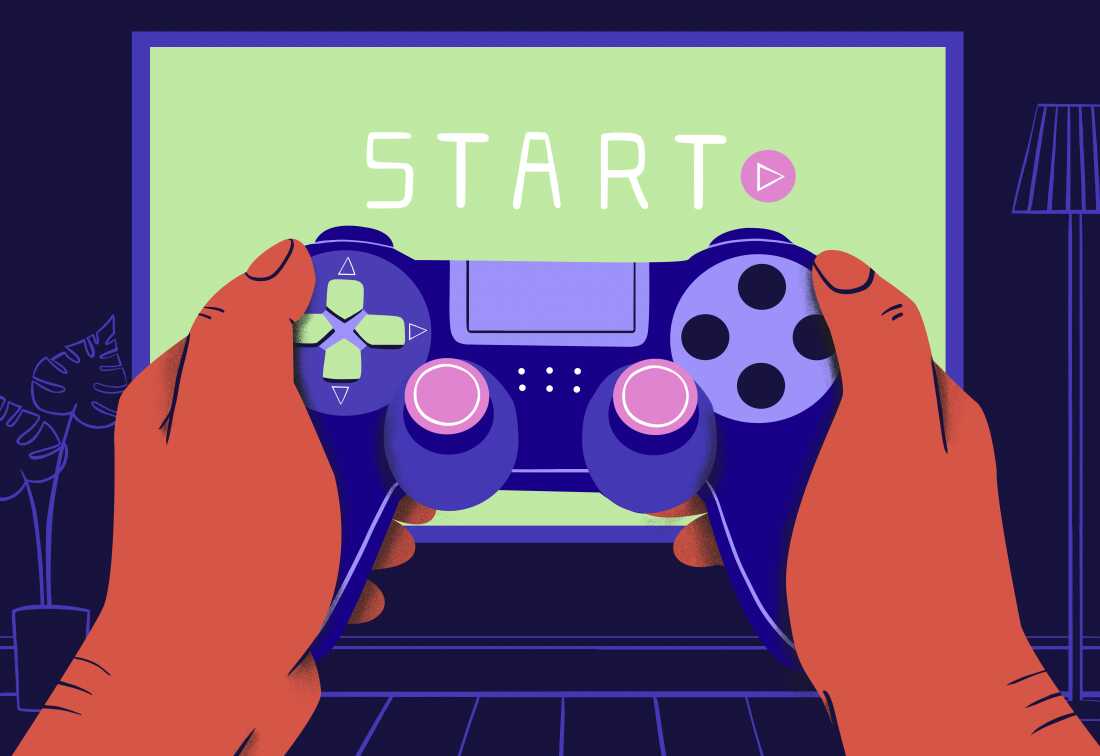
Feeling stuck, bored or restless in life? You might be ready to start a side quest. In video games, it's a mission that deviates from the main storyline, helping to build the world's lore . In real life, it's an activity that doesn't serve any other purpose than bringing more whimsy into your day-to-day. Westend61/Getty Images hide caption
toggle caption
Westend61/Getty Images
Don't miss a single podcast episode from Life Kit. Follow us on Apple Podcasts or Spotify.
When was the last time you did something just for fun? Like skipped down the sidewalk, roller-skated or learned a new language without the pressure of becoming fluent?
In other words, when was the last time you took a side quest?
The term comes from video games. It's a mission that deviates from the main storyline, helping to build the world and add flavor to the experience.
But in real life, it's an activity that doesn't serve any other purpose than bringing more whimsy and exploration into your day-to-day. And it's a great way of practicing play and opening up new possibilities, especially if you're feeling stuck, tense or restless.
"Just like in the gaming world, it makes the main quest stronger. It gives it more nuance or new dimension or brings out a facet of you that you convinced yourself you couldn't [be]," says Kyra Gaunt, an ethnomusicologist and the author of The Games Black Girls Play: Learning the Ropes From Double-Dutch to Hip-Hop.
Research has shown that play can help us adapt to difficult circumstances, practice survival skills, problem-solve and collaborate. "Doing something you've not done before will open up the brain's different neural networks," Gaunt says. "You'll get this sense of wonder and awe."
Ready to find your side quest? Let's go.
Think of how you liked to play as a kid
This is a good prompt to start with, said Jeff Harry, a public speaker who teaches workshops on the importance of play, in a 2023 interview with Life Kit.
Were you super into Lego? Finger painting? Catching fireflies? Seeing how far you could catapult yourself off the swing set?
Then, think about how to incorporate that form of play into your life now. If you liked pretend play, maybe your side quest could be an acting or improv class. If you liked physical challenges, maybe you could go on an adventurous hike.
Take a quiz to figure out your play personality
If you're striking out on your fave activities as a kid, take this quiz to find your play style. It uses thousands of personal play histories collected by the National Institute for Play and play researcher and psychiatrist Stuart Brown.
The idea is to find the type of play activity that naturally "gives you a sense of joy and engagement and sustained motivation," Brown told Life Kit in 2023.
According to the quiz, you might discover you're a "dreamer," someone who finds play in fantasy or alternate worlds, or an "organizer," someone who enjoys creating order by arranging things or connecting people. Then, see whether your results spark any side quest ideas.
Pick something you don't know how to do
You can also make your side quest something totally different from what you're usually drawn to. "I like to encourage people to do things [they] don't know how to do," Gaunt says.
A couple of summers ago, she took a drawing class. "There was a figure [model] I was supposed to draw, and I'm like, 'I can't draw,'" she says. The instructor told her to let her hand "follow your vision."
She took the advice to heart and found she could apply it to other areas of her life. "The next day, my writing was easier. My writing was better," she says. So be open to new activities that intrigue you — you never know how it will affect your main quest.
When in doubt, don't overthink it
If you still don't know what your side quest should be or if you feel too tired or busy to think of something, pause, listen and follow your urges, says Sahara Moné, curator of Let's Play NYC, a community group that prioritizes play.
Maybe you've been wanting to take an acting class since you graduated from college and told yourself this is the year you'll do it. "That's a nudge. It's very loud," she says. "It's a good place to start."
Keep up with your quest with the acronym ARTSN
Hopefully by now, you've come up with a few side quest ideas. Use the acronym ARTSN, which Gaunt came up with, to make one a reality.
A: Achievable, an activity that is small enough to begin.
R: Revealing, an activity that teaches you something new about yourself.
T: Time-bound, an activity that has a start and stop point.
S: Specific, an activity that has a clear goal.
N: Notice, as in, “Notice how you feel after you participate” in the side quest, Gaunt says. What surprised you? What delighted you?
Don't forget to have fun. "Adults spend so much time in environments where they're trying to control the outcome," Gaunt says. Side quests, on the other hand, release us from worrying about that.
Your turn: Have you ever been on a life-changing side quest?
How did it enhance your main quest? Email your story to [email protected] with your full name and a photo, and we may include an excerpt on NPR.org.
This story was edited by Meghan Keane. The visual editor is CJ Riculan. We'd love to hear from you. Leave us a voicemail at 202-216-9823, or email us at [email protected].
Listen to Life Kit on Apple Podcasts and Spotify, and sign up for our newsletter. Follow us on Instagram: @nprlifekit.
















%20102026%20top%20art%20SOURCE%20Amazon.jpg?mbid=social_retweet)








 English (US) ·
  French (CA) ·
  French (FR) ·