

 3 days ago
2
PROTECT YOURSELF with Orgo-Life® QUANTUM TECHNOLOGY
Orgo-Life the new way to the future Advertising by AdpathwaySometimes the right man or small group of individuals at the right time and place can change the course of history.
Two hundred and fifty years ago this week, as dawn broke on October 18th, 1776, Marblehead Colonel John Glover found himself on one of these inflection points as he climbed a slight rise in Pelham, New York, near Manhattan. Upon reaching the summit, he lifted his spyglass to his eye to scan the horizon. What he saw exceeded his worst nightmares: over 150 British warships heading up the Long Island Sound and hundreds of Redcoats already flooding from their ships onto a small peninsula. If the British advanced, they could prevent Washington’s army retreating from Manhattan and potentially end the Revolutionary War.
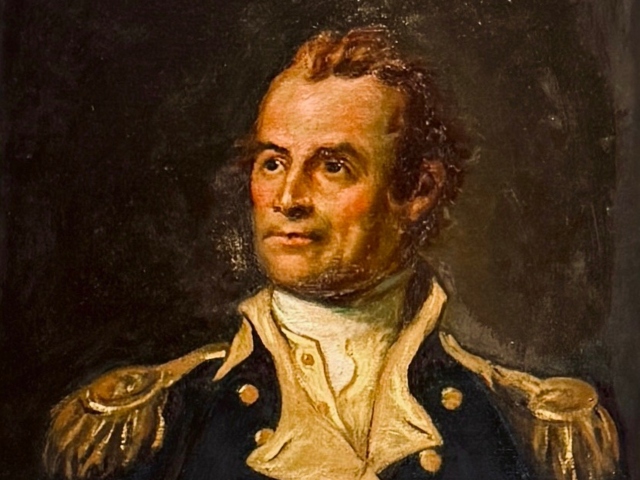
Portrait of General John Glover, oil on canvas, by Henry Sutton, 1964, Abbot Hall, Marblehead, MA
Glover remembered the moment: “Thus disposed of, I rode forward—oh! the anxiety of mind I was then in for the fate of the day,—the lives of seven hundred and fifty men immediately at hazard, and under God their preservation entirely depended on their being well disposed of; besides this, my country, my honour, my own life, and everything that was dear, appeared at that critical moment to be at stake—I would have given a thousand worlds to have had General Lee, or some other experienced officer present, to direct, or at least to approve of what I had done.”
Instead of debating or pondering, Glover acted and improvised a new defensive formation on the fly: a defense in depth which was novel for 18th-century warfare.
After being repulsed by Revolutionary Snipers at Throggs Neck days earlier, Lord Howe loaded his men back onto their vessels and sought another location to disembark. Roughly five miles north, they found Pell’s Point from where they could travel down the Eastchester Road to King’s Bridge and trap Washington’s army—if they had not encountered John Glover’s brigade.
Local militiamen armed the rifles and engaged the British shortly after the enemy disembarked. They then fell back and joined the Massachusetts men.
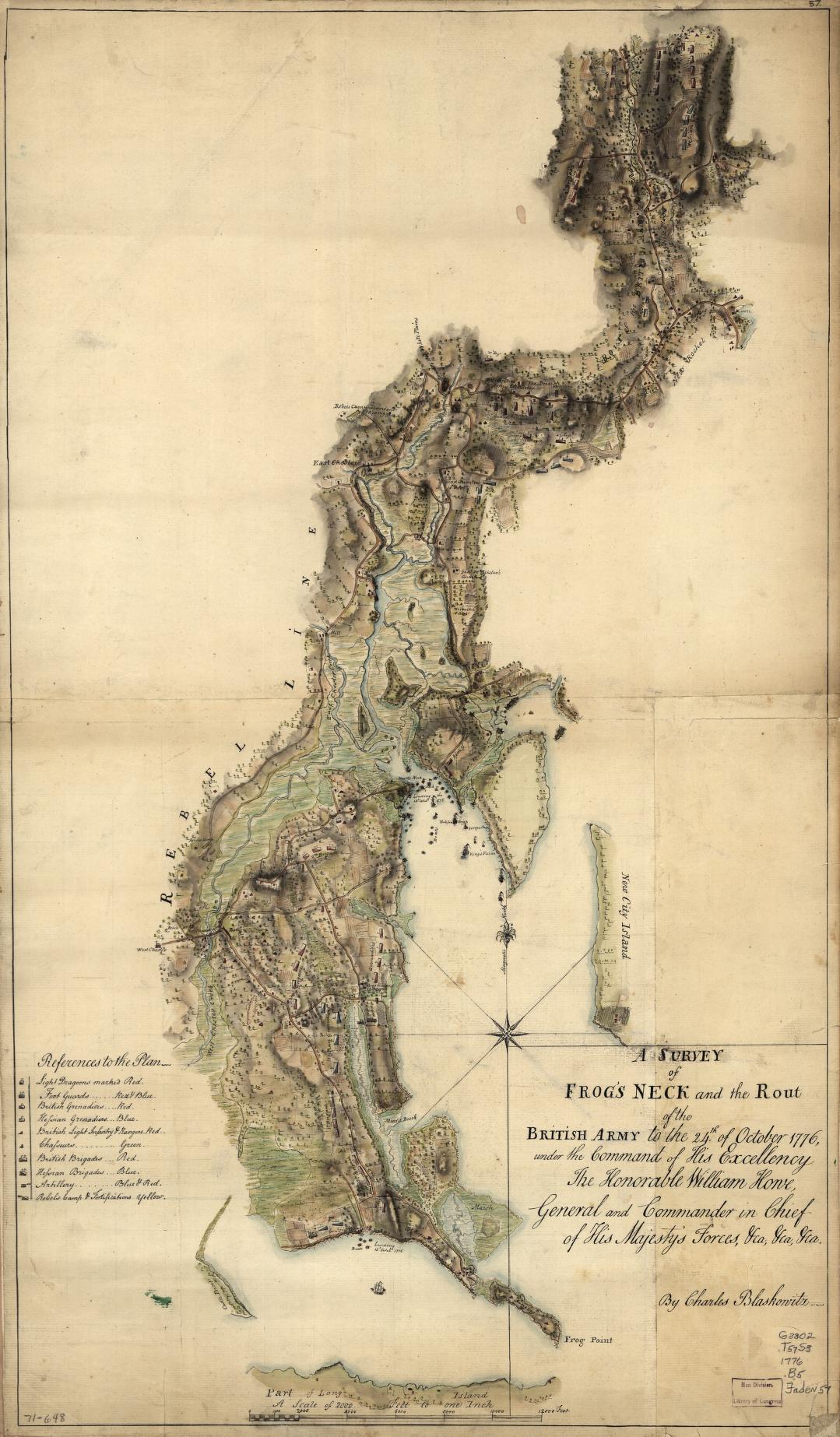
Library of Congress, Geography and Map Division.
By the time Glover and his men arrived, the British had marched a mile and a half inland and seized the high ground and a significant advantage over the Americans.
Glover hatched an ingenious battle plan to hold off the thousands of British soldiers, despite being outnumbered five to one. He immediately dispatched a small advance party to slow the British onslaught. He also sent one regiment with three field pieces to the rear. The colonel arranged the rest of his men in successive lines along Split Rock Road, the main thoroughfare from the beach inland. The stone fences, boulders, and rocky outcropping lining the road would force the 4,000 invading troops to stick to the roadway and advance in a column. Glover created a deep defense by strategically placing his men behind the stones fences to inflict as many casualties on their enemy as possible. This novel form of warfare demonstrated the evolving nature of the American way of war.
More about the role American riflemen and the rifle at the Battle of Pelham are told in my forthcoming book: Revolutionary Snipers: Washington’s Frontier Commandos Whose Marksmanship Forged A New Way of War and Helped Win the Revolution, the unknown story of the Continental Army’s first soldiers, snipers who were the precursors to U.S. Army Special Operators.
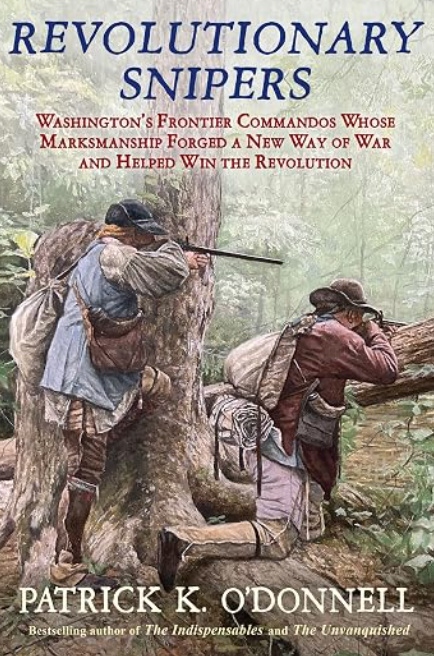
Revolutionary Snipers Book Jacket, Atlantic Monthly Press
The American advance guard approached within fifty yards of their enemy, three-quarters of them battle-hardened Hessian allies, before exchanging brief fire and then falling back. Believing they had the Americans on the run, the British cheered and advanced. When the British vanguard, the elite light infantry, were within thirty yards, the Americans suddenly rose as one from their concealment, rested their weapons on the stout stone wall, and fired on the enemy with their motley assortment of muskets. With the enemy so near and the fence providing a convenient resting place for their weapons, many American bullets found their mark, and dozens of Redcoats and Hessians dropped.
Astonished, the remaining troops turned tail and ran, choosing to wait for the main body to approach rather than pursuing with the customary bayonet charge. When the bulk of the force arrived, the British charged the American position, and again, the Americans rose from their hiding places and fired as one. This time the disciplined Redcoats and Hessians returned fire. The two groups of men continued firing at will for about twenty minutes while British artillery lobbed cannonballs at the Americans sheltered by the stone wall. After exchanging seven rounds, the Americans retreated. Partially sheltered by the fences, they were able to withdraw behind the point where more of their comrades lay in wait on the other side of the road. Today, a portion of the battlefield runs through the early holes of the Split Rock Golf Course. You can still see the remains of the stone fences and the rocks on the course.
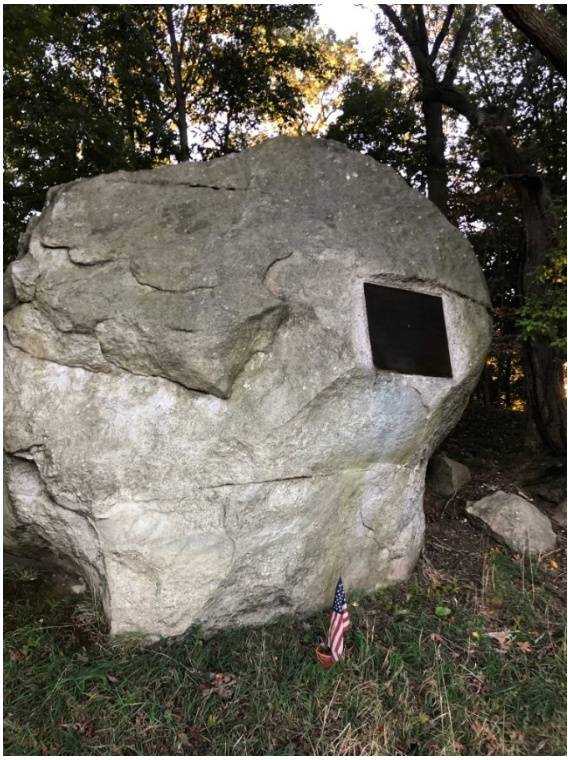
Glover’s Rock marking the start of the battle where riflemen attacked British as they were landing (source: Author photo)
Repeating their earlier performance, the British shouted and pressed forward, but the next American regiment led by Colonel William Shepard was waiting behind a stone wall on the opposite side of the road. Shepard, a veteran of the French and Indian War, had his men stagger their fire so that they could keep a constant stream of lead turned on the enemy. They exchanged seventeen rounds and caused the Redcoats to retreat several times. Once they fled so far, an American soldier leaped over the war and took a hat and canteen from a dead British captain.
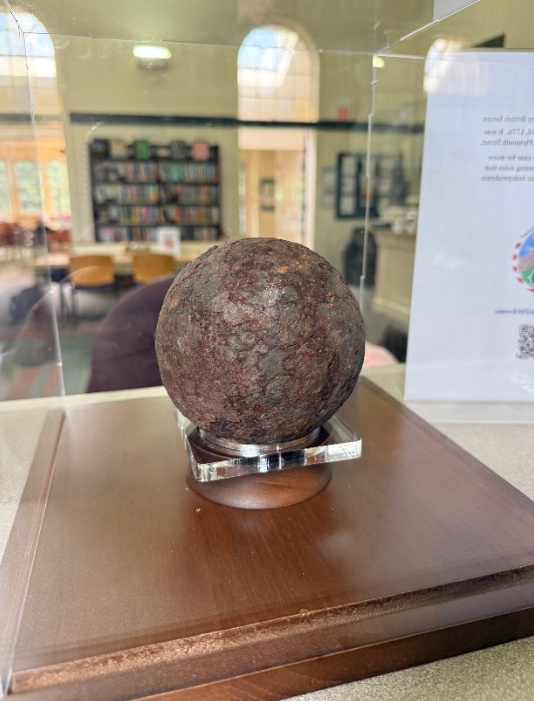
Cannonball found near the battle (Source: Author photo)
Among the casualties were British captain and light infantry officer, William Glanville Evelyn. Shepard took a bullet to the neck, but while the surgeons were probing, Shepard regained consciousness, asked for his canteen, and upon finding he could drink, said to the surgeon: “It is all right, doctor, stick on a plaster and tie on my cravat, for I am out again.”
Eventually, the enemy’s overwhelming numbers forced Glover’s men to retreat. The Continentals repeated the same maneuver a third time, but it was not as successful, and the British forced the Patriots to give up ground much more quickly. The Marblehead colonel then led his men through a small creek and up a hill where he had left the rear guard with the artillery. Having learned that it was unwise to pursue the retreating Americans, the British halted their advance. A cannonade ensued as the two sides took turns firing until nightfall.
Eventually, Howe declined to pursue the Americans, who had done so much damage to his forces. The total number of British casualties remains unknown, but it must have been substantial because Howe grossly overestimated, by over ten times, the number of Continentals he had faced.
More importantly, Glover and his men’s stand at Pelham on October 18, 1776, allowed Washington’s Continental Army time to escape to White Plains and live to fight another day. In contrast to the British losses, the Americans lost only six men dead and thirteen wounded, including Shepard, whom Glover described as “a brave officer.”
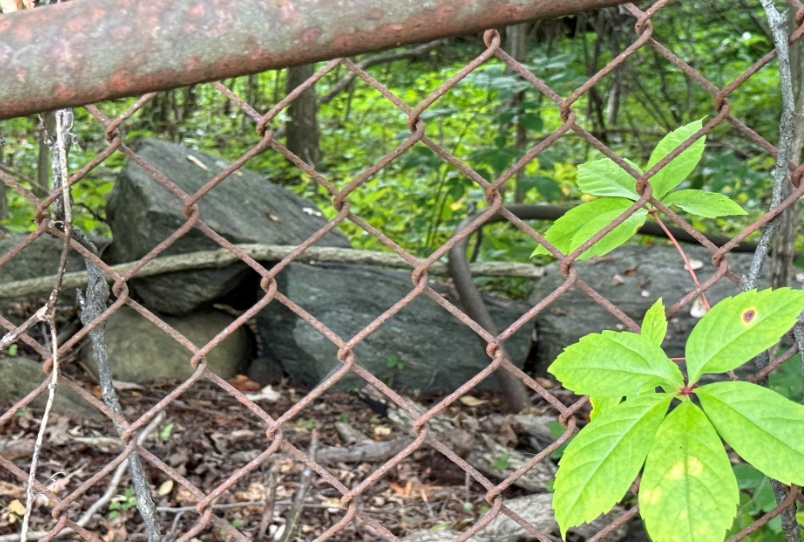
Remnants of stone walls used in battle still visible on Split Rock Golf Course (Source: Author photo)
Patrick K. O’Donnell is a bestselling, critically acclaimed military historian and the leading authority on American elite and special operations units. The author of fourteen books, including Revolutionary Snipers: Washington’s Frontier Commandos Whose Marksmanship Forged a New Way of War and Helped Win the Revolution, The Indispensables, and Washington’s Immortals, a trilogy on the elite units of the Revolutionary War, along with The Unvanquished, which are all featured prominently at Barnes & Noble. He is a senior fellow at Mount Vernon, and his books have received numerous national awards. O’Donnell is a professional public speaker and will be on a national book tour for Revolutionary Snipers which can be preordered and for events he is keynoting related to the 250th Anniversary of the United States starting November 9. O’Donnell served as a combat historian with a Marine rifle platoon during the Battle of Fallujah. He is a director and the historian for The OSS Society and is a professional speaker who frequently lectures on America’s conflicts, espionage, special operations, and the Revolutionary War. He has provided historical consulting for DreamWorks’ award-winning miniseries Band of Brothers and for documentaries produced by the BBC, the History Channel, and Discovery.
@combathistorian
















 English (US) ·
 French (CA) ·
 French (FR) ·