

 18 hours ago
10
PROTECT YOURSELF with Orgo-Life® QUANTUM TECHNOLOGY
Orgo-Life the new way to the future Advertising by Adpathway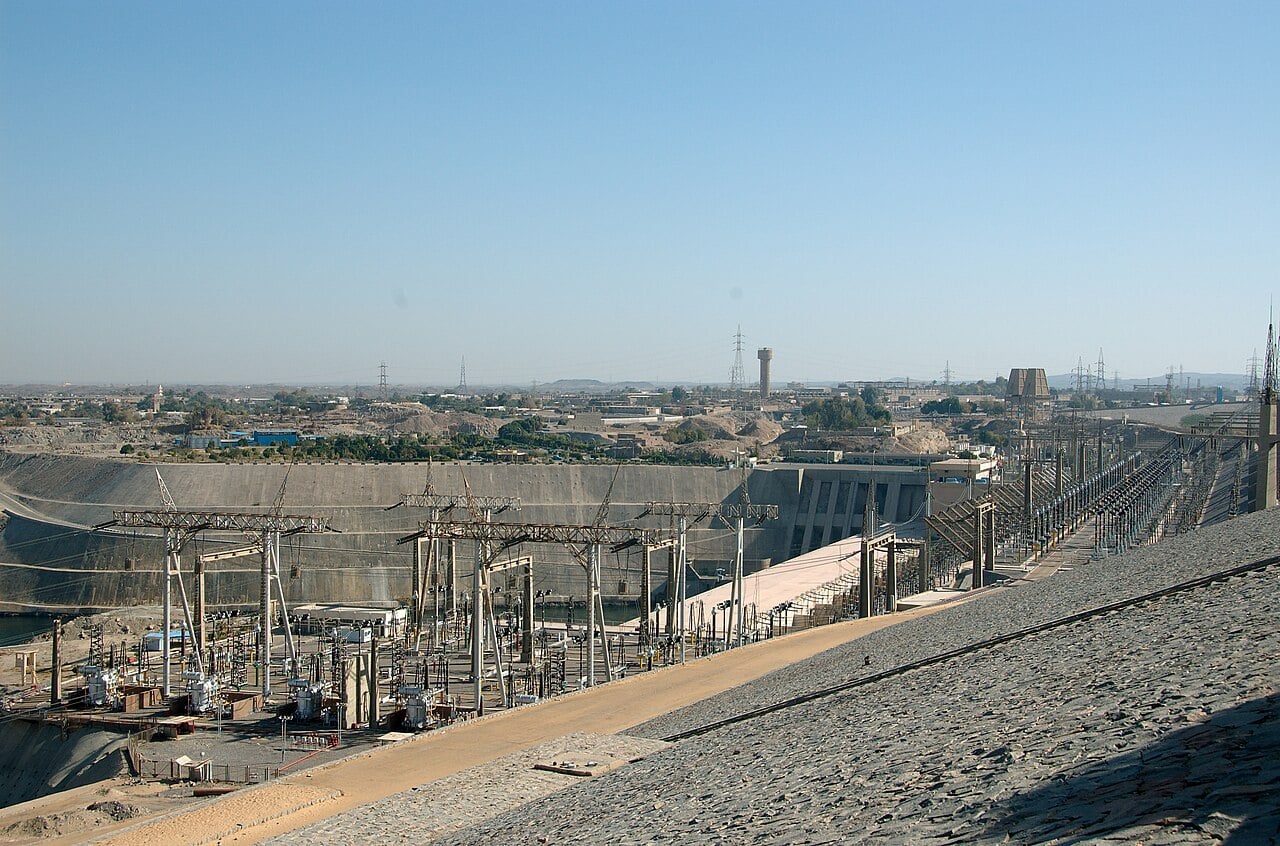
EGYPT · SUDAN · NILE WATER
Key Facts
- What happened Egypt and Sudan rejected Ethiopia’s unilateral Blue Nile dam management in Cairo on Monday 2 November 2026.
- Their position They call their water security indivisible and cite the 1959 Nile Waters Agreement between Egypt and Sudan.
- The ask They urge Ethiopia to cooperate under international law, with prior notice, consultation and consensus.
- Beyond the dam They also condemned drone attacks on Sudan’s power and water plants and opposed militarising the Red Sea.
- US angle Egypt and Ethiopia are both US partners, and Washington has offered to mediate.
Egypt and Sudan rejected Ethiopia’s unilateral management of its Nile dam after talks in Cairo on Monday 2 November 2026. They said running the dam without a binding legal framework threatens the water security of the two downstream countries.
Free daily brief — no card needed
Get every Africa story in one morning email
We build you a personalized brief around the topics you follow — free for 7 days. Love it? Your first month after that is US$1.
Yes, email me my free daily brief — I can unsubscribe any time.
The joint statement followed the third round of their “2+2” talks, which bring together two foreign ministers and two water ministers. For US readers, it shows a dispute between two American partners and Ethiopia that is still unresolved.
What Egypt and Sudan Said on Monday 2 November
Foreign ministers Badr Abdelatty of Egypt and Mohi El-Din Salem of Sudan met in Cairo with water ministers Hani Sewilam and Ismat Qurashi. The two governments rejected unilateral actions in the Eastern Nile Basin, the area shared by Egypt, Sudan and Ethiopia.
They called their water security “indivisible” and said they would defend their rights and existing uses under the 1959 Nile Waters Agreement. They also backed the Permanent Joint Technical Commission for Nile Waters and offered it technical and logistical support.
Follow this story
Get an email when there’s news on Egypt
Free. One email a day at most, and only when there is news. This also signs you up to our weekday newsletter, Africa Intelligence. Nothing arrives until you click the confirmation link, and you can stop either with one click. Privacy policy.
What Egypt and Sudan Said About the Nile Dam
They urged Ethiopia to drop unilateral policies and cooperate under international law. The principles they listed were avoiding significant harm, prior notification, consultation and consensus.
They said the dam dispute concerns only Egypt, Sudan and Ethiopia and rejected efforts to bring in other Nile Basin countries. They also called for keeping the Nile Basin Initiative alive and continuing talks on the Cooperative Framework Agreement.
Beyond the Dam: Sudan and the Red Sea
The two governments condemned drone attacks on Sudan’s electricity and water plants by what the statement called rebel militias. The drones were launched from a neighbouring country the statement did not name.
Egypt said it is ready to take measures allowed under international law and the two countries’ joint defence agreement to support Sudan’s unity. It also rejected setting up or recognising parallel governing bodies in Sudan.
On the Red Sea, they said governance is the exclusive job of countries with coastlines there and opposed its militarisation. Our Sudan explainer covers the war behind these concerns.
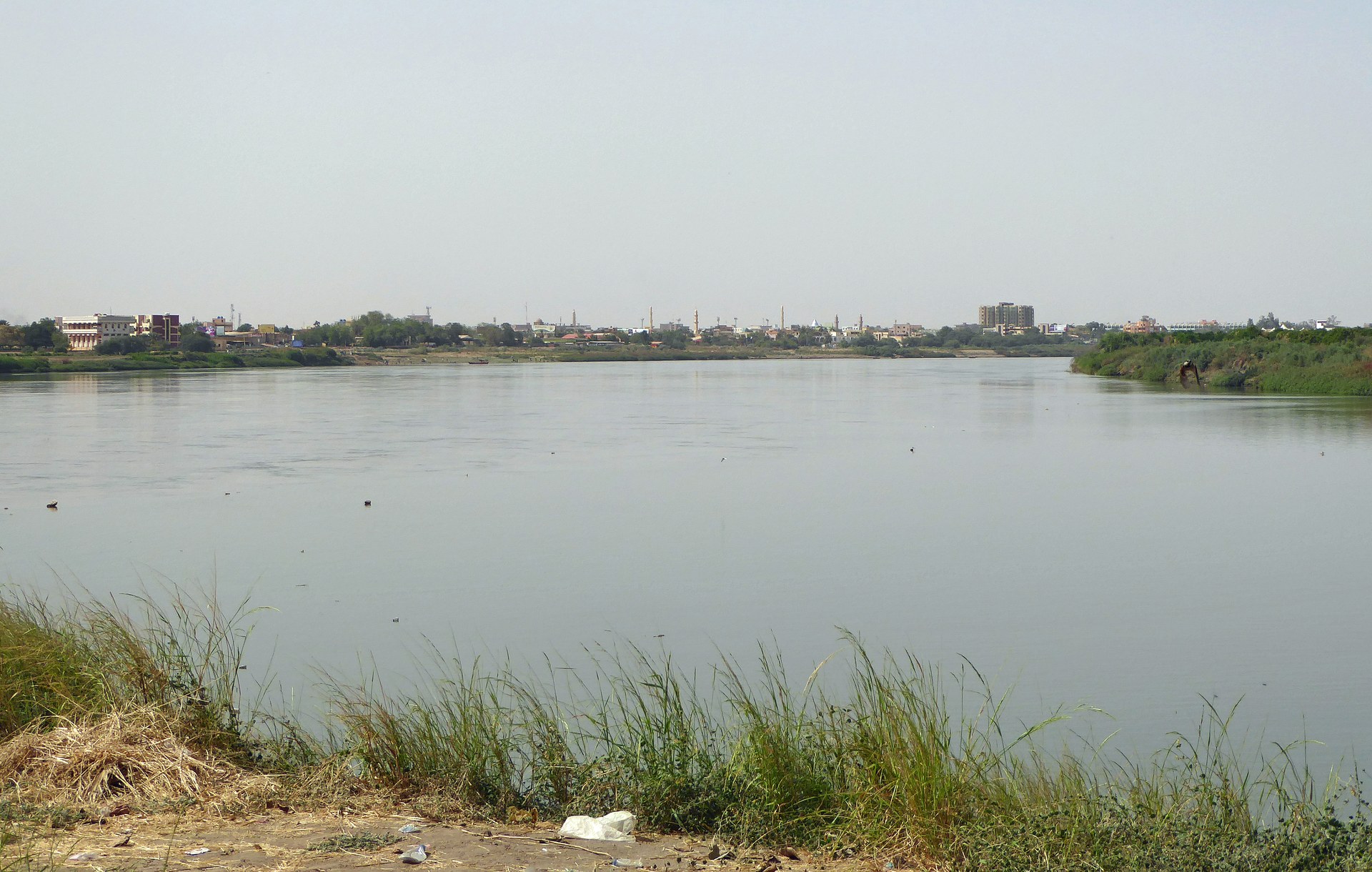
They agreed to expand cooperation on rainwater harvesting and solar-powered groundwater stations. They also discussed rehabilitating the Jebel Aulia reservoir on the White Nile south of Khartoum.
The Dam and the 1959 Agreement
Ethiopia opened the Grand Ethiopian Renaissance Dam, Africa’s largest hydropower plant, on the Blue Nile in September 2025. Our explainer on the dam dispute shows that Egypt calls it illegitimate and wants a binding deal on how it is run.
The 1959 agreement gives Egypt 55.5 billion cubic metres of Nile water a year and Sudan 18.5 billion. Ethiopia is not a party to it, and says it paid for the dam itself.
In Plain English, Who Is Who
The Grand Ethiopian Renaissance Dam, or GERD, is Ethiopia’s hydropower dam on the Blue Nile, the river that supplies most of the water reaching Egypt. Downstream countries are those lower on a river, here Egypt and Sudan.
The Permanent Joint Technical Commission for Nile Waters is the Egypt-Sudan body that handles their shared water issues. The Nile Basin Initiative is a forum of Nile countries for joint projects.
What It Means for You
Egypt receives about US$1.3 billion a year in US military aid, and Ethiopia is also a US partner, so a worsening dispute concerns Washington. President Donald Trump offered to mediate in a January 2026 letter.
For investors and travelers, the statement is diplomatic, and it announced no step against Ethiopia. Watch the Red Sea language, because shipping through the Suez Canal depends on stability there.
What Is Not Known
Whether Ethiopia will answer the joint statement is not known. The statement gives no timetable for talks with Ethiopia.
Egypt did not say which measures under international law it has in mind. The neighbouring country said to have launched the drones was not named.
More: Africa news in English, every day from The Rio Times.
Frequently Asked Questions
What did Egypt and Sudan say about Ethiopia’s dam?
They rejected Ethiopia’s unilateral management of the dam without a binding legal framework. They called their water security indivisible and cited the 1959 agreement.
When and where did the talks take place?
The talks were held in Cairo on Monday 2 November 2026. It was the third round of the 2+2 meetings of foreign and water ministers.
What is the 1959 Nile Waters Agreement?
It is an Egypt-Sudan treaty that divides the Nile’s flow, with 55.5 billion cubic metres a year for Egypt and 18.5 billion for Sudan. Ethiopia is not a party.
Did Egypt threaten military action?
The statement says Egypt is ready to take measures allowed under international law and the joint defence agreement to support Sudan’s unity. It named no specific step.
Sources: Egyptian Ministry of Foreign Affairs, joint statement of the third round of the Egypt-Sudan 2+2 consultations, 2 November 2026; Egyptian Ministry of Water Resources and Irrigation, 2 November 2026; Agreement between Egypt and Sudan for the Full Utilization of the Nile Waters, 8 November 1959.
This article was produced by The Rio Times’ automated newsroom system. How we use AI · Report an error · Editorial responsibility: Matthias Camenzind, Editor-in-Chief










 English (US) ·
 French (CA) ·
 French (FR) ·