

 2 months ago
68
2 months ago
68
PROTECT YOURSELF with Orgo-Life® QUANTUM TECHNOLOGY
Orgo-Life the new way to the future Advertising by Adpathway
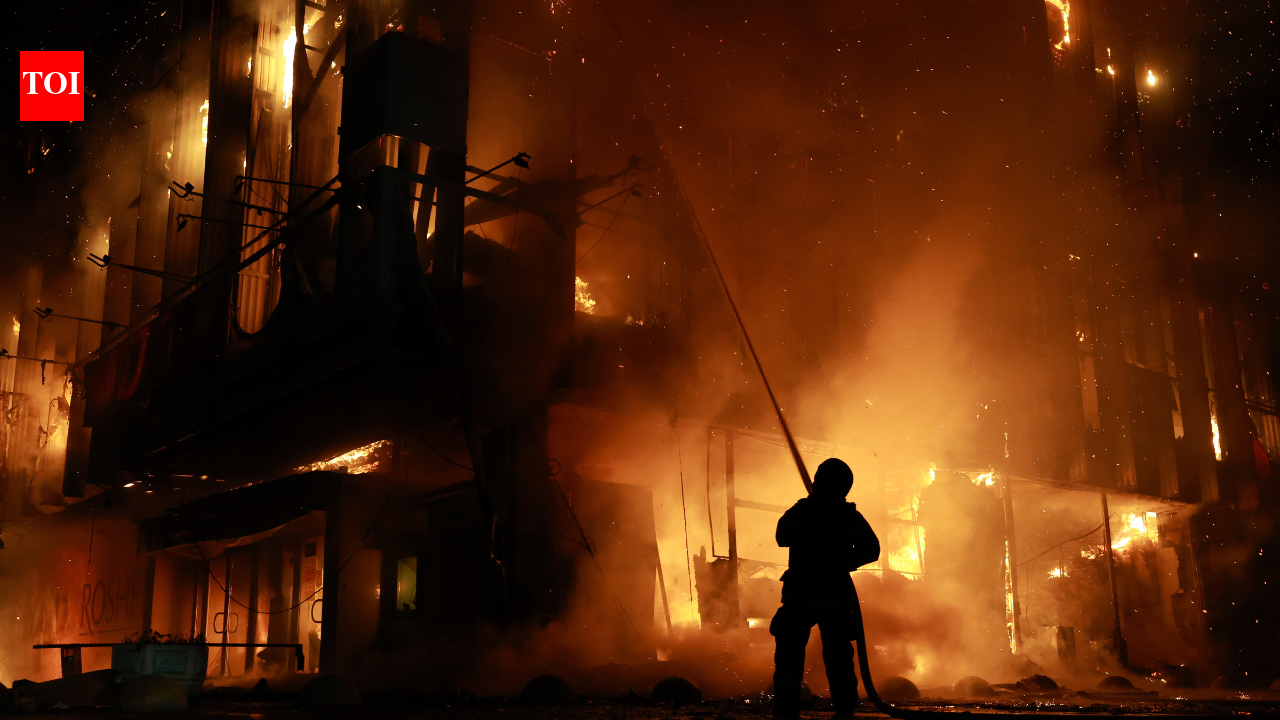
The US military hit Iranian missile and radar sites on June 26 after Iran fired drones at a cargo ship in the Strait of Hormuz, raising fresh doubts over a ceasefire signed just nine days earlier.
5 min readJun 27, 2026 05:29 AM IST First published on: Jun 27, 2026 at 04:54 AM IST
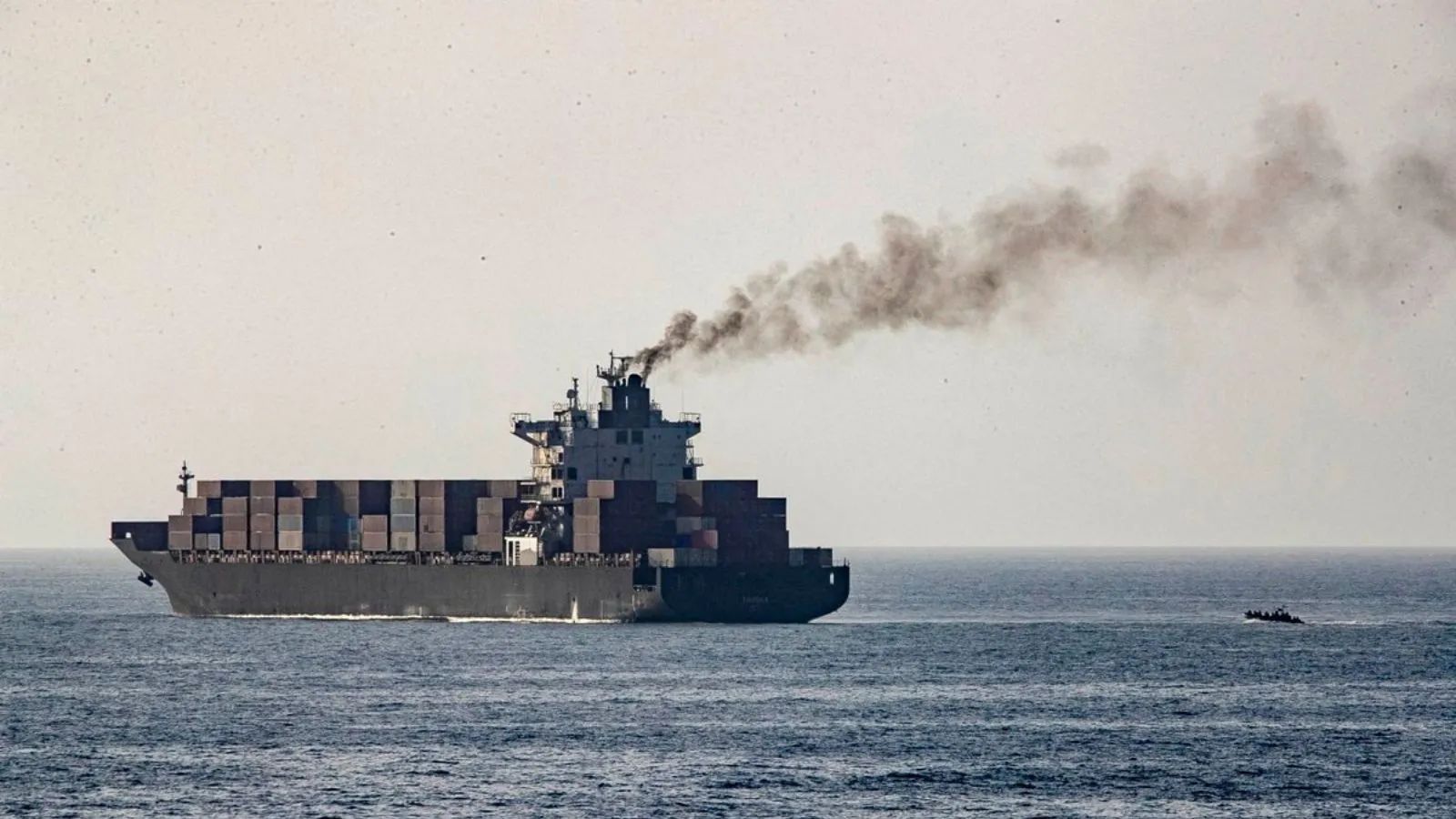 Cargo ships near the Strait of Hormuz. (File Photo)
The United States military struck Iranian targets on Friday after Iran fired drones at commercial ships passing through the Strait of Hormuz the day before, in what President Donald Trump called a direct breach of their ceasefire agreement.
Officials told CNN and the New York Times the operation lasted roughly 90 minutes and covered four sites three along the coast and one on Qeshm island in the Persian Gulf, carried out by F-35s and F-16s.
United States Central Command, which directs US military forces in the Middle East, said US forces “conducted strikes against Iran, June 26, as a powerful response to yesterday’s attack on a commercial ship that was transiting the Strait of Hormuz”.
The Pentagon statement posted on social media continued: US aircraft struck Iranian missile and drone storage locations and coastal radar sites after Iran hit M/V Ever Lovely on June 25 with a one-way attack drone. The Singapore-flagged cargo ship was exiting the Strait of Hormuz along the Omani coast at the time of Iran’s attack.
— U.S. Central Command (@CENTCOM) June 26, 2026The unwarranted aggression against commercial shipping by Iranian forces clearly violated the ceasefire.
What triggered the strikes
Trump said on Truth Social that Iran fired at least four one-way attack drones at ships in the strait. One hit the upper deck of a large cargo ship, while the US knocked down the other three.
Story continues below this ad
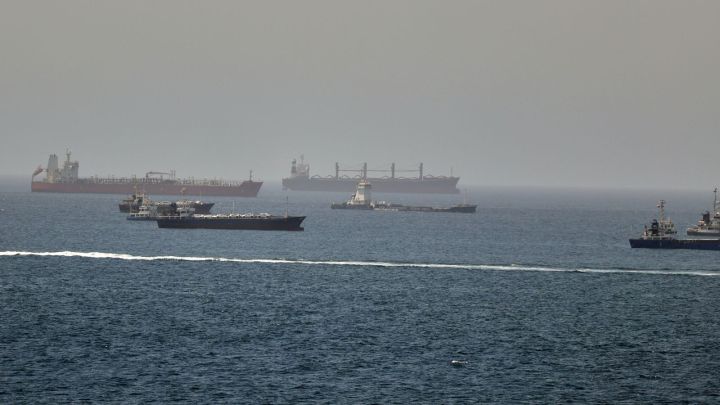 Tankers and cargo vessels are seen in the Gulf of Oman, along shipping routes linking the Strait of Hormuz and the Arabian Sea. (PTI))
The ship that was struck was the M/V Ever Lovely, a Singapore-flagged vessel exiting the strait along the Omani coast. Its owner, Evergreen Marine, said the attack damaged the bridge windows but no one was hurt and the cargo was safe. The main engine and all navigation equipment kept working, and the ship’s ability to sail was not affected.
‘You’ll find out’
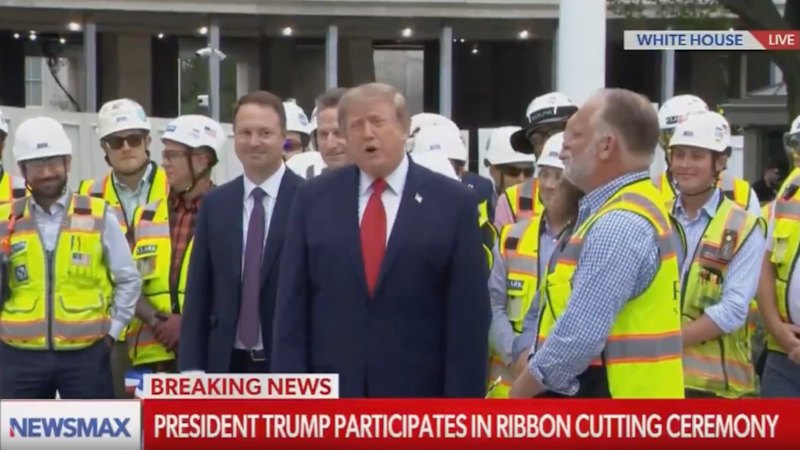
When reporters asked Trump at the White House whether Iran would face any consequences, he gave a short answer: “You’ll find out.”
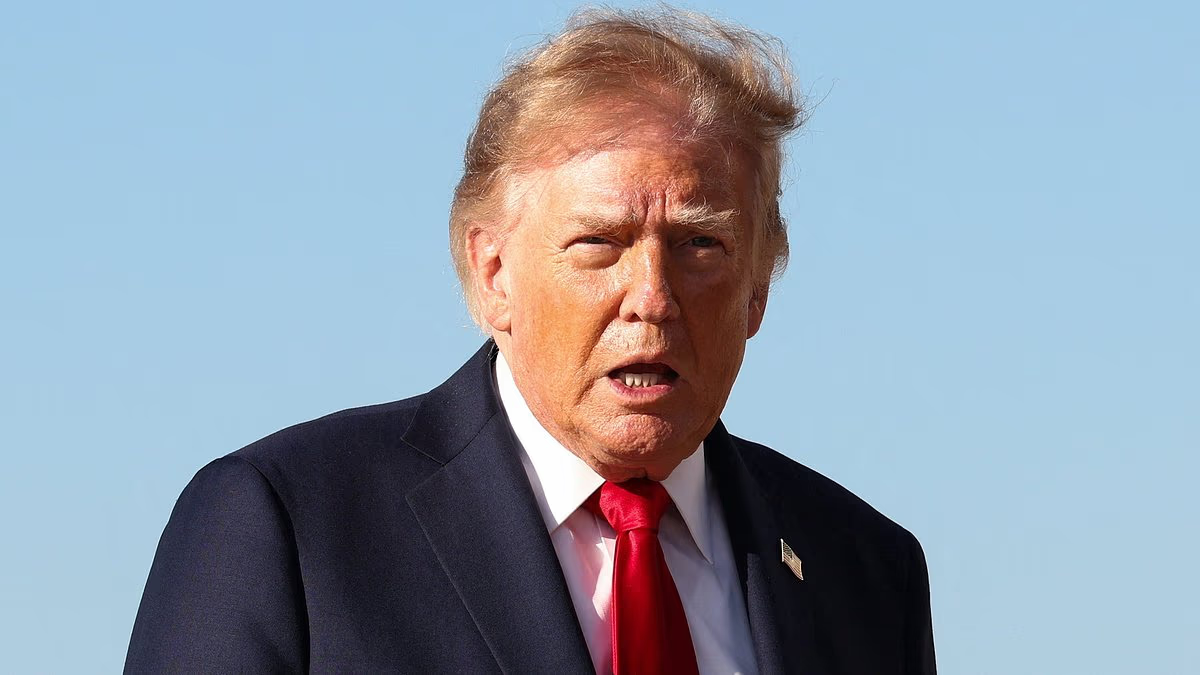
“I don’t like the fact that they took a shot yesterday,” he said. “They shouldn’t be doing that.”
Earlier that morning on Truth Social, Trump had been sharper: “Obviously, this is a foolish violation of our Ceasefire Agreement,” he wrote.
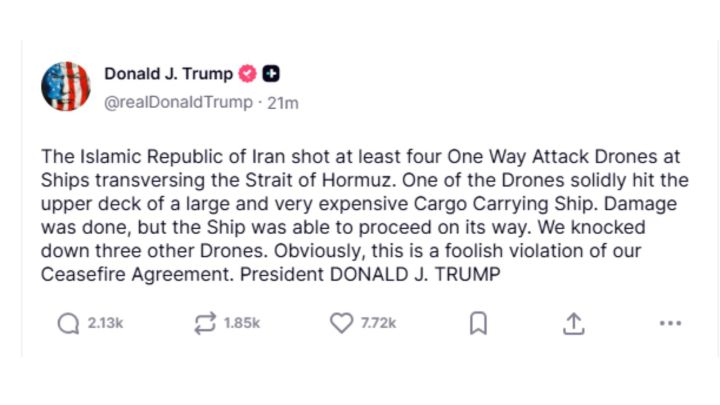 (Photo: @realDonaldTrump)
What the ceasefire said
Story continues below this ad
The US and Iran agreed on June 17 to stop hostilities under a 14-point memorandum of understanding, which also called on Iran to use its best efforts to allow commercial vessels to pass through the strait without charge for 60 days.
US Central Command said Friday the drone attack on the Ever Lovely “clearly violated the ceasefire” and that Iran’s actions “undermined freedom of navigation” in a waterway that carries a large share of the world’s oil and gas.
Tolls: the fault line underneath
Even before Thursday’s attack, the ceasefire was under strain over the question of shipping fees. An Iranian member of the country’s negotiating team, Hossein Ghorbanzadeh, said Iran would resume collecting fees from vessels after the 60-day pause expires, adding that the temporary halt was accepted “so that the agreement could be reached”, as reported by Fox News.
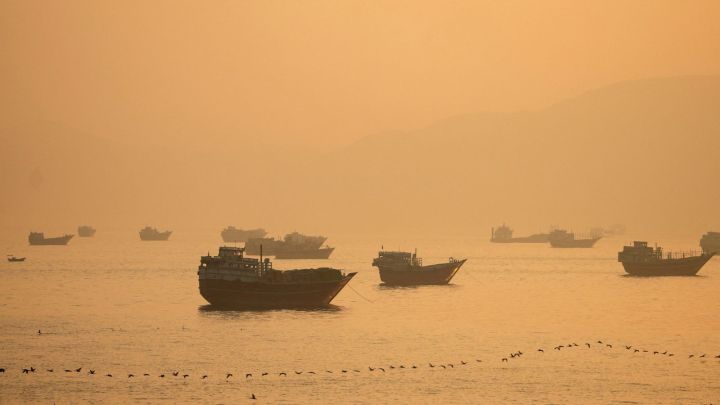 Vessels at the Strait of Hormuz, as seen from Musandam, Oman. (REUTERS)
Trump had said on Wednesday that Iran told him there would be “no tolls, no insurance costs and no other charges of any kind,” warning that if that information turned out to be false, negotiations would end immediately.
Story continues below this ad
Iran’s chief negotiator, Mohammed Bagher Ghalibaf, added to the tension by saying publicly that “the administration of the Strait of Hormuz will never go back to the way it was before the war.”
Vance draws a line
Vice-President JD Vance addressed Tehran directly in a post on X after the US struck: “If Iran has disagreements about how the MOU is being applied, they can pick up the phone. But violence will be met with violence.”
Iran signed a ceasefire agreement. We have honored it. If they have disagreements about how the MOU is being applied, they can pick up the phone.
But violence will be met with violence. https://t.co/VWnBS1PWaV
The UN’s International Maritime Organization paused a planned evacuation of more than 11,000 sailors stranded in the shipping lane since the war began.
Iran’s parliament also pushed back. Ebrahim Azizi, head of the Iranian parliament’s national security commission, wrote on X that “the US attacked Iran in the middle of negotiations once again,” adding: “The failed US president has shown he has no commitment to the principles of negotiation or a ceasefire.”
The U.S. attacked Iran in the middle of negotiations once again.
The failed U.S. President has shown he has no commitment to the principles of negotiation or a ceasefire.
This reckless violation of the ceasefire will, as always, lead to retreat and regret on their part.
The…
The US military said it would keep helping commercial ships move safely through the strait, adding that its forces remain “present and vigilant throughout the region.”
(With inputs from agencies)
The Express Global Desk at indianexpress.com which delivers authoritative, verified, and context-driven coverage of key international developments shaping global politics, policy, and migration trends. The desk focuses on stories with direct relevance for Indian and global audiences, combining breaking news with in-depth explainers and analysis. A major focus area of the desk is US immigration and visa policy, including developments related to student visas, work permits, permanent residency pathways, executive actions, and court rulings. The Global Desk also closely tracks Canada’s immigration, visa, and study policies, covering changes to study permits, post-study work options, permanent residence programmes, and regulatory updates affecting migrants and international students. All reporting from the Global Desk adheres to The Indian Express’ editorial standards, relying on official data, government notifications, court documents, and on-record sources. The desk prioritises clarity, accuracy, and accountability, ensuring readers can navigate complex global systems with confidence. Core Team The Express Global Desk is led by a team of experienced journalists and editors with deep expertise in international affairs and migration policy: Aniruddha Dhar – Senior Assistant Editor with extensive experience in global affairs, international politics, and editorial leadership. Nischai Vats – Deputy Copy Editor specialising in US politics, US visa and immigration policy, and policy-driven international coverage. Mashkoora Khan – Sub-editor focusing on global developments, with a strong emphasis on Canada visa, immigration, and study-related policy coverage. ... Read More
© IE Online Media Services Pvt Ltd

Loading Recommendations...















 English (US) ·
  French (CA) ·
  French (FR) ·