

 1 month ago
17
1 month ago
17
PROTECT YOUR DNA WITH QUANTUM TECHNOLOGY
Orgo-Life the new way to the future Advertising by Adpathway
Over the summer, Fischer Olpin and Gracee Dalton fulfilled a longtime dream of combining bikepacking and sewing. Their impractical vision took them around Hokkaido, Japan, for an unforgettable adventure. They pedaled from place to place with a full-size Juki sewing machine, stopping to make bags and other gear against a variety of spectacular backdrops. Read about their journey here…
“You’re doing what?!”
That’s the reaction most people had when they saw my partner and me pedaling down the quiet roads of Hokkaido, Japan, with a sewing machine strapped to the front of my bike. This venture was a mix of everything I love most rolled into one strange, heavy setup. I hope this piece provides a lens into why this trip made perfect sense—at least for me.
Where it all Began
For this story to make sense, you first need a little insight into who I am and what my brand, Fish-Ski Designs, is all about. My parents are mostly to blame, and the apple didn’t fall far from the tree. I’m the product of both of them, and so is my brand. My mom is a professional sewist and certified girl boss, and my dad is a documentary filmmaker and videographer. I grew up watching them work tirelessly to support four wild kids.
When I started Fish-Ski Designs, I used every dollar I had to build something that felt true to me. I focused on upcycling old sails and reclaimed fabrics. What started as making custom bags for friends quickly evolved into a full-blown small business.

Fish-Ski Designs has never been just about bags, though. Many people know us for our Instagram: the goofy energy, the chaos, and our love for adventure. For us, it’s never been about racing, lycra, or hitting mileage goals (if that’s what you love, then we’re stoked for you!). It’s about rewriting the script for what bikepacking can look like. And sometimes, that’s a bit impractical. So, when this Japan project started coming to life, something about it all felt oddly natural.
This story and the photos you see wouldn’t exist without my partner, Gracee Dalton, who documented every moment while pedaling every mile right beside me.

The Spark
We didn’t have a set plan for our next bikepacking trip. We were tossing around ideas, unsure where to go or what we wanted it to look like. Then a close friend of mine, Chase, reached out. He owns a home in Higashikawa, Japan, and he invited me to bring Fish-Ski to Japan for an artist residency at his place, the Asahidake Riders House.
At first, I hesitated. The idea of traveling halfway around the world just to sit inside and sew didn’t feel right. But then it clicked: what if I didn’t have to choose between sewing and adventure? What if I took my work with me, literally? Making bikepacking bags while bikepacking. The irony of it was so perfect. I’d always dreamed of doing my work in beautiful places, but I’d never imagined combining a sewing project with a bikepacking trip.

We still wanted to spend time with Chase, and having a home base for a mission like this seemed necessary. We used his home as a starting point for multiple short trips, experiencing the volcanoes, rivers, and cities within biking distance. We’d head out for two or three days at a time, then return to rest, sew, and plan the next route. It was the perfect rhythm.
Stitching on the Road
That dream quickly became real. We spent weeks pedaling through Hokkaido’s quiet backroads, navigating grids of rice fields and rolling past Gatorade-blue streams flowing down from volcanoes. We even circumnavigated an island north of Japan, an unforgettable highlight.
We stopped to sew in some of the most incredible places imaginable: abandoned bridges, empty campgrounds, and, of course, the occasional 7-Eleven to refuel on onigiri and katsu chicken. Each stitch and every mile reminded me why I started Fish-Ski in the first place: to make things that are practical, colorful, and always spark conversation wherever they go.
We met many other bikepackers along the way, often greeted first with confusion, then laughter, as we mimed our explanations through the language barrier. We weren’t in a rush, and if the people we met weren’t either, I’d offer to stop and sew them a bag for their bike. Sometimes it was an OniGeari or a Bevvy Carrier, both originals that quickly became must-haves for any biking adventure, especially in Japan.
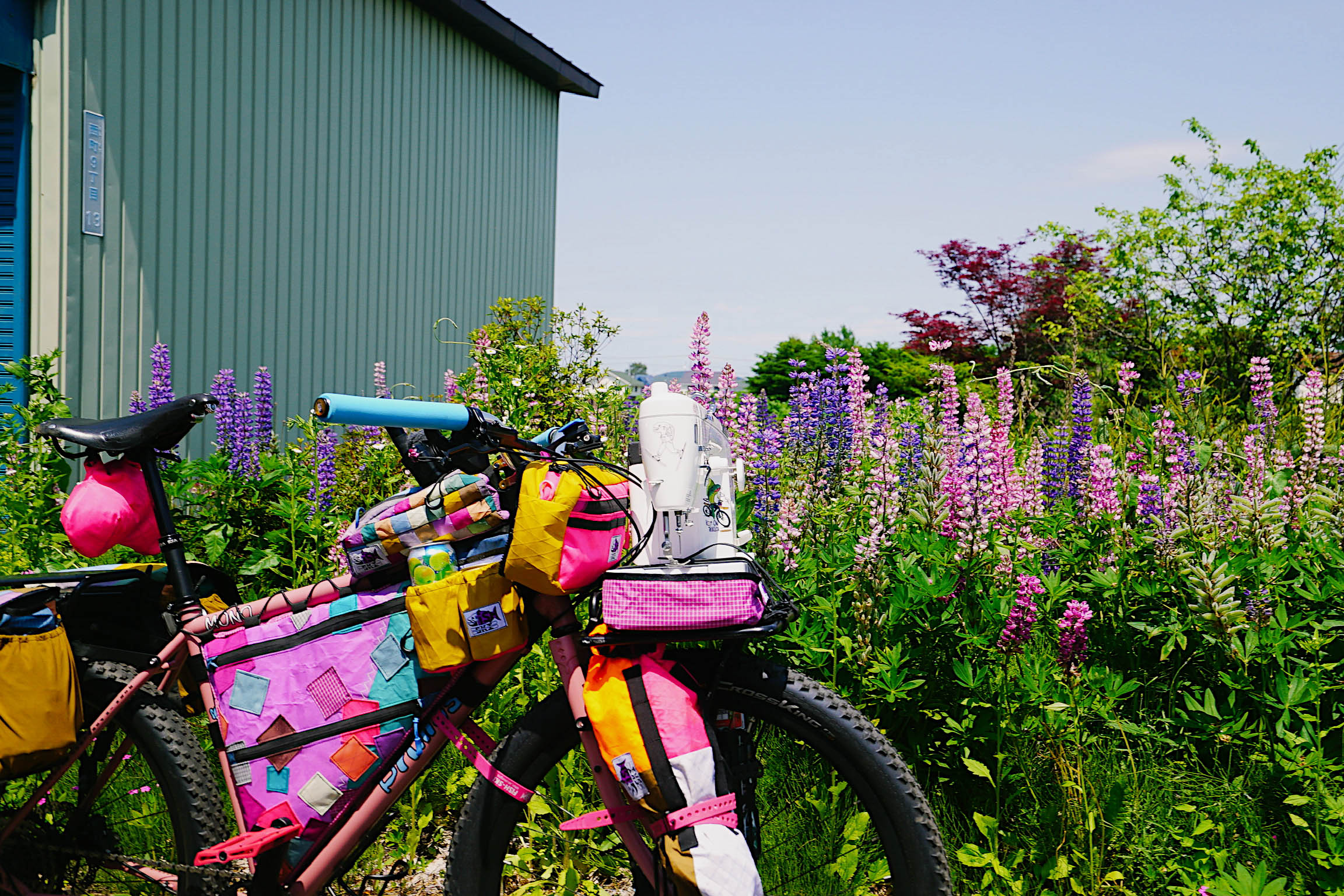
On our first day, we built our bikes and set out for a shakeout ride. Somewhere along the way, I started scheming a new design: a hacky sack. It sounds simple, but I became obsessed with perfecting it. We tested countless patterns, sizes, and fabrics, and eventually filled one with locally farmed rice we’d bought from a nearby market. It worked beautifully, and soon, we were hooked. It felt like the perfect product—something that brought people together and was literally supported by the land we were exploring.

One night, about midway through our trip, we met a solo bikepacker at a campground. By chance, she was from our hometown of Salt Lake City, Utah. We swapped stories of our Japan adventures, shared beers, and played hacky sack at the base of a volcano. It was one of those serendipitous moments that stitched everything together.
Gear That Made It Possible
This trip was as much about the gear as it was about the idea. Here’s what made it work:
Racks: My Old Man Mountain Pizza Rack had already proven itself. I’d seen it hold a full-grown person (not recommended, for the record), so 25 pounds of sewing machine felt well within its limits. Both bikes ran Old Man Mountain racks. The Pizza Rack held the sewing machine, with fork mounts for a small fold-up stool, a total game-changer that will definitely come on future trips.
Power: Two Goal Zero Sherpa 100AC power banks. Each one powered the sewing machine for about eight hours and charged phones and cameras, too. Compact, reliable, and worth every ounce.
Bikes: Primos Monos. Sturdy, simple, and comfortable. Gracee ran Jones H-Bars with some rise for a more upright position. I used Soma Dream bars since the sewing machine ruled out Jones or Molokos.

Bags: My own Fish-Ski Backpack Panniers, two panniers and a fanny pack that zip together into a single backpack for flights. Somehow, we didn’t pay extra baggage fees. We probably just got lucky.
Setup: Bikes under 50 pounds each, packed in cardboard boxes with sleeping pads, camp stoves, and bulky but light items.
Sewing Machine: I run all Juki machines in my studio. The Juki TL-2000Qi was about my fifth or sixth machine. It’s not one I’ve ever used for production bags, but one I bought specifically as a travel machine. It’s small, tough, and reliable. Somehow, it felt right at home strapped to the front of my bike.
Take Home
This trip filled us with inspiration: new designs, new stories, and new ways to merge creativity with adventure. It also reminded me that the ideas that make the least sense on paper often make the most sense in practice. Sewing while bikepacking wasn’t about proving it could be done. Rather, it was about following curiosity wherever it led us, even if that meant pedaling up 14 percent grades with a sewing machine at my fingertips.
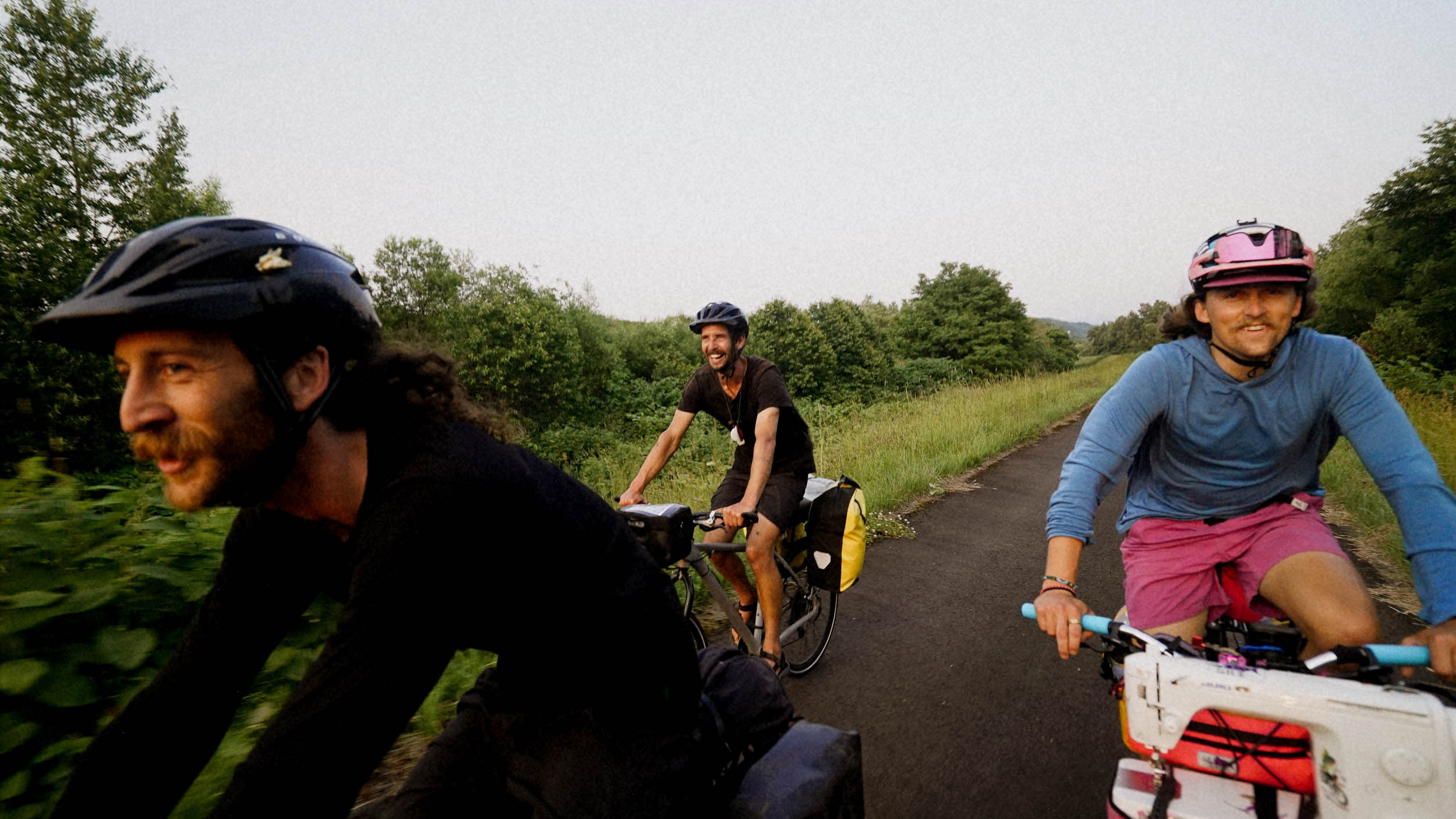
Each time I sat down to sew—in the shadow of volcanoes, on quiet forest roads, beside a river glowing gold in the evening light—I felt like I was stitching together every part of my life. Absurd, yes. But also perfect.
Further Reading
Make sure to dig into these related articles for more info...
Please keep the conversation civil, constructive, and inclusive, or your comment will be removed.




 English (US) ·
  French (CA) ·
  French (FR) ·