

.png) 1 day ago
12
PROTECT YOURSELF with Orgo-Life® QUANTUM TECHNOLOGY
Orgo-Life the new way to the future Advertising by AdpathwayWith the sadness of our summer migrants departing the UK for another year comes the joy of our wintering birds returning. Working in conservation at Poole harbour, I’m out most days, connected to the ebb and flow of this change.
As it is one of the largest natural harbours in the world, and located on the East Atlantic Flyway, birds are constantly on the move here, whether leaving, arriving or stopping to refuel.
To name just a few, in recent weeks we’ve seen the departure of swallows for southern Africa, and meadow pipits for Europe and north Africa; teals and avocets have arrived in large numbers; and we’ve had sightings of passing curlew sandpipers – scarce here.
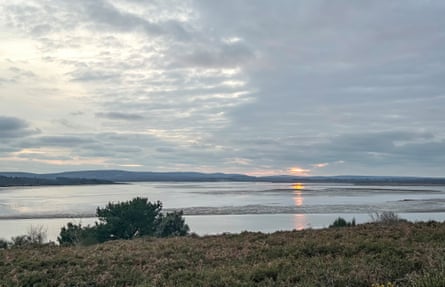
Today is a sunny, abnormally mild October afternoon on the Wareham channel, and the tide is very low, exposing broad expanses of mudflats bordered by heather, gorse and reedbeds on the shore. The mudflats teem with aquatic insects, crustaceans and worms – a vast buffet for waders. As we cruise near the shallows, taking care to remain in the deeper channels, I get a better view of the birds that have stopped to feed – curlews, oystercatchers, black-headed gulls, Icelandic black-tailed godwits.
A bird that always catches my eye is the dunlin. They often congregate in huge flocks, and in the bright sunshine, I can just about make out their short, downcurved bills, brownish-grey upperparts and plain white underparts. They move erratically and constantly probe the mud. Every so often, they are spooked by something and lift into the air, their white undersides catching the sunlight.
This group of dunlin may have travelled thousands of miles to reach the harbour. Despite weighing only around 50g, these little waders could have bred as far away as eastern Europe or Russia.
They breed in the UK too, mainly on grasslands and moorlands in northern England and Scotland, moving south to spend the winter in continental Europe and north Africa. Here in Poole harbour, their numbers can exceed 2,000 by January.
Bird migration is such an incredible spectacle; I feel privileged to see it happening on such a scale.

















 English (US) ·
 French (CA) ·
 French (FR) ·