

.png) 11 hours ago
5
11 hours ago
5
PROTECT YOURSELF with Orgo-Life® QUANTUM TECHNOLOGY
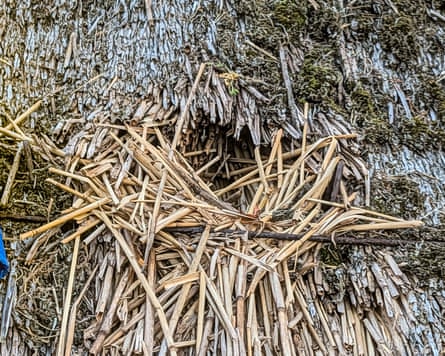
Orgo-Life the new way to the future Advertising by AdpathwayThat the thatch is thick with moss and crusted with the brittle fronds of lichen is not unusual for a roof of this age. What’s puzzling me is the hole in its centre. It is about 10in wide – a dark scoop, as if someone has taken a giant ladle to the roof.
When I climb the ladder for a closer look, I can see toothmarks on the reed. I also see that the hole does not go all the way through – the animal obviously gave up after an exploratory burrow.
“It was probably the pine marten,” says Pam Aitchison, the owner of this thatched roundhouse in a glen just south of the Cairngorms, which I am here to re-thatch. She fed it peanut butter and jam sandwiches for a while, but stopped when she became concerned that it might be damaging the roof.
This is a first for me in 14 years working on thatched roofs. Damage by squirrels is fairly common. They can chew through reed, wire netting, roof battens and even lead chimney flashings. Rats and jackdaws are familiar culprits too, but pine martens – less so.
They are a regular presence in this glen, though. Bruce, a semi-retired plumber who lives up the track, had a pair of martens nesting in the roof of his garage for a few summers. Initially, he tried various ways of keeping them out, but in the end he decided to live with them. “They’ll squeeze through anything,” he said. “You cannae blame them wanting somewhere to live.”
The tightly packed new thatch I am laying should, I hope, be less inviting to the mustelids than the soft surface of the old reed.
I set to work fixing in place the bundles of water reed, which has come from just down the road, in Tayside (unlike the majority of thatching reed in the UK, which is imported from overseas). It was harvested from Britain’s largest continuous reedbed – an 11-mile-long arc of Phragmites planted in the early 19th century.
Originally intended as a flood defence, it is now managed by the RSPB, and contains a quarter of Britain’s population of bearded tits, as well as marsh harriers and water rails. Thatch can be a home for wildlife before it goes on the roof, too.






















 English (US) ·
  French (CA) ·
  French (FR) ·