

 2 weeks ago
1
2 weeks ago
1
PROTECT YOURSELF with Orgo-Life® QUANTUM TECHNOLOGY
Orgo-Life the new way to the future Advertising by AdpathwayLooking across a swathe of golden oat grass to the Apple House, it seems almost inconceivable that the M25 and M1 motorways are just beyond the treeline. I’m exploring the Serge Hill Project for Gardening, Creativity and Health: a therapeutic resource for local schools, community groups and charities, founded three years ago by Tom and Sue Stuart-Smith.
All around me, a diverse collection of drought-tolerant plants is thriving in a six-inch layer of sharp sand in the uppermost section of the Plant Library, despite not having been watered once during our sweltering summer.
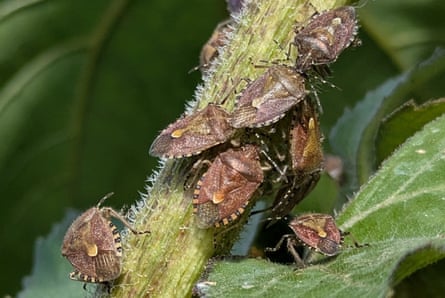
Among the many plants I’ve not met before, Crete scabious is the epitome of autumn glory. Its pale lilac flowers have transformed into globular seed heads that quiver in the breeze. Each sphere is a fanfare of tiny trumpets, their flared funnels marked with brown stripes. On closer inspection, I can see that some of these papery alcoves harbour hairy shieldbug nymphs, Dolycoris baccarum.
Elsewhere in the garden, troops of adults and juveniles cluster on sunflower stems and wine-red dahlias, but nowhere is the nymphs’ camouflage as successful as on the scabious seed heads. While the adults invite attention with their black and white striped antennae and connexivum (edge of the abdomen), and reddish-brown forewing bases and pronotum (a hardened plate covering the front of the body), the young bugs’ markings shield them from sight. Golden-brown bands on their abdomens and along the connexivum break up their oval outlines, and the colour match between plant and insect helps them sink into sepia obscurity.
Their sanctuary – Crete scabious – is one of many Mediterranean species planted in the garden as part of the project’s research into climate-resilient landscapes, so it’s encouraging to see the shieldbugs making themselves at home. So far, almost 350 invertebrates (including five species of shieldbug) have been recorded across more than 2,500 herbaceous perennials, low shrubs and bulbs in the Plant Library.
Like the children and adults who come to this inclusive garden to connect with nature, the Serge Hill Project provides wildlife with a safe space to shelter and develop. And all within a mile of the London orbital, Britain’s busiest motorway.






















 English (US) ·
  French (CA) ·
  French (FR) ·