

.png) 2 hours ago
3
2 hours ago
3
PROTECT YOURSELF with Orgo-Life® QUANTUM TECHNOLOGY
Orgo-Life the new way to the future Advertising by AdpathwayBy Shruti Srivastava and Sudhi Ranjan Sen
Back in July, the resignation of Prime Minister Narendra Modi’s education minister swiftly ended India’s first major round of student “Cockroach” protests just as they were gaining momentum. This time, he has no easy way out.
Modi’s rivals are now demanding the resignation of Chief Election Commissioner Gyanesh Kumar, alleging that he has failed to address criticism that a once-in-20-year update of India’s electoral rolls is unjustly purging millions of voters at the expense of the opposition. While there’s little hard evidence of bias, the furor was stoked by an Indian Express report last month that found Kumar ignored objections to the process raised by his two fellow commissioners.
Even if Modi wanted to get rid of Kumar, who has more than two years left on his term, the process would take time and political capital. The Election Commission of India is an independent body, and removing its head would require an investigation to prove “misbehavior” as well as approval by both houses of parliament in the same session with at least two-thirds of members present.
But Modi’s Bharatiya Janata Party has repeatedly backed the Election Commission and the revision of electoral rolls, which is intended to remove dead, duplicate and ineligible voters in the world’s largest democracy. A sudden U-turn to get rid of Kumar or halt the revision process would not only hand a victory to Modi’s opponents, but also call into question recent election wins for his party, which retains a dominant grip on parliament.
“Either you figure out a way of letting him step aside, or you ensure that the protests are delegitimized,” said Neelanjan Sircar, a political scientist at Ahmedabad University who specializes in Indian elections and voter behavior. “The government is very much on the back foot. But when you’re a dominant party with this kind of control, it can take a very long time for the slide to show.”
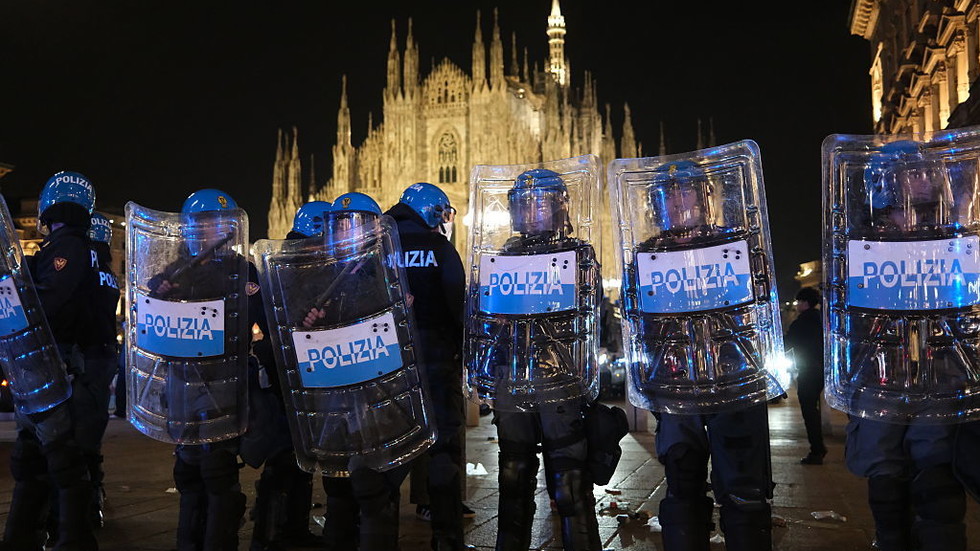
The dynamics leave Modi little choice but to deploy repressive measures to snuff out the protests to avoid a repeat of July, when police bloodied thousands of students in street clashes near parliament in New Delhi. His government this time has opted for mass detentions, arrests of the Cockroach Janta Party’s leaders and a partial lockdown of the capital.
Central Delhi has effectively been turned into a fortress for over a week, with heavy security and restrictions on public assembly. Roads around one of the capital’s busiest commercial districts reopened on the weekend, though barricades remained in place and thousands of security personnel are deployed across the city.
The government has also stepped up its rhetoric against the protesters, painting them as a small minority seeking to overthrow the will of voters who have helped Modi’s BJP dominate Indian politics since 2014. Unlike the earlier protests related to exams, which resonated across the political spectrum and the wider public, the latest demonstrations are more led by the opposition INDIA alliance, which has struggled in recent elections.
“Attempts are being made to use the nation’s youth as pawns in a politics of chaos — some seek a regime change,” Defense Minister Rajnath Singh said in a national address on Friday. “Their struggle is not for electoral reform,” he added, accusing protesters of seeking to “dismantle democratic institutions and set the country ablaze.”
The bet from Modi now is that the heavy security presence and arrests will help keep people off the streets long enough for the current wave of protests to fizzle out. The traffic gridlock and other inconveniences from the heightened restrictions also may increase public anger toward the protesters, particularly as the extent of disapproval over alleged election malpractices is still unclear.
Home Minister Amit Shah has also used the issue to appeal to the BJP’s base of Hindu nationalists, who want to eliminate special provisions for religious minorities including Muslims. He has accused opponents of the voter-roll revision of supporting illegal immigration, signaling that the bulk of those removed from the list are foreigners from Muslim communities in neighboring countries such as Pakistan, Bangladesh and Myanmar, according to Nilanjan Mukhopadhyay, a New Delhi-based author and Modi biographer.
“I expect more draconian measures, including the use of laws against protesters and the opposition, over the next two years,” Mukhopadhyay said. “I also see a greater risk of communal tensions across the country, with minor confrontations potentially escalating into major incidents.”
At the same time, the crackdown risks backfiring into a fresh rallying cry for young people, opposition parties and civil society groups. The spotlight again is quickly turning from a single issue to Modi’s government more broadly, at a time when inflation is rising and fresh graduates are struggling to find jobs as companies seek to deploy artificial intelligence to boost productivity. The rupee is hovering near record lows and foreign investors continue to sell Indian stocks.
While Kumar hasn’t explicitly referenced the calls to resign, the Election Commission has shown more responsiveness to public criticism of late.
Last month, it agreed to publish minutes of meetings, eased some voter-verification requirements, extended deadlines for voters to challenge their exclusions in Delhi and Maharashtra, and established a panel to review its voter-registration software. The poll body also said officials would collect documents from voters with unmatched or inconsistent records, while those excluded in earlier revisions could seek reinstatement.
Modi’s best pathway to a swift resolution may come from another independent institution: The Supreme Court.
India’s top court, which previously allowed the voter-roll revision to continue, asked the poll body on Oct. 15 to respond to allegations that large numbers of eligible voters were removed from the lists. If judges order changes to the process, the government could point to the ruling rather than street pressure as the reason for a shift.
“To me, the only viable option that is available now is for judiciary to step in and work toward negotiated solution which restores the credibility of the process,” said Mujibur Rehman, a Jamia Millia Islamia political scientist and author who has written extensively on Indian politics and political institutions.
Even if that happens, the latest episode shows an even bigger problem: The Cockroach Janta Party has some staying power and isn’t going away easily. The pressure group, which has so far stayed out of electoral politics, has helped mobilize a street force that has given momentum to the INDIA opposition bloc in parliament and put Modi on the defensive.
The next major tests at the polls is slated for early next year in Uttar Pradesh, India’s most populous state, which is crucial to any opposition hopes to unseat Modi’s government in the next national vote scheduled for 2029. So far Modi’s coalition government has shown no sign of breaking apart to potentially trigger an early election.
The government is increasingly “anxious” about the cockroach movement, but it’s unclear if opposition parties will be able to convert the anger on the streets into votes at the ballot box, said Milan Vaishnav, director of the South Asia Program at the Carnegie Endowment for International Peace and an expert on Indian electoral politics.
“The real challenge is whether the INDIA alliance can translate this in electoral terms,” he said. “They are quite capable of snatching defeat from the jaws of victory."













 English (US) ·
  French (CA) ·
  French (FR) ·