

.png) 1 hour ago
5
1 hour ago
5
PROTECT YOURSELF with Orgo-Life® QUANTUM TECHNOLOGY
Orgo-Life the new way to the future Advertising by Adpathway
Oil rises past $100 a barrel
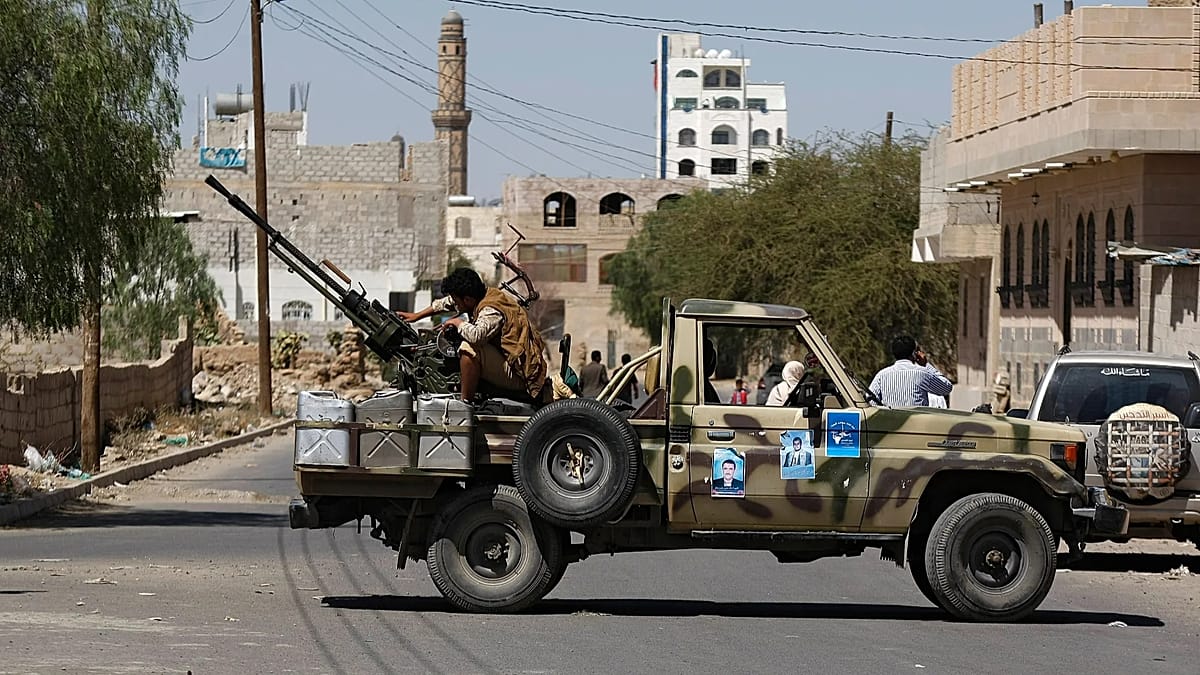
Oil is back in triple-digit territory. Brent crude crossed $100 a barrel on Wednesday after fresh attacks on oil facilities and tankers in the Middle East reignited concerns over an already weakened global supply chain.Brent crude rose 2.57% to $100.40 a barrel, while US West Texas Intermediate (WTI) climbed 2.10% to $94.98. The move marks the first time in almost six weeks that oil has crossed the $100 level.The latest surge follows a sharp deterioration in the conflict, with the US military reporting that it had struck five Iranian tankers after attempted missile attacks on a Navy warship. Separately, attacks by an Iranian-backed Houthi rebel group set oil facilities in Saudi Arabia on fire.The developments have added to an oil market that had already been on an upward trajectory. On Wednesday, Brent crude rose 1.47% to $99.36 a barrel and WTI climbed 1.54% to $94.46, marking gains of more than 1% for four consecutive sessions.The conflict has intensified further after Iran launched missiles towards US targets in Jordan. Iran’s Revolutionary Guards said two US destroyers and a US base in Jordan’s Al Azraq had also been targeted with ballistic missiles.
Jordan’s air-defence systems intercepted 18 of the 20 missiles fired from Iranian territory, while the remaining two landed in unpopulated areas.
Hopes of lasting ceasefire weaken
The renewed hostilities come as prospects for a permanent end to the more than six-month-old war have weakened. Brent crude has risen by a quarter since early August.The latest exchange of attacks has pushed the two sides back towards open hostilities, adding to the economic pressure created by the conflict.US secretary of state Marco Rubio warned that Washington would continue striking Iranian oil tankers if Tehran carried out further attacks on US warships."Iran continues to try to hit US naval ships, and for every time they do that or try to do that, they're going to lose tankers," Rubio told reporters during a visit to Colombia.Alongside the military response, the US has tightened economic pressure on Tehran. On Tuesday, it imposed sanctions on additional parts of Iran's aviation industry, targeting more than two dozen commercial and private airlines as well as foreign cargo service providers.The measures are part of US President Donald Trump's dual economic and military approach as his administration seeks to bring the war to an end while isolating Tehran from its remaining trading partners.
Strait of Hormuz remains key flashpoint
The Strait of Hormuz remains at the centre of the confrontation. Almost one-fifth of the world's oil passed through the strategic waterway before the war began, with both the US and Iran seeking to exert control over it.The supply outlook is also adding to the pressure on the market. Although non-OPEC producers including the United States, Canada and Guyana have ramped up output, the International Energy Agency said last month that global oil supply was expected to fall by 4.3 million barrels per day this year, or about 4%.
Higher crude prices could raise transport costs
A sustained rise in crude prices can push up the cost of gasoline, diesel and jet fuel. This can make travel more expensive and raise the cost of goods that need to be transported quickly, such as fresh food, or shipped over long distances, including furniture and appliances.The rise in energy prices also creates political pressure for Trump and his Republican Party ahead of the November midterm elections.The Middle East conflict has continued for more than six months, keeping oil markets volatile. However, prices remain below the $126-a-barrel level seen earlier in the war.

















 English (US) ·
  French (CA) ·
  French (FR) ·