

 3 hours ago
2
3 hours ago
2
PROTECT YOURSELF with Orgo-Life® QUANTUM TECHNOLOGY
Orgo-Life the new way to the future Advertising by AdpathwayVenezuela · ENERGY
Key Facts
- —The licence bp was awarded the Lorán Phase 2 licence on 13 August, as operator, with XRG and UCC Oil and Gas Holding each holding an equal working interest — roughly a third apiece.
- —The gas Phase 2 covers about 4 trillion cubic feet. The Venezuelan Lorán block holds around 7.3 trillion, and the cross-border Lorán-Manatee structure about 10 trillion.
- —Why it is legal now OFAC’s General License 50A, issued 13 February and amended 18 February, authorises oil and gas sector transactions in Venezuela and names bp among the companies covered.
- —The conditions Treasury-controlled payment accounts, contracts under US law, and quarterly reporting. This is supervised re-entry, not deregulation.
- —Phase 1 Shell took the Lorán Phase 1 licence in June and is developing the adjacent Manatee field on the Trinidadian side, with first gas expected in 2027.
- —Also signed A memorandum on the Carúpano East Block, in the Caracolito sub-basin of the Mariscal Sucre area, on the same day.
The geology has not moved in forty years. Everything around it moved in eight months.
One-stop reference
Company Intelligence
Every listed company in Latin America — financials, ownership and structure for 1,450+ companies across 26 exchanges, in one place.
The Lorán gas licence went to bp on 13 August, with XRG and UCC Oil and Gas Holding alongside it in roughly equal thirds. What makes it notable is not the gas, which has been sitting there for forty years. It is that this transaction would have been unlawful for an American-exposed company as recently as January.
What the Lorán gas licence covers
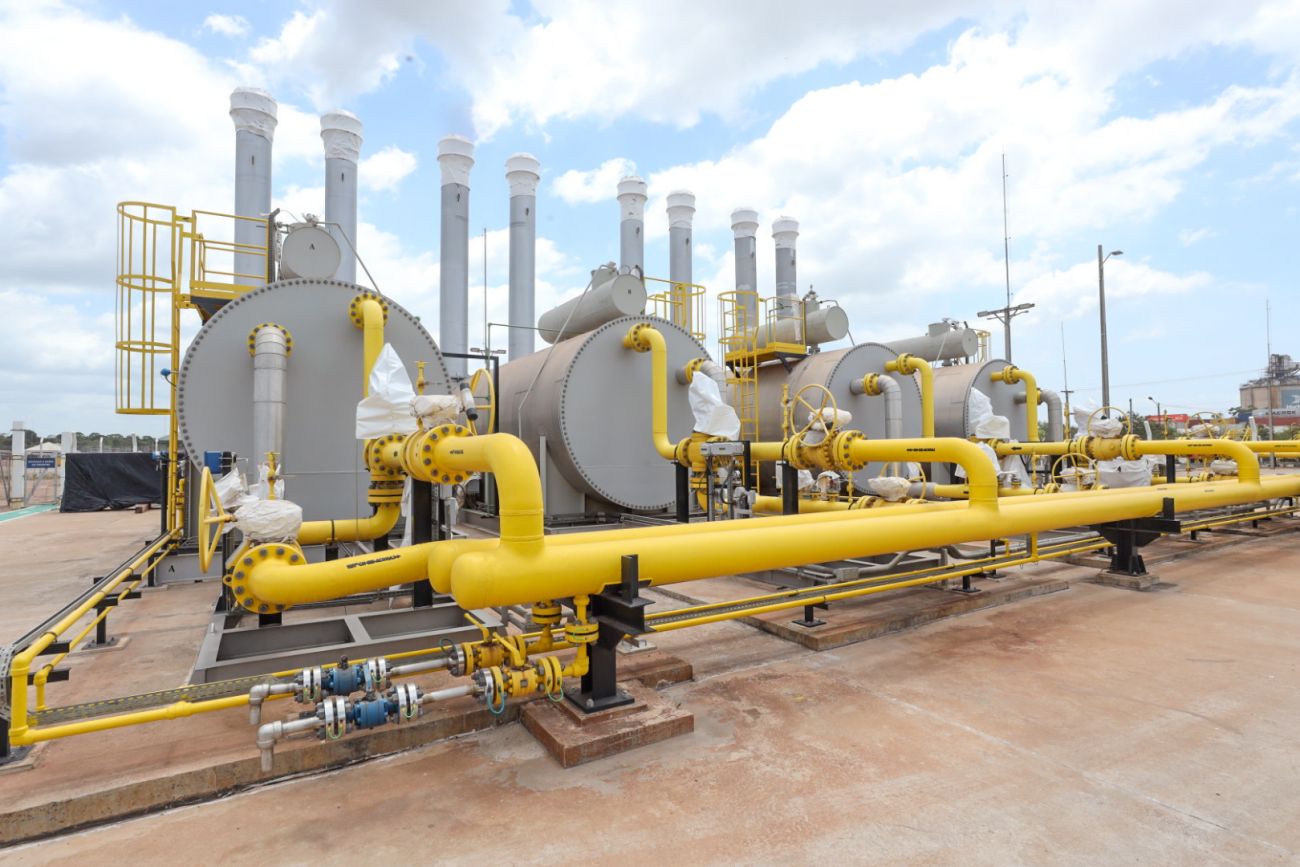
Lorán is the Venezuelan portion of the Lorán-Manatee structure, a single gas accumulation lying across the maritime boundary between Venezuela and Trinidad and Tobago. The combined field holds roughly 10 trillion cubic feet of recoverable gas; the Venezuelan Lorán block accounts for about 7.3 trillion.
Phase 2, the subject of this licence, covers around 4 trillion cubic feet. bp operates, with XRG — ADNOC’s international investment arm — and UCC Oil and Gas Holding each taking an equal working interest.
Phase 1 went to Shell in June, which is developing the adjacent Manatee field on the Trinidadian side with first gas expected in 2027. A memorandum on the Carúpano East Block, in the Caracolito sub-basin of the Mariscal Sucre area, was signed the same day as the bp award.
The cross-border geology is why this took decades. A field straddling a border cannot be developed by one side without an agreement with the other, and for most of the last twenty years the two governments were not in a position to make one.
The rules changed in February, and that is the story
Between February and March, the US Treasury substantially rewrote its Venezuela sanctions programme through a series of general licences. General License 50A, issued on 13 February and amended five days later, authorises transactions related to oil and gas sector operations in Venezuela, including dealings with PDVSA, and names bp among the companies it covers.
That is a different legal architecture from the one most coverage still assumes. Under the old regime each arrangement needed its own specific authorisation. Under a general licence, conduct within its terms is permitted without asking. A separate licence, General License 49, covers contingent investments and does still require specific authorisation for performance.
It is not deregulation. The conditions attached are unusually intrusive: payments run through Treasury-controlled accounts, contracts are written under US law, and licence holders report quarterly. What Washington has built is supervised re-entry, with the supervision retained.
And general licences can be amended or revoked. GL 50A has already been amended once, within a week of issue. Anyone modelling this asset should treat the sanctions position as a variable rather than a constant.
Who actually needs this gas
Trinidad and Tobago built one of the world’s larger LNG export industries on domestic gas that is now in serious decline. Its Atlantic LNG plants and its fertiliser and petrochemical complexes have run below capacity for years for want of feedstock, and Venezuelan gas is the nearest available answer — close enough to pipe.
Be careful about how firmly that is stated, though. bp’s own announcement of the award does not mention Trinidad or Atlantic LNG at all. The Trinidadian destination is the obvious commercial logic and it is how analysts read it, but it is not what the company has said.
For Venezuela the benefit is real and slower. Development takes years, and the state’s share arrives through royalties and taxes rather than immediate cash. The near-term gain is credibility: a supermajor signing a licence is a signal to everyone else.
The rest of the Venezuelan picture
Two other items landed in the same week. The US Department of Transportation granted National Airlines an exemption to operate scheduled cargo and passenger services to Venezuela, effective for two years through 30 July 2028. Air links have been among the most visible casualties of the past decade, and this restores a route rather than a gesture.
And ECLAC’s annual survey projects Venezuela growing 6.5% in 2026 — the second-fastest in Latin America, behind Guyana at 16.2%. State the base effect with it: an economy that contracted by roughly three quarters over a decade can post very large percentages without recovering much of what it lost.
Set against that is the exchange rate. Tamara Herrera of Síntesis Financiera puts recent central bank interventions in the foreign exchange market at about US$2.2 billion a month, and estimates the bank could place US$1.8 billion a month through year-end to hold the gap between the official and parallel rates. That is the number describing the actual condition of the economy, and it is not the number of a country in recovery.
The pattern across all three is the same. Venezuela is being reconnected to the world — on terms written in Washington, under conditions Washington monitors, and revocable by Washington. For anyone with exposure here, that is a genuine improvement on isolation and it is not the same thing as sovereignty over your own investment case.
Frequently Asked Questions
Who holds the Lorán gas licence?
bp is the operator, with XRG and UCC Oil and Gas Holding each holding an equal working interest — roughly a third each. The Phase 2 licence was awarded on 13 August 2026 and covers about 4 trillion cubic feet.
Is it legal for bp to operate in Venezuela?
Yes. OFAC’s General License 50A, issued on 13 February 2026 and amended on 18 February, authorises oil and gas sector transactions in Venezuela and names bp among the companies covered, subject to Treasury-controlled payment accounts, US-law contracts and quarterly reporting.
Will the gas go to Trinidad?
That is the commercial logic and how analysts read it, since Trinidad’s LNG and petrochemical plants are short of feedstock. But bp’s own announcement of the award does not mention Trinidad or Atlantic LNG.
Sources: bp; US Department of the Treasury OFAC General Licenses 49 and 50A; Oil & Gas Journal; Enerdata; US Department of Transportation; CEPAL Estudio Económico 2026; Síntesis Financiera via Banca y Negocios.















 English (US) ·
  French (CA) ·
  French (FR) ·